At-home test kits have transformed the bathroom counter into a tiny laboratory. In a matter of minutesor a few days if a sample must be mailedyou may be able to check for pregnancy, monitor blood glucose, screen for an infection, or collect a sample for colorectal cancer screening. It is private, convenient, and usually requires considerably less paperwork than a doctor’s appointment.
But convenience raises an important question: How accurate are at-home test kits, really? The answer is not a satisfying one-word verdict. Some home tests are highly reliable when used at the right time and exactly as directed. Others are useful screening tools but cannot diagnose a condition by themselves. A few popular products measure markers that may not provide medically meaningful answers at all.
Understanding the difference can help you avoid false reassurance, unnecessary panic, and the uniquely modern experience of staring at a barely visible line under three different lamps.
Medical note: At-home test results should be interpreted according to the kit instructions and your personal health situation. A home test is not a substitute for emergency care, a physical examination, or professional medical advice.
What Is an At-Home Test Kit?
The term at-home test kit covers two related but different products.
Complete self-tests
With a complete self-test, you collect the sample, run the test, and read the result yourself. Pregnancy tests, rapid respiratory-virus tests, glucose meters, and certain HIV self-tests fall into this category. Results may appear within a few minutes.
At-home collection kits
With an at-home collection kit, you collect blood, urine, saliva, stool, or a swab at home and send it to a laboratory. The lab performs the analysis and usually posts the result in an online portal. Some sexually transmitted infection tests, genetic tests, hormone panels, and colorectal screening tests use this model.
Mail-in kits may use sophisticated laboratory equipment, but that does not automatically make every result useful. The quality of the answer still depends on what is being measured, how the sample was collected, how it traveled, and whether the test has been validated for its advertised purpose.
How Is the Accuracy of a Home Test Measured?
Accuracy is more complicated than a claim such as “99% reliable.” Before trusting a percentage, it helps to know what was measured and under what conditions.
Sensitivity
Sensitivity describes how well a test detects people who truly have the condition. A highly sensitive test produces fewer false-negative results. If 100 infected people take a test with 90% sensitivity, the test may correctly identify about 90 while missing approximately 10.
Specificity
Specificity describes how well a test identifies people who do not have the condition. A highly specific test produces fewer false-positive results.
Real-world accuracy
Performance in a controlled study may be better than performance in a busy kitchen at 6:30 a.m. Real-world accuracy can be affected by poor lighting, incorrect timing, inadequate samples, expired materials, confusing instructions, temperature exposure, and the user’s understandable desire to finish before the coffee gets cold.
The likelihood that a result is correct also depends on how common the condition is in the tested group and how likely you were to have it before testing. This is why the same positive result may have different meaning in someone with classic symptoms and a known exposure than in someone with no symptoms or risk factors.
Why At-Home Tests Produce False Results
Testing too early
Many tests detect a biological marker that takes time to reach a measurable level. Pregnancy tests look for human chorionic gonadotropin, while infection tests may look for antigens, antibodies, or genetic material. Testing before enough of the marker is present can produce a false negative.
Collecting an inadequate sample
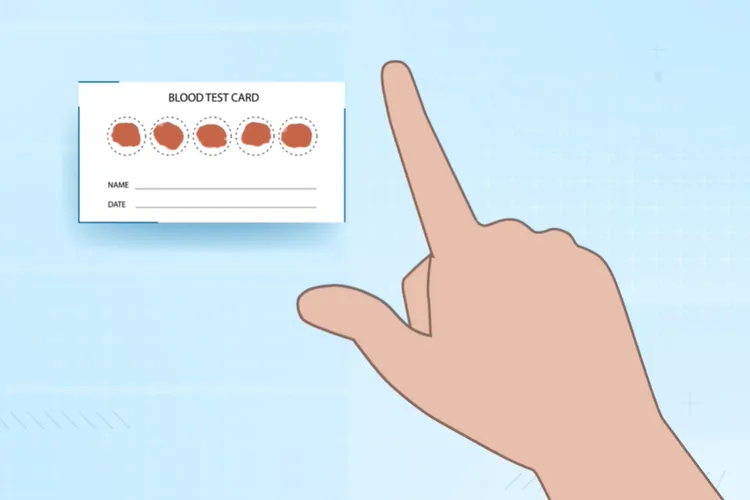
A quick, timid nasal swab may not collect enough material. A finger-stick card may require each circle to be filled correctly. Urine volume, saliva production, stool sampling, and swab location can all matter. “Close enough” is not always close enough in laboratory science.
Ignoring the reading window
Some rapid tests must be read during a specific time range. Looking too soon may miss a developing result. Looking much later may reveal drying or evaporation marks that are not valid positive lines.
Improper storage
Heat, humidity, freezing temperatures, and an open container can damage test strips or chemical reagents. A kit stored for months in a steamy bathroom or a scorching car may not perform as intended.
Using expired components
Reagents change over time. Always check the expiration date, including any officially authorized extension listed by the manufacturer or regulator. Do not assume a test is fine because the box still looks youthful.
How Accurate Are Common At-Home Test Kits?
Home pregnancy tests
Home pregnancy tests are among the easiest and most reliable consumer tests. Many can approach 99% accuracy when used correctly after a missed period. However, performance may be lower when testing early, using diluted urine, misreading the display, or choosing a test that is less sensitive to low hormone levels.
A positive pregnancy test is generally meaningful, but medical follow-up is still recommended. A negative result taken early may need to be repeated after several days. First-morning urine can be helpful because it is often more concentrated.
COVID-19, influenza, and other respiratory tests
Rapid antigen tests are convenient and can be useful when symptoms or recent exposure make infection likely. They are generally better at detecting infection when the amount of virus is relatively high. A positive result is often informative, but a single negative result does not always rule out infection, especially early in an illness.
Repeated testing according to the package directions can reduce the chance of missing an infection. Molecular home tests may be more sensitive than antigen tests, although they can cost more and may involve additional steps. Multiplex kits that test for several respiratory viruses can also be useful, but treatment decisions should still consider symptoms, medical history, and professional guidance.
HIV and STI testing kits
At-home HIV self-tests and laboratory mail-in kits can expand access to confidential testing. Some complete HIV self-tests provide results in approximately 20 minutes, while collection kits for HIV, chlamydia, gonorrhea, or syphilis may take several days after the sample reaches a laboratory.
Timing is critical because every infection has a window period. Testing too soon after exposure can produce a negative result even when infection is present. A reactive HIV self-test requires confirmatory testing through a healthcare professional. Symptoms, ongoing exposure, or a high-risk event may also justify professional testing despite a negative home result.
Colorectal cancer screening kits
At-home stool tests can detect hidden blood, abnormal DNA markers, or both. They can be effective screening options for people at average risk who are within the recommended screening age range. They are also much easier to schedule than a colonoscopy because the bathroom rarely has a six-week waiting list.
However, these kits screen for signs associated with colorectal cancer; they do not diagnose cancer. A positive result usually needs to be followed by a colonoscopy. A negative result does not guarantee that no polyps or cancer are present, and stool-based screening must be repeated at the recommended interval.
Blood glucose meters
Home glucose meters are valuable monitoring tools for people with diabetes, but their readings are not identical to laboratory measurements. Accuracy may be affected by dirty or wet hands, an insufficient blood drop, damaged strips, heat, humidity, dehydration, certain medications, and testing at an alternative body site while glucose is changing rapidly.
Users should follow the manufacturer’s instructions, store strips properly, perform control checks when recommended, and discuss unexpected readings with a healthcare professional. A consumer glucose meter should not be used by itself to diagnose diabetes.
Direct-to-consumer genetic tests
A genetic testing company may accurately identify the specific variants included in its analysis while still providing an incomplete picture of your health risk. Many consumer tests examine selected locations in the genome rather than sequencing every relevant gene. Risk estimates may also differ among populations because the underlying research data are not equally representative.
A negative consumer result does not eliminate inherited risk, and a potentially serious finding should generally be confirmed in a clinical laboratory. Before mailing your DNA to anyone, review the company’s policies on data storage, research use, deletion, sharing, and law-enforcement requests. Your genome is not a coupon code; replacing it after a data breach is difficult.
Food sensitivity tests
Many mail-in food sensitivity panels measure immunoglobulin G, or IgG, responses to dozens of foods. Major allergy organizations do not recommend food-specific IgG testing for diagnosing food allergy or intolerance. IgG may simply reflect normal exposure to a food rather than a harmful reaction.
These panels can lead people to eliminate nutritious foods unnecessarily. Suspected food allergies should be evaluated with a detailed history and appropriate testing under professional supervision. An oral food challenge, when needed, should be performed in a medical setting rather than recreated at home with optimism and an emergency contact list.
Are At-Home Test Kits Easy to Use?
Ease of use varies widely. A midstream urine test with a digital screen is usually simpler than collecting multiple finger-stick blood spots or preparing a stool sample for shipment.
| Test Type | Typical Sample | Ease | Common Weak Point |
|---|---|---|---|
| Pregnancy test | Urine | Usually easy | Testing early or misreading faint lines |
| Respiratory antigen test | Nasal swab | Easy to moderate | Shallow swabbing or incorrect timing |
| HIV oral self-test | Oral fluid | Usually easy | Testing during the window period |
| Mail-in STI test | Urine, swab, or blood | Moderate | Collection or shipping errors |
| Glucose meter | Finger-stick blood | Moderate with practice | Blood volume and strip storage |
| Stool screening test | Stool | Moderate | Incomplete sampling or delayed return |
| Genetic test | Saliva or cheek swab | Collection is easy | Interpreting what results actually mean |
People with limited vision, reduced hand strength, tremors, color-vision differences, low health literacy, or limited English proficiency may find some kits challenging. Digital readers, illustrated instructions, video demonstrations, larger print, and customer-support lines can make a major difference.
How to Get the Most Reliable Result
- Choose a legitimate test. Look for appropriate FDA clearance, approval, or authorization for the test’s specific intended use.
- Read the instructions before opening anything. Some steps are time-sensitive, and discovering step four halfway through step seven rarely improves science.
- Check the expiration date and packaging. Do not use damaged, leaking, or previously opened materials.
- Follow storage requirements. Allow refrigerated components to reach the required temperature when instructed.
- Collect the correct sample. Use the specified location, amount, swabbing duration, and preparation method.
- Use a timer. Do not rely on intuition, a song playlist, or how long the minute feels.
- Check the control indicator. If the control line or symbol does not appear, the test is invalid.
- Record the result. Photographing a rapid result within the valid reading window can help document it.
- Repeat when recommended. Serial testing may be important for early infection or an initially negative pregnancy test.
- Arrange follow-up. Confirm unexpected, positive, inconclusive, or medically important findings with a qualified professional.
When You Should Not Rely on a Home Test
Do not delay urgent medical care while waiting for a home test if you have chest pain, severe breathing difficulty, confusion, fainting, uncontrolled bleeding, signs of stroke, a serious allergic reaction, severe dehydration, or another rapidly worsening symptom.
Professional evaluation is also important when symptoms continue despite negative results, a result conflicts with known exposure or risk, treatment depends on an exact diagnosis, or the test suggests cancer, HIV, a genetic disorder, or another serious condition.
What Using At-Home Test Kits Really Feels Like: Common Experiences
The technical description of a home test is simple: collect, process, wait, read. The human experience is usually less orderly. The following composite examples reflect common situations rather than the medical history of any one person.
The early pregnancy test
A person takes a pregnancy test several days before an expected period because the package promises early detection. The result is negative, but the period does not begin. A second test taken after the missed period is positive. Nothing magical happened between the two boxes; the hormone level simply became easier to detect.
The lesson is that a negative result may accurately describe what the test could detect at that moment, not necessarily what is happening biologically. Timing is part of the test.
The negative respiratory test that changes tomorrow
Someone wakes with a scratchy throat after a household exposure and takes a rapid antigen test. It is negative. The next day, congestion and fever appear, and a repeat test is positive. This experience can make the first kit seem defective, but antigen levels may have been below the test’s detection threshold during the initial test.
Serial testing is therefore not pointless repetition. It gives the test another opportunity to detect a changing infection. During that uncertain period, symptoms, exposure history, and precautions still matter.
The finger-stick learning curve
A first-time user opens a mail-in blood test expecting one polite drop of blood. Instead, the collection card demands several fully saturated circles. The first finger produces almost nothing, the second produces enough blood but misses the circle, and by the third attempt the kitchen resembles an extremely low-budget medical drama.
Warming and washing the hands, letting the arm hang briefly, using the side of the fingertip, and following the kit’s collection directions can make the process easier. Even so, finger-stick kits may be frustrating for people with poor circulation, hand limitations, or needle anxiety. A laboratory draw may be easier and produce a more dependable sample.
The private mail-in STI kit
For a person worried about embarrassment, transportation, or scheduling, an at-home STI collection kit can feel liberating. The sample is collected privately, the package is mailed, and results arrive through a secure portal. That convenience may encourage testing that otherwise would not happen.
The harder part can begin after the result appears. A positive or unclear report requires treatment, counseling, possible partner notification, and sometimes confirmatory testing. Before ordering, it helps to check whether the service includes access to a clinician, prescriptions where legally appropriate, and clear follow-up instructions.
The confusing wellness dashboard
A consumer orders a broad hormone, nutrient, food sensitivity, or genetic panel out of curiosity. The online dashboard flags several measurements as high, low, or “suboptimal.” None are emergencies, but the colorful warning symbols make sleep optional for the evening.
Reference ranges are not universal diagnoses. A mildly unusual value may reflect normal variation, collection timing, diet, medication, hydration, or a result that has little clinical significance. Broad testing also increases the chance that at least one number will fall outside a stated range.
The best home testing experience is therefore not always the one with the most measurements. It is the one that answers a clear question, uses a validated method, explains limitations, and provides an appropriate next step.
Conclusion
At-home test kits can be accurate, easy, and genuinely useful. Pregnancy tests, glucose meters, infection tests, and mail-in screening kits have made important health information more accessible and private. Yet no test is immune to poor timing, collection mistakes, storage problems, biological window periods, or misleading interpretation.
Choose tests based on regulatory status and clinical purpose rather than advertising volume. Follow every instruction, respect the reading window, and treat important results as the beginning of a healthcare decisionnot the final word. The most reliable home-testing strategy combines a good kit, careful technique, realistic expectations, and professional follow-up when the result matters.