If you have ever typed “how to raise humidity for houseplants” into a search bar at 11:47 p.m. while staring at a crispy calathea, chances are you have met the pebble tray. It is one of the most common bits of plant advice on the internet: grab a shallow tray, add pebbles, pour in water, and set your plant on top. Supposedly, your fern stops sulking, your prayer plant stops browning, and your living room transforms into a tasteful little cloud forest.
But do pebble trays actually work, or are they just the plant world’s version of crossing your fingers and hoping for the best?
Here is the honest answer: yes, pebble trays can work, but only in a limited, very local, not-magical way. They are helpful for some plants, in some setups, in some homes. They are not a cure-all, and they are definitely not a substitute for proper watering, good light, stable temperatures, or a real humidifier when the air in your home is bone dry. In other words, pebble trays are usefulbut they are often oversold.
Let’s break down what pebble trays do well, where they fall short, and whether they deserve a permanent spot in your houseplant routine.
The Short Answer: Yes, But There’s Fine Print
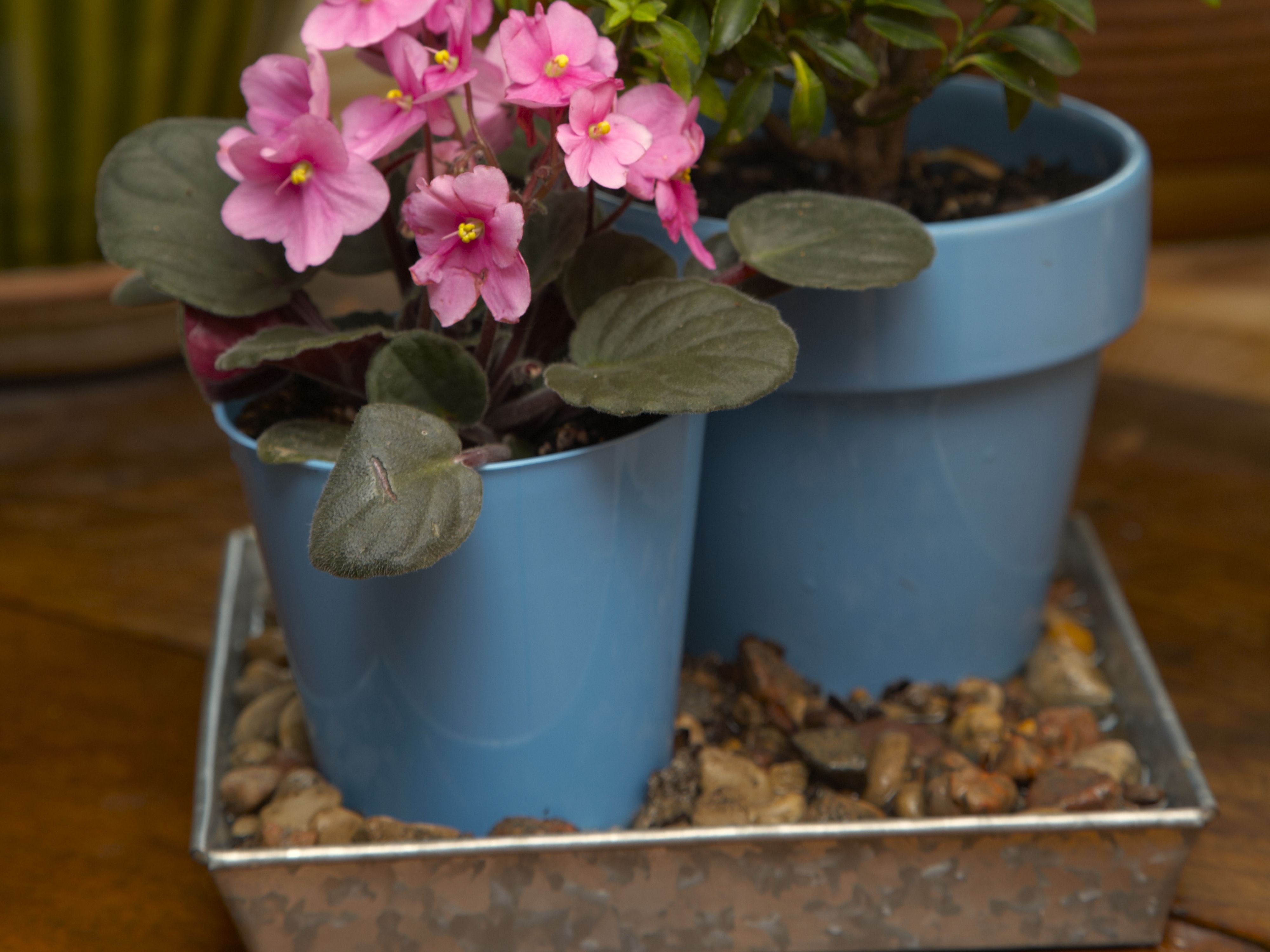
A pebble tray works by increasing evaporation directly around a plant. Water sits below a layer of stones or pebbles, and as that water evaporates, it adds a bit of moisture to the air nearby. That means the air just around the plant can become slightly more humid than the rest of the room.
The catch is that the effect is usually modest. In a real home, air moves. Heat runs. Fans circulate. Doors open. People walk by. All of that movement spreads moisture through the room instead of letting it hover neatly around your plant like a tiny botanical spa. So while pebble trays do create a microclimate, they do not create miracles.
That is why many plant experts land in the same place: pebble trays are worth trying for small humidity-loving plants, but if you are caring for larger tropical plants or battling very dry indoor air in winter, a humidifier will usually do the heavy lifting much better.
What a Pebble Tray Actually Does
It creates a small humidity bubble
The real value of a pebble tray is that it slightly increases the humidity in the immediate vicinity of the pot. Think inches, not feet. It is not changing the humidity of your whole room. It is nudging the conditions right around the plant in a friendlier direction.
That small bump can matter for compact plants that sit low and close to the tray. A fittonia, tiny fern, or African violet may actually enjoy the extra moisture. A tall floor plant with leaves two feet above the tray? Not so much. By the time the moisture reaches those leaves, the effect is usually diluted.
It helps without soaking the roots
The pebbles are not just there for looks. Their job is to hold the pot above the waterline so the roots do not sit in standing water. That is an important distinction. A proper pebble tray adds humidity to the air; an improper pebble tray turns into a sneaky overwatering system. Your plant does not need that kind of plot twist.
It is cheap, simple, and low-risk
One reason pebble trays remain popular is that they are inexpensive and easy to set up. You do not need electricity, fancy gear, or a dedicated plant cabinet. For beginners, that makes them an accessible first step. Even when the humidity boost is small, the cost of trying is low.
Why Pebble Trays Help Some Plants More Than Others
Not every plant cares about humidity in the same way. Some houseplants come from tropical environments and appreciate air that stays comfortably moist. Others are perfectly happy in average indoor air and could not care less about your decorative tray of stones.
Plants that may benefit most
Pebble trays make the most sense for small, moisture-loving plants. This includes many ferns, fittonia, selaginella, prayer plants, some calatheas, and African violets. These plants often show stress when the air gets too dry, especially in winter when indoor heating can turn a cozy room into a leaf-crisping chamber.
Because these plants are relatively compact, their leaves stay closer to the humid air produced by the tray. That is exactly the kind of setup where a pebble tray has its best chance to be useful.
Plants that are less likely to care
Large monsteras, tall philodendrons, bigger dracaenas, and many floor plants usually need more than a pebble tray can provide if humidity is truly low. Meanwhile, cacti, succulents, snake plants, and ZZ plants are often fine without any extra humidity at all. Putting a pebble tray under a cactus is a bit like handing an umbrella to a camel. Sweet, but unnecessary.
When Pebble Trays Usually Fall Short
Your room is very dry
If your home runs dry during winter, a pebble tray may simply not be enough. Forced-air heating, fireplaces, and some HVAC systems lower indoor humidity dramatically. In that environment, a shallow tray of evaporating water is trying to solve a room-sized problem with teacup-sized energy.
Your plant is tall or wide
The farther the leaves are from the tray, the weaker the effect becomes. Pebble trays work best when the humidified air can linger around the foliage. That is why low-growing plants in wide pots tend to benefit more than tall plants perched above a tiny saucer.
The tray is too small
A pebble tray that barely extends past the pot is usually more decorative than functional. The wider the exposed wet surface, the more evaporation you get. If the tray is tiny, the moisture increase will also be tiny.
The pot is sitting in water
This is one of the most common mistakes. If the bottom of the pot touches the water, the potting mix can wick moisture upward. That can lead to soggy soil, root stress, fungus gnats, and all the other chaos nobody ordered.
Signs Your Plant May Want More Humidity
Low humidity can show up in a few familiar ways. Brown leaf edges, crispy tips, curling leaves, stalled unfurling on new growth, and excessive leaf drop can all point to dry air. Ferns may look papery. Prayer plants may get crunchy. Spider mites also tend to love dry conditions, which is deeply rude of them.
That said, humidity is not always the only culprit. Similar symptoms can also come from underwatering, overwatering, excess fertilizer salts, cold drafts, or poor light. So before you declare a humidity emergency and build your plant a tiny pebble lagoon, check the basics first.
How to Make a Pebble Tray That Actually Has a Chance
If you are going to use a pebble tray, it is worth setting it up correctly. A sloppy setup tends to disappoint people and then the pebble tray gets blamed for crimes it only partially committed.
- Choose a wide, shallow tray. Ideally, it should extend beyond the pot rather than match it exactly.
- Add clean pebbles, stones, or glass marbles. You want enough depth to keep the pot above the waterline.
- Pour in water until it sits just below the top of the pebbles. The stones should stay above the water enough to support the pot.
- Set the pot on top, not in the water. The roots should never sit in standing water.
- Refill and clean regularly. Stagnant water, mineral buildup, and algae make the whole arrangement less charming.
If you want to be extra practical, place a small hygrometer nearby. It takes the guesswork out of the equation and tells you whether your setup is actually changing conditions around the plant.
Pebble Tray vs. Humidifier vs. Misting vs. Grouping Plants
Pebble trays
Best for: small plants, budget-friendly care, localized humidity support. Pebble trays are simple, quiet, and low-maintenance. Their weakness is that the humidity increase is limited.
Humidifiers
Best for: larger plants, plant collections, seriously dry homes. If you want consistent humidity across a broader area, a humidifier is the clear winner. It is more effective, more measurable, and better suited for high-humidity plants that are dramatic in the winter.
Misting
Best for: mostly making you feel productive for thirty seconds. Misting can give a very temporary bump in moisture, but it fades quickly. It may freshen dusty foliage, but it is usually not the most reliable way to solve low indoor humidity.
Grouping plants together
Best for: creating a slightly friendlier microclimate. When plants are clustered together, they can hold onto moisture in the air a bit better. It is not a silver bullet, but it can help, especially when combined with a pebble tray or humidifier.
Bathrooms, kitchens, terrariums, and cabinets
Best for: plants that truly crave higher humidity. A bright bathroom or kitchen can naturally provide more moisture in the air. Tiny humidity lovers may do even better in terrariums or enclosed plant cabinets, where moisture has a chance to stay put instead of wandering off into the hallway.
So, Do Pebble Trays Actually Work?
Yesbut only if your expectations are reasonable.
Pebble trays are not nonsense. They do increase humidity a little right around the plant. They are especially useful for small plants that sit low to the tray and only need a slight bump in moisture. They can also be a smart “supporting actor” in a broader plant-care routine.
What pebble trays do not do is solve major humidity problems in a large, dry room. They are not a room humidifier. They are not a cure for crispy leaves caused by bad watering habits. And they are not going to turn a giant floor plant into a rainforest princess overnight.
The best verdict is this: pebble trays work as a mild humidity aid, not as a miracle treatment. Used correctly, they can be helpful. Used with unrealistic expectations, they can feel useless.
The Plant Pro Take
If a plant expert had to sum it up in one sentence, it would probably be this: pebble trays are worth trying for small humidity-loving plants, but a humidifier is the better solution when you need a bigger or more dependable result.
That is why the smartest approach is not “pebble tray or nothing.” It is layering your care. Give the plant proper light. Water consistently. Keep it away from heating vents and cold drafts. Use a pebble tray if the plant is a good candidate. Upgrade to a humidifier if the plant still looks like it is writing a formal complaint.
Real-World Experiences: What Growers Usually Notice With Pebble Trays
In real homes, pebble tray results tend to be less dramatic than social media makes them sound, but they are not imaginary either. A common experience goes something like this: a plant owner sets a small fern or fittonia on a wide tray of pebbles near a bright window, keeps the water topped off, and notices that the leaf tips stay softer and the plant looks a little less stressed during dry winter weeks. Nothing explosive happens. There is no overnight glow-up. The plant simply seems less annoyed. And honestly, that is already a win.
Another very typical experience involves a calathea. Someone hears that calatheas love humidity, builds a pebble tray, and waits for the plant to become a lush tropical masterpiece. Instead, the leaf edges still brown. Why? Because the room is too dry, the plant is near a vent, or the tray is tiny compared with the size of the plant. This is where many people decide pebble trays are a scam. Usually, the tray was not useless; it was just outmatched. The plant needed stronger humidity support than a shallow tray could offer.
African violet growers often have better luck. These plants are compact, they appreciate moderate humidity, and they fit nicely into the “small plant, close to tray” category. In practice, a pebble tray can help maintain a more comfortable pocket of moisture around the plant, especially when combined with stable temperatures and careful watering. The result is not always dramatic, but growers often report steadier growth and fewer dry-looking edges when the rest of the care routine is solid.
Then there is the “I bought a humidifier and suddenly understood everything” crowd. This group usually spends weeks trying trays, misting, plant grouping, strategic sighing, and whispered encouragement. Then they add a humidifier and notice that their prayer plant unfurls better, their fern looks fuller, and their tropicals stop crisping so quickly. Their conclusion is usually not that pebble trays are fake. It is that pebble trays are a gentle assist, while a humidifier is an actual tool for changing room conditions.
There is also a surprisingly practical lesson that growers learn after a month or two: tray size matters more than people think. A wide tray under a small plant can do something. A tiny saucer hidden under a large pot does almost nothing. Cleanliness matters too. When pebble trays are ignored, the water gets grimy, mineral deposits build up, and algae shows up like an uninvited guest. The tray still exists, but the charm is gone. The growers who stick with pebble trays long-term are usually the ones who treat them as part of regular maintenance rather than as a one-time trick.
What most real-world experiences have in common is this: pebble trays tend to work best when expectations are modest. They are good for nudging conditions, not transforming them. They help the plants that are already close to success. They do not usually rescue plants that are deeply unhappy for bigger reasons. Once people understand that, pebble trays make a lot more senseand cause far fewer houseplant identity crises.
Conclusion
Pebble trays actually do work, but only within their limits. They can add a bit of local humidity, especially for small, low-growing, moisture-loving houseplants. They are affordable, easy to make, and useful as part of a bigger care strategy. But they are not the best tool for severe dryness, tall plants, or full-room humidity control.
So if you want the honest answer, here it is: a pebble tray is a helpful supporting character, not the hero of the movie. For a finicky fern on a windowsill, it may make a real difference. For a towering tropical in a dry, heated room, you will probably want a humidifier. Use the right tool for the right plant, and your houseplants will be far less likely to develop crunchy little grudges.