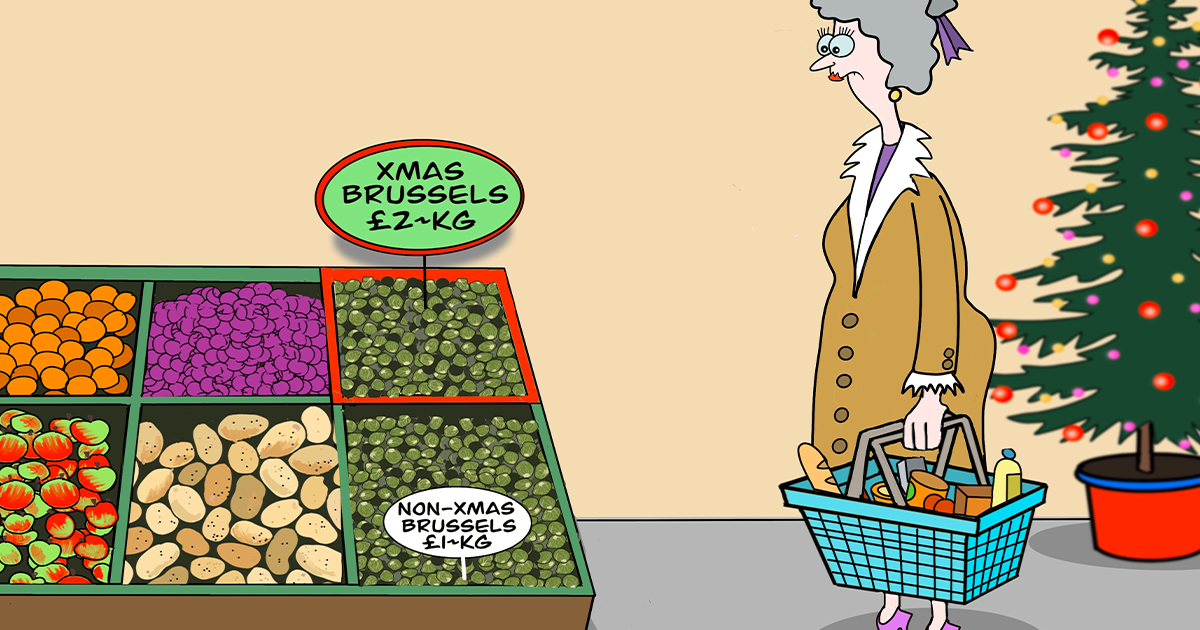
Christmas is the season of joy, goodwill, twinkly lights, and at least one minor household argument over where the tape disappeared to. It is warm, sentimental, beautiful, and, if we are being honest, absolutely ridiculous. That is exactly why Christmas cartoons work so well. The holiday season is already halfway to a punchline before the artist even picks up a pen. All a cartoonist has to do is look around: the lopsided tree, the overstuffed shopping bag, the burnt casserole, the family photo that required seventeen attempts and one emotional support cookie.
That is the spirit behind I Drew 21 Christmas Cartoons That Show The Funny Side Of The Holidays. The appeal of a collection like this is not just that it is festive. It is that it sees the season clearly. Christmas is magical, sure, but it is also cluttered, awkward, overcommitted, nostalgic, expensive, messy, and strangely competitive. In other words, it is prime comedy material.
The best Christmas cartoons do not make fun of the holidays from the outside. They laugh from within the chaos. They understand that the season is full of people trying very hard to create perfect memories while real life keeps barging in wearing mismatched socks and holding a broken ornament. That contrast is comedy gold. It is also why holiday cartoons feel so relatable. Even when the setup is exaggerated, the emotion underneath is very real.
Why Christmas Cartoons Work So Well
The holidays are naturally theatrical
Christmas has everything comedy loves: costumes, props, traditions, unrealistic expectations, and a ticking clock. There are deadlines for gifts, travel, cards, decorations, baking, and hosting. There are family members arriving with opinions. There are pets investigating wrapping paper like they are customs agents. There is always one strand of lights that refuses to cooperate, as though it has union protections.
From a visual standpoint, the season is already cartoon-ready. Santa hats, oversized sweaters, tangled garlands, gingerbread disasters, giant inflatables, and mountains of wrapping paper all make funny images before a joke is even added. A skilled illustrator can turn a familiar holiday moment into a punchline with one good facial expression. A parent staring at a toy that requires ninety batteries is funny. A host smiling politely while dinner goes off the rails is funny. A shopper carrying eleven bags and one ounce of patience is very funny.
Nostalgia makes the jokes land harder
Christmas humor has extra power because it rides sidecar with nostalgia. People do not just remember the holiday; they remember the feeling they wanted the holiday to have. Cozy movies. Family traditions. The smell of cookies. Matching pajamas. A tree that somehow looked more magical when you were eight. Holiday cartoons tap into that emotional memory and then gently poke it in the ribs.
That is why the funniest Christmas cartoons are rarely cruel. They are affectionate. They tease the season without ruining it. They say, “Yes, this is chaotic, but look how human it all is.” A joke about gift wrapping is not really about scissors and tape. It is about effort. A joke about overdecorating is not really about ornaments. It is about the annual urge to create wonder with whatever energy and glitter you have left.
The 21-Cartoon Formula: What These Holiday Jokes Usually Capture Best
A collection of 21 Christmas cartoons has room to cover the whole festive circus. The strongest cartoon sets usually move across a range of holiday experiences instead of repeating the same gag in different sweaters. That variety matters. It turns the collection from a one-note joke into a comic portrait of the season.
1. Decorating drama
Few things say “holiday realism” like a tree that looks elegant in theory and emotionally compromised in practice. Decorating cartoons work because they expose the tiny battles hiding inside the sparkle. Who gets to put up the lights? How many ornaments are too many? Why is the tree suddenly leaning like it had one too many at the office party? These scenes are funny because so many households treat decorating as both an art form and a contact sport.
2. Gift-giving panic
Gift humor is evergreen because everyone has been on both sides of it. There is the panic of trying to find the perfect present, the performance of pretending you love a gift that confuses you, and the annual miracle of someone losing the tape three times in one hour. Christmas cartoons often turn consumer pressure into visual comedy: towering shopping bags, frantic wrapping sessions, or faces that say, “I bought this at 9:42 p.m. on Christmas Eve and may never emotionally recover.”
3. Family gathering chaos
Holiday cartoons thrive on family dynamics because every relative comes with a built-in character profile. There is the organizer, the grump, the overachiever, the late arriver, the enthusiastic child, the dog who has decided the entire event is about him, and the one person who keeps asking whether anyone has seen the tape. Again. These interactions are funny because they are recognizable. Christmas is often less about a flawless dinner table and more about a group project no one officially agreed to join.
4. Cooking and baking disasters
The holiday meal is one of the season’s most reliable comedy machines. Cookies burn. Frosting slides. A roast takes longer than expected. A gingerbread house collapses like a tiny suburban tragedy. And yet people keep trying, because food is one of the ways families show love. That is what makes kitchen cartoons so effective: the joke is not that the cookies are ugly; the joke is that the effort behind them was heroic.
5. Santa in modern life
One of the most dependable Christmas-cartoon tricks is dropping Santa into modern inconveniences. Santa dealing with technology, traffic, delivery culture, surveillance cameras, customer expectations, or modern parenting is basically a comedy buffet. The humor comes from taking a mythic symbol of Christmas and making him deal with the same nonsense everyone else does. Suddenly the North Pole has logistics problems, and honestly, that feels right.
What Makes These Cartoons Funny Instead Of Just Festive
A Christmas cartoon cannot survive on candy canes alone. Visual holiday clutter helps, but the real engine is observation. The funniest cartoons notice the little truths that polite holiday marketing tends to skip. For example: nobody looks elegant while stringing lights. Family photos are rarely calm. Hosting always sounds easier four days before it actually happens. And no matter how much people say they want a simple Christmas, someone will still decide a handmade centerpiece is necessary at the worst possible time.
Humor also comes from compression. A cartoon can take a long, messy holiday experience and reduce it to one revealing image. A single frame can capture exhaustion, affection, disappointment, overconfidence, and denial all at once. That is hard to do in prose and easy to appreciate in a drawing. It is the artistic equivalent of saying, “You know exactly what this feels like,” without needing a five-paragraph explanation.
The other secret ingredient is restraint. Good holiday cartoons know when to stop. They suggest the full madness of the season while leaving room for the reader to fill in the rest from personal experience. That is why a simple image of a family smiling beside a catastrophically overdecorated tree can be funnier than a long monologue. The audience does the final bit of work. They remember their own tree, their own relatives, their own annual relationship breakdown with ribbon.
The Funny Side Of The Holidays Is Also The Honest Side
There is a reason people connect so strongly with Christmas humor: it provides relief. The season is often sold as serene and picture-perfect, but real life is noisier than that. Real holidays come with budgets, schedules, travel delays, crowded kitchens, mixed emotions, and expectations high enough to need aviation clearance. Comedy gives people a way to enjoy the season without pretending it is flawless.
That does not make the holiday less meaningful. If anything, it makes it more meaningful. The season becomes more lovable when it is allowed to be imperfect. A funny Christmas cartoon says, “Your celebration does not have to look like a catalog to count.” That is a surprisingly comforting message. It tells readers they are not failing the holidays just because the cookies cracked, the lights tangled, or Uncle Dave started a debate nobody ordered.
Holiday humor also helps protect the season from becoming too polished to enjoy. When everything has to be photogenic, festive life can feel performative. Cartoons push back against that pressure. They remind us that crooked wreaths, weird gifts, and baking mishaps are not interruptions to Christmas. They are Christmas. Or at least they are the parts most people remember most clearly once the glitter settles.
Why A 21-Cartoon Collection Feels So Shareable
A set of 21 Christmas cartoons is practically built for modern readers. It is snackable, visual, and easy to pass around with a message that says, “This is so us.” Each cartoon offers a quick hit of recognition. Together, they create a mosaic of holiday life. One reader sees the gift-wrap joke and thinks of their mother. Another sees the decorating one and thinks of their spouse. Someone else sees the kitchen disaster and feels spiritually understood.
That shareability matters because Christmas is a communal season. People want content that feels social. They want jokes they can text to siblings, post in group chats, or show across the couch while someone else is half-asleep under a throw blanket. Cartoons are perfect for that. They are easy to consume, emotionally immediate, and less preachy than essays about “the true meaning of the holidays.” Sometimes the true meaning of the holidays is simply that four adults are pretending not to panic while assembling a toy with microscopic screws.
The Art Style Matters, Too
When holiday cartoons work, the drawing style usually plays a huge role in the joke. Exaggerated expressions, cozy backgrounds, absurd proportions, and cluttered seasonal details can all heighten the humor. A deadpan face next to a wildly festive backdrop is an all-time comedy move. So is showing characters trying to maintain dignity while surrounded by nonsense. The red-and-green palette, snowy settings, and familiar iconography help readers enter the joke quickly. No explanation needed. It is Christmas. Trouble is already implied.
And because cartoons simplify reality, they can make even stressful situations feel lighter. The burnt pie becomes charming. The shopping chaos becomes theatrical. The social awkwardness becomes cute. A cartoon does not erase frustration, but it reframes it. That is one reason holiday illustrations continue to thrive: they transform pressure into perspective. Once you laugh at a situation, it usually becomes easier to survive.
Final Thoughts
I Drew 21 Christmas Cartoons That Show The Funny Side Of The Holidays is such a strong title because it promises something readers secretly want every December: permission to laugh at the season while still loving it. The holidays do not need less meaning; they need less pretending. The funniest Christmas cartoons understand that the season is not ruined by its chaos. It is defined by it.
That is what makes holiday humor endure. Long after the wrapping paper is gone and the leftovers have stopped multiplying, people remember the weird, warm, ridiculous moments. The tree that would not stand straight. The gift that made no sense but somehow became legendary. The dessert that failed so hard it became family folklore. Christmas cartoons take those moments, sharpen them into punchlines, and hand them back to us as tiny, festive mirrors.
And maybe that is the real charm of the whole thing. Behind every funny holiday cartoon is a simple truth: the season becomes more beautiful the moment we stop expecting perfection and start enjoying the mess.
More Holiday Experiences That Feel Like They Belong In A Cartoon
If you have lived through even a handful of Christmas seasons, you probably already know that the funniest holiday moments are almost never planned. They just happen, usually when everyone is trying very hard to create a memory worthy of a glossy card. One year, for example, a family can spend an entire afternoon decorating the tree with almost cinematic care, only to realize the strongest visual statement in the room is the extension cord running across the carpet like a plot twist. Another year, someone decides to make homemade cookies “for the experience,” and three hours later the kitchen looks like a powdered sugar weather event.
That is the lived-in territory Christmas cartoons understand so well. The humor is not random. It comes from pressure colliding with sincerity. You want the moment to be special, and because you want it so badly, the smallest setbacks become weirdly dramatic. A missing ornament hook suddenly feels like a crisis. A grocery-store line becomes an epic saga. A family photo session turns into a hostage negotiation with seasonal accessories.
The most relatable experiences are often the quietest ones. You stay up late wrapping gifts and discover that the house is finally peaceful, but you are also using a coffee mug as a tape dispenser because the actual dispenser has vanished into another dimension. You attempt to carry too many boxes from the attic because making two trips feels like defeat. You promise yourself every year that you will decorate more simply, spend less, and keep things calm, and every year you somehow end up emotionally attached to a wreath that absolutely does not need to be fluffed for forty minutes.
Then there is the social comedy of the season. Office parties, neighborhood gatherings, school concerts, Secret Santa exchanges, group texts about potluck assignments, and those heroic holiday hosts who say, “It’s casual,” while clearly orchestrating something one step below a moon landing. The funny part is that everyone is performing some version of their best holiday self. People become extra cheerful, extra generous, extra tired, and sometimes extra weird. That tension is exactly what makes festive cartoons so effective. They reveal the performance while keeping the affection intact.
Family traditions add another layer. Matching pajamas sound adorable until someone refuses to wear them, spills cocoa on them, or discovers they somehow shrink exclusively on the least cooperative family member. Baking with children sounds magical until a dog steals a cookie, the frosting goes rogue, and an innocent snowman ends up looking like he has seen things. Still, those are often the moments people remember with the most fondness. The imperfections become the memory. The mess becomes the story.
That is why Christmas cartoons resonate long after December ends. They do not just make people laugh in the moment. They validate the whole experience of trying, failing a little, and loving the holiday anyway. Every tangled light, overdecorated mantel, awkward gift exchange, and burnt appetizer becomes evidence that the celebration was real. Not perfect. Real. And real holidays, as it turns out, are a lot funnier than ideal ones.