Note: Body-only HTML, cleaned for publishing, with no placeholder citations or source markup.
If you have ever looked at a table and thought, “Well, that’s annoyingly elegant,” the Matthew Hilton Compass Table is probably your kind of furniture. It is one of those pieces that manages to look refined without becoming fussy, practical without becoming boring, and distinctive without shouting across the room like an overconfident reality-show contestant.
Designed by British furniture designer Matthew Hilton and closely associated with SCP, the Compass Table has earned its reputation as a quiet modern classic. Its appeal is not based on gimmicks or trendy details. Instead, it comes from proportion, craftsmanship, and a sharp understanding of how a table should actually behave in real life. That sounds simple, but in furniture design, simple is often where the hard work hides.
For homeowners, designers, and anyone trying to build a room that feels intentional rather than random, the Compass Table offers something rare: character with restraint. It has a sculptural presence, yet it still knows how to do the basic table job of holding dinner, books, laptops, coffee cups, and the occasional emotional support candle.
Who Is Matthew Hilton?
Before getting into the table itself, it helps to understand the designer behind it. Matthew Hilton is widely respected for creating furniture that balances visual lightness, technical precision, and everyday usefulness. His work has long been admired for avoiding short-lived design trends in favor of pieces that people can live with for years.
That philosophy matters. Plenty of furniture looks great in a showroom and then becomes less charming after six months of actual use. Hilton’s work tends to move in the opposite direction. The longer you live with it, the more the details start to reveal themselves: the edges, the proportions, the engineering, the way the piece settles into a room without flattening it.
His broader body of work includes celebrated tables, chairs, sofas, and storage pieces, many of which share the same DNA: clarity of line, careful material choices, and a belief that good design should feel natural rather than theatrical. In other words, Hilton is not trying to impress you with noise. He is trying to impress you with intelligence.
What Makes the Compass Table Special?
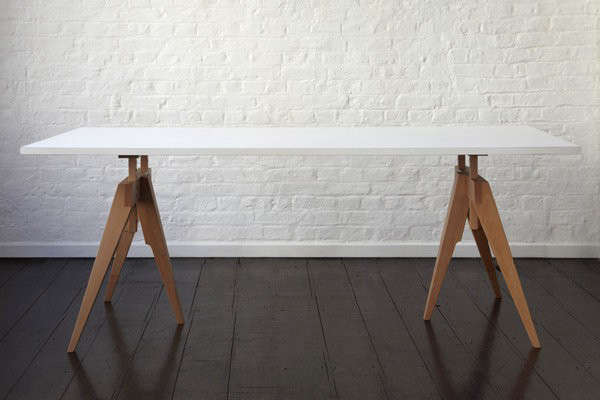
The Matthew Hilton Compass Table is best known for its trestle-based design. But calling it “a trestle table” is a little like calling a tailored coat “a jacket.” Technically true, emotionally underwhelming.
The Compass design stands out because the trestles are the star. They are tapered, elegantly drawn, and shaped with a mid-leg curve that gives the table both balance and motion. This is where the table gets its name and much of its personality. It feels directional, poised, and architectural, as though the legs have been carefully mapped rather than simply attached.
Older product descriptions have highlighted the Compass collection as a study in elegance and balance, with trestles made from steamed solid beech and designed for practicality and stability. That combination is the whole trick: the table looks light, but it behaves solidly. It has grace, but it is not fragile. It feels clean and minimal, but not cold.
In design terms, this is the sweet spot. The Compass Table does not beg for attention, yet it absolutely rewards it.
Design Details That Give It Staying Power
A Base That Actually Matters
Many tables live or die by the base. If the base is clunky, the room feels heavy. If it is too weak, the whole piece looks nervous. The Compass Table gets this right by using trestles that are visually slim but structurally convincing. That makes the table suitable for modern spaces where people want furniture to feel open rather than bulky.
Lightness Without Weakness
One of the recurring ideas in Hilton’s table designs is visual lightness. Across his work, whether in the Cross collection or De La Espada’s Light tables, he returns to the idea that furniture should reduce visual weight in a room. The Compass Table fits beautifully within that design mindset. It gives you a strong horizontal surface and a stable foundation without turning the dining area into a blocky obstacle course.
Craftsmanship Over Flash
The Compass Table is not trying to win you over with dramatic ornament. Its beauty comes from line, curve, taper, and the relationship between the top and base. That means it works especially well in interiors where quality matters more than decoration. If your style leans toward Scandinavian, contemporary, soft industrial, warm minimalism, or even edited midcentury-inspired interiors, this table makes immediate sense.
Materials, Finishes, and Construction
The Compass line has historically been offered with trestles and tabletop options that emphasize durability and clarity. Product references over the years have noted versions with glass and laminate tops, paired with the signature trestle base. That mix matters because it changes the personality of the piece.
A laminate Compass Table feels crisp, practical, and a little more casual. It is great for daily living, creative workspaces, and homes where function is not optional. A glass-topped version leans more airy and architectural, letting the trestle form take center stage. In both cases, the table stays true to Hilton’s usual approach: honest materials, precise construction, and a refusal to add unnecessary drama.
That also means the table does not rely on surface decoration to make its point. It trusts the form. Frankly, more furniture should have that level of self-confidence.
How the Compass Table Looks in a Real Home
This is where the table earns its keep. A lot of designer furniture is gorgeous in photographs and vaguely intimidating in real life. The Compass Table does better because it is visually memorable while still being easy to place.
In a small dining room, the open trestle format helps preserve a sense of breathing room. In a larger open-plan interior, it gives the dining area structure without turning it into a visual brick. In a studio or multipurpose space, it can work as a dining table, a creative workspace, or a statement desk for someone who takes both design and elbow room seriously.
It also plays very nicely with a range of seating. You can pair it with sculptural dining chairs if you want a more curated look, or go with simpler wood chairs and let the base do the talking. If you are styling the table with Matthew Hilton’s other work, the connection feels especially natural, but it is not required. The Compass Table is independent enough to hold its own.
Why Designers and Collectors Keep Coming Back to It
The answer is simple: it solves more than one problem at once. It has enough personality to anchor a room, enough refinement to age well, and enough functionality to justify the floor space it occupies.
There is also the matter of authorship. Matthew Hilton’s name carries weight because his designs are known for being thoughtful rather than flashy. For many design-minded buyers, the Compass Table is attractive not just because it looks good, but because it reflects a design philosophy rooted in usability, proportion, and longevity.
That is increasingly valuable in a furniture market crowded with disposable trend pieces. The Compass Table feels like the opposite of throwaway culture. It is the kind of piece you buy because you want to keep it, not because you want a new background for next month’s social posts.
Compass Table vs. Other Matthew Hilton Tables
If you look across Hilton’s table designs, a pattern appears. The Cross Table is known for legroom, extension functionality, and clean contemporary lines. The Light Table explores visual lightness with slender construction and complex joinery. The Compass Table, by contrast, feels more sculptural at the base and more graphic in silhouette.
That difference is useful when choosing the right piece. If you want hidden extension mechanics and flexible seating capacity, another Hilton table may be the better fit. If you want a table that feels instantly identifiable because of its elegant trestles and strong profile, the Compass Table becomes especially compelling.
It is less about which table is “best” and more about which version of Hilton’s thinking suits your room. The Compass Table is for people who want functional furniture with a stronger visual signature.
Best Rooms and Styling Ideas
For a Minimal Dining Room
Pair the table with upholstered chairs in muted tones, a simple pendant overhead, and a textured rug underneath. Let the table be the sharpest line in the room.
For a Creative Workspace
Choose a laminate version if available, keep accessories limited, and add a task light plus one sculptural object. Suddenly your work area looks like it has opinions.
For a Warm Modern Interior
Balance the Compass Table with natural materials like wool, linen, oak, leather, and soft matte ceramics. This keeps the geometry from feeling too severe and makes the room more inviting.
For an Eclectic Space
Use the Compass Table as the “calm one” in the room. It pairs surprisingly well with art-heavy interiors because the form is distinctive without being visually noisy.
Is the Matthew Hilton Compass Table Worth It?
If your goal is to buy a table that is cheap, anonymous, and emotionally indistinguishable from office breakroom furniture, then no. The Compass Table is not trying to be that.
But if you want a table with authentic design credibility, excellent proportions, and the kind of form that still looks intelligent years later, then yes, it is absolutely worth considering. It succeeds because it is both designed and useful. That should be the norm, but in furniture, it is still a pleasant surprise.
The Matthew Hilton Compass Table remains relevant because it solves a timeless problem: how to make everyday furniture feel elegant without making everyday life harder. Hilton’s answer is precise, thoughtful, and quietly confident. The result is a table that does not just sit in a room. It improves the room.
Living With the Matthew Hilton Compass Table: Real-World Experience
Living with the Compass Table feels a little different from living with an ordinary dining table. At first, you notice the look. The trestles give it a sense of posture, almost like the table is standing rather than simply existing. Then, after a few weeks, you start noticing the part that matters more: it is easy to live with.
Morning coffee feels more intentional at this table. A laptop, notebook, and mug do not make it look like the room has fallen apart. Instead, the table somehow holds daily clutter with a little dignity. That is one of the underrated pleasures of well-designed furniture. It does not demand a perfect life to look good. It can survive your real one.
In a dining setting, the Compass Table has a social quality that is hard to fake. Because the base is visually open, it does not create that boxed-in feeling some chunky tables do. People can sit comfortably, move around, and settle in without feeling like they are negotiating with a piece of timber. For dinner parties, that matters. For weeknight takeout, it still matters. Nobody wants to battle furniture before tacos.
There is also a tactile experience to a table like this. The visual crispness suggests discipline, but the overall feeling is not sterile. It is composed, not cold. In a room with soft lighting, books, ceramics, and natural materials, the Compass Table starts to feel less like an object and more like part of the architecture. It anchors the room quietly, which may be the most sophisticated thing a table can do.
Over time, the design reveals itself in small ways. You begin to notice how the legs taper, how the curves soften the geometry, how the proportions keep the piece feeling light even when the room is full. This is not the kind of furniture that burns bright and then becomes visually tiring. It gets better through familiarity, which is honestly a rare and lovely trait.
For people who work from home, the Compass Table can also become an accidental hero. It is large enough to function as a serious work surface, yet attractive enough that you do not feel obligated to hide it when the workday ends. That flexibility is a gift in modern homes where dining room, office, studio, and “place where I pretend to be organized” often overlap.
The biggest experience, though, is emotional rather than technical. The Matthew Hilton Compass Table makes a room feel considered. Not staged. Not precious. Considered. It suggests that someone cared about proportion, detail, and the long game. In a world full of furniture designed to be replaced, that feeling is powerful. You do not just use this table. You grow into it, and it grows into the life around it.
Conclusion
The Matthew Hilton Compass Table is more than a stylish designer piece. It is a practical, beautifully resolved table that captures what makes Hilton’s work so enduring: balance, intelligence, craftsmanship, and restraint. It does not rely on trends, and it does not need to. With its refined trestle base, strong silhouette, and lived-in versatility, the Compass Table remains a smart choice for anyone who wants modern furniture with real staying power.