A wedding photo booth is normally expected to produce polished portraitolution to identify every sequin on the maid of honor’s dress. A Game Boy Camera wedding photo booth cheerfully ignores all three expectations.
Instead, it transforms guests into chunky, four-shade pixel portraits that look as though they were transmitted from 1998 through a toaster. The images are tiny, imperfect, and unmistakably charming. That combination makes the setup more than a nostalgic decoration. It becomes entertainment, a conversation starter, a physical souvenir station, and a wonderfully strange way to document a celebration.
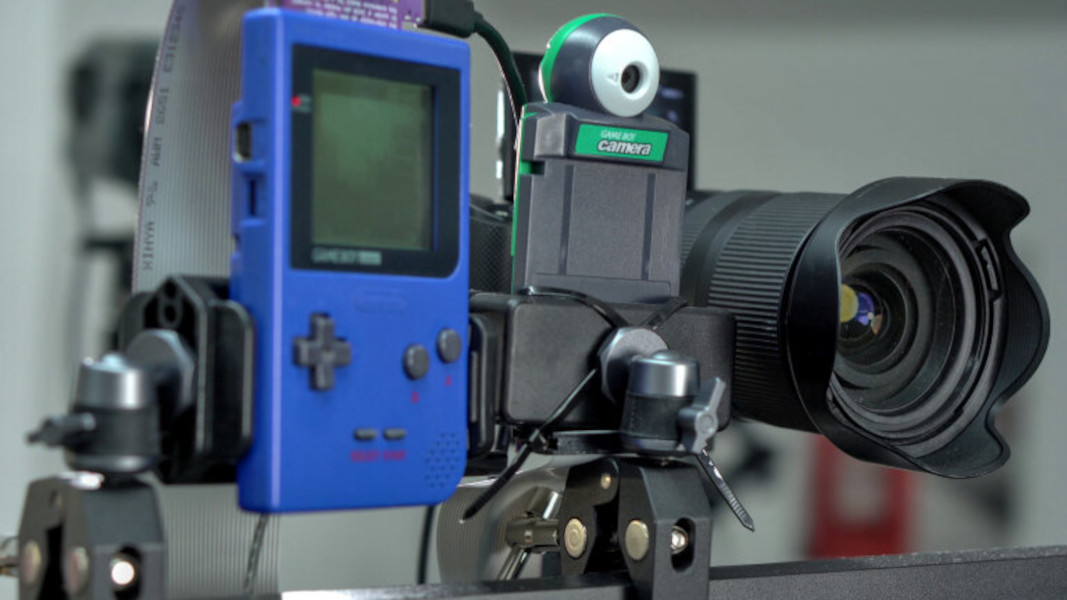
The idea gained attention after physicist and maker Sebastian Staacks created a working Game Boy Camera photo booth for a family wedding. His system combined original Nintendo hardware with a Raspberry Pi, custom electronics, a modern mirrorless camera, and a Game Boy Printer. Guests could record short clips, choose pixelated stills, and print miniature monochrome keepsakes before returning to the dance floor. >It was not merely retro technology placed on a table for decoration. It was a complete interactive experienceand proof that wedding photography does not always need more megapixels. Sometimes it needs fewer. Far fewer.
Why a Game Boy Camera Belongs at a Wedding
Wedding receptions are full of cameras, yet many of the resulting images look remarkably similar. Guests stand against a backdrop, hold a cardboard mustache, smile politely, and receive a glossy strip before the prop mustache is passed to the next person.
A Game Boy Camera in a wedding photo booth changes the mood because nobody expects it to produce perfection. Its limitations give guests permission to be silly. People lean toward the lens, exaggerate their expressions, test unusual poses, and invite strangers into the frame. The booth becomes an activity instead of a portrait appointment.
Traditional wedding photo booths remain popular because they combine entertainment with an immediate takeaway. Open-air booths are especially flexible, while enclosed booths deliver the classic strip-photo experience. A Game Boy setup borrows the best parts of both formats: an accessible open station, a playful interface, sequential images, and a printed souvenir. >It also speaks directly to couples who grew up with handheld games, cartridge cases, link cables, and the universal childhood ritual of checking whether blowing into electronics would somehow repair them. For those couples, the equipment is not random vintage clutter. It is part of their cultural history.
The Tiny Camera Behind the Giant Idea
A Digital Camera From 1998
Nintendo introduced the Game Boy Camera and Game Boy Printer in 1998 as accessories for its enormously successful handheld system. The camera plugged into the cartridge slot and turned the Game Boy into an early consumer digital camera, photo editor, animation tool, and miniature creative studio. Nintendo’s own company history lists the camera and printer among the notable hardware additions released alongside the Game Boy Color. >The camera uses a 128-by-128-pixel sensor and stores 128-by-112-pixel photographs. Images contain only four shades: black, dark gray, light gray, and white. Its swiveling lens can rotate 180 degrees, allowing it to face either the photographer or the subject. Long before smartphone manufacturers began promoting front-facing cameras as revolutionary, Nintendo had already created a dedicated selfie machinealthough the resulting selfie contained roughly enough visual information to identify your hairstyle and general emotional condition. >The software included stamps, drawing tools, frames, animation features, self-timer options, montage effects, and several playful modes. Users could add cartoon eyes, facial hair, text, or Nintendo-themed graphics to their portraits. Contemporary coverage emphasized that children cared less about technical image quality than about transforming ordinary pictures into ridiculous visual experiments. 3>The Game Boy Printer Completes the Experience
The Game Boy Printer is a portable thermal printer that communicates through the Game Boy link port. It was designed to print pictures, artwork, and other compatible game content on narrow paper. The hardware can also use standard 38-millimeter thermal paper, which makes it possible for modern enthusiasts to keep old units operating without relying entirely on rare original Nintendo rolls. >For a wedding booth, the printer is essential because it turns a digital novelty into something physical. A guest presses a button, performs for the camera, and eventually receives a tiny pixel portrait that feels somewhere between an arcade prize, a receipt, and a museum artifact from the first age of digital photography.
Modern phone photos are quickly buried beneath screenshots, food pictures, and accidental photographs of someone’s pocket. A small thermal print is harder to ignore. It gets placed in a wallet, attached to a refrigerator, taped into a guest book, or carried home with the wedding favors.
How the Real Game Boy Wedding Photo Booth Worked
Staacks’ wedding system was built around a Raspberry Pi 4 running a Python control program. A local web interface created with Flask and displayed through Chromium guided guests through the process. Large physical buttons kept the interaction simple enough for people who had never used a Game Boyor who had already become suspiciously enthusiastic about the open bar. 3>Step 1: Guests Start the Sequence
A guest pressed a large green button to begin. The screen displayed instructions and started a countdown, giving everyone enough time to gather, pose, swap places, or realize that Uncle Gary had entered the frame wearing three pairs of novelty glasses.
Step 2: Two Cameras Record at Once
During the sequence, the booth recorded approximately five seconds of footage using both a Game Boy Camera and a Sony a6400 mirrorless camera. The modern camera preserved a clean, high-resolution version of the moment, while the Game Boy Camera generated the recognizable monochrome pixel footage. >This dual-camera approach is one of the smartest parts of the design. The vintage camera provides the style, but the modern camera provides insurance. Weddings are not ideal environments for discovering that an experimental capture device has quietly stopped recording after the cake cutting.
Step 3: The Game Boy Image Becomes a Video Feed
The Game Boy Camera was connected through a device called the GB Interceptor. Originally developed to capture and stream Game Boy gameplay, the open-source adapter sits between a cartridge and the console. It observes the communication on the Game Boy’s memory bus, reconstructs what appears on the screen, and presents the result to a connected computer as a USB video source. >In practical terms, it allows decades-old Game Boy hardware to behave somewhat like a webcam. That sentence would have sounded like science fiction to a child in 1998, particularly one who was still trying to defeat the second level of a platform game.
Step 4: Three Stills Are Selected and Printed
After the recording, the software extracted three still images from the Game Boy Camera footage. Guests could then print the sequence through the original Game Boy Printer. The result resembled a tiny retro photo strip, complete with the rough tonal transitions and jagged edges that make Game Boy photography immediately recognizable.
The collected modern and pixelated video clips could also be edited into a longer wedding film. Staacks noted that the high-resolution camera supplied the main footage, while the Game Boy material added visual personality and nostalgic transitions. In other words, the Game Boy Camera served as the seasoning rather than the entire meal. 2>Why Bad Image Quality Becomes Good Wedding Design
On paper, 128-by-112-pixel grayscale photographs sound like a technical failure. At a wedding, they become an artistic decision.
Modern cameras work hard to eliminate imperfections. They correct exposure, sharpen faces, reduce noise, track eyes, smooth motion, and occasionally make human skin look as though it was manufactured by a luxury candle company. The Game Boy Camera does none of that. It reduces every person to a bold arrangement of light and shadow.
That abstraction can be surprisingly flattering. Minor blemishes disappear. Clothing becomes graphic pattern. Expressions become exaggerated. A crowded group portrait resembles a frame from a lost video game in which the objective is apparently to dance near a dessert table.
The low resolution also creates consistency. Guests of different ages, outfits, and comfort levels are translated into the same visual language. Instead of worrying about whether every photograph is technically perfect, people focus on making the image funny, dramatic, or memorable.
Planning a Game Boy Camera Wedding Photo Booth
Use Vintage Hardware for Character, Not Reliability
Original Game Boy equipment is decades old. Cartridge contacts can be dirty, link cables can be temperamental, printers can jam, and thermal paper can fade. A successful booth should therefore include backups wherever possible.
Test every connection before the wedding. Bring spare batteries, cables, printer paper, cleaning supplies, and at least one alternative way to preserve the files. Store digital copies separately from the Game Boy hardware, and use a modern camera in parallel when the footage matters to the couple.
Keep the Guest Interface Extremely Simple
The best booth should not require a technician to explain it after every first dance. Use one obvious start button, a readable countdown, large instructions, and clear feedback when the process is complete.
A second button can handle printing, canceling, or retaking a sequence, but resist the urge to add a control panel that resembles a commercial aircraft. Wedding guests want to pose, not complete an electronics certification.
Design the Lighting for the Game Boy Camera
The camera performs best when faces are clearly separated from the background. Soft frontal lighting helps create readable features, while a simple background prevents clothing and decorations from collapsing into one pixelated mass.
Avoid placing the booth directly in front of a bright window or intense spotlight. The limited grayscale palette cannot preserve the same range of highlights and shadows as a modern camera. Even illumination is more useful than dramatic illumination.
Plan for Printing Delays
Thermal printing is part of the charm, but it is not especially fast. Position the printer so guests can collect their pictures without blocking the next group. A small tray, labeled pickup area, or booth attendant can prevent prints from being grabbed by the wrong party.
Consider producing two copies when practical: one for the guest and one for a wedding album. Guests can attach the couple’s copy beside a handwritten message, transforming the booth into a pixel-art guest book.
Creative Ways to Personalize the Booth
A Game Boy wedding photo booth should look intentionally retro rather than accidentally unfinished. The visual presentation can connect the electronics to the broader wedding theme.
Create a Game-Inspired Interface
Use pixel fonts, simple icons, animated hearts, or a start screen displaying the couple’s names. Messages such as “Press Start to Pose,” “Player Two Has Joined,” or “Achievement Unlocked: Married” establish the mood without requiring guests to recognize a specific game.
Add Custom Print Borders
The printed strip can include the wedding date, initials, a tiny heart, or a short phrase. Keep the graphics bold and simple because fine decorative lines may disappear at Game Boy resolution.
Build a Cartridge-Themed Enclosure
The booth housing could resemble an oversized Game Boy cartridge, handheld console, arcade cabinet, or fictional in-game menu. Large directional-pad decorations make excellent visual cues, although allowing guests to navigate the buffet with them remains beyond current technology.
Combine Physical and Digital Keepsakes
Thermal prints provide immediate souvenirs, while digital files can be uploaded to a private gallery after the wedding. Couples can later turn the best portraits into thank-you cards, animated GIFs, table-number artwork, stickers, or a pixelated highlight reel.
Experiencing a Game Boy Camera Wedding Photo Booth
The Guest Experience: Confusion Followed by Delight
The first reaction is usually curiosity. Guests recognize the shape of a Game Boy but may not understand why one is mounted beside a wedding backdrop. Someone presses the start button. A countdown appears. The group leans toward the lens, and the tiny preview turns everyone into four-tone digital cave paintings.
That moment changes the energy. A standard photo booth asks guests to look good. The Game Boy Camera asks them to see what happens. People begin experimenting immediately. One group creates a fake album cover. Another stages an overly dramatic proposal. Children discover that moving during the sequence produces wonderfully chaotic silhouettes. Older relatives may not understand the gaming reference, but they understand the joy of receiving a picture moments after it was taken.
The printer adds suspense. Guests watch the strip emerge line by line, often laughing before the final image is visible. Because the output is small and unpredictable, the print feels earned. It is not simply another digital file delivered by text message. It is an object created in front of them.
The Couple’s Experience: A Different View of the Reception
Couples rarely witness every corner of their own wedding. While they are greeting relatives, cutting the cake, or attempting to eat dinner before another photograph is requested, the booth records smaller interactions elsewhere in the room.
The collected sequences can reveal friendships and family combinations that the official photographer may not capture. College friends reunite. Cousins form enormous groups. Grandparents cautiously pose for one picture and then return five minutes later with props. The footage becomes a parallel record of the receptionless formal than professional coverage and often more revealing of the party’s personality.
The Game Boy aesthetic also makes the images feel connected, even when they were taken hours apart. Every portrait belongs to the same imaginary game world. When assembled into a montage, the wedding party appears to be a cast of unlockable characters celebrating the completion of a very cooperative two-player campaign.
The Builder’s Experience: Controlled Technical Chaos
For the person operating the system, the experience is equal parts satisfaction and vigilance. A custom booth combines old electronics, modern computing, physical buttons, camera control, video capture, file storage, and printing. Each component may work perfectly on its own while developing a sudden personality when connected to everything else.
The best preparation is repeated testing under reception-like conditions. Run the booth continuously. Let several people press buttons too quickly. Fill the storage device with sample clips. Replace the paper in low light. Disconnect a cable and confirm that the interface recovers gracefully. A wedding is not the place to learn that the printer becomes philosophical after its twentieth consecutive portrait.
An attendant is useful even when the booth is mostly automatic. That person can replace paper, straighten the camera, clear a queue, and reassure guests that the pixelated preview is intentional. Without an attendant, a technically curious guest may attempt to “improve” the setup by pressing every visible switch.
The Morning-After Experience: Tiny Evidence of a Big Party
The next morning, the physical prints take on a different quality. They may be scattered near place cards, tucked into purses, attached to handwritten notes, or displayed beside professional photographs. Their imperfections become more appealing because they feel honest.
A polished wedding portrait records how everyone looked. A Game Boy Camera print often records how the moment felt: spontaneous, unserious, energetic, and shared. It may not preserve the exact color of the flowers, but it preserves the fact that six people tried to fit into a frame designed for approximately one and a half heads.
That is why the experience stays memorable. The booth does not compete with the professional photographer. It captures a different category of memoryone built from participation, surprise, nostalgia, and the delight of seeing sophisticated adults reduced to cheerful clusters of pixels.
Is a Game Boy Camera Photo Booth Right for Every Wedding?
Probably not. Couples seeking elegant editorial portraits, effortless vendor service, or perfectly color-matched prints may prefer a conventional booth. A Game Boy setup requires technical planning, careful testing, and acceptance that vintage hardware sometimes behaves like vintage hardware.
It is an excellent match for retro-gaming weddings, informal receptions, maker couples, technology enthusiasts, arcade themes, and events where guests enjoy interactive details. It also works well as a secondary booth beside professional photography rather than as the only method of documenting the reception.
The strongest version combines old and new technology. Let the Game Boy Camera create the style, let a modern camera protect the memories, and let the printer deliver the tiny physical reward.
Conclusion
A Game Boy Camera in a wedding photo booth succeeds because it turns technological weakness into social strength. Its tiny resolution encourages playful poses. Its monochrome palette produces a unified visual style. Its printer creates tangible souvenirs, and its familiar hardware connects an adult celebration to the games and gadgets many guests loved as children.
The original 1998 accessory was built for experimentation, drawing, animation, and laughter. Decades later, those qualities make it unexpectedly suitable for weddings. The hardware may be old, the photographs may be tiny, and the printer may sound as though it is calculating taxes, but the experience feels personal in a way that polished digital filters often do not.
For couples willing to embrace technical preparation and glorious imperfection, a Game Boy Camera wedding photo booth can become one of the most talked-about features of the reception. It does not merely photograph guests. It invites them to play.
Note: Original Game Boy hardware is more than two decades old, so any wedding installation should be tested extensively and paired with modern digital recording and backup storage.