Note: Body-only HTML in standard American English, ready to copy and publish.
Few things ignite the internet faster than parenting, privilege, and airplane seating. Put all three together, add a lie-flat seat, a coach cabin, and a caption about not spoiling children, and you get exactly the kind of viral discourse that makes strangers type with the fury of ten thousand delayed passengers.
That is why this story took off. A wealthy father was shown heading up front while his children remained in coach, and the internet immediately split into camps. One side called it smart parenting. Their logic was simple: kids do not need caviar-level comfort just because their parents can afford it. The other side called it tone-deaf, performative, and possibly irresponsible, arguing that teaching humility should not look like outsourcing the hard part of family travel while the adults clink glasses in first class.
And honestly? Both reactions reveal something important about modern parenting. This was never really just about airplane seats. It was about what affluent parents owe their kids, what they should withhold, what discomfort teaches, and whether “not spoiling” a child is the same thing as actually raising a grounded human being.
So let’s talk about why this debate got so hot, what it says about money and family values, and what parents can actually learn from it without turning every boarding pass into a character-building exercise.
What Started the Debate
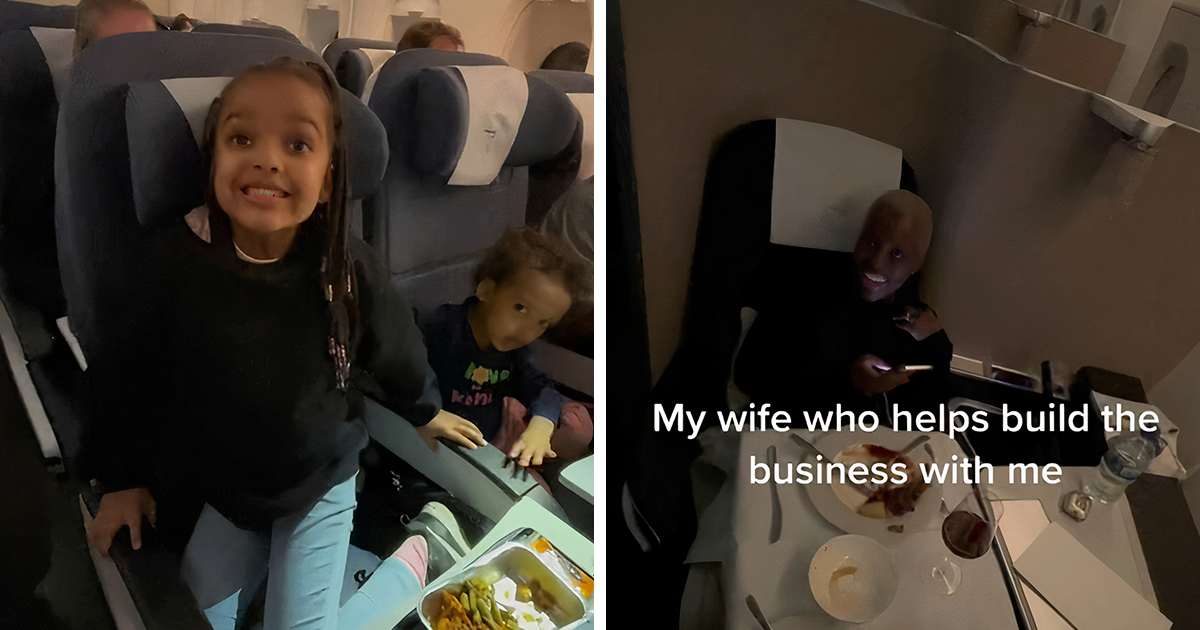
The now-famous conversation centered on a wealthy dad who made a point of leaving his kids in coach while he and his wife enjoyed first class. Reports on the viral clip said the children were not entirely alone and were seated with a nanny, a detail that softened the safety concern for some viewers but did absolutely nothing to calm people who hated the message. For critics, the image still screamed the same thing: Mom and Dad get luxury, the kids get a life lesson, and the internet gets a fresh reason to lose its mind.
The phrase attached to the moment was even sharper than the seating chart. The point, at least as supporters understood it, was that wealthy parents should avoid raising kids who think premium treatment is their birthright. No automatic upgrades. No luxury as a default. No tiny emperors demanding sparkling water at 35,000 feet.
On paper, that sounds almost noble. Plenty of parents with money worry about entitlement. They do not want children growing up assuming comfort is guaranteed, service workers exist for them, and every inconvenience is a personal insult. In that sense, the father’s decision struck a chord because it tapped into a real anxiety: how do you raise kids with resources without raising kids who become unbearable?
But parenting is not judged on paper. It is judged in context. And in context, a parent sailing toward first class while the children head to coach looks less like philosophy and more like a social experiment with overhead bins.
Why So Many People Thought the Dad Had a Point
Let’s give the pro-coach crowd their due. They are not crazy. There is a legitimate argument here, and it has less to do with aviation than with boundaries.
Children do not automatically benefit from having every possible luxury. In fact, a steady diet of instant gratification can backfire. Kids who always get the best seat, the best snack, the fastest solution, and the easiest route through every inconvenience may end up learning a dangerous little lesson: comfort is the norm, and disappointment is a violation of their rights.
That is not resilience. That is just premium-packaged fragility.
Parenting experts have been saying versions of this for years. Boundaries matter. Patience matters. Delayed gratification matters. Chores matter. Letting children wait, work, save, help, and occasionally hear the devastating word no matters. If your child never has to earn anything, never has to contribute, and never has to cope with frustration, you are not building confidence. You are building dependency with better luggage.
Seen through that lens, making kids fly coach can look like a reasonable choice. Coach is not a punishment. It is how most of humanity travels. If a child can handle it safely and calmly, the argument goes, why not let them experience the ordinary version of life instead of the luxury version every single time?
There is also a practical point that many affluent families quietly make: parents are allowed to be adults. A mother or father who worked long hours, paid for the tickets, and wants a more comfortable seat is not automatically committing a moral crime. Parenting is not sainthood in compression socks. Sometimes adults want the upgrade because their backs hurt, they need to work, or they simply want the comfort they paid for.
That is the strongest defense of the dad’s decision. Not that kids should be denied nice things forever, but that children do not need to assume that every nice thing belongs to them by default.
Why Critics Thought It Missed the Entire Point
Still, the backlash was not just pearl-clutching. Critics were reacting to something deeper than seat assignments. They were reacting to what the gesture seemed to teach.
If the lesson is “you do not always get luxury,” fine. If the lesson is “I earned this, and you did not,” that gets messier fast. Children do need to learn that money is earned and privileges are not automatic. But they also learn by watching how power works inside a family. If a parent’s message is basically, I enjoy comfort while you absorb the inconvenience, that can teach hierarchy more than humility.
And then there is the obvious issue of age. Travel experts tend to draw a pretty hard line here: little kids should generally sit with their parents. Not near them. Not somewhere in the same metal tube. With them. Older children who are calm, independent, and experienced flyers may be a different story. But if a child is too young to handle snacks, safety instructions, turbulence, bathroom logistics, and unexpected stress without constant support, separate cabins stop looking like a life lesson and start looking like bad planning.
Critics also pointed out the burden this can place on everyone else. Flight attendants are there for safety and service, not surprise co-parenting. Other passengers did not sign up to become unpaid seat neighbors, emergency emotional support, or aisle monitors for children trekking between cabins. Once a parenting choice spills onto strangers, it stops being a purely private choice.
That is one reason the debate resonated so widely. Most people were not actually upset that rich people exist or that first class exists. They were annoyed by the possibility that a parent might call something “teaching values” when it really creates work for someone else.
The Real Question: Is Discomfort a Lesson or a Performance?
This is where the story gets interesting. Plenty of good parenting involves allowing discomfort. That part is real. Children should not be protected from every frustration like they are tiny diplomats on a state visit. Waiting in line, sitting in a less fancy seat, packing their own backpack, doing chores before fun, saving up for something instead of receiving it instantly, hearing “not this time,” and dealing with mild inconvenience are all healthy experiences.
But healthy discomfort has to make sense. It has to be connected to a clear family value. It has to be consistent. And it helps if the adults are modeling the same principle instead of starring in a luxury version of “do as I say, not as I recline.”
That is why the viral moment felt off to so many viewers. It looked less like a shared family ethic and more like a symbolic flex. If the goal is to teach modesty, a surprisingly effective method is for everyone to fly coach sometimes. If the goal is to teach gratitude, involve kids in the cost of travel, explain tradeoffs, and talk openly about why some comforts are occasional treats rather than entitlements. If the goal is to teach independence, give children age-appropriate responsibilities instead of simply removing perks.
In other words, the best lessons are usually less theatrical.
A child who helps plan the trip, carries their own bag, waits their turn, thanks the crew, handles boredom without a meltdown, and understands that money involves choices is learning more than a child who is merely parked in economy while the adults disappear behind the curtain.
What Actually Keeps Kids Grounded
Boundaries, Not Guilt
Parents often spoil kids for reasons that sound loving in the moment. They feel guilty for being busy. They want to avoid conflict. They want memories, peace, and a pleasant afternoon at the store. That is understandable. But constantly giving in teaches children that desire and reward are basically the same thing. Healthy parenting means setting limits without apologizing for every disappointment like you have personally ruined spring.
Contribution, Not Consumption
One of the clearest ways to keep kids from becoming entitled is to make sure they contribute to family life. Chores are not old-fashioned punishment. They are training in competence, empathy, and responsibility. Children who help are more likely to see themselves as part of a household, not just customers with strong opinions. A kid who can clear a table, fold laundry, or manage a carry-on is getting a better lesson in groundedness than one who simply gets told they do not deserve first class yet.
Money Talk, Not Money Mystery
Parents sometimes avoid discussing money because it feels stressful or awkward. But silence can create weird fantasies. Kids may assume money appears magically, that luxuries are normal, or that family choices are random. Talking about cost, tradeoffs, saving, and budgeting helps children connect privileges to real-world decisions. That does not mean burdening them with adult anxiety. It means giving them context.
Delayed Gratification, Not Instant Luxury
Wanting something and waiting for it is a skill. Saving allowance, earning privileges, or working toward a bigger reward teaches patience and planning. That is the kind of lesson many supporters of the viral dad were trying to defend. The problem was not the principle. The problem was the packaging.
Failure, Not Rescue Missions
Another major anti-entitlement tool is letting kids struggle safely. Forget the homework? Feel that consequence. Leave the headphones behind? The flight just got more interesting. Need to solve a problem with a seatmate or ask a flight attendant for help politely? Great. That is real-world practice. Parents who swoop in to smooth every wrinkle often raise kids who cannot function without a concierge team disguised as family.
Warmth, Not Coldness
Here is the part people often miss. Kids do not become grounded because parents are emotionally distant. They become grounded when warmth and limits exist together. Love without boundaries creates chaos. Boundaries without warmth can feel like rejection. The sweet spot is a child who feels deeply secure but does not assume the universe owes them a footrest.
What Airlines and Common Sense Add to the Debate
Separate cabins may be a parenting choice, but they can also become a policy issue. Some airlines make it clear that “same plane” is not always the same thing as proper supervision. Delta’s unaccompanied minor guidance explicitly includes children traveling without an adult in the same cabin. American’s rules are also specific about very young children and cabin accompaniment. Meanwhile, the U.S. Department of Transportation has treated family seating as a consumer-protection issue, pushing airlines toward adjacent seating for young children at no extra charge.
That should tell parents something important. Family seating is not just about convenience or vibes. For younger children, proximity matters. Safety, emotional regulation, bathroom trips, turbulence, meal service, and emergencies all become more complicated when parents are physically separated from their kids.
So yes, there may be cases where older, seasoned young travelers can handle coach while a parent sits elsewhere. But this is not a one-size-fits-all badge of superior parenting. Age matters. Temperament matters. Airline rules matter. The ability to sit still without turning the aisle into a reunion tour matters a lot.
The Better Version of This Parenting Lesson
If parents genuinely want to teach their kids not to be spoiled, there are stronger ways to do it.
Fly together in coach sometimes, even if you can afford more. Let children see that comfort is nice, not mandatory. Give them responsibilities during travel. Have them pack thoughtfully. Carry their own gear. Say thank you to gate agents and flight attendants. Explain why one trip might include a splurge while another does not. Rotate privileges when appropriate. Make luxury occasional rather than automatic.
Most of all, make the lesson about perspective, not status. A grounded child does not need to be humiliated, deprived, or theatrically denied. They need to understand effort, gratitude, contribution, and context. They need to know that money buys options, not superiority.
That is the part the internet was really arguing about. Not whether a kid can survive coach. Obviously they can. The question is what the adult thinks coach is for. If it is a normal seat on a normal flight, fine. If it is a morality play designed to remind kids that the grown-ups are the VIPs, people are going to notice. And judge. Loudly. Possibly before beverage service.
Final Thoughts
The viral father probably intended to send a message about discipline, gratitude, and not raising entitled children. On that narrow point, he touched a nerve that many parents understand. Wealth can make good intentions slippery. It is easy to say you want humble kids and then accidentally build a life where they never wait, never want, and never have to do much for themselves.
But the internet’s pushback mattered too. Children learn from what parents do, not just what parents claim to be teaching. If the visual lesson looks like luxury for me and inconvenience for you, people are going to question the value system behind it.
So was the dad right? Maybe partly. Kids do not need first class to become decent humans. But the stronger lesson is not “put the children in coach.” The stronger lesson is “raise kids who can handle coach, appreciate first class without expecting it, and treat everyone in every cabin like a human being.”
That is a much better philosophy. And unlike a viral seating arrangement, it actually travels well.
Related Experiences That Explain Why This Story Hit Such a Nerve
If this debate felt strangely personal to so many people, it is because the airplane was just a stage. Versions of this exact conflict happen in ordinary families all the time, just without the dramatic curtain between cabins.
Think about the parent who orders the expensive entrée and tells the kids to split fries because “they won’t appreciate it anyway.” Or the family vacation where adults book the ocean-view room and the children get the pullout couch near the loud ice machine, then hear a lecture about gratitude before anyone has even found the hotel towels. Or the road trip where a parent insists discomfort builds character right up until it is their turn to sit in the cramped middle seat. People recognize the pattern instantly: the stated lesson is values, but the emotional memory for the child can be exclusion.
At the same time, plenty of adults remember childhood experiences that genuinely did shape them for the better. Maybe they flew coach every time and never thought twice about it. Maybe they had parents who could afford more but deliberately kept family life pretty normal. Maybe they worked part-time, saved for extras, wore hand-me-downs, did dishes, packed school lunches, or learned early that “nice to have” and “necessary” are not the same thing. Those people often hear a story like this and think, What is the big deal? Ordinary limits did not ruin me. They helped me.
That is why the discussion gets so heated. Everyone is not reacting to the same memory. Some hear “kids in coach” and picture a healthy lesson in moderation. Others picture parents using restraint as branding while someone else absorbs the labor. Some hear “don’t spoil your kids” and think of gratitude. Others think of coldness dressed up as wisdom.
Then there is the perspective of fellow travelers, which may be the most relatable one of all. Most people have sat near a child on a plane and thought one of two things: What a sweet kid or I am now in a side quest I did not choose. That is why the public reaction sharpens so quickly when parents and children are separated. People know that the consequences rarely stay neatly inside the family. If the arrangement works, no one notices. If it does not, the whole row gets drafted into the experiment.
In that sense, the story became bigger than one dad, one flight, or one rich-family philosophy. It touched the universal tension of modern parenting: how do you prepare children for the real world without making them feel shut out of your world? That is the line every parent is trying to walk, whether the family is flying first class, booking basic economy, or just arguing over who gets the front seat on the way to soccer practice.
And maybe that is the most useful takeaway of all. Kids do not need perfect equality in every comfort, and they definitely do not need every luxury handed to them on a silver tray. But they do need consistency, warmth, and a sense that the rules mean something deeper than “because I said so” or “because I paid for it.” The families that get this right are not the ones performing a lesson. They are the ones living it, long before boarding begins.