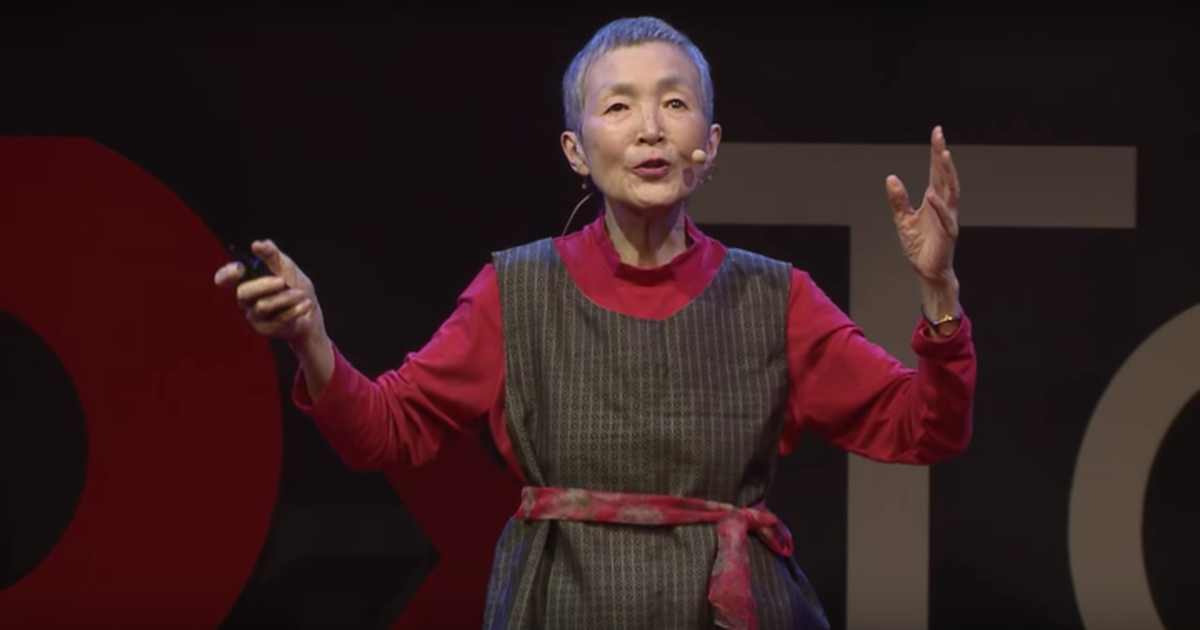
Picture this: you’re 81, you’ve already done the whole “career” thing, your peers are busy debating lawn-care philosophies, and the App Store is packed with games that seem designed for people whose thumbs move like caffeinated hummingbirds. So you do what any reasonable person would do… you learn programming from scratch and build your own iPhone game.
That’s not a motivational poster. That’s the real-world plotline of Masako Wakamiya, a retired Japanese banker who decided that if the tech industry wasn’t going to make fun mobile games for older adults, she’d simply become the tech industry (at least in her corner of it).
Her story hits a sweet spot that’s hard to ignore: it’s funny, it’s bold, it’s quietly rebellious, and it pokes a hole in one of the most stubborn myths in modern lifethat learning to code is only for the young. Let’s break down what she built, how she got there, and why her “silver-life” software adventure matters far beyond one delightful iPhone game.
The Woman Behind the Headline
Wakamiya didn’t come from a Silicon Valley startup. She came from a long, traditional careerdecades in bankingfollowed by retirement at the standard mandatory age in Japan. And then came a second life that started the way many “late bloomer” tech stories do: with a practical problem and a little curiosity that refused to sit down.
Around age 60, she began using computers and the internet, partly as a way to stay connected while caring for an elderly parent and spending more time at home. Early consumer computers weren’t exactly “tap here to feel joy.” Setting them up could feel like assembling IKEA furniture with the instructions in invisible ink. But she persisted, learned the basics, and discovered what millions of people later rediscovered in different ways: technology can be a lifeline.
Over time, she got involved in senior-focused online communities and digital projectsspaces created “by older adults, for older adults.” That’s important, because it hints at the bigger theme here: she wasn’t dabbling in tech to chase a trend. She was using tech to solve human problemsconnection, learning, dignity, and fun.
“Where Are the Games for People Like Me?”
One of the most quietly sharp observations in Wakamiya’s story is also one of the simplest: most apps are built with young users in mind. That doesn’t mean older adults can’t use thembut it often means the experience is less enjoyable, less accessible, and sometimes just plain annoying.
Think about the design assumptions that sneak into everyday apps:
- Speed as a feature: fast reflexes, rapid tapping, quick swipes.
- Tiny targets: buttons the size of a breadcrumb.
- Low-contrast interfaces: pale gray text on slightly different gray.
- No patience for mistakes: one wrong tap and you’re in a settings menu you didn’t know existed.
Wakamiya noticed that older players often lose against younger people in speed-based gamesnot because they’re less smart, but because the game is optimized for a different kind of body. So rather than accepting “that’s just how it is,” she decided to change what “it” could be.
Learning to Code at 81: The Unsexy, Beautiful Reality
Let’s be honest: “learned programming at 81” sounds inspiring, but it also sounds like a lot of troubleshooting. And it was.
She learned Apple’s Swift programming languagewidely used for iOS developmentand did it without a lifelong tech background. She studied from books and lessons, and at one point worked with a programmer remotely through tools like messaging and video calls. This is the part that deserves more attention than the headline: she built a learning system that fit her life, her pace, and her goals.
The Hidden Challenges Older Beginners Face
Late-in-life learners often deal with obstacles that younger learners don’t have to think about as much:
- Language barriers: programming tools and documentation are heavily English-based, even when you live elsewhere.
- “Code is the easy part” surprise: learning syntax is one thing; turning code into a working app is another universe.
- Confidence tax: when society constantly hints you’re “too old,” you have to spend energy refusing that ideaevery day.
Wakamiya pushed through those realities the way a good developer does: not by pretending it’s easy, but by treating every obstacle as a problem that can be worked, tested, and improved.
The iPhone Game She Built: Hinadan
Her game is called Hinadan, and it’s rooted in Japanese culturespecifically the tradition around Hinamatsuri (Girls’ Day / Doll Festival), where ornamental dolls are displayed in a particular arrangement.
In the game, players arrange dolls in the correct orderturning cultural knowledge, memory, and pattern recognition into gameplay. It’s not a twitchy, reflex-heavy experience. It’s more like: “Let’s solve a satisfying puzzle, learn something meaningful, and not get bullied by a timer.”
Why Hinadan Works (Even If You’ve Never Heard of the Festival)
Even if you didn’t grow up with Hinamatsuri, the design choices are universally smart:
- Contextual gameplay: it’s based on a real tradition, not an abstract mechanic.
- Clear goal: arrange items correctlysimple to understand, challenging to master.
- Low-pressure pacing: no need for 400 taps per minute.
- Social resonance: older adults can play with kids and grandkids and share cultural stories.
That last one is huge. Great games aren’t just entertainmentthey’re bridges. Her game became a bridge between generations and between “tech users” and “tech makers.”
What the Tech World Got Wrongand What She Got Right
Wakamiya’s story is often told as a feel-good anecdote, but it’s also a critique. It says: “You built a whole digital world and forgot to make it friendly for everyone who lives in the real world.”
Companies spend fortunes optimizing for attention, but sometimes ignore the basics of inclusive design. Wakamiya understood something many product teams miss:
Older adults aren’t a niche. They’re a future version of almost everybody.
Senior-Friendly Design Isn’t “Dumbing It Down”
Designing for older users isn’t about making things childish. It’s about making things humane. If you’re building an iPhone game (or any app) with older adults in mind, these practices help everyone:
- Bigger tap targets: aim for comfort, not precision surgery.
- Readable typography: scalable text, strong contrast, less visual clutter.
- Gentle learning curve: clear instructions and optional help at every step.
- Error forgiveness: easy undo, no punishment for exploration.
- Pacing options: speed controls, timer toggles, or slower modes.
Ironically, if more apps followed these rules, we’d all have fewer moments of angrily whispering, “WHY IS THIS BUTTON SO SMALL?”
Why Her Story Matters in the United States
Even though Wakamiya lives in Japan, her message lands hard in the U.S., where the population is aging and older adults are increasingly online. More seniors are using smartphones, joining social platforms, shopping online, and experimenting with digital learningyet a lot of products still treat them like an afterthought.
Her story also punches at a very American workplace problem: ageism in tech. In an industry that celebrates “young geniuses,” older workers can be treated as outdated long before they’re actually out of ideas. Wakamiya is living proof that ideas don’t expire on your birthday.
And in the U.S., her journey connects to something practical: the rise of community-based learning. Libraries, community colleges, nonprofits, and online platforms are helping adults learn new skillscoding included. The real takeaway isn’t “everyone should build an app at 81.” It’s this:
If you can learn, you can build. If you can build, you can participate.
How to Copy Her Blueprint (Without Moving to Xcode on Day One)
If Wakamiya’s story makes you want to learn programmingor help a parent or grandparent learnhere’s a grounded approach that doesn’t require a dramatic montage:
1) Start With a Meaningful Goal
Pick something personal: a simple game, a family photo organizer, a habit tracker, a tiny app that solves one tiny annoyance. Motivation beats willpower.
2) Choose One “Beginner-Friendly” Path
- If you want iPhone apps: start with Swift basics and simple projects.
- If you want quick wins: try no-code tools to learn product thinking first.
- If you want general coding confidence: begin with beginner courses and small exercises.
3) Build Small, Then Stack Wins
Your first “app” might just be a button that changes text. That’s not embarrassingthat’s literally how software is born. Every big product is a pile of small wins wearing a trench coat.
4) Learn With Other Humans
Wakamiya worked with guidance and community. A class, a mentor, a study buddy, or a patient grandkid who enjoys explaining things can turn frustration into momentum.
5) Design for the Body You Have
Whether you’re 18 or 81, design around your comfort: bigger fonts, accessibility settings, ergonomic devices, breaks, and pacing that makes learning sustainable.
Conclusion: The Best Time to Learn Is “Still Alive O’Clock”
Masako Wakamiya didn’t become a programmer to prove a point. She became a programmer because she wanted a better digital lifefor herself and for people like her. Along the way, she accidentally became a walking rebuttal to age stereotypes.
If her story does anything for the rest of us, let it be this: don’t wait for permission to start. Whether you want to build an iPhone game, learn coding as a hobby, or simply understand the digital world a little better, the “right age” is the one you are today.
And if the App Store doesn’t have what you want? Well… apparently the correct move is to learn Swift and make it yourself.
Bonus: of Experiences Related to Learning to Code Late in Life
When people picture “learning programming,” they often imagine a teenager in a hoodie typing at 2 a.m. while lo-fi beats play in the background. In real life, late-in-life coding stories look differentand that’s exactly why they’re so useful. The experiences older beginners report tend to be less about raw speed and more about mindset, patience, and problem-solving that’s been sharpened by decades of living.
Experience #1: The first week is mostly vocabulary. Older learners often say their earliest challenge isn’t mathit’s language. “Variable,” “function,” “loop,” “compiler,” “framework.” It can feel like walking into a party where everyone is speaking a dialect of English that was invented five minutes ago. The breakthrough moment is realizing that confusion isn’t proof you’re failing; it’s proof you’re learning something new.
Experience #2: Debugging becomes strangely empowering. There’s a moment every learner hits: the code doesn’t work, you stare at it, and your brain tries to negotiate. (“What if we simply… never run the program again?”) But late learners often develop a superpower here: patience. They re-read the error message, test one small change, try again, and slowly build the habit of treating bugs like puzzles instead of personal insults. Each fix is a tiny victory, and tiny victories add up fast.
Experience #3: The “why” matters more than the “wow.” Many older beginners stick with coding when the project has meaning: a game that grandkids can play, a tool that helps organize medications or appointments, a digital scrapbook, or a community website. Purpose acts like fuel. You don’t need to chase flashy features; you need a reason to keep showing up.
Experience #4: Learning gets better with community. A class at a library, a community college workshop, a patient mentor, or even a small online group can turn coding from lonely frustration into shared momentum. The best learning environments normalize questions and celebrate progress. And older learners often become wonderful collaborators because they’re used to teamwork, communication, and steady improvement.
Experience #5: Accessibility tools aren’t “cheating.” Increasing text size, using voice dictation, slowing down pointer speed, taking breaks, or choosing devices that reduce strainthese aren’t shortcuts. They’re smart engineering choices for the human body. Late learners who embrace accessibility settings often learn faster because they remove unnecessary friction.
Put all that together and you get something powerful: coding becomes less about being “a tech person” and more about being a person who can build. The real magic of Wakamiya’s story isn’t the age on her birthday cake. It’s the attitude: curiosity, playfulness, and the willingness to start smallthen keep going until the small becomes real.