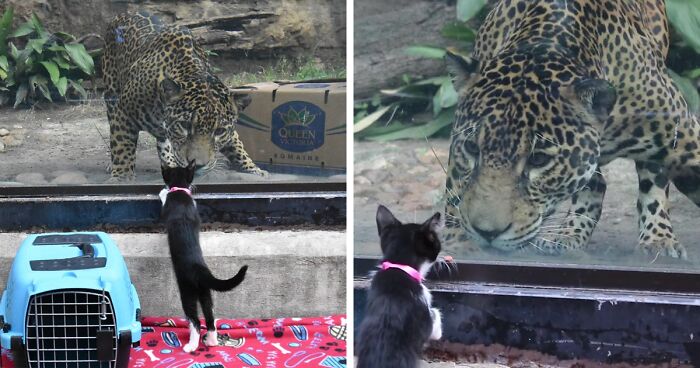
Every shelter pet deserves a little excitement. A squeaky toy is nice. A sunny nap is excellent. But a front-row view of a giraffe? That is the sort of résumé-building experience usually reserved for dogs with suspiciously glamorous lives.
In June 2020, foster kittens and dogs from the Animal Defense League of Texas received an unusually memorable outing at the San Antonio Zoo. The adoptable pets explored the zoo while safely observing animals such as giraffes, primates, big cats, and hippos. The purpose was bigger than adorable photographs: the visit helped draw attention to pets waiting for permanent homes during a difficult period for animal organizations.
The result was internet gold. Tiny cats stared at enormous animals. Dogs seemed to consider whether a giraffe was simply a very tall neighbor with an inconveniently long neck. And zoo residents appeared curious about their unexpected visitors. It was wholesome, funny, and just strange enough to make people stop scrolling.
More importantly, the shelter pets’ zoo field trip offered a powerful reminder: enrichment, visibility, and human connection can make a meaningful difference for animals waiting to be adopted.
A Zoo Field Trip With a Very Big Mission
The phrase “meet their exotic relatives” should be understood with a wink. A kitten and a leopard may share broad feline family traits, but nobody was arranging a family reunion over tuna treats. Likewise, a dog does not need to network with every wolfish-looking animal in the building.
Still, the visual contrast made the outing unforgettable. A curious kitten watching a massive hippo is not merely cute; it tells a story without needing a single word. Here was a small, adoptable animal with a personality, a point of view, and a future home somewhere beyond a shelter enclosure.
The San Antonio outing happened during the COVID-19 era, when many nonprofits, shelters, and zoological institutions faced disrupted routines, reduced visitor traffic, and major fundraising challenges. Instead of treating that moment as only a setback, the organizations found a creative way to bring public attention back to animal care and pet adoption.
That was the brilliance of the idea. The animals were not simply taken somewhere unusual for the sake of a viral photo. The outing created a conversation about foster care, adoption, enrichment, and the fact that every shelter pet is more than a kennel number. Some are couch-potato candidates. Some are future hiking buddies. Some are clearly destined to become household supervisors who judge your snack choices from the arm of the sofa.
Why Shelter Pet Field Trips Matter
A shelter can be a safe place, but it is rarely a calm and predictable home environment. New sounds, unfamiliar smells, barking, cleaning routines, changing staff, and nearby animals can create stress for dogs and cats. Even well-run shelters must work hard to make daily life more comfortable, engaging, and emotionally manageable for animals in their care.
That is where shelter pet enrichment becomes important. Enrichment means offering safe, appropriate experiences that encourage an animal to explore, think, sniff, play, rest, or interact in ways that fit its species and individual temperament. It may involve puzzle feeders, scent games, training sessions, quiet time, gentle socialization, climbing spaces for cats, or a peaceful walk outside the shelter.
A Change of Scenery Can Be Valuable
For the right dog, a field trip can provide fresh smells, new surfaces, one-on-one attention, and a break from the usual kennel routine. Dogs experience much of the world through their noses, so a slow walk through a park can be a full-length sensory documentary. A zoo visit, handled carefully and with professional oversight, can add even more unusual sounds and scents to that experience.
For cats, the rules are different. Some cats enjoy carefully managed novelty, while others would prefer to file a formal complaint after being moved six feet from their favorite blanket. Cats need individualized handling, quiet spaces, secure carriers, and the option to retreat. A field trip is never a one-size-fits-all plan, especially for animals who are fearful, medically fragile, highly reactive, or still adjusting to shelter life.
Field Trips Help Shelters Learn More About Pets
A trip outside the shelter can also help staff and volunteers see an animal in a new context. Does the dog settle calmly in a car? Does it enjoy meeting strangers? Is it comfortable around busy public spaces, or would it thrive best in a quieter home? Does it pull toward every interesting smell like a tiny detective with a badge, or does it prefer a slow stroll and a nap?
These observations can make adoption profiles more useful. Instead of a generic description such as “sweet dog,” a shelter may be able to say that a dog rides politely in the car, enjoys patios, loves gentle attention, or relaxes after a long sniff walk. Those details help potential adopters imagine daily life with that animal.
Attention Is Part of the Lifesaving Work
People often discover adoptable pets through social media, local news, rescue websites, adoption events, and word of mouth. A creative outing can provide photos and stories that make an animal memorable. That does not mean every dog needs a giant publicity stunt. A dog wearing a bandana at a neighborhood café, a cat lounging in a foster home window, or a puppy learning a new trick can also help someone fall in love.
The key is authenticity. The goal is not to turn shelter animals into circus performers. The goal is to reveal their personalities and help the public see them as potential family members.
What Made the Zoo Visit So Memorable
The San Antonio Zoo trip worked because it combined three powerful ingredients: novelty, storytelling, and purpose.
First, it had novelty. We are used to seeing zoo animals look at visitors. We are less used to seeing a kitten look back at a lion with the confidence of someone who has never paid rent and fears absolutely nothing.
Second, it had storytelling. Photos of a shelter animal in an unexpected setting naturally invite people to ask questions. Who is that dog? Is the cat available for adoption? Where did they come from? How can I help?
Third, it had purpose. The outing was tied to awareness for pet adoption and the challenges facing animal organizations. That is why it remained more than a cute internet moment. It reminded people that local shelters need foster families, volunteers, donations, adopters, transport support, and simple shares on social media.
A good animal-welfare story makes us laugh first, perhaps cry a little second, and then reach for the adoption page before we can talk ourselves out of it.
Field Trips Must Put Animal Welfare First
A shelter pet field trip sounds delightful, but it must always be planned around the animal’s safety and emotional comfort. A zoo outing is not appropriate for every pet, every shelter, or every facility. It requires coordination, careful selection, transportation planning, veterinary considerations, trained handlers, secure barriers, and clear rules about where animals may go.
Choose the Right Animal
Not every dog enjoys public outings. Some dogs are happiest in calm, familiar spaces. Others may be overwhelmed by crowds, noises, unfamiliar animals, or travel. A responsible program selects pets based on temperament, health, behavior history, and current stress level.
The same goes for cats. A social kitten may tolerate a carefully controlled outing better than an adult cat who finds a doorbell emotionally exhausting. No animal should be pushed into an experience simply because it may photograph well.
Keep Wildlife and Pets Properly Separated
The word “meeting” should never suggest direct interaction between shelter pets and zoo wildlife. Big cats, primates, hoofed animals, reptiles, birds, and other zoo residents have specific welfare needs, health considerations, and safety protocols. Barriers, distance, staff supervision, and animal-specific procedures are essential.
A pug does not need to make eye contact with a leopard up close. That is not enrichment. That is an episode of a wildlife documentary nobody wants to narrate.
Follow Hygiene and Biosecurity Rules
Animal exhibits require thoughtful hygiene practices. Handwashing, controlled access, proper cleaning, secure waste disposal, and separation from food areas help reduce health risks. Pets should be current on veterinary care according to the shelter’s protocol, and staff should follow all rules set by the zoo, local authorities, and veterinary professionals.
The best animal encounter is one where everyone goes home healthy, calm, and still convinced that giraffes are delightfully weird.
How Ordinary People Can Give Shelter Pets an Adventure
You do not need access to a zoo partnership to improve a shelter pet’s day. Many shelters and rescues offer dog day-out programs, short-term fostering, weekend sleepovers, volunteer walks, or enrichment opportunities. These programs can give animals a break from shelter routines while helping volunteers learn what they are like outside a kennel.
A simple adventure may include:
- A quiet walk in a park with plenty of sniffing time.
- A car ride followed by a calm visit to a pet-friendly patio.
- A backyard nap in the shade.
- A foster-home afternoon with toys, treats, and a soft bed.
- A photo session that shows the animal’s personality.
- A training session that builds confidence and gives the pet a new skill.
Even small experiences can help tell a better adoption story. A volunteer may discover that a dog loves children, ignores bicycles, hates rain, or becomes deeply offended when asked to pose for a photo without receiving a treat afterward. Those details can help find a more compatible home.
For cats, enrichment can be wonderfully low-key: a cardboard box, vertical shelves, puzzle feeding, a sunny perch, playtime with a wand toy, or a quiet foster room with predictable routines. Cats do not need to become world travelers. Many would consider a new cardboard box to be an internationally acclaimed luxury resort.
Not Every Shelter Pet Needs a Zoo, but Every Pet Needs a Chance
The real lesson behind the shelter pets’ zoo field trip is not that every adoption center should schedule lion-viewing appointments. It is that creativity can make animals more visible, more comfortable, and easier for people to understand.
Shelter pets need safe care, medical support, patience, and homes that fit their personalities. They also need moments that let them be themselves. A dog may shine during a relaxed walk. A shy cat may become affectionate in a foster home. A playful kitten may win someone over by attacking a shoelace with the confidence of a tiny jungle predator.
Those moments matter because adoption is not only about finding an animal. It is about recognizing a companion.
A Shelter Pet’s Zoo Day: An Experience From the Leash End
The following is an illustrative composite experience inspired by shelter field-trip programs and the San Antonio zoo outing.
The van door opens, and the dog takes one careful step down. This is already a big day. The shelter smells familiar: disinfectant, kibble, laundry, nervous barking, and the faint aroma of somebody’s forgotten tennis ball. But this place smells different. There is warm pavement, wet leaves, popcorn, birds, grass, and something that smells like a goat who has made several bold life choices.
The volunteer clips on the leash and speaks in the soft, cheerful voice reserved for dogs who are trying very hard to look brave. “You’re doing great, buddy.” The dog does not know what a zoo is, but the dog knows this: there are many smells, there are many people, and someone has brought treats.
At first, the dog is alert. Ears up. Tail moving in cautious little arcs. There is a loud call from somewhere ahead, followed by a chorus of children laughing. The volunteer pauses near a quieter path and lets the dog sniff until the world makes more sense. This is not a race. There is no prize for reaching the giraffes before lunchtime.
Then comes the first surprise: a huge animal moving slowly behind a barrier. The dog sees long legs, a swaying neck, and spots. The dog stares. The giraffe stares back for half a second, probably wondering why a medium-sized creature in a colorful bandana has appeared in its afternoon schedule.
Nearby, a kitten peeks from a secure carrier. The kitten has been given a soft blanket, a place to hide, and a volunteer who knows when curiosity has turned into stress. For a moment, the kitten watches a distant enclosure with the fierce concentration of a creature who believes every bird, leaf, and moving shadow belongs to them personally.
There are no dramatic introductions. No animal is forced to perform. The outing is made of small, gentle moments: a dog receiving praise after walking calmly; a kitten blinking slowly from the safety of a carrier; a volunteer sharing water; a family stopping to ask, “Is that pet available for adoption?”
That question changes everything.
Because the dog is not just “a shelter dog” anymore. The family learns that he likes car rides, leans into gentle scratches, and sniffs every tree as if he is reading local news. The kitten is not just “one of many kittens.” She is the tiny explorer who watched the giraffes and then fell asleep in a fleece blanket like she had spent the day managing a major diplomatic event.
At the end of the trip, the pets return to their safe spaces. They may be tired. They may be relieved. They may be thinking only about dinner. But the people who met them carry the story home.
Maybe someone shares a photo. Maybe a neighbor sees it. Maybe a future adopter visits the shelter that weekend. Maybe one unusual day at the zoo becomes the first chapter of a pet’s permanent home.
That is the real magic of a shelter field trip. It is not the giraffe. It is not the cameras. It is the possibility that a dog or cat who needed a chance was finally seen.
Conclusion: A Small Adventure Can Open a Big Door
The shelter pets who visited the local zoo showed how creativity can turn animal welfare into a story people want to share. Their field trip was funny, heartwarming, and wildly photogenic, but its deeper message was simple: adoptable pets deserve attention, enrichment, and the chance to be known for who they are.
Whether that means a zoo visit, a park walk, a foster-home weekend, or a quiet afternoon with a cardboard box, positive experiences can help shelter animals feel more comfortable and help future adopters see their potential. The next great family pet may not need an exotic field trip. Sometimes all they need is one person to notice them, ask about them, and say, “Let’s take them home.”