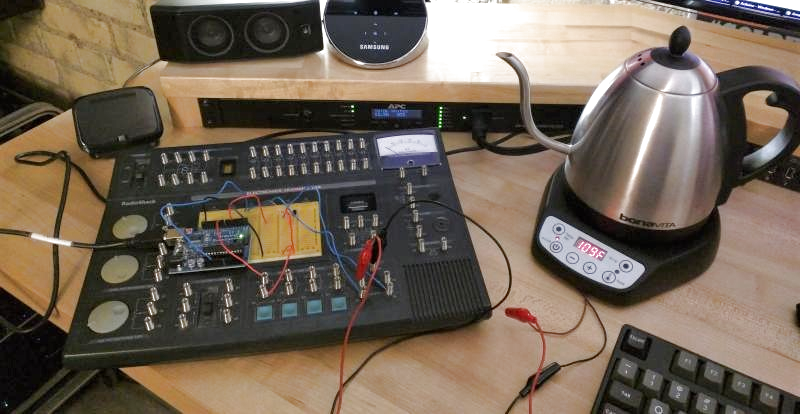
There are two kinds of tea drinkers in this world. The first group boils water, tosses in a tea bag, and moves on with life like calm, reasonable adults. The second group knows that green tea can turn bitter if the water gets too hot, that oolong likes a different temperature than black tea, and that “close enough” is how flavor dreams go to die. For the second group, a PID tea kettle is already a beautiful piece of nerd-adjacent engineering. Add a little IoT magic, and suddenly your kettle stops being just a countertop appliance and starts acting like the most polite member of your smart home.
The phrase “A Little IoT For Your PID Tea Kettle” sounds like a joke someone made while holding a soldering iron in one hand and a mug in the other. But the idea behind it is surprisingly practical. A PID-controlled kettle is designed to reach and hold a target water temperature more precisely than a basic on-off kettle. Adding an Internet of Things layer does not magically make tea taste like it was brewed by woodland spirits, but it can make the experience smoother, smarter, and more consistent. Think remote status updates, temperature visibility, automation routines, and better timing for busy mornings when your brain is still buffering.
Why PID Control Matters in the First Place
Before the “smart” part gets all the attention, it helps to understand why PID control is the star of the show. PID stands for proportional, integral, and derivative control. In plain English, it is a method for adjusting heat so the system can approach a target temperature with less overshoot, less wobble, and more stability than a simple all-on or all-off approach.
That matters because tea is pickier than people pretend. Delicate green and white teas generally prefer lower temperatures. Black teas and herbal infusions can handle hotter water. If your kettle rockets past the sweet spot and then cools down like an indecisive rocket, your brewing routine becomes a guessing game. A PID kettle aims to reduce that drama. It tries to hold the line, which is exactly what tea lovers, pour-over coffee fans, and anyone who enjoys repeatable results actually want.
In other words, a PID kettle is not just a fancy kettle for people who alphabetize their spice rack. It is a tool for consistency. And consistency is the secret sauce behind better beverages, whether you are brewing sencha, coaxing flavor out of a single-origin coffee, or simply refusing to burn your tongue before 8 a.m.
What the IoT Layer Actually Adds
Now for the fun part. The IoT layer is where the kettle becomes less “hot water machine” and more “household collaborator.” At a high level, smart kettle projects and connected kettle setups usually revolve around a few core ideas: measuring status, sharing data, receiving commands, and tying all of that into a home automation system.
1. Remote visibility
The most obvious upgrade is knowing what your kettle is doing without hovering over it like an anxious stage parent. Is it heating? Has it reached the setpoint? Did someone already use it? Is there enough water left for one more cup? When a kettle can report state information to a dashboard or app, you get convenience without constant kitchen patrol.
2. Better timing
The second upgrade is routine. A connected PID kettle can become part of a morning flow: lights come on, your preferred playlist starts, and the kettle is already approaching the right temperature for your usual brew. That is not laziness. That is workflow optimization with caffeine at stake.
3. Smarter automation
Once a kettle can communicate with a smart home platform, it can join bigger routines. Maybe you want a notification when the water is ready. Maybe you want the kettle to avoid heating when the house is empty. Maybe you want a voice assistant to start a brewing routine called “tea time,” which is exactly the sort of phrase that makes modern life sound ridiculous and wonderful at the same time.
4. Data for the delightfully obsessive
Some people keep journals about tea leaves, steeping times, and tasting notes. Others look at a graph of water temperature over time and think, yes, this is my art. IoT makes that kind of tracking possible. Whether you call it quality control or harmless obsession depends entirely on whether you have ever argued with someone about the ideal water temperature for gyokuro.
The Tech Stack Behind the Idea
Most connected kettle concepts follow a familiar pattern. A small microcontroller with wireless connectivity acts as the brain. A temperature sensor provides the input. A control method turns heating on and off or modulates it appropriately. Then a communication layer publishes the device state to a broader system.
In the maker world, that wireless brain is often something in the ESP family, especially boards based on ESP8266 or ESP32. The reason is simple: they are compact, inexpensive, and built for connected projects. The ESP32 is especially popular because it brings integrated Wi-Fi and Bluetooth to IoT applications without demanding a giant board or a giant budget. For smart-home users, that makes it a natural fit for appliance-adjacent experiments, environmental sensors, and automation endpoints.
On the software side, MQTT and Home Assistant frequently enter the conversation. MQTT is light, fast, and designed for device-to-device messaging, which makes it ideal for small connected gadgets reporting status and receiving commands. Home Assistant then becomes the control tower, tying device information into dashboards, notifications, scenes, and automations. ESPHome simplifies this even further for many hobbyists because it lets compatible microcontrollers expose sensors, switches, and climate-style controls in a way that feels much more approachable than writing everything from scratch.
Temperature sensing is where things get interesting. Some setups use digital temperature sensors. Others use thermocouples or similar sensors when higher-heat measurement and more specialized sensing are needed. In theory, measuring water temperature sounds simple. In practice, placement, calibration, response time, and whether the sensor is actually touching what you think it is touching make all the difference. A kettle can look smart on a dashboard while still being gloriously wrong if the sensor data is sloppy.
The Real Benefits for Tea Drinkers
It is easy to laugh at a connected kettle until you live with one, or at least with the features people want from one. Then the appeal becomes obvious.
Precision without babysitting
A classic variable-temperature kettle is already useful, but adding connectivity means you can stop pacing around the kitchen waiting for the magic moment. For tea drinkers who brew multiple styles, this matters. Green tea at one temperature, black tea at another, herbal blends hotter still: it is nice when the kettle behaves less like a blunt instrument and more like a well-trained sous-chef.
Reduced friction in daily routines
The best smart-home features are the ones that quietly remove friction. You do not need your kettle to compose poetry. You just want it to fit into your life. A notification that your water is ready is useful. A dashboard that shows the kettle is still warm is useful. An automation that avoids unnecessary reheating is useful. That is the difference between a gimmick and a genuinely pleasant upgrade.
Consistency for coffee people too
Tea gets the headline, but pour-over coffee fans are absolutely invited to this party. Water temperature has a real impact on extraction, and repeatability is part of what makes careful brewing worth the effort. The moment you start dialing in grind size, bloom time, and target temperature, a connected PID kettle starts looking less like a toy and more like a lab instrument wearing a kitchen costume.
Where Smart Kettle Dreams Run Into Reality
Here is the part where the article puts on safety glasses.
Turning a PID kettle into an IoT kettle sounds elegant on paper, but real hardware is messy. Measuring temperature accurately can be harder than expected. External sensors may read the wrong thing. Water level sensing is another headache. Some projects estimate it by weight, some by inference, and some simply do without. And then there is the big one: controlling a heated, mains-powered appliance is not the same as blinking an LED or automating a desk fan.
That is why the smartest part of a smart kettle may be restraint. If you are discussing the concept publicly, or planning content for a general audience, it is better to focus on architecture, outcomes, and design thinking rather than step-by-step modification advice. The stakes include shock risk, fire risk, damaged appliances, inaccurate temperature readings, and food-contact concerns if any internal materials are changed. Once heat, water, and household electricity meet in the same sentence, casual improvisation should leave the room.
There is also a reliability problem with some DIY smart-home builds: the more systems you stack together, the more chances you create for one tiny failure to turn your tea ritual into an IT support ticket. If the Wi-Fi drops, the broker disconnects, the sensor drifts, or the automation gets too clever, your “smart” kettle can become a surprisingly effective machine for making disappointment.
Safety, Accuracy, and Food-Safe Thinking
Any serious discussion of connected kettles should include three words: safety, safety, safety. Actually that is one word repeated because it deserves the stage time.
Electrical safety
Appliances that heat water are not beginner toys. High temperature and line voltage are a terrible combo for casual experimentation. For most households, the safer path is to choose a kettle with built-in temperature presets from a reputable manufacturer, then layer external smart-home logic around approved devices instead of modifying the internals.
Measurement accuracy
PID control only looks impressive when the sensor data is trustworthy. Precision on paper is not the same thing as precision in your actual kitchen. Sensor placement, calibration, and thermal lag matter. If the reading is off, the whole “precision brewing” promise turns into theater with graphs.
Food-contact materials
If any component in a project touches water that will be consumed, food-safe materials and appropriate compliance stop being optional trivia. That is true whether the project is commercial, experimental, or somewhere in the land of “I saw it online and got inspired.” Hot water is not forgiving, and neither is common sense.
Privacy and the Surprisingly Personal Kettle
There is also a modern question hiding in the steam: does every appliance need the cloud? Not really. One of the reasons local-first systems remain popular with hobbyists is that they let devices stay useful without sending every little household event into the digital wilderness. Your kettle knows when you are home, when you wake up, and how often you probably need caffeine. That may sound silly, but usage patterns can reveal more than people realize.
A good connected-kettle philosophy is simple: keep it local when possible, keep it boring when necessary, and avoid making your brewing routine dependent on five external services and a prayer. The point is better tea, not a cybersecurity subplot.
Why This Idea Still Has Charm
Even with all the caveats, “A Little IoT For Your PID Tea Kettle” remains such a delightful concept because it sits at the intersection of usefulness and absurdity. It is not world-changing. It is not mission-critical. No one is winning a Nobel Prize because the kettle now talks to a dashboard. And yet it perfectly captures why people love tinkering.
It takes something ordinary, studies it closely, and asks: can this be more elegant, more responsive, and more enjoyable? That is the same instinct behind a lot of good engineering. Sometimes it builds medical devices. Sometimes it builds spacecraft. And sometimes it makes sure your oolong hits the sweet spot while you are still looking for your socks.
The best version of this idea is not maximalist. It is thoughtful. It respects the fact that precision matters, that convenience is nice, and that safety is non-negotiable. It treats the kettle as part appliance, part ritual object, and part design challenge. And that is why it keeps resurfacing in maker culture: not because everyone needs a connected kettle, but because enough people see the beauty in one.
Experience: Living With the Idea of a Smart PID Tea Kettle
What makes this topic so appealing is not just the technology. It is the experience around it. A PID tea kettle with a little IoT sprinkled on top changes how the whole routine feels. The old way is familiar: fill the kettle, press the button, wait, maybe forget about it, remember again, and hope the water is still at a useful temperature when you get back. The smarter version feels more intentional. You still do the human part of making tea, but the system removes a bit of waiting, a bit of guessing, and a bit of friction.
Picture a rainy afternoon. You are working, reading, studying, or pretending to do at least one of those things. Instead of wandering into the kitchen every few minutes, you get a simple notification that the water is ready. That tiny convenience sounds minor until you experience it repeatedly. A connected kettle is not life-changing in the dramatic, cinematic sense. It is life-smoothing. It shaves rough edges off a daily habit, and those small improvements add up.
There is also a surprising emotional angle. Tea is ritual. Coffee is ritual too, but tea has a special talent for making people slow down. When the kettle becomes more precise and more responsive, the ritual feels supported rather than interrupted. You spend less attention on the mechanics and more on the drink itself: the smell of the leaves, the color in the cup, the first sip that lands exactly where your mood needed it to land.
For gadget lovers, there is another layer of satisfaction: visibility. Seeing temperature data, status updates, and automation history turns a basic appliance into something legible. You understand what it is doing instead of treating it like a sealed mystery box. That does not mean every household needs telemetry for hot water, but for people who enjoy connected living, it is deeply satisfying when even a kettle becomes part of a coherent system.
That said, the best experiences usually come from modest ambition. The most charming smart-kettle setup is not the one with the most complicated rules. It is the one that quietly works. It tells you when the water is ready. It avoids pointless reheating. It fits into your morning routine without demanding troubleshooting before breakfast. The moment the kettle becomes harder to manage than the tea itself, the whole fantasy collapses like a soggy biscuit.
There is humor in the idea too, and that is part of its appeal. A connected PID kettle is wonderfully overqualified for its job. It is a tiny shrine to modern maker culture, where convenience, curiosity, and a little bit of absurdity all share the same countertop. One person sees unnecessary complexity. Another sees craftsmanship. Both are right, which may be the most honest review possible.
In the end, the experience is less about showing off a smart appliance and more about building a better moment. Good tools make routines feel lighter. Great tools disappear into the background and let the ritual shine. That is the promise behind a little IoT for your PID tea kettle: not smarter tea, exactly, but a smarter path to the cup you were already hoping to enjoy.
Conclusion
A little IoT for your PID tea kettle is not about turning tea into a software project just for the fun of collecting dashboards, though let’s be honest, the dashboards are part of the fun. At its best, the idea combines precise temperature control with thoughtful automation, giving tea and coffee lovers a better brewing routine without losing the charm of the ritual itself. The trick is to keep the concept grounded: accurate sensing matters, simple automation is better than gadget chaos, and safety should always outrank novelty. Done thoughtfully, the connected PID kettle remains one of those rare smart-home ideas that is both nerdy and genuinely delightful.