Garage floors are heroic. They hold up your car, your lawn mower, your “I’ll organize this someday” boxes, and at least one mystery stain that seems to have achieved permanent resident status. Grease stains on a garage floor are especially annoying because concrete looks tough, but it is actually porous. That means oil and grease do not just sit politely on top. They sneak into tiny pores, settle in, and act like they own the place.
The good news: you can remove grease stains from concrete garage floors with the right method, a little patience, and zero need to panic-buy a new slab. Fresh stains are usually easy to absorb and scrub away. Older oil stains may need a concrete degreaser, a poultice, or repeated cleaning. The key is choosing the right treatment for the stain instead of attacking it randomly with every bottle under the sink like a cleaning-product action movie.
This guide explains how to get rid of grease stains on a garage floor step by step, including simple household fixes, heavy-duty concrete cleaner options, safety tips, and prevention tricks so your garage floor does not become an abstract painting titled Transmission Fluid at Sunset.
Why Grease Stains Stick to Garage Floors
Most garage floors are made of unfinished or lightly sealed concrete. Concrete may feel hard as stone because, well, it mostly is, but it contains microscopic pores. When oil, automotive grease, brake fluid, or cooking grease lands on the floor, it can soak into those pores. If you clean only the surface, the stain may fade at first and then reappear later like a villain in the sequel.
That is why the best way to clean grease stains from a concrete garage floor is to work in stages: absorb, loosen, scrub, rinse, and repeat if necessary. For deep oil stains, you may also need a poultice that draws the grease out of the concrete as it dries.
Before You Start: Gather the Right Supplies
You do not need a professional janitorial closet. Most garage grease stain removal jobs can be handled with basic supplies:
- Kitty litter, sawdust, cornstarch, baking soda, or oil absorbent granules
- A stiff nylon brush or push broom
- Dish soap or powdered laundry detergent
- Baking soda
- Concrete degreaser or oil stain remover
- Plastic scraper or putty knife
- Bucket of warm water
- Garden hose or wet/dry vacuum
- Gloves and eye protection
- Old towels, rags, or absorbent pads
Avoid using a wire brush on concrete unless you truly need abrasion for a repair project. Wire can scratch the surface or leave metal particles that may rust later. A stiff nylon brush is usually the sweet spot: tough enough to scrub, polite enough not to chew up your garage floor.
Step 1: Remove Loose Oil, Dirt, and Debris
Start by scraping away any thick grease, sludge, dried clumps, or loose grit. Use a plastic scraper or putty knife, then sweep the area thoroughly. This step seems boring, but it matters. If you pour cleaner on top of sand and dust, you are basically making dirty soup. Delicious? No. Effective? Also no.
If the stain is fresh and wet, blot it first. Do not rub aggressively at this stage. Rubbing can spread the oil over a wider area. Use rags, paper towels, or absorbent pads to lift as much liquid as possible from the surface.
Step 2: Absorb Fresh Grease Immediately
For fresh grease stains on a garage floor, absorbent material is your best friend. Cover the stain with a thick layer of kitty litter, sawdust, cornstarch, baking soda, or commercial oil absorbent. Press it gently into the stain with your shoe or a board. Let it sit for several hours. For larger or wetter stains, leave it overnight or even 24 to 48 hours.
Kitty litter works because it pulls liquid oil away from the concrete. The cheaper clay-based kind is often better than fancy scented litter. Your garage floor does not need lavender. It needs absorbency.
After the absorbent has done its job, sweep it into a dustpan and dispose of it according to local rules, especially if it soaked up motor oil or automotive fluids. Do not hose oily absorbent into the street, storm drain, or yard. That only moves the problem from your garage to the environment, which is not cleaning; it is relocation with consequences.
Step 3: Wash the Grease Stain with Dish Soap
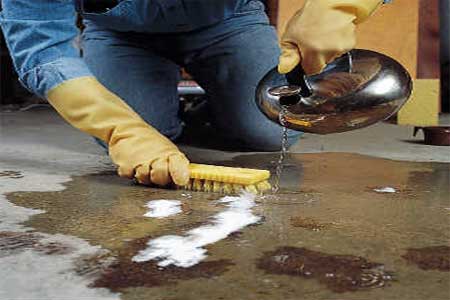
Once the extra oil is absorbed, use dish soap to break down the remaining grease. Dish soap is designed to cut oil, which is why it saves dinner plates from looking like they survived a butter festival.
Dish Soap Method
- Squirt grease-cutting dish soap directly onto the stain.
- Add a small amount of warm water.
- Scrub the area with a stiff nylon brush for several minutes.
- Let the soap sit for 10 to 20 minutes.
- Scrub again, then rinse with clean water.
- Blot or vacuum up the dirty water.
Do not flood the whole garage if you can avoid it. Use just enough water to rinse the stained area. If your garage slopes toward the driveway, make sure oily wash water does not run into a storm drain.
Step 4: Try a Baking Soda or Laundry Detergent Paste
If dish soap improves the stain but does not fully remove it, upgrade to a paste. Baking soda and powdered laundry detergent are both useful for cleaning oil stains on concrete because they add mild abrasion and help lift greasy residue.
Baking Soda Paste Method
- Sprinkle baking soda over the grease stain.
- Add enough water to make a thick paste.
- Scrub the paste into the concrete with a stiff brush.
- Let it sit for 20 to 30 minutes.
- Scrub again and rinse.
Powdered Detergent Method
- Mix powdered laundry detergent with warm water until it forms a paste.
- Spread the paste over the stain.
- Let it sit for at least 30 minutes.
- Scrub well with a nylon brush or push broom.
- Rinse and repeat if needed.
This method is a strong choice for medium stains, especially stains that are not ancient. If the spot is old, dark, and deeply embedded, you may need a commercial concrete degreaser next.
Step 5: Use a Concrete Degreaser for Stubborn Stains
A concrete degreaser is made to break down petroleum-based stains, tire marks, oily grime, and garage-floor buildup. It is stronger than dish soap and usually the best option for older grease stains on concrete.
Read the product label before using it. Some degreasers are concentrated and must be diluted. Others are used full strength for tough oil stains. Wear gloves, protect your eyes, and keep the garage door open for ventilation.
How to Use Concrete Degreaser
- Sweep the stained area completely clean.
- Apply the degreaser according to the label instructions.
- Let it dwell for the recommended time so it can loosen the grease.
- Scrub with a stiff nylon brush or push broom.
- Rinse thoroughly with clean water.
- Remove dirty water with a wet/dry vacuum, mop, or absorbent towels.
Do not rush the dwell time. Degreaser needs a few minutes to work into the stain. Scrubbing immediately after application is like waking someone up and asking why they have not finished breakfast yet. Give the cleaner a chance to do its job.
Step 6: Make a Poultice for Deep, Old Oil Stains
When grease has soaked deep into concrete, surface scrubbing may not be enough. A poultice can help draw oil out of the pores. Think of it as a facial mask for your garage floor, except less spa music and more brake fluid.
A simple poultice uses an absorbent powder mixed with a cleaning liquid. The powder holds the liquid against the stain. As the mixture dries, it pulls dissolved oil upward and traps it.
Basic Concrete Poultice
- Mix baking soda, cornstarch, flour, powdered clay absorbent, or diatomaceous earth with a concrete-safe degreaser until it forms a peanut-butter-like paste.
- Spread the paste over the stain about 1/4 inch thick.
- Cover it loosely with plastic wrap if the product instructions allow, or leave it uncovered if using a drying oil stain remover.
- Let it dry completely. This may take several hours or overnight.
- Scrape up the dried poultice and sweep the area.
- Scrub and rinse the concrete.
For very old oil stains, one treatment may not erase everything. Repeat the poultice process as needed. The stain should become lighter each time. If it does not change after two or three attempts, the oil may be too deeply embedded or the concrete may be permanently discolored.
Step 7: Consider a Pressure Washer, But Use It Wisely
A pressure washer can help remove loosened grease, especially after a degreaser has been scrubbed into the concrete. However, pressure washing alone is not magic. Water pressure can blast away surface grime, but it may not dissolve oil trapped in concrete pores. Pre-treating with a degreaser usually gives better results.
If you pressure wash inside or near a garage, control the water carefully. Move storage boxes, protect drywall, and avoid forcing oily runoff toward drains. Use a fan pattern rather than a pinpoint blast, and do not hold the nozzle too close to the concrete. Too much pressure in one spot can etch the surface, leaving clean damagewhich is still damage, just with better lighting.
What Not to Do When Cleaning Garage Floor Grease
Some cleaning ideas sound powerful but create new problems. Avoid these common mistakes:
- Do not mix cleaning chemicals. Bleach, ammonia, acids, solvents, and degreasers can create dangerous fumes when combined.
- Do not pour gasoline on the stain. It is flammable, unsafe, and not a responsible cleaning method.
- Do not send oily water into storm drains. Collect and dispose of contaminated runoff properly.
- Do not paint or seal over oily concrete. Coatings may fail if grease remains in the slab.
- Do not use bleach as your main oil remover. Bleach may help with mildew on sealed concrete, but it is not the best tool for petroleum grease.
How to Handle Different Types of Garage Floor Stains
Fresh Motor Oil
Blot it, cover it with absorbent material, wait, sweep, then scrub with dish soap or concrete degreaser. Fresh oil gives you the best chance of full removal.
Old Grease Stains
Use a degreaser first, then a poultice if the stain remains dark. Old stains often require repetition. Concrete has a long memory.
Transmission Fluid or Brake Fluid
Absorb the liquid immediately and clean with a concrete-safe degreaser. Automotive fluids should be treated as chemical waste, not ordinary dirty water.
Cooking Grease
If a grill, fryer, or outdoor cooking setup caused the stain, use absorbent material first, then dish soap and hot water. Cooking grease can become sticky, so a baking soda paste may help.
Tire Marks with Greasy Residue
Use a concrete degreaser and a stiff brush. Tire marks often include plasticizers, road grime, and oily residue, so plain water rarely removes them completely.
How to Prevent Grease Stains on a Garage Floor
Once your floor is clean, prevention becomes much easier than stain removal. A garage floor mat under the car can catch drips before they hit the concrete. Drip pans are useful for older vehicles, lawn equipment, motorcycles, and snow blowers. If you work on cars, keep oil absorbent nearby and treat spills immediately.
Sealing the concrete is another smart move. A concrete sealer, garage floor paint, or epoxy coating can make the surface less porous and easier to clean. However, preparation matters. Before applying any coating, remove oil, grease, dust, salt, and loose concrete. If grease remains, the coating may peel, bubble, or refuse to bond. Nobody wants a garage floor coating with commitment issues.
Eco-Friendly and Safety Tips
Used motor oil and oily cleanup waste should be handled carefully. Many auto-parts stores, repair shops, recycling centers, and household hazardous waste programs accept used oil. Store used oil in a clean, sealed container and do not mix it with antifreeze, solvents, paint, pesticides, or other chemicals.
When cleaning, ventilate the garage by opening the door and windows if available. Wear gloves and eye protection, especially when using commercial degreasers. Keep children and pets away from the work area until the floor is rinsed and dry. Read every label. The label is not decorative literature; it is the part that keeps your eyebrows, lungs, and concrete happier.
Experience Notes: What Actually Works in a Real Garage
In real life, garage floor grease stains rarely behave like the tidy before-and-after photos on a product label. A stain may be part motor oil, part road grime, part dust, and part “I have no idea what leaked here in 2019.” That is why the most successful approach is usually layered rather than dramatic. The biggest mistake people make is jumping straight to heavy chemicals before removing the excess oil. If the stain is still wet, absorb it first. Otherwise, the cleaner spreads the grease around and creates a larger, lighter, still-annoying stain.
For a fresh oil drip, cheap clay kitty litter is often surprisingly effective. Pour it on thick, grind it gently into the spot with your shoe, and leave it alone. The “leave it alone” part is hard because everyone wants to scrub immediately. But patience matters. After several hours, the litter often darkens as it pulls oil from the surface. Sweep it up, then follow with dish soap and warm water. On newer stains, this simple routine can make the mark nearly disappear.
For older stains, dish soap alone usually improves the surface but may not finish the job. That is when a concrete degreaser earns its shelf space. The trick is to scrub it in, let it sit long enough, and rinse thoroughly. If you apply degreaser and rinse it away after thirty seconds, you are mostly cleaning your impatience. Let the product dwell according to the label. Then scrub with a stiff nylon brush in multiple directions so the cleaner reaches the texture of the concrete.
One practical tip: clean a slightly larger area than the stain itself. If you clean only a perfect circle around one oil spot, you may end up with a bright clean halo that looks almost as strange as the original stain. Feather the cleaning outward so the freshly washed area blends into the surrounding floor. This is especially helpful on older garage floors that have years of dust, tire residue, and normal discoloration.
Deep stains may need a poultice. The first time you use one, it can feel oddly old-fashioned, like making a tiny mud pie for your floor. But it works because it gives the cleaner time to soften the oil while the powder absorbs it. For stubborn stains, repeat the poultice rather than switching randomly between five products. Consistency usually beats chaos.
Also, expectations matter. A fresh grease stain can often be removed almost completely. An old stain that has soaked into unsealed concrete for years may lighten dramatically but not vanish 100 percent. That does not mean you failed. It means concrete is porous and time is rude. If the floor is going to be painted, sealed, or coated, focus less on cosmetic perfection and more on removing active grease so the coating can bond properly.
Finally, keep a spill kit in the garage. A small bag of absorbent, a stiff brush, gloves, and a bottle of concrete degreaser can save you hours later. Grease stains are easiest to remove before they become garage archaeology.
Conclusion
Getting rid of grease stains on a garage floor is not about one miracle product. It is about matching the method to the stain. Fresh grease needs quick absorption. Light residue may come up with dish soap, baking soda, or powdered detergent. Older oil stains often need a concrete degreaser, repeated scrubbing, or a poultice that draws grease from the pores of the concrete.
Work patiently, rinse responsibly, and avoid mixing chemicals. Once the floor is clean, prevent future stains with mats, drip pans, quick cleanup habits, and a concrete sealer or coating if appropriate. Your garage floor may never look like a showroom unless you actually own a showroom, but it can look clean, cared for, and far less like your car has been writing greasy love letters to the concrete.