The Palpebra Table Lamp is not the kind of lamp that politely disappears into the background. It has a point of view. It has a little drama. It may even have better stage presence than the side table it sits on. Inspired by the movement of an eyelid, the Palpebra lamp turns a familiar everyday actionopening and closing the eyeinto a sculptural lighting experience for modern interiors.
In today’s design market, the name “Palpebra Table Lamp” is most closely associated with the Cassina Palpebra lamp designed by Ico Parisi, a compact, adjustable table lamp released as part of Cassina’s lighting collection. The word palpebra means “eyelid” in Italian, which explains the lamp’s clever personality: it reveals and hides light much like an eye blinking awake. For anyone who loves designer lighting, Italian modernism, collectible furniture, or simply a lamp that does more than sit there looking nervous, Palpebra is worth a closer look.
What Is the Palpebra Table Lamp?
The Palpebra Table Lamp is a designer table lamp that blends art, engineering, and practical lighting. Cassina’s version, designed by Italian architect and designer Ico Parisi, features an upper cover that opens and closes through a refined rotation system. This movement changes the angle of light emission, allowing the lamp to shift from a quiet glow to a more directed beam.
Unlike a traditional table lamp with a shade, stem, and base, the Palpebra feels closer to a small architectural object. It has a rounded, low profile, a compact body, and a mechanical gesture that gives it life. One moment, it looks like a sleek object resting on a shelf. The next, it opens slightly and begins to glow like a sleepy robot with excellent taste in furniture.
Current Cassina product information lists the Palpebra as a table lamp made primarily with aluminum, with retailer specifications also noting ABS and glass components. It is available in finishes such as satin aluminum, matte black, and polished red. Typical published dimensions are approximately 7.4 inches wide, 6.5 inches deep, and 7.4 inches high, or about 19 x 17 x 19 centimeters. That makes it small enough for a nightstand, console, desk, or low shelf, but visually strong enough to command attention.
The Design Story: Ico Parisi and the Poetry of Movement
Ico Parisi was one of Italy’s important modernist designers, known for working across architecture, furniture, interiors, photography, and visual arts. Born Domenico Parisi in Palermo in 1916, he later moved to Como, where his career developed among influential figures in Italian architecture and design. His work often balanced rational structure with expressive emotion, and that combination is exactly what makes the Palpebra Table Lamp so interesting.
The lamp is not dramatic because it is huge. It is dramatic because it moves with intention. The opening-and-closing action gives it a human quality. In a room full of predictable lamps, Palpebra behaves more like a tiny performance piece. It does not shout, “Look at me!” It simply opens its eyelid and lets everyone understand who the main character is.
Cassina’s re-edition reflects historical research and development connected to the Ico Parisi Design Archives. This matters because the Palpebra is not just another trendy lamp shaped like a rounded gadget. It belongs to a broader design conversation about Italian lighting, mid-century experimentation, and the way objects can create atmosphere through movement.
Key Features of the Palpebra Table Lamp
1. Eyelid-Inspired Adjustable Light
The lamp’s most distinctive feature is its adjustable upper cover. By opening or closing the “eyelid,” the user can change how much light escapes and where it goes. This makes the Palpebra Table Lamp useful for ambient lighting, accent lighting, and subtle task lighting.
For example, on a bedroom nightstand, a slightly open position can create a calm evening glow. On a console table, a wider opening can highlight nearby art, books, or a ceramic bowl you bought because the internet told you your entryway needed “texture.” The lamp’s adjustability gives it flexibility without requiring a complicated setup.
2. Capacitive Touch Control
Cassina’s Palpebra uses a capacitive sensor to control light intensity. A long press can adjust brightness gradually, while a tap can cycle through preset brightness levels. That small detail gives the lamp a clean, contemporary user experience. No dangling switch, no awkward fumbling behind the table, no dramatic battle with a cord at midnight.
This type of touch control fits the lamp’s overall design language. The Palpebra feels tactile and intuitive. You interact with it almost the way you interact with a small object of technology, but it still keeps the warmth and charm of a collectible design piece.
3. Compact Dimensions with Strong Visual Impact
One of the best things about the Palpebra Table Lamp is its scale. It is compact, but not shy. Because of its unusual form, it can become a focal point even in a small space. This is especially useful for apartments, boutique hotel rooms, reading corners, and modern bedrooms where every object needs to earn its place.
A large floor lamp may overwhelm a tight room, and a generic table lamp may feel forgettable. Palpebra sits in the sweet spot: small footprint, big personality. It is the lighting equivalent of someone who says very little at dinner but somehow becomes the most memorable person at the table.
4. Warm LED Lighting
Retail specifications commonly describe the Cassina Palpebra as an LED table lamp with dimmable control, 100–240V compatibility, and warm light around 2700K. Warm white light is popular in residential interiors because it feels cozy and flattering. It softens hard surfaces, makes wood tones richer, and prevents a living room from feeling like a dentist’s waiting area.
LED lighting also brings practical advantages. Quality LEDs are energy efficient, long lasting, and well suited for compact fixtures. In a lamp like Palpebra, the LED source supports the clean shape while keeping the lighting experience refined and efficient.
Palpebra Table Lamp vs. Ordinary Table Lamps
A standard table lamp usually has three jobs: hold a bulb, wear a shade, and avoid being knocked over by pets. The Palpebra Table Lamp has a more ambitious agenda. It is a lighting object, a design statement, and a conversation starter.
Compared with a typical bedside lamp, Palpebra offers more sculptural character. Compared with a classic mushroom lamp, it feels more mechanical and interactive. Compared with a desk lamp, it is less about office productivity and more about mood, detail, and atmosphere. It is not the lamp you buy because you lost the old one during a move. It is the lamp you choose because the room needs a visual punctuation mark.
That said, Palpebra is still functional. Its adjustable light emission allows it to work in different settings. It can sit beside a bed, soften the edge of a media console, brighten a reading nook, or add a quiet glow to a hallway cabinet. The best use is not harsh task lighting for spreadsheets at 1 a.m. The best use is creating layered, emotionally pleasing light.
Where to Use the Palpebra Table Lamp
Bedroom Nightstand
The Palpebra Table Lamp works beautifully as a bedside lamp because of its compact size and dimmable light. Place one on each side of the bed for symmetry, or use a single lamp on one nightstand for a more collected, editorial look. In matte black, it can add depth to a neutral bedroom. In polished red, it becomes the design equivalent of red lipstick: confident, intentional, and impossible to ignore.
Living Room Side Table
On a living room side table, Palpebra can replace a traditional shaded lamp when you want something more sculptural. It pairs well with modern sofas, low lounge chairs, stone coffee tables, and walnut or oak case goods. Because it is visually compact, it also works well beside larger decorative objects, such as art books or a vase.
Entryway Console
An entryway is one of the best places to use a statement table lamp. The Palpebra creates a welcoming glow while making the first impression feel curated. It says, “Welcome home,” but with an Italian accent and possibly a better haircut.
Home Office Shelf or Desk Corner
Although Palpebra is not a traditional task lamp, it can add a warmer layer of light to a home office. Place it on a shelf, credenza, or desk corner to balance the cold glow of screens. It is especially useful if your workspace needs to feel less like a tax-preparation bunker and more like a room where actual creative thinking might happen.
How to Style the Palpebra Table Lamp
The Palpebra Table Lamp looks best when it has breathing room. Because the form is sculptural, avoid crowding it with too many small objects. A good styling formula is simple: lamp, one stack of books, one organic object, and negative space. Negative space is not empty space; it is the quiet pause that lets good design do its little runway walk.
For a minimalist interior, choose satin aluminum or matte black and pair it with stone, glass, or light oak. For a bolder room, polished red can act as a compact color accent. Red works particularly well with cream walls, dark wood, warm brass, black metal, and contemporary artwork.
If the surrounding furniture is very angular, the Palpebra’s rounded body adds softness. If the room already has curved sofas or circular tables, the lamp reinforces that language. In either case, its moving “eyelid” gives the composition a sense of animation that ordinary decorative objects rarely achieve.
Buying Tips: What to Check Before Purchasing
Before buying a Palpebra Table Lamp, confirm the exact model, designer, finish, voltage, lead time, and included light source. This is important because the name “Palpebra” appears in more than one design-lighting context.
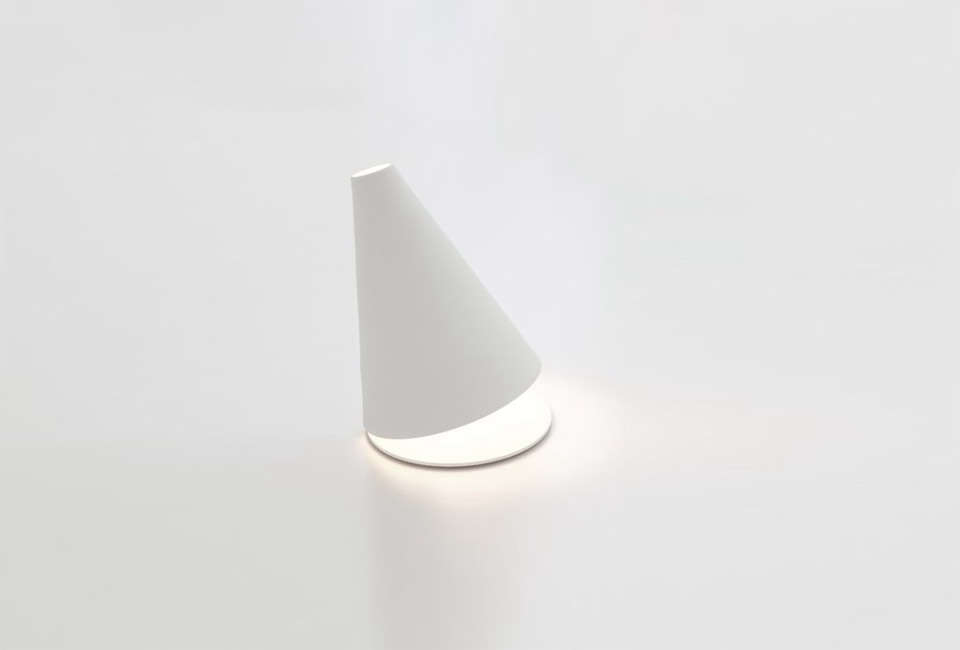
The Cassina version is associated with Ico Parisi and has the adjustable eyelid-inspired mechanism. Another Palpebra table lamp, designed by Federico Delrosso for Davide Groppi, is a conical white metal lamp known for its tilted shade and emotional, filtered light effect. That version is typically described with a round base of about 16 centimeters and a height around 20.5 to 22.5 centimeters, depending on the retailer listing. There are also other lighting products using the Palpebra name, including commercial dome-shaped lamps. In other words, do not rely on the product name alone. Check the photos and specifications unless you enjoy surprise furniture, which is rarely as fun as surprise cake.
For the Cassina Palpebra, look for finish options such as satin aluminum, matte black, and polished red. Check whether the retailer lists the lamp as in stock, made to order, or available with a multi-week lead time. High-end designer lighting often has longer delivery windows, especially when imported or custom ordered.
Is the Palpebra Table Lamp Worth It?
The Palpebra Table Lamp is best for buyers who value design history, expressive form, and atmospheric lighting. It is not the cheapest way to light a table. A basic lamp from a big-box store can do the job for far less money. But Palpebra is not competing with basic lamps. It belongs in the category of collectible designer lighting, where the object itself matters as much as the light it produces.
It is worth considering if you want a piece that feels special without being oversized. It is also a strong choice for interiors where small details carry the design. A lamp like this can upgrade a corner, sharpen a room’s personality, and make a simple surface feel intentional.
However, if you need strong task lighting for detailed work, you may want to pair Palpebra with another lamp or overhead source. Its greatest strength is mood and sculptural expression, not floodlighting a desk like an interrogation scene in a crime show.
Experience Section: Living With the Palpebra Table Lamp
Using the Palpebra Table Lamp is different from using a regular lamp because the interaction feels personal. You do not simply switch it on and walk away. You adjust it. You decide how awake the lamp should be. Open it wider, and the light becomes more direct. Close it slightly, and the room relaxes. That simple movement changes the mood more than you might expect.
Imagine placing the Palpebra on a nightstand in a quiet bedroom. At full brightness, it gives enough presence to help you settle in, find your book, or avoid stepping on the mysterious object on the floor that turns out to be a charger. Dimmed down, it becomes soft and atmospheric, the kind of light that makes the room feel calm instead of merely illuminated. This is where the lamp earns its name. It feels like the visual moment between wakefulness and sleep.
In a living room, the experience is more social. Guests notice it. Someone will ask what it is, and someone else will touch it before asking permission because beautiful objects have that effect on people. The Palpebra rewards curiosity. Its form makes sense once it moves. The “eyelid” is not a gimmick; it is the heart of the design. When adjusted, the lamp changes from object to instrument, controlling light with a gesture that feels almost theatrical.
On a console or shelf, the Palpebra also changes how nearby materials look. Warm light can bring out the grain in wood, add depth to stone, and make metal accessories feel softer. If placed near a wall, the lamp can create gentle reflections and shadows that shift as the cover opens or closes. This is especially satisfying in the evening, when a room benefits from layered lighting rather than one ceiling fixture blasting everything into reality.
The compact size is another part of the everyday experience. It does not demand a large table, and it does not block views across a room. That makes it useful in smaller apartments or carefully edited interiors. You can place it where a standard lamp shade would feel bulky. It gives you design impact without requiring a redesign of the entire furniture plan, which is good news for anyone who has ever moved a sofa three inches and called it a renovation.
The Palpebra Table Lamp also teaches a useful lesson about lighting: brightness is not the only goal. A great lamp shapes attention. It tells the eye where to rest. It creates comfort through contrast. Palpebra does this beautifully because it lets light appear gradually, almost like a secret being shared. That emotional quality is what separates memorable designer lighting from ordinary illumination.
For daily use, the biggest advantage is atmosphere. The biggest limitation is that it may not replace a strong reading or work lamp for every user. But that is not a flaw; it is a matter of purpose. Palpebra is for people who want lighting with character, not just wattage. It is for rooms that need a final detail, a warm glow, and a little wink from Italian design history.
Conclusion
The Palpebra Table Lamp is a small object with a surprisingly big emotional range. Its eyelid-inspired movement, compact form, warm dimmable light, and connection to Ico Parisi’s design legacy make it more than a decorative lamp. It is a functional sculpture for people who care about atmosphere, proportion, and personality.
Whether styled on a nightstand, console, side table, or office shelf, the Palpebra brings a distinctive sense of life to a room. It is playful without being silly, refined without being cold, and practical without becoming ordinary. If your home needs lighting that feels intelligent, warm, and just a little mischievous, the Palpebra Table Lamp is ready to open its eye.