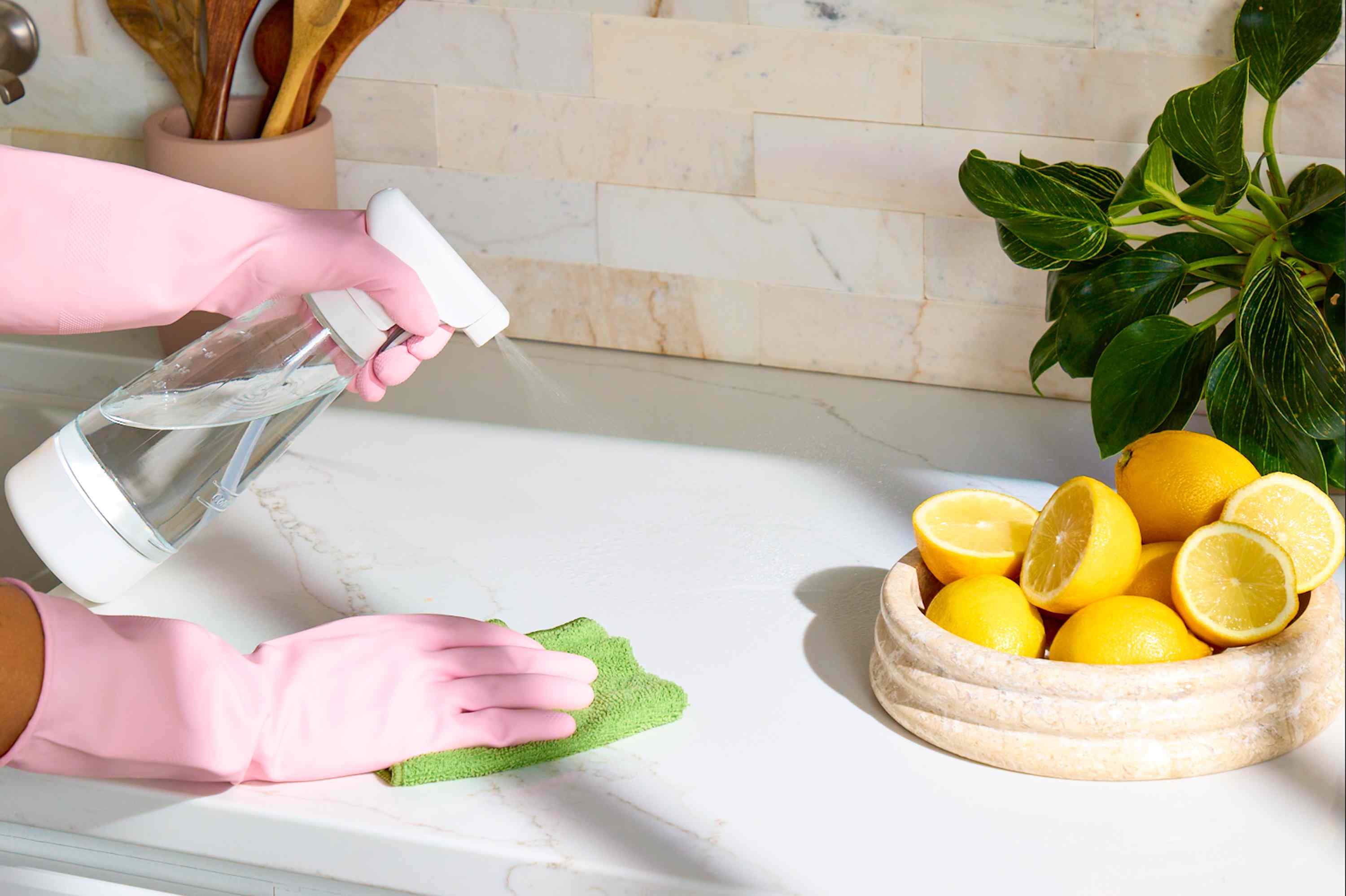
Lemon juice is basically nature’s way of saying, “Relax, I’ve got this.” It cuts grease, freshens odors, and leaves your kitchen smelling like you’re about to open a very optimistic bakery. The problem? If you use it the wrong way, your countertop can end up looking like a zebra tried to moonwalk across it.
This guide shows you exactly how to clean countertops with lemon juice without leaving streakswith the right dilution, the right tools, and a few pro-level finishing moves that make your surfaces look polished instead of… emotionally complicated.
Why Lemon Juice Works (and Why It Sometimes Backfires)
Lemon juice contains citric acid, which helps dissolve greasy residue and lift everyday grime. It’s also great at neutralizing certain smellslike last night’s garlic situation that’s still haunting your kitchen.
But lemon juice can also backfire if you:
- Use it full-strength (too acidic, too sticky, too much residue)
- Don’t rinse (acid + minerals + leftover grime = streak city)
- Let it air-dry (the countertop dries, the residue stays)
- Use the wrong cloth (lint is not the aesthetic we’re going for)
Before You Start: What Countertops Should NOT Get Lemon Juice?
Let’s do the responsible-adult part for 30 seconds: not every countertop is a lemon’s best friend. Lemon juice is acidic, which can dull finishes, break down sealers, or etch certain materials.
Avoid lemon juice on these surfaces
- Marble (acid can etch and leave dull spots)
- Granite or other natural stone (especially if the sealer is worn)
- Engineered stone (some manufacturers advise avoiding acidic cleaners)
- Unsealed concrete (porous and stain-prone)
- Unfinished or unsealed wood (can damage and discolor)
Usually safe (with the method below)
- Laminate
- Solid-surface countertops (like acrylic-based surfaces)
- Ceramic tile (avoid soaking grout)
- Sealed butcher block (light use only; don’t saturate; wipe dry immediately)
Tip: If you’re not sure what your countertop is made of, test your lemon solution in a hidden spot first (back corner, under the toaster, behind the coffee makeraka the “no one looks here” zone).
What You’ll Need for a Streak-Free Lemon Clean
- Lemon juice (fresh or bottled)
- Water (ideally warm; distilled if you have hard water)
- Mild dish soap (optional but helpful for grease)
- Two microfiber cloths (one for cleaning, one for drying/buffing)
- Spray bottle (optional, but makes life easier)
- A small bowl (if you prefer dipping a cloth instead of spraying)
The Best Lemon Juice Dilution Ratio (So You Don’t Leave Residue)
For everyday countertop cleaning, the sweet spot is:
- 1 part lemon juice
- 2 parts water
Want extra degreasing power? Add 1–2 drops of mild dish soap per 16 ounces of solution. Not a squirt. Not a “glug.” Two drops. You’re cleaning a countertop, not auditioning for a bubble machine.
Step-by-Step: How To Clean Countertops With Lemon Juice Without Leaving Streaks
Step 1: Clear and dry-sweep the surface
Move appliances, cutting boards, and that random mail pile you swear is “temporary.” Then wipe away crumbs and dust with a dry microfiber cloth. If you skip this, you’re basically turning your cleaner into lemony mud.
Step 2: Spray (lightly) or dampen your cloth
Light misting is your friend. If the countertop is dripping, you used too much. If you’re worried about overspraying, dampen a microfiber cloth with the solution instead and wipe the surface that way.
Step 3: Wipe in sections using overlapping strokes
Clean in manageable zonesabout the size of a baking sheet. Use overlapping strokes, and don’t scrub like you’re mad at the countertop. Gentle pressure lifts grime without smearing it around.
Step 4: Rinse (yes, really)
This is the difference between “sparkling clean” and “why does it look like I cleaned it with a ghost?” Take a second cloth, dampen it with clean water, and wipe the surface to remove any lemon/dish soap residue.
Step 5: Dry and buff immediately
Grab a dry microfiber cloth and buff the countertop until it feels dry to the touch. This prevents water spots and streaks, and it also gives you that satisfying “wow” shine.
The Real Reasons You’re Getting Streaks (and How to Fix Each One)
Cause #1: Too much lemon solution
Fix: Use less product. You want a thin film that you can wipe away, not a puddle that dries into residue.
Cause #2: You didn’t rinse
Fix: Always follow lemon cleaning with a plain-water wipe. Lemon juice can leave a faint residue, especially if you used bottled juice or added soap.
Cause #3: Hard water minerals
Fix: If you live in a hard-water area, use distilled water for your mix and your rinse step. Minerals are famous for drying into streaks and spots.
Cause #4: Your cloth is the problem
Fix: Swap to a clean microfiber cloth. Fabric softener-coated cloths and linty towels are streak factories. Microfiber grabs residue instead of redistributing it like a bad rumor.
Cause #5: Grease film that needs soap first
Fix: Add a couple drops of mild dish soap to your diluted lemon mix, or do a quick warm soapy-water wipe first, then finish with the lemon solution as a “polish pass.”
Targeted Stain Tricks (Without Turning Your Countertop Into a Science Fair)
Sticky spots (syrup, jam, mystery goo)
Lay a warm, damp cloth over the sticky area for 30–60 seconds to soften it. Then wipe with the lemon solution and rinse. This avoids aggressive scrubbing that can dull finishes over time.
Water rings or dull patches on non-stone surfaces
Use your diluted lemon mix, rinse well, and buff dry. If a dull patch persists, it may be finish wear rather than “dirt,” so don’t keep escalating with stronger acids.
Stained grout near tile countertops
Use a soft toothbrush with a tiny amount of the diluted solution. Don’t flood grout linesporous grout can hold onto moisture and discolor if oversaturated. Rinse and dry thoroughly.
How Often Should You Use Lemon Juice on Countertops?
For most “lemon-safe” surfaces, lemon juice cleaning works best as an occasional refresher, not an every-hour hobby.
- Daily: warm water + mild dish soap (simple and reliable)
- 1–2 times per week: the diluted lemon method for shine + odor refresh
- As needed: spot-cleaning sticky messes
If you have any type of stone (natural or engineered), stick with cleaners recommended for that surface and treat lemon like a cooking ingredientnot a cleaner.
Safety Notes (Because “Natural” Doesn’t Mean “Harmless”)
- Never mix lemon juice with bleach (dangerous fumes can form).
- Avoid mixing multiple strong cleaners in generalkeep it simple.
- Don’t rely on lemon juice for disinfection if you need true sanitizing (for example, after raw meat contact). Use a product specifically intended for disinfecting kitchen surfaces, and follow label directions.
FAQ
Can I clean countertops with straight lemon juice?
You can, but it’s more likely to leave residue and streaks, and it’s riskier for sensitive materials. Dilution gives you cleaning power with far fewer “why is it cloudy?” surprises.
Fresh lemon vs bottled lemon juicedoes it matter?
Fresh lemon is usually cleaner in composition (no additives). Bottled lemon juice can still work, but it may leave more residuemeaning the rinse-and-buff steps matter even more.
Why do my counters look clean, but still smeary?
That’s usually a thin film of grease or leftover cleaner. Use less solution, add a drop or two of dish soap to help break grease, rinse with clean water, and buff dry with a fresh microfiber cloth.
What if I accidentally used lemon juice on marble or granite?
Don’t panicjust act fast. Wipe it up immediately, rinse with water, and dry. If you notice dull spots later, that may be etching and could require professional refinishing (especially on marble).
Real-World Experiences: Lessons People Learn the Hard Way (So You Don’t Have To)
In real kitchens, streaks usually don’t happen because someone “did it wrong” in a dramatic way. They happen because of tiny, totally normal habitslike spraying cleaner while multitasking or grabbing whatever towel is closest (including the one that just dried your hands… which just touched the pizza box… which touched… you get it).
Experience #1: The “I used more so it would work better” phase. A lot of people start by using too much lemon solution, especially if they’re excited about switching to a simpler cleaner. The countertop looks amazing while it’s wet, and then it dries into faint stripes that show up only when sunlight hits at the exact angle that makes you question your life choices. The fix is surprisingly boring: mist lightly, wipe in sections, and rinse. Less product + faster drying equals more shine.
Experience #2: Hard water is the sneaky villain. If you’ve ever cleaned a surface and watched it dry into spots, you already know this pain. Hard water minerals don’t care that your lemon juice smells like springtimethey’ll still dry into streaky residue if you let them. People who switch to distilled water for mixing (and for the rinse cloth) often say it’s the single biggest “wow” improvement, especially on dark countertops where streaks are basically highlighted in neon.
Experience #3: One cloth is never enough. Many streak complaints come from using the same cloth start-to-finish. Cloth #1 picks up grease and crumbs. Then cloth #1 tries to “dry” the surface by smearing a thin layer of damp grime across everything like a minimalist painting. The two-cloth method is the grown-up cheat code: one microfiber to clean, one to rinse, one to dry/buff. If that sounds like too much laundry, keep a small stack and toss them in with towels (skip fabric softener so they stay absorbent).
Experience #4: The “my counters are stone-ish… I think?” discovery. Some folks don’t know their countertop material until something reacts. Lemon juice is often the moment of truth. If a surface dulls or changes tone after contact, it may be natural stone or a finish that’s sensitive to acids. The practical takeaway isn’t shameit’s strategy: identify the surface, use cleaners intended for it, and reserve lemon for materials that tolerate it well.
Experience #5: The best-looking kitchens clean in tiny loops, not marathon sessions. People who get consistently streak-free results tend to clean “little and often.” A quick wipe after cooking prevents grease film from building up, so lemon juice becomes a finishing touch instead of a heavy-duty degreaser. The best routine is the one you’ll actually do: a daily mild wipe, a weekly lemon refresh (if your surface allows), and immediate cleanup for spills.
Bottom line: streak-free cleaning is less about having a magic ingredient and more about technique. Lemon juice helpsbut the rinse, the microfiber, and the fast buff are what make your countertop look like it belongs in a “before-and-after” video.
Conclusion
To clean countertops with lemon juice without leaving streaks, remember the simple formula: dilute, wipe, rinse, and buff dry. Use a light mist (not a flood), clean in sections, and finish with a dry microfiber cloth before the surface air-dries into spots. When your countertop material is lemon-friendly, this method delivers a fresh-smelling kitchen and a genuinely polished shinewithout the zebra stripes.