Note: This body-only HTML is ready for web publishing and contains no extra source-code commentary.
Some pendant lights walk into a room and immediately demand applause. The Perseo Suspension Light does something smarter: it floats in quietly, softens the mood, flatters the architecture, and somehow ends up stealing the whole show anyway. That is part of its charm. It is elegant without being stiff, sculptural without behaving like it is too important for everyday life, and refined without feeling cold. In a market packed with pendants that scream for attention, the Perseo family proves that good design does not need a megaphone. Sometimes it just needs beautiful glass, a confident silhouette, and a little restraint.
If you are researching the Perseo Suspension Light for a home project, a design mood board, or a serious “I need my dining room to stop looking like a waiting area” upgrade, this guide breaks down what makes it special. We will look at its design language, materials, finishes, room placement, styling ideas, and the practical realities of living with a premium Italian suspension light. The short version? Perseo is the kind of fixture that makes a room feel considered. The longer version is much more fun, so let’s get into it.
What Is the Perseo Suspension Light?
The Perseo Suspension Light is a designer pendant from Produzione Privata, the experimental design company associated with Michele De Lucchi. It is best known for its hand-crafted blown-glass diffuser and its soft, lantern-like presence. Depending on the seller and collection, you will usually see Perseo described as part of a small family of suspension and related wall pieces, with suspension versions commonly associated with sizes such as 15, 28, and 44. Current official listings tend to focus on medium and large suspension options, while older and retailer-based references often include the smaller format as well.
That little detail matters because it tells you something important about the product: Perseo is not just a one-off decorative object. It is a family of forms that can work in more than one scale and more than one type of room. In other words, this is not a diva lamp that insists on living only above a dramatic marble table in a penthouse. It can absolutely do high design, but it also understands scale, proportion, and real-life interiors.
Why the Perseo Pendant Stands Out
It Looks Delicate, but It Has Presence
At first glance, the Perseo Suspension Light can read almost like paper. That visual lightness is part of the magic. The blown-glass diffuser has a softness that makes it feel airy and gentle, but the faceted shaping keeps it from becoming bland. It is rounded, yes, but not sleepy. It has volume, but not heaviness. It feels handmade in the best way, with just enough character to make clean-lined interiors feel warmer and more human.
This is one of the hardest tricks in lighting design. Plenty of pendants are bold. Plenty are subtle. Very few manage to be both subtle and memorable. Perseo does.
It Balances Japanese and Italian Design Sensibilities
One of the most interesting things about the Perseo light is how often it is compared to Japanese paper lanterns while still being unmistakably Italian in craftsmanship and finish. That contrast gives the fixture its personality. The lantern reference brings softness, calm, and familiarity. The Murano-style blown glass and carefully controlled form bring precision, artistry, and a more luxurious edge.
The result is a suspension light that works beautifully in interiors that mix minimalism with warmth. Think contemporary spaces with wood floors, plaster walls, linen drapery, natural stone, or vintage furniture. Perseo does not need a room full of expensive design icons to look good. It simply needs an environment that appreciates shape, texture, and atmospheric light.
It Gives Off a Softer Kind of Luxury
Some luxury lighting wants you to notice how much it cost. Perseo is not that type. It is more in the category of design objects that quietly signal taste. If a flashy chandelier is the person showing off their sports car keys at brunch, the Perseo pendant is the person who ordered beautifully and never mentioned where the jacket came from. Subtle confidence. Great energy.
That softer luxury makes the fixture especially appealing for homeowners and designers who want warmth and sophistication without tipping into visual noise.
Design Details That Matter
Blown Glass Construction
The star of the show is the glass diffuser. Perseo is associated with blown glass construction and a shape that feels handmade rather than machine-perfect. That matters visually because hand-worked glass interacts with light in a more nuanced way. Instead of producing a flat, generic glow, it creates depth. The surface catches light. The form softens it. The whole object looks alive, especially in the evening when the rest of the room is calm.
Faceted Surface
The faceting is one of the most underrated parts of the design. Without it, Perseo might simply look like another rounded pendant. With it, the lamp gains structure and a slightly sculptural quality. The faceted surface gives the diffuser a rhythm. It plays with highlights and shadows and helps the piece look interesting even when the light is off. That is important because a pendant is not just a light source; it is also a daytime object.
Finish Options
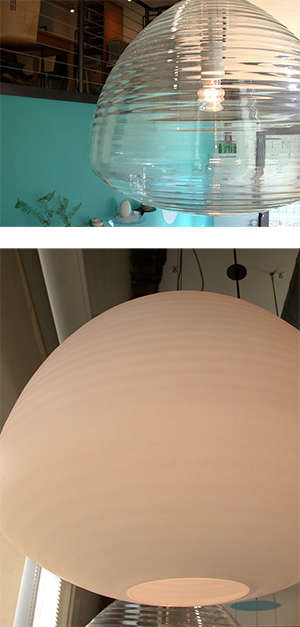
The Perseo Suspension Light is commonly associated with white layered satin or transparent glass finishes. The white option tends to emphasize softness and diffusion. It is dreamy, calm, and slightly cloud-like. The transparent version reveals more of the materiality and shape, which can feel a little crisper and more architectural.
Neither finish is objectively better. The right choice depends on your room. If you want the pendant to blend into a serene interior and cast a mellow glow, white satin is the obvious favorite. If you want a little more visual clarity and a more defined glass presence, transparent may feel more at home.
Scale and Proportion
Perseo works because it respects proportion. The family has been offered in more than one size, which gives it flexibility across different spaces. Smaller versions can work in pairs or rows. Medium sizes suit breakfast nooks, entryways, or cozy dining setups. Larger versions can hold their own above a dining table, in a stairwell, or in a room with higher ceilings.
When in doubt, remember the golden rule of pendant lighting: the lamp should feel intentional, not accidental. Too small, and it disappears. Too big, and it starts acting like it pays the mortgage. Perseo looks best when it has enough breathing room to float.
Where to Use the Perseo Suspension Light
Dining Room
This is one of the strongest placements for the Perseo pendant. Hung over a dining table, it creates a focal point without making the whole room feel formal. That balance is especially useful in homes where the dining area needs to function for both Tuesday night pasta and Saturday night “we lit candles and suddenly became much more elegant” dinners.
A white satin Perseo over a wood dining table is especially beautiful because it balances softness and grounding. Add textured textiles, simple ceramics, and maybe one chair that is slightly more stylish than the others, and you are done.
Kitchen Breakfast Area
If your kitchen has a breakfast nook, a round table, or a compact eat-in corner, Perseo can bring warmth to the space without making it feel busy. This is particularly helpful in kitchens with hard surfaces everywhere. Cabinets, counters, tile, and metal finishes can sometimes create a room that feels a little too efficient. Perseo adds softness and personality.
Entryway
A pendant in the entryway sets the tone for the entire home, and Perseo does that especially well. It feels welcoming rather than dramatic. It tells guests, “Yes, this house has taste,” but in a gracious whisper instead of a theatrical monologue.
If you have a two-story foyer, a larger Perseo can be stunning. In a more modest entry, a medium version can still make the space feel intentional and elevated.
Bedroom
Bedrooms benefit from gentle lighting, and the Perseo Suspension Light brings exactly that mood. It can work as a central overhead fixture, but it is particularly compelling when used in a layered lighting plan. Pair it with bedside lamps or wall lights so the room has multiple levels of illumination. The pendant becomes the mood setter rather than the single source doing all the heavy lifting.
Living Room Corner or Reading Zone
Not every pendant has to live over a table. In the right layout, Perseo can also anchor a reading corner or a conversational area. It works best when allowed to hang as a sculptural object in a relatively uncluttered zone. Give it some negative space. Let it breathe. The lamp has earned it.
How to Style the Perseo Light
Best Interior Styles
The Perseo Suspension Light works especially well in modern, contemporary, Japandi, minimalist, and warm transitional interiors. It also fits beautifully in eclectic spaces where you want one element of calm among more expressive furnishings.
Because the fixture has both softness and sculptural definition, it can pair with a wide range of materials. Wood, limestone, plaster, linen, leather, blackened steel, brushed brass, and vintage pieces all tend to play nicely with it.
Colors That Work Well
Perseo looks strongest against quiet palettes. Warm whites, ivory, putty, soft gray, pale taupe, muted olive, and natural wood tones are excellent companions. If your room is bold and colorful, the pendant can still work, but it may need a calmer supporting cast nearby so it does not get visually lost.
What Not to Pair It With
If the room already has a dozen statement elements, Perseo may struggle to have its moment. This is not because the lamp is weak. It is because it is refined. It likes thoughtful company, not chaos. A hyper-busy wallpaper, a sculptural chandelier in the next sightline, neon art, five clashing finishes, and a zebra-print rug may be a little too much. Perseo is elegant, but it is not interested in competing in a reality show.
Practical Buying Considerations
Know Your Ceiling Height
Before buying, check suspension length and ceiling conditions. A pendant this graceful needs to hang at the right height to look its best. Over a dining table, it should feel intimate without blocking sight lines. In open circulation spaces, it should sit high enough to preserve movement and comfort.
Think About Light Quality, Not Just Appearance
It is easy to fall in love with the shape and forget the actual function of a light fixture. Perseo does best when treated as part of a layered lighting scheme. It gives atmosphere, presence, and softness, but depending on bulb choice and room size, you may still want recessed lighting, sconces, or task lamps nearby. Great lighting is rarely one-note.
Choose the Finish With Your Lifestyle in Mind
The satin white finish can feel more diffuse and forgiving. The transparent version may show more detail and can feel slightly more formal. Neither is high drama, but they do create different moods. Consider how you use the room during the evening, what materials surround the light, and whether you want the fixture to blend in or stand out a little more.
Is the Perseo Suspension Light Worth It?
If you value craftsmanship, atmosphere, and design pedigree, the answer is yes. The Perseo Suspension Light is not a trend piece. It is the kind of fixture that still feels thoughtful years after installation because its appeal comes from form, material, and proportion rather than gimmicks.
It is especially worth considering if you want a pendant that feels artistic without becoming difficult, precious, or over-styled. Perseo has enough design credibility for professionals, but enough warmth for real homes. That is a rare sweet spot.
In a world of lighting options that often lean too industrial, too flashy, or too generic, Perseo offers a more human answer. It glows softly. It looks graceful. It adds character. It does not shout. It does not need to. Good design usually does not.
Experience: Living With the Perseo Suspension Light
Here is where the Perseo Suspension Light becomes more than a product description and starts feeling like part of daily life. On paper, it is a designer pendant in blown glass. In a room, it behaves more like an atmosphere machine. That sounds dramatic, but only because lighting is one of the most underrated parts of interior design. We notice when it is bad immediately. We notice when it is good more slowly, almost subconsciously. Perseo belongs to the second category.
Imagine walking into your dining room at the end of a long day. The table is not styled for a magazine shoot. There is probably mail on one end, a bowl in the middle, and someone has absolutely left a charging cable where it should not be. Yet when the Perseo is on, the room still feels softer and more composed. The glass diffuses light in a way that flatters surfaces instead of flattening them. Wood looks warmer. Walls look calmer. Even ordinary weeknight takeout gets a promotion in the visual department.
That is one of the best real-world qualities of this suspension light: it makes normal life look a little better without making your home feel staged. Some luxury fixtures can feel disconnected from actual living, as if they expect everyone in the room to sit up straighter and stop touching things. Perseo is elegant, but it is not uptight. It works just as well over a casual breakfast as it does during a dinner party.
There is also the daytime effect, which people often overlook when buying pendant lighting. For many hours of the day, a fixture is not illuminated at all. It is just there, hanging in space, earning its keep visually. Perseo does that beautifully. The faceted glass gives it enough shape to remain interesting in daylight, while the rounded form keeps it from feeling sharp or severe. Sunlight catches the surface gently, and the pendant reads less like an appliance and more like a quiet piece of sculpture.
Emotionally, the experience of living with a Perseo-style light is all about calm. It does not create a harsh spotlight effect. It does not turn a room clinical. It encourages slower, softer spaces. That makes it a smart choice for people who want their interiors to feel restorative rather than merely impressive. If your taste leans toward rooms that exhale instead of perform, this is your kind of pendant.
Perhaps the most satisfying part is that Perseo feels special without becoming exhausting. You do not have to “explain” it to enjoy it. Guests may comment on it, usually in the form of, “That light is beautiful,” which is really the ideal response. Not confusion. Not polite silence. Not an awkward discussion about conceptual art and exposed bulbs. Just simple appreciation. In the end, that is the real experience of the Perseo Suspension Light: it brings beauty, softness, and intelligence into a room, then lets life happen underneath it.
Final Thoughts
The Perseo Suspension Light succeeds because it understands something many fixtures forget: lighting should shape a room, not overpower it. With its blown-glass form, lantern-like softness, sculptural surface, and understated sophistication, Perseo offers a rare mix of artistry and livability. It is a designer pendant with soul, which may sound like a grand claim for a ceiling fixture, but one look at it glowing over a table and the argument makes itself.
If you want a suspension light that feels timeless, elegant, and genuinely atmospheric, Perseo deserves a place on the shortlist. It is proof that the best lighting does more than brighten a room. It changes how the room feels.