A wooden triangle ruler looks simple enough to be underestimated. It sits quietly on a desk, points its corners at innocent notebooks, and waits for someone to realize that straight lines, clean angles, and readable scale drawings do not happen by magic. Whether you call it a wooden drafting triangle, a triangular ruler, an architect scale, or that “three-sided measuring thing hiding under the papers,” this tool has earned a lasting place in classrooms, studios, workshops, and design offices.
The wooden triangle ruler is especially interesting because it combines practicality with old-school charm. Modern drafting tools are often made of plastic, acrylic, aluminum, or stainless steel, but wood still has a personality those materials cannot quite copy. It feels warmer in the hand, looks beautiful on a desk, and brings a little vintage dignity to the very serious business of drawing a line from point A to point B without making it look like a sleepy worm.
This guide explores what a wooden triangle ruler is, how it is used, why people still like it, what to look for before buying one, and how to care for it so it remains useful instead of turning into a decorative boomerang.
What Is a Wooden Triangle Ruler?
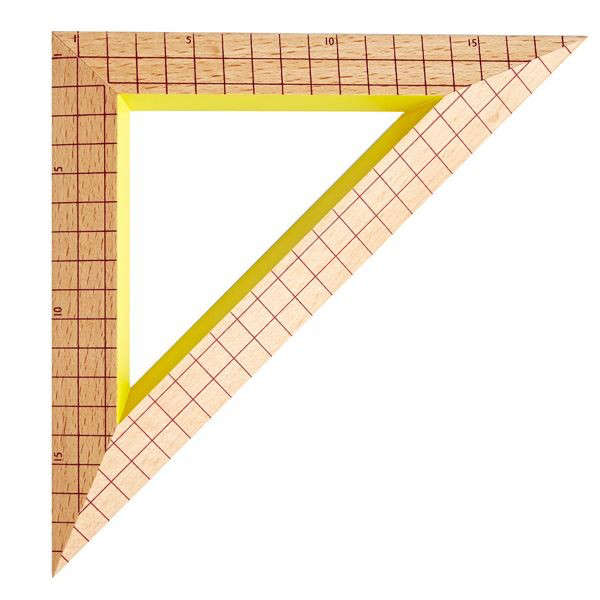
A wooden triangle ruler usually refers to one of two related tools. The first is a flat triangular drafting ruler used to draw fixed angles, most commonly 30, 45, 60, and 90 degrees. The second is a three-sided architect’s scale ruler, often shaped like a triangular prism, with different measurement scales printed along its edges. Both tools help users measure, draft, design, and transfer dimensions accurately.
In classrooms, a triangle ruler is often used for geometry, technical drawing, and basic drafting exercises. In architecture and interior design, a triangular scale ruler helps translate real-world dimensions into scaled drawings such as floor plans, elevations, and furniture layouts. In woodworking, a triangular layout tool or square helps mark right angles, check cuts, and guide repeatable measurements.
Wooden versions of these tools have a long history. Before today’s transparent plastics and laser-etched aluminum scales became common, wood was a natural choice because it was accessible, workable, lightweight, and pleasant to handle. Vintage wooden drafting scales are still popular among collectors, architects, artists, and anyone who believes a good desk should contain at least one object that looks like it knows Latin.
Why the Triangle Shape Matters
The triangle is not just there to look clever. It is one of the strongest and most useful shapes in design. A flat drafting triangle gives you fixed angles that can be used repeatedly without resetting a protractor every time. That means faster drawing, cleaner construction lines, and fewer opportunities to ask, “Wait, was that 60 degrees or did my pencil just panic?”
The most common drafting triangles are the 45-45-90 triangle and the 30-60-90 triangle. The 45-degree triangle is useful for diagonal lines, isometric-style sketches, and square-based layouts. The 30-60-90 triangle is popular in engineering drawing, architectural drafting, and geometric construction because it provides two different acute angles plus a reliable right angle.
A triangular architect scale uses the shape differently. Instead of providing a flat angle guide, its three-sided body allows multiple measurement scales to fit on one compact ruler. Each edge can represent a different drawing scale, such as 1/4 inch equals 1 foot, 1/8 inch equals 1 foot, or other common architectural ratios. This lets architects and designers move between drawing scales without carrying a small orchestra of rulers.
Common Uses for a Wooden Triangle Ruler
1. Technical Drawing and Drafting
In manual drafting, triangle rulers are used with a T-square, parallel rule, or drafting board to draw vertical, horizontal, and angled lines. A designer can place the triangle against a straight reference edge and draw consistent lines at 30, 45, 60, or 90 degrees. This is useful for mechanical drawings, architectural details, furniture plans, and classroom exercises.
2. Architecture and Interior Design
A wooden triangular scale ruler is useful for reading and creating scaled drawings. For example, if a floor plan is drawn at 1/4 inch equals 1 foot, the correct edge of the scale ruler lets you measure room dimensions directly from the drawing. Instead of doing math every three seconds, you use the scale and save your brain for more important questions, like whether the sofa will fit through the door.
3. Woodworking Layout
In woodworking, accurate layout is everything. A small error at the marking stage can become a large, expensive, and emotionally dramatic problem after cutting. A triangle ruler or layout square can help mark straight lines, check corners, repeat measurements, and create angled cuts. It is especially helpful for small projects, templates, craft builds, and layout work where speed and consistency matter.
4. Geometry and Education
Students use triangle rulers to learn angles, parallel lines, perpendicular lines, scale, and measurement. A wooden ruler adds a tactile element that many learners enjoy. It feels sturdy, familiar, and less slippery than some plastic tools. For younger students, a wooden triangle ruler can also make geometry feel more like building and less like being attacked by invisible numbers.
5. Art, Pattern Making, and Craft Projects
Artists, quilters, leatherworkers, scrapbookers, and model makers also use triangle rulers to draw angles, create borders, make templates, and repeat shapes. A wooden triangle ruler can be especially appealing in creative spaces because it doubles as a functional tool and an attractive studio object. That may not improve your line quality, but it certainly improves your desk’s self-esteem.
Wooden Triangle Ruler vs. Plastic, Acrylic, and Metal
Every material has strengths and weaknesses. A wooden triangle ruler offers a warm feel, good grip, low glare, and classic style. It is usually comfortable to handle and less cold or sharp than metal. It may also be a more visually appealing choice for traditional drafting desks, studios, classrooms, and gift sets.
Plastic and acrylic triangle rulers are popular because they are lightweight, inexpensive, and transparent. Transparency helps users see the drawing underneath, which is a major advantage in technical drafting. Acrylic tools often have crisp printed markings, but they may scratch or crack if treated roughly.
Metal triangle rulers and layout squares are typically more durable and better suited for construction sites, shops, and heavy-duty woodworking. Aluminum and steel tools resist edge wear better than wood and are often preferred when precision, impact resistance, and long service life are priorities.
Wood sits somewhere between beauty and utility. It is practical, but it asks for a little care. If exposed to moisture, extreme heat, or rough storage, it can warp, swell, crack, or lose accuracy. In other words, wood is wonderful, but it does not appreciate being left in a damp garage under a paint can and three mysterious screws.
Best Woods for Triangle Rulers
Traditional wooden rulers are often made from hardwoods or stable engineered wood. Beech, maple, boxwood, birch, bamboo, and laminated plywood are common choices. These materials are chosen because they can be shaped cleanly, hold printed or engraved markings well, and provide a smooth surface.
Beech is a popular ruler wood because it is hard, fine-grained, and relatively affordable. Maple is dense and durable, with a clean light color that makes markings easy to read. Boxwood has historically been valued for precision rules because of its fine texture and dimensional stability. Bamboo is technically a grass, not a wood, but it is often used in ruler products because it is strong, lightweight, and renewable.
Laminated wood can be especially useful because alternating layers may reduce warping compared with a single piece of solid wood. For a wooden triangle ruler, stability matters more than fancy grain. A ruler with dramatic figure may look gorgeous, but if it twists like a potato chip, it belongs on a shelf, not on a drafting table.
How to Choose a Good Wooden Triangle Ruler
Check the Purpose First
Before choosing a wooden triangle ruler, decide what you need it to do. For geometry class, a simple flat triangle with clear angle markings may be enough. For architecture, choose a triangular scale ruler with the scales you actually use. For woodworking, look for a sturdy layout triangle or square with readable markings and a reliable edge.
Look for Clear, Durable Markings
The markings should be easy to read and resistant to fading. Engraved or deeply printed graduations often last longer than surface-only printing. If the ruler includes both inches and centimeters, make sure the numbers are not crowded. A ruler that requires a magnifying glass and emotional support is not a productivity tool.
Test the Edges
The edges should be straight, smooth, and free of chips. A drafting triangle should sit flat on paper. A triangular scale should roll minimally and feel balanced in the hand. A woodworking layout ruler should have edges that contact the workpiece cleanly.
Consider Size
Common sizes include 6-inch, 8-inch, 10-inch, and 12-inch versions. Smaller rulers are convenient for notebooks, school bags, and quick sketches. Larger rulers are better for architectural drawings, drafting boards, and workshop layouts. A 12-inch triangular architect scale is a standard choice for many design students and professionals.
Inspect for Warping
Place the ruler on a flat surface and check whether it rocks. For a flat triangular ruler, all edges should touch the table evenly. For a triangular scale ruler, sight down each long edge to see whether it appears straight. Even a beautiful wooden ruler becomes frustrating if its “straight edge” has developed a personal opinion.
How to Use a Wooden Triangular Architect Scale
Using an architect scale is not difficult once you understand the basic idea. First, identify the scale of the drawing. A floor plan may say 1/4 inch equals 1 foot, 1/8 inch equals 1 foot, or another ratio. Then find the matching scale on the ruler. Align the zero mark with the starting point of the line you want to measure. Read the number at the end of the line using the same scale.
The most common beginner mistake is starting at the physical end of the ruler instead of the zero mark. Many scale rulers have extra space before zero, so starting at the end can create incorrect measurements. Another mistake is switching scales halfway through a drawing. If you begin measuring with the 1/4-inch scale, keep using that scale unless the drawing specifically changes.
When drafting from real dimensions, the process works in reverse. If a room is 12 feet wide and the drawing scale is 1/4 inch equals 1 foot, the scale ruler tells you how long to draw that room on paper. The ruler handles the conversion, which is helpful because architecture already contains enough chances for caffeine-related arithmetic.
How to Use a Flat Wooden Drafting Triangle
To use a flat wooden drafting triangle, place one edge against a T-square, straightedge, or known reference line. Hold the triangle firmly so it does not shift. Draw along the desired angled edge. Flip or rotate the triangle to create lines in the opposite direction.
For parallel lines, slide the triangle along the T-square while keeping the same edge aligned. For perpendicular lines, use the 90-degree corner. For angled construction lines, choose the 30, 45, or 60-degree edge depending on the triangle type. Combining a 45-degree triangle with a 30-60-90 triangle can also help create additional angles, especially in traditional manual drafting.
If you are using ink, be careful with wooden edges. Some drafting triangles include an inking edge, which slightly lifts the edge away from the paper to prevent smearing. If your wooden triangle does not have that feature, use pencil or test your pen technique first. Ink has a special talent for discovering your overconfidence.
Accuracy Tips for Better Results
Accuracy is not only about the tool. It is also about how consistently you use it. One of the best habits is to measure and mark from the same reference edge whenever possible. This reduces small differences caused by switching sides, changing tools, or reading different scales.
For woodworking, many experienced makers prefer transferring dimensions directly instead of repeatedly reading numbers. For example, you can mark one part, set your ruler or square to that measurement, and transfer the mark to matching pieces. This improves consistency and reduces the chance of misreading a tiny fraction.
It is also wise to compare your wooden triangle ruler against a known accurate ruler or square from time to time. Wood can move with humidity, so a ruler that was accurate years ago may not remain perfect forever. For fine woodworking, cabinetry, engineering, or professional drafting, use wood rulers for layout and reference, but rely on high-precision metal tools when tolerances are extremely tight.
Care and Maintenance
A wooden triangle ruler lasts longer when it is stored properly. Keep it dry, away from direct sunlight, and out of extreme temperature changes. Do not leave it in a hot car, damp basement, or toolbox where it can be scratched by metal tools. Store flat drafting triangles flat, and keep triangular scale rulers in a sleeve, drawer, or pencil case.
Clean the ruler with a soft dry cloth. If necessary, use a barely damp cloth and dry it immediately. Avoid soaking, harsh cleaners, and abrasive pads. If the wood has a natural finish, a tiny amount of appropriate wax or oil may help maintain the surface, but never apply anything that could blur markings or stain paper.
If the markings begin to fade, do not try to “improve” them with a thick marker unless you want your measurements to become interpretive art. For serious work, replace the ruler when markings become unclear or edges become damaged.
Who Should Use a Wooden Triangle Ruler?
A wooden triangle ruler is a good fit for students, artists, architects, designers, hobby woodworkers, crafters, collectors, and anyone who enjoys practical tools with character. It is especially useful for people who like analog design processes, sketching by hand, making templates, or working in a studio where tools are part of the creative atmosphere.
However, it may not be the best choice for wet job sites, heavy construction, or ultra-precise machine setup. In those situations, aluminum, stainless steel, or high-grade plastic tools may be more durable and stable. The wooden triangle ruler is best understood as a reliable everyday drawing and layout companion, not a replacement for every specialized measuring instrument in the universe.
Practical Experiences With a Wooden Triangle Ruler
The first thing most people notice about a wooden triangle ruler is the feel. It does not slide across paper as nervously as some plastic rulers, and it does not feel cold like metal. That small difference matters during long drawing sessions. When sketching a room layout, planning a shelf, or helping a student understand angles, the wood feels calm and controlled. It makes the process feel less like operating equipment and more like making something by hand.
In a home office, a wooden triangular architect scale can become one of those tools you reach for even when a digital app is available. For example, when reviewing a printed floor plan, it is often faster to grab the scale ruler, check the drawing ratio, and measure a wall directly than to open software and hunt through menus. A 10-foot wall, a 3-foot doorway, or a 24-inch cabinet depth becomes readable at a glance. The ruler turns a flat drawing into something your hands understand.
In a small woodworking project, a wooden triangle ruler can help with layout before cutting. Suppose you are building a simple desktop organizer. You can use the ruler to mark square corners, repeat side panel dimensions, and sketch angled dividers. The key lesson is that the ruler works best when paired with a consistent reference edge. Mark all repeated parts from the same side, keep your pencil sharp, and resist the temptation to “eyeball it just once.” Eyeballing it just once is how drawers become trapezoids with confidence issues.
For students, the experience is different but equally useful. A wooden triangle ruler gives geometry a physical form. Instead of memorizing that a right angle is 90 degrees, students can place the corner on paper and see it. Instead of guessing what a 45-degree line looks like, they can draw one repeatedly. The ruler helps connect abstract angle vocabulary with visible, repeatable marks. That is especially helpful for visual learners.
There is also a small emotional benefit. Wooden tools age. They pick up tiny marks, soften slightly at the edges, and develop a surface that feels familiar. A plastic ruler often feels disposable; a wooden ruler feels like it has stories. This does not make it automatically more accurate, but it does make it more likely to be kept, used, and appreciated. In creative work, that matters. The best tool is not always the most expensive one; sometimes it is the one you actually enjoy picking up.
The biggest practical warning is storage. A wooden triangle ruler should not be tossed into a crowded drawer with scissors, utility knives, glue sticks, and one unidentified cable from 2014. It deserves a flat drawer, sleeve, or desk tray. Keep it dry, check it occasionally, and use it with respect. Do that, and it can remain a dependable helper for drawing, measuring, teaching, designing, and making straight lines that behave themselves.
Conclusion
The wooden triangle ruler is more than a nostalgic desk accessory. It is a practical measuring and drawing tool that supports drafting, architecture, woodworking, geometry, crafting, and design. Its triangular shape provides either fixed angles or multiple scale edges, depending on the type. Its wooden construction offers warmth, grip, beauty, and a traditional feel that many users still prefer.
Choose one with clear markings, straight edges, stable wood, and the right scale system for your work. Use it consistently, store it carefully, and check it against a trusted reference when accuracy matters. A good wooden triangle ruler will not design the project for you, but it will quietly help your lines stay straight, your angles stay honest, and your measurements avoid unnecessary drama.
Note: This article is based on synthesized information from reputable educational, woodworking, drafting, architecture, and tool-reference sources, rewritten in original standard American English for web publication.