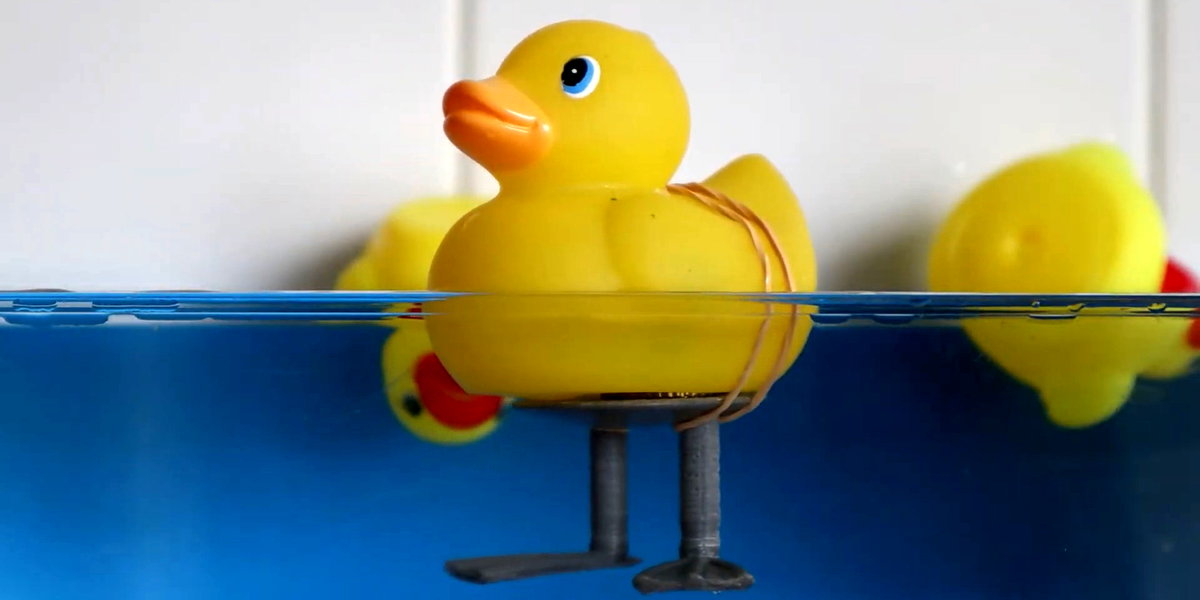
Some ideas sound silly until you look at them for more than five seconds. Plastic prosthetics for rubber duckies is one of those ideas. At first glance, it feels like the kind of sentence a sleep-deprived toy designer mutters after too much coffee and not enough sunlight. But look a little closer, and this oddball topic opens into something surprisingly rich: product repair, sentimental design, 3D printing, toy safety, and the very human tendency to care deeply about objects with tiny faces.
There is not a formal, white-coat industry devoted exclusively to fitting bath ducks with replacement legs, flippers, beaks, or wheel systems. Still, the concept makes sense in the modern maker era. Real-world prosthetics have already been custom-built for animals. 3D printing has made rapid prototyping faster and more affordable. Toy collectors restore beloved items all the time. And anyone who has ever refused to throw away a chewed-up childhood bath toy understands the emotional logic immediately: if the duck is still cute, why not save it?
That is where plastic prosthetics for rubber duckies becomes more than a punchline. It becomes a tiny design challenge with big ideas behind it.
Why This Ridiculous-Sounding Idea Actually Works
Rubber duckies occupy a strange and wonderful place in American culture. They are bath toys, desk mascots, gift-shop icons, collector items, cruise-ship scavenger-hunt stars, and emotional support weirdos for people who need a little cheer on a shelf. Once an object has eyes, a rounded body, and the facial expression of a patient kindergarten teacher, people start projecting personality onto it almost immediately.
Psychologists have long observed that people anthropomorphize objects. In plain English, that means we give human qualities to non-human things. We do it with cars, coffee mugs, old laptops, and absolutely with ducks wearing sailor hats. Research on object attachment also suggests that comfort and human-like qualities can make it harder to part with possessions. So when a favorite duck loses a foot, cracks at the base, or starts leaning like it survived a dramatic soap-opera cliffhanger, many people do not see trash. They see a tiny patient with a strong will to float.
That emotional connection is exactly why a prosthetic add-on can feel charming rather than absurd. A replacement part does not just “fix” the toy. It preserves the story attached to it.
What Real Prosthetics Teach Us About Tiny Duck Prosthetics
The best way to take this topic seriously is to start with real prosthetics. One of the most widely shared examples is Buttercup, a duck born with a backward foot who later received a custom 3D-printed duck foot that helped restore mobility. Another famous case involved Derby, a dog who received custom prosthetic legs designed through repeated testing and refinement. Those are not toy stories. They are real demonstrations of what personalized design can do when engineers and caregivers solve a highly specific problem.
Now, a rubber duck is obviously not going jogging through a park like Derby. It is not a medical patient, and no one should confuse hobby fabrication with regulated human medical devices. But the design principles still transfer beautifully. Real prosthetic work often follows a familiar logic: assess the damaged structure, measure the anatomy, model the replacement, choose materials carefully, test the fit, revise the geometry, and improve comfort or function. That same workflow works at toy scale.
For a ducky project, “function” may mean helping a display duck stand upright, allowing a bath toy to float evenly again, or restoring symmetry so a sentimental collectible looks whole on a shelf. The goal is smaller, but the process is surprisingly legitimate.
How Plastic Prosthetics For Rubber Duckies Would Actually Be Made
1. Diagnose the duck drama
Every project starts with the same question: what exactly is missing or failing? Some ducks need a replacement foot. Some need a stabilizing tail support. Others have split seams or distorted bases and need an external brace more than a traditional prosthetic. In restoration work, defining the problem correctly matters more than rushing to print a solution.
2. Measure or scan the toy
Modern additive manufacturing is built around digital modeling. The simplest approach is old-school measuring with calipers and a sketch. A fancier route uses 3D scanning or photogrammetry to capture the toy’s geometry. That is the same broad digital logic used in real prosthetic development: build a model first, then turn it into a physical object layer by layer.
3. Design for attachment, not just appearance
This is where many cute ideas fail. A replacement flipper that looks perfect but falls off after one splash is just expensive confetti. Good duck prosthetics need an attachment method. That may be a press-fit sleeve, a clip-on cradle, a non-permanent strap, a low-profile cradle under the belly, or a display-only adhesive solution. If the duck is a children’s toy, the bar for safety gets much higher, and removable small parts become a major concern.
4. Choose the right plastic
For hobby printing, PLA is popular because it is easy to print and works well for prototypes. PETG is often more durable and more impact-resistant. ABS is common too, though printing considerations and ventilation become more important with some materials. Flexible materials such as TPU can be useful when a part needs some bend or grip. In short, the “best” plastic depends on whether the goal is a display repair, a novelty accessory, or a sturdier functional support.
5. Prototype, laugh, adjust, repeat
No one nails a tiny duck ankle on the first try every time. The first version may sit too high. The second may twist. The third may make the duck look like it joined an extreme sports league. Iteration is normal. In fact, one of the biggest advantages of additive manufacturing is how quickly a designer can revise a file and test a new version without rebuilding expensive tooling.
Material Choices Matter More Than the Joke
If a prosthetic duck project is only for adult display, the design conversation is mostly about durability, fit, and aesthetics. If the duck will be handled by children, used in water, or sold as a toy, safety becomes the main event.
Toy safety is not optional
In the United States, toys intended for children are subject to safety requirements, testing rules, and certification obligations. That means a maker cannot just print a cute replacement part, toss it onto a bath toy, and assume the job is finished. Small parts, accessible materials, labeling, and compliance all matter. The toy world is not the Wild West, even when the sheriff is a yellow duck with a pirate hat.
Soft bath toys raise chemical questions
Flexible duck toys have historically raised questions about plasticizers. Consumer safety guidance has specifically used a children’s rubber duck as an example of a product that may contain phthalates because those chemicals can make plastic softer and more pliable. For modern repair or customization work, that means material selection should be thoughtful. If the project is decorative, choices are broader. If it is intended for child use, material sourcing and compliance are a big deal.
Water changes everything
Bath toys live in a world of warmth, moisture, soap residue, and microbial mischief. Researchers have shown that flexible bath toys can harbor biofilms, bacteria, and fungi. So if a duck prosthetic is meant for bathtub use, the design should avoid hollow crevices that trap water, hard-to-clean cavities, or awkward seams that become a luxury condo for microscopic tenants. A display duck can get away with more. A bath duck needs a hygiene plan.
Best Real-World Uses For Duck Prosthetics
Sentimental restoration
This is the sweetest use case. A family keeps a beloved duck from childhood, but time has taken a bite out of one side. Instead of replacing it, they create a custom support piece that helps the toy sit upright in a nursery or on a bookshelf. Suddenly, a battered bath companion becomes an heirloom with attitude.
Art and design projects
Artists and designers love objects that sit between funny and profound. A duck with a tiny prosthetic leg can become a commentary on care, fragility, adaptation, disability visibility, or the emotional life of objects. The humor gets people in the door. The design message keeps them there.
Education and makerspaces
This topic also works brilliantly in classrooms and makerspaces. It is approachable, inexpensive, and instantly visual. Students can learn measurement, CAD basics, material selection, prototyping, ethics, and safety through a project that does not feel intimidating. “Design a replacement foot for a duck” is much less scary than “master parametric modeling,” even though the lesson underneath is very similar.
Fundraisers and awareness campaigns
A duck with a visible assistive device can also become a mascot for animal rescue, rehabilitation, design-for-good campaigns, or STEM outreach. The project is memorable because it is adorable, but it still teaches something real about customization, accessibility, and problem-solving.
Common Mistakes That Turn a Cute Project Into a Plastic Mess
The first mistake is making the part too literal. A duck prosthetic does not need to mimic anatomy perfectly if the true goal is balance, support, or display. Sometimes a discreet stand or underbody brace works better than a hyper-detailed replacement limb.
The second mistake is ignoring scale. Tiny parts look charming on-screen and impossible in real life. If the attachment point is too small, fragile, or sharp, the design can become frustrating fast.
The third mistake is forgetting context. A bath toy, a collectible shelf duck, and a museum-style art duck all need different solutions. One wants easy cleaning. One wants visual polish. One wants conceptual flair. Treating them as the same object is how a simple project ends with glue on the table, regret in the heart, and one suspiciously judgmental duck staring at you from the sink.
The Future of Plastic Prosthetics For Rubber Duckies
As desktop fabrication tools improve, this niche will only get easier to explore. Better scans, faster printers, and more diverse materials make custom toy restoration far more accessible than it was a decade ago. Libraries, universities, and makerspaces across the United States already support educational and research printing with materials like PLA, PETG, TPU, and resin-based options. That means the skills needed for duck prosthetics are no longer locked inside industrial labs.
The bigger future question is not whether people can make tiny duck prosthetics. They absolutely can. The interesting question is why they choose to. And the answer is surprisingly lovely: because repair is meaningful, customization is fun, and humans are deeply wired to care about familiar objects. We are the kind of species that sees a damaged bath toy and thinks, “This little legend deserves another chance.” Honestly, that is not the worst thing about us.
Experiences Related to “Plastic Prosthetics For Rubber Duckies”
The experience of working on a duck prosthetic project is usually part engineering puzzle, part comedy routine, and part emotional ambush. It often begins with a person casually saying, “This is probably dumb, but can you fix my duck?” Then the duck appears, and it is never just a duck. It is the bath toy that survived three apartments, two siblings, one overenthusiastic puppy, and a family move. Suddenly the assignment has stakes.
The first emotional turn happens during measurement. The moment someone rotates the toy under a lamp and starts discussing symmetry, balance, and attachment points, the joke becomes a project. You stop seeing a disposable plastic bird and start seeing a design brief. How should the replacement part support the weight? Should it match the duck’s original shape, or should it be visibly modern, almost like a tiny titanium-looking statement piece? Should the part disappear, or should it celebrate the repair?
Then comes the prototyping stage, which is where humility enters wearing steel-toe boots. The first print is often too big, too stiff, too wobbly, or weirdly heroic. A replacement foot might make the duck stand perfectly, but also make it look like it is about to enter a mixed martial arts octagon. A sleek little leg might look elegant but fail the basic test of “can this duck survive being nudged by a curious child?” Every version teaches something.
There is also a strangely satisfying moment when the right design finally clicks. The duck stands. The line of the body looks natural. The repaired toy regains its posture, almost its personality. People laugh, but not in a mocking way. It is the laugh of delight, the same sound people make when they see a tiny sweater on a dog or a miniature library in a front yard. The project feels both silly and sincere, which is a powerful combination.
For makers, the best part is often the reaction from the owner. A repaired duck can trigger the kind of gratitude normally reserved for much bigger objects. That is because the value was never in the plastic alone. It was in memory, continuity, and care. The prosthetic becomes proof that repair is possible even when replacement would have been easier.
In group settings, these projects also create instant engagement. Students who would roll their eyes at a lecture on additive manufacturing suddenly care a lot about tolerances when the assignment is saving a duck from a lifetime of crooked floating. Adults who say they are “not creative” become extremely opinionated about whether the prosthetic should be yellow, white, transparent, or chrome. The duck, somehow, becomes a democratic design problem.
That may be the most memorable experience of all. Plastic prosthetics for rubber duckies remind people that design does not have to be huge to be meaningful. Sometimes innovation shows up in a hospital lab. Sometimes it shows up in a makerspace. And sometimes it shows up in someone’s hand, in the form of a tiny yellow bird getting one more chance to sit proudly on the edge of the tub like it owns the place.
Conclusion
Plastic prosthetics for rubber duckies may sound like a novelty topic, but it sits at the intersection of real trends: personalized fabrication, repair culture, sentimental design, toy safety, and the expanding reach of 3D printing. The same design thinking that helps create real prosthetics for animals and custom-fit medical devices can inspire tiny, practical, and sometimes moving solutions for toy restoration and artistic play.
The smartest version of this idea is not reckless or random. It is intentional. It respects materials, safety, hygiene, and purpose. Most of all, it respects the emotional life people build around familiar objects. Sometimes a duck is just a duck. Sometimes it is a memory with a squeaker. And when that memory needs a tiny plastic assist, good design can absolutely answer the call.