Playing with a crayfish is not like playing fetch with a dog, peekaboo with a toddler, or emotional chess with a cat. A crayfish will not bring you a ball. It will not sit on command. It will, however, wave its claws like a tiny underwater landlord telling you to back away from its cave. And honestly? That is part of the charm.
Crayfish, also called crawfish or crawdads in many parts of the United States, are freshwater crustaceans with big personalities packed into armored little bodies. They explore, dig, rearrange decorations, investigate food, defend favorite hiding spots, and occasionally act as if the entire aquarium is their personal kingdom. Learning how to play with a crayfish means learning how to interact safely, gently, and respectfully while encouraging natural behavior.
The most important rule is simple: play should never stress the animal. A crayfish is not a toy, even if it looks like a pocket-sized lobster wearing boxing gloves. The best crayfish play is really enrichment: feeding games, observation, gentle interaction through the glass, safe exploration, and habitat activities that let your crayfish behave like a crayfish.
What Does “Playing With a Crayfish” Really Mean?
When people ask how to play with a crayfish, they often imagine picking it up, letting it crawl around, or getting it to chase something. That can be risky. Crayfish have delicate legs, sensitive gills, and claws that can pinch. They also depend on clean, oxygenated freshwater and can become stressed when handled too much or kept out of water too long.
A better definition of crayfish play is interactive enrichment. You are not trying to train a circus lobster. You are giving your crayfish safe things to investigate, move, climb, hide under, and nibble. Think of yourself as the activity director at a very small aquatic resort. Your guest has claws, refuses to fill out comment cards, and may redecorate without permission.
Understand Your Crayfish Before You Interact
Crayfish are bottom-dwelling freshwater animals. In nature, they spend much of their time walking along streambeds, ponds, ditches, and wetlands, searching for food and shelter. They eat plant matter, algae, decaying material, small aquatic animals, and leftovers they find along the bottom. This omnivorous diet explains why food-based games work so well.
They are also territorial. A crayfish may claim a cave, rock, flowerpot, piece of driftwood, or suspiciously perfect corner of the tank. If it backs into a hideout and raises its claws, that is not an invitation to high-five. It is saying, in fluent crustacean, “This is my porch.”
Another key point: crayfish molt. As they grow, they shed their hard outer shell. During and after molting, they are soft, vulnerable, and easily injured. A molting crayfish may hide, move less, or ignore food. During this time, do not handle it, poke around its shelter, or remove the shed shell immediately unless it is causing a water-quality problem. Many crayfish nibble on the old shell to recover minerals.
Safety First: How to Avoid Stress, Pinches, and Escapes
Wash Your Hands Before and After
Before reaching near the tank, rinse your hands thoroughly with clean water. Avoid soap residue, lotion, sunscreen, perfume, hand sanitizer, or cleaning chemicals. These can contaminate aquarium water. After interacting with the tank, wash your hands well with soap and water.
Do Not Grab From Above
In the wild, danger often comes from above: birds, raccoons, fish, and other predators. A hand swooping down can scare a crayfish. If you must move it, use a small container, aquarium-safe cup, or net rather than grabbing it with your fingers.
Respect the Claws
A crayfish pinch is usually not medically dramatic, but it can hurt. More importantly, sudden pulling can injure the crayfish. If it grabs you, stay calm and lower your hand gently into the water. Do not shake it off like you are auditioning for a slapstick comedy.
Keep the Lid Secure
Crayfish are excellent climbers. Airline tubing, filter parts, plants, and decorations can become escape ladders. A secure lid is part of safe play because an adventurous crayfish on the floor is no longer “playing.” It is now a tiny fugitive in need of rescue.
Best Ways to Play With a Crayfish
1. The Feeding Stick Game
One of the safest ways to interact with a crayfish is with feeding tongs or a clean aquarium-safe stick. Offer a small piece of food, such as a sinking pellet, blanched zucchini, pea, carrot, or algae wafer. Hold it near the crayfish, not directly in its face. Let the crayfish come forward, touch it with its antennae, and take the food.
This game encourages natural foraging. It also helps your crayfish associate your presence with something positive. Over time, some crayfish become bold enough to march out when they see you approach. That does not mean they love you in the golden-retriever sense, but it does mean you have become the Snack Wizard.
2. The Treasure Hunt
Hide small pieces of food in different areas of the tank. Place one near a cave, another behind a smooth rock, and another on an open patch of substrate. The goal is to encourage exploration. Crayfish use their antennae and small feeding appendages to investigate, so a simple food search can become a full-body sensory activity.
Keep portions tiny. Uneaten food can decay and damage water quality. Remove leftovers after a few hours. A treasure hunt should not turn the tank into a buffet swamp.
3. Rearranging Day
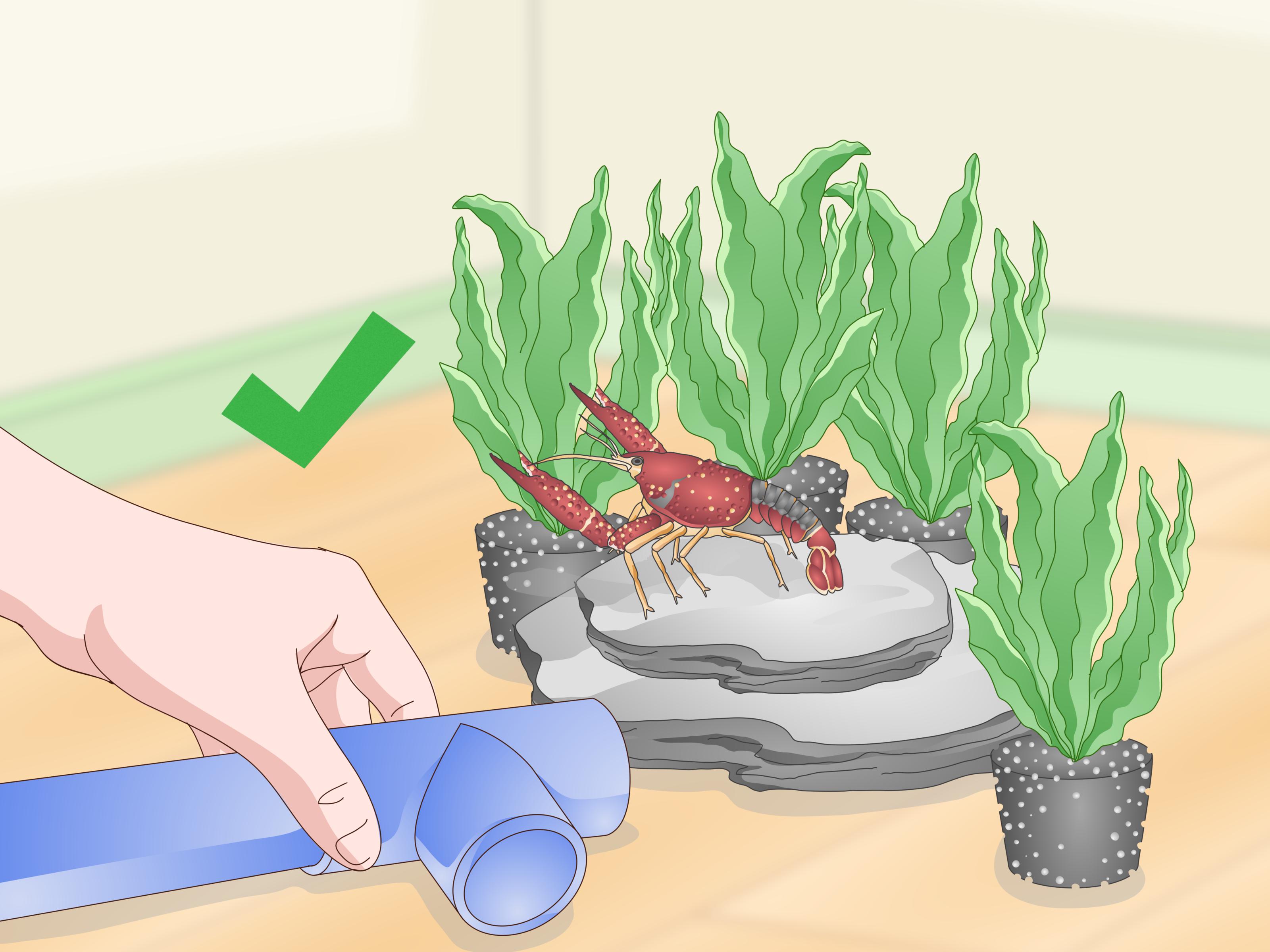
Crayfish are natural diggers and decorators. Add safe, smooth stones, small caves, PVC pipe sections, aquarium-safe ceramic shelters, or driftwood. Make sure everything is stable and cannot collapse. Your crayfish may push gravel, drag leaves, block an entrance, or redesign the layout with the confidence of an interior designer who accepts payment in pellets.
Do not constantly change the entire tank. Too much disruption can stress the animal. Instead, occasionally add one new safe object or move a small decoration. Let your crayfish inspect it at its own pace.
4. Follow-the-Finger Through the Glass
Some crayfish will react to movement outside the aquarium. Slowly move your finger along the glass and see if your crayfish follows, raises its claws, or comes closer. Keep the movement gentle. Do not tap the glass. Tapping creates vibrations that may startle aquatic animals.
This activity is mostly for observation, but it can be surprisingly entertaining. One crayfish may ignore you completely. Another may square up like a champion boxer defending the last shrimp pellet on Earth.
5. The Climbing Challenge
Create a safe climbing area using aquarium-safe driftwood, stacked smooth stones, or sturdy decorations. Keep the structure low and stable. Crayfish enjoy exploring vertical surfaces, but you do not want a rockslide or an escape ramp. The best climbing setup gives your crayfish a challenge without leading directly to the lid.
Watch how your crayfish tests the route. It may climb, pause, wave its antennae, back down, and try again. That little problem-solving routine is exactly the kind of natural behavior enrichment should encourage.
6. The Observation Game
Sometimes the best way to play is to watch. Crayfish behavior is full of small details. Notice how it walks forward but swims backward with a quick tail flip. Watch how it uses its claws differently from its smaller legs. Observe whether it prefers one cave, comes out at feeding time, or becomes more active in dimmer light.
Keeping a simple crayfish journal can be fun, especially for kids, classrooms, or curious adults. Record feeding reactions, favorite hiding places, molting dates, and funny “construction projects.” This turns pet care into discovery rather than random poking.
What Not to Do When Playing With a Crayfish
Do not chase your crayfish around the tank with your hand. Do not pick it up repeatedly for entertainment. Do not place it on dry surfaces for photos. Do not make it fight another crayfish. Do not drop unsafe objects into the aquarium. Do not feed salty, seasoned, oily, or processed human food. A crayfish does not need a potato chip. It needs clean water and sensible snacks.
Also, do not release a pet crayfish into a pond, stream, lake, ditch, or neighborhood water feature. Many crayfish species can become invasive outside their native range. Released pets may compete with local species, spread disease, or damage aquatic habitats. If you can no longer care for a crayfish, contact a local aquarium shop, animal rescue, science teacher, or aquatic pet community for responsible options.
How to Set Up a Tank That Makes Play Easier
A healthy crayfish is more likely to explore and interact. Tank setup matters. For many common pet crayfish, a 10- to 20-gallon aquarium is often used for a single individual, though larger species need more room. Bigger tanks are usually easier to keep stable because waste is diluted in more water.
Use a reliable filter, dechlorinated water, and regular water testing. Ammonia and nitrite are especially dangerous in aquariums, and new tanks need time to develop beneficial bacteria. Weekly partial water changes help keep the environment clean. Remove uneaten food before it breaks down.
Add hiding places. A crayfish without a hideout is like a person trying to sleep in a glass hallway. Caves, smooth rocks, driftwood, and aquarium-safe tubes give it security. Hiding places are especially important during molting.
Choose substrate that allows digging. Sand or smooth gravel lets your crayfish push, scoop, and rearrange. Avoid sharp decorations that could damage legs or the soft body after a molt. Secure the lid, cover gaps, and make sure cords or filter parts do not create escape routes.
Can You Train a Crayfish?
You probably will not train a crayfish to roll over, unless rolling over is part of a dramatic retreat after being startled. However, crayfish can learn routines. Many become more active when they recognize feeding time. Some approach the front glass when a person enters the room. Others learn where food usually appears.
The key is consistency. Feed at similar times. Use the same feeding tongs. Keep movements slow. Reward curiosity with small, healthy foods. Over time, your crayfish may become bolder and more interactive. Just remember that every crayfish has its own temperament. Some are fearless little bulldozers. Some are shy cave goblins. Both are normal.
Fun Crayfish Play Ideas for Kids and Families
Crayfish can be fascinating pets for families because they invite observation rather than rough handling. Children can help create a behavior chart, draw the tank layout, name the crayfish’s favorite cave, or predict which food it will choose first. Make it scientific and silly at the same time.
Try a “crayfish restaurant” test with tiny portions of safe foods. Offer a small piece of blanched zucchini on one side and a sinking pellet on the other. Which does it find first? Which does it carry away? Does it eat in the open or retreat to a hideout like a suspicious diner protecting its fries?
Adults should supervise all interactions. Kids should learn that gentle observation is real play. The goal is not to make the crayfish perform. The goal is to notice how a unique animal explores its world.
Signs Your Crayfish Is Enjoying Enrichment
A comfortable crayfish may explore, forage, climb, dig, take food readily, and move confidently around the tank. It may spend time in its hideout and still be perfectly healthy. Resting and hiding are normal. Constantly hiding after a major tank change may mean it needs time to adjust.
Warning signs include refusing food for long periods outside of molting, lying on its side, weak movement, failed molts, cloudy water, unusual odor, or repeated escape attempts. These signs may point to water-quality problems, stress, poor diet, or unsafe tank conditions. When in doubt, test the water first. In aquarium life, clean water solves many mysteries before they become tragedies.
Experience Notes: What Playing With a Crayfish Is Actually Like
The first thing you notice when interacting with a crayfish is that it is far more aware than people expect. It may look like a tiny armored vacuum cleaner at first, but after a few days of watching, you begin to see patterns. It has preferred routes. It has favorite corners. It knows where food usually lands. It may even develop a daily schedule that includes breakfast, cave inspection, gravel bulldozing, and standing dramatically on a rock like it is addressing the nation.
A good crayfish play session usually starts quietly. You approach the tank slowly, and the crayfish pauses. Its antennae sweep forward. If it is shy, it may back into a cave. If it is bold, it may lift its claws and face you. This is where patience matters. The worst mistake is trying to force interaction. The best move is to wait, offer a small piece of food with tongs, and let curiosity do the work.
Food games are often the most rewarding. A crayfish finding a pellet hidden behind a pebble is oddly satisfying to watch. It may touch the pellet, grab it, turn around, and carry it into a shelter like a dragon dragging treasure into a cave. If you offer blanched vegetables, you may see it nibble slowly, using tiny mouthparts that are easy to miss unless you look closely. This is not flashy play, but it is absorbing. It turns the aquarium into a small stage where the main actor has claws and no respect for your original aquascape.
Another memorable experience is watching a crayfish rearrange its environment. You may place a small smooth stone in what you consider the perfect location. The crayfish may disagree. By morning, the stone has moved, the gravel has been piled into a miniature wall, and the cave entrance has been renovated. This is enrichment at work. The crayfish is not being naughty. It is expressing natural digging and shelter-building behavior. You provided the materials; it provided the artistic vision.
Molting teaches patience more than any other part of crayfish care. Before a molt, your active little tank boss may become quiet and secretive. After molting, it may stay hidden while its new shell hardens. This is the time to leave it alone. No games, no handling, no tank rearranging. Watching from a respectful distance is the correct choice. It may feel boring, but responsible pet care sometimes means doing absolutely nothing with great discipline.
Over time, the experience becomes less about “playing with” a crayfish and more about building a small routine together. You learn its signals. It learns that your arrival might mean food. You stop expecting cuddly behavior and start appreciating crustacean behavior. That shift is the secret. A crayfish is not a strange fish, a mini lobster, or a low-maintenance toy. It is its own kind of animal: cautious, curious, stubborn, surprisingly funny, and wonderfully weird.
Conclusion
Learning how to play with a crayfish means replacing rough handling with smart enrichment. The best activities are simple: offer food with tongs, create treasure hunts, provide climbing areas, observe behavior, and let your crayfish explore a safe, clean, escape-proof aquarium. Respect its claws, protect its water, give it hiding places, and leave it alone during molting. Do that, and you will discover that crayfish are not boring at all. They are tiny freshwater characters with big attitudes, excellent digging skills, and the energy of a creature that firmly believes every cave belongs to them.
Note: This article focuses on gentle, humane interaction. Crayfish play should always protect the animal’s health, reduce stress, and avoid releasing aquarium pets into natural waterways.