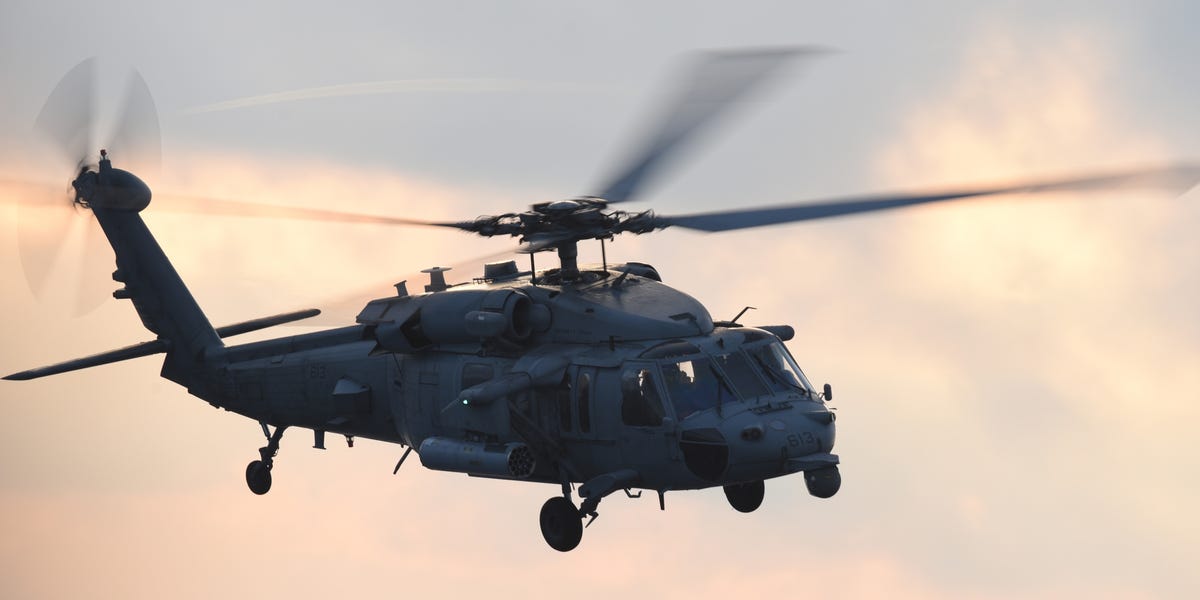
The phrase “MH-60 Seahawk retirement” sounds dramatic, like the U.S. Navy is about to roll its helicopters y is more interesting. The Navy is not suddenly sending the MH-60 Seahawk family to the museum. Instead, it is managing a long, careful transition from today’s hard-working MH-60R and MH-60S helicopters toward a future maritime aviation system built for longer range, better networking, modular upgrades, and crewed-uncrewed teaming.
In plain English: the Seahawk is aging, but it is still useful, still busy, and still central to how the Navy operates from destroyers, frigates, littoral combat ships, amphibious ships, and aircraft carriers. Retirement will be a phased process, shaped by flight hours, maintenance realities, modernization budgets, fleet demand, and the arrival of Future Vertical Lift (Maritime Strike), often shortened to FVL(MS).
This article breaks down what MH-60 Seahawk retirement actually means, why the Navy cannot simply replace the aircraft overnight, what the MH-60R and MH-60S still do every day, and how the next generation of naval vertical lift may change life at sea.
What Is the MH-60 Seahawk?
The MH-60 Seahawk is the naval cousin of the Black Hawk family, adapted for the messy, salty, unforgiving world of shipboard operations. It is not one helicopter doing one job. It is a family of mission aircraft that helps the Navy hunt submarines, track surface threats, move cargo, rescue people, support special operations, conduct medical evacuation, and keep ships connected across wide ocean spaces.
The two major U.S. Navy variants are the MH-60R Seahawk, commonly called the “Romeo,” and the MH-60S Seahawk, commonly called the “Sierra.” They share a common heritage and cockpit philosophy, but they are optimized for different parts of the Navy’s mission set.
MH-60R: The Submarine Hunter With a Side Hustle
The MH-60R is the Navy’s primary airborne anti-submarine and anti-surface warfare helicopter. It replaced older SH-60B and SH-60F helicopters and became a core part of the fleet’s maritime strike and undersea warfare capability. When a destroyer needs eyes, ears, and weapons beyond the ship’s horizon, the Romeo is often the aircraft that gets the call.
Its job is not glamorous in a Hollywood way. Much of anti-submarine warfare is patient, technical, and suspiciously quiet. The helicopter uses sensors, radar, sonar systems, communications equipment, and weapons to detect and respond to threats that may be hidden under the water or moving across the surface. Think of it as a flying detective with rotor blades and a very serious attitude toward submarines.
MH-60S: The Fleet’s Utility Knife
The MH-60S performs a broader combat support role. It has been used for anti-surface warfare, humanitarian disaster relief, combat search and rescue, aeromedical evacuation, special warfare support, vertical replenishment, and airborne mine countermeasures. If the Romeo is the fleet’s submarine detective, the Sierra is the sailor who shows up with duct tape, a rescue hoist, cargo hooks, and a plan.
The MH-60S replaced the older H-46 Sea Knight in many logistics and support roles. That change gave the Navy a more modern helicopter with a glass cockpit, commonality with the MH-60R, and improved supportability. For ship crews, that commonality matters. Shared training pipelines, parts, maintenance knowledge, and cockpit architecture help reduce complexity across the force.
Is the MH-60 Seahawk Being Retired?
Yes, but not immediately. The better answer is: the Navy is preparing for the eventual retirement of the MH-60R and MH-60S fleet while keeping both variants operational into the late 2030s and, in some planning discussions, into the early 2040s.
That may sound like the aviation version of “I’m leaving soon” while still sitting on the couch three hours later. But in defense planning, this is normal. Large military aircraft fleets do not disappear all at once. They are extended, modernized, inspected, patched, upgraded, and gradually replaced as new aircraft arrive in useful numbers.
The MH-60 family was designed around long service lives, but naval helicopters live tough lives. Saltwater, deck landings, vibration, heavy gross weights, mission equipment, weapons, cargo, and constant deployments all add stress. A helicopter that spends its career operating from a pitching destroyer in bad weather does not age like a hangar queen at a local airshow.
Why Retirement Is Complicated
Retiring the Seahawk is not like trading in a family SUV. The Navy cannot simply buy a replacement fleet on Monday and park it on every ship by Friday. Several issues make MH-60 Seahawk retirement complicated.
1. The Seahawk Is Everywhere
The MH-60R and MH-60S are deeply embedded in Navy operations. They deploy from surface combatants, amphibious ships, carriers, and shore bases. They support anti-submarine warfare, surface warfare, logistics, rescue, mine countermeasures, and special operations support. Replacing that much capability requires more than a new airframe. It requires training, ship integration, weapons testing, maintenance systems, simulators, spare parts, data links, tactics, and funding.
2. The Replacement Must Fit on Ships
A Navy helicopter replacement has to live on ships. That sounds obvious, but it is one of the biggest design constraints. The aircraft must fit inside hangars, land safely on small flight decks, fold or stow efficiently, resist corrosion, and operate in harsh maritime weather. A fast aircraft that cannot fit on a destroyer is like buying a grand piano for a submarine: impressive, but inconvenient.
3. Range and Speed Requirements Are Changing
Modern naval warfare demands longer reach. Distributed Maritime Operations require ships and aircraft to spread out, share data, and operate across larger areas. The next aircraft must likely fly farther and faster than the Seahawk while carrying sensors, weapons, and communications systems that can plug into a larger digital battle network.
4. The Navy Needs a Bridge Strategy
The Navy’s bridge strategy is service-life extension and modernization. The MH-60S has been a major focus because of airframe fatigue concerns and its intense workload. The MH-60R also needs modernization, though its timeline is affected by newer production aircraft and inventory management. The goal is to keep the fleet safe, capable, and relevant until the replacement is ready.
Service-Life Extension: Keeping the Seahawks in the Fight
A key part of the MH-60 Seahawk retirement story is the service-life extension program. Earlier Navy planning discussed extending Seahawk service lives beyond the original 10,000-hour airframe design target. More recent planning points to keeping Seahawks flying into the late 2030s after service-life work.
For the MH-60S, the extension effort has been associated with moving from 10,000 to 12,000 flight hours, which can add years of useful life. That does not mean every aircraft automatically gets a magic “+2,000 hours” sticker slapped on the tail. Engineers need to study fatigue, inspect structures, examine subsystems, and determine what repairs or modifications are required.
This is where retirement becomes less emotional and more spreadsheet-shaped. Engineers look at airframe fatigue, hydraulics, electrical systems, mission equipment, component removals, maintenance trends, and the cost of keeping the aircraft safe. If a helicopter can be extended affordably, it remains useful. If an aircraft becomes too expensive or structurally limited, it may retire earlier.
Service-Life Modernization: More Than Just Flying Longer
Flying longer is only half the problem. The other half is staying relevant. A helicopter can have plenty of airframe life left and still be limited by old avionics, closed architecture, outdated mission systems, or hard-to-upgrade software.
That is why the Navy has also explored Service Life Modernization for the MH-60R/S fleet. The idea is to update cockpit avionics, mission systems, and weapons system architecture using a Modular Open Systems Approach. In normal human language, that means designing systems so future upgrades do not require rebuilding the whole aircraft’s digital nervous system every time the Navy wants a new capability.
Open architecture matters because threats change quickly. Submarines get quieter, electronic warfare becomes more complex, missiles grow more capable, and unmanned systems multiply like rabbits with defense budgets. A modular Seahawk can better absorb new sensors, communications tools, weapons interfaces, and software improvements while the Navy waits for FVL(MS).
The Replacement: Future Vertical Lift (Maritime Strike)
The long-term replacement path for the MH-60 Seahawk fleet is Future Vertical Lift (Maritime Strike). The program is envisioned as a family of systems, not simply “one helicopter to rule them all.” That family could include crewed aircraft, uncrewed aircraft, modular mission packages, launched effects, advanced sensors, and networked systems designed to operate from Navy ships.
FVL(MS) is expected to perform the missions Seahawks handle today, but with greater range, endurance, survivability, reliability, and modularity. The Navy has also emphasized that the future platform must support Distributed Maritime Operations. That means the aircraft will not just be a flying truck, scout, or weapons carrier. It will be a node in a larger web of ships, aircraft, satellites, drones, sensors, and command systems.
The Navy’s current planning points toward an initial operational capability in the early 2040s. That timeline explains why the MH-60R and MH-60S cannot retire quickly. They are the bridge between today’s shipboard aviation and tomorrow’s maritime strike network.
What Could Replace the Seahawk?
The final shape of the Seahawk replacement is not yet locked in. The Navy is studying options and watching what the Army and Marine Corps are doing with future vertical lift technologies. But shipboard aviation has unique requirements, so the Navy cannot simply copy and paste another service’s aircraft.
Tiltrotor Possibilities
Tiltrotors offer speed and range advantages. They can fly like airplanes once airborne and take off vertically like helicopters. That sounds perfect until the aircraft has to fold, fit, land, and survive on a destroyer’s flight deck in angry seas. Shipboard size and deck handling are major challenges.
Advanced Compound Helicopters
Compound helicopters may offer more speed than conventional helicopters while preserving some shipboard practicality. Designs with advanced rotors, pusher propellers, and improved engines could deliver better range and performance without becoming too large for surface combatants.
Crewed-Uncrewed Teams
The most likely future is not a single aircraft doing everything alone. The Navy has signaled interest in crewed and uncrewed systems working together. A crewed aircraft might control drones, launch sensors, relay data, or coordinate unmanned scouts. This would reduce risk to crews and expand the area a ship can monitor or influence.
Why the MH-60R May Stay Relevant Longer
The MH-60R remains one of the Navy’s most important anti-submarine and anti-surface warfare assets. It is also used by several allied and partner navies, which helps sustain production, training, support, and modernization interest. International demand matters because a widely used platform often benefits from shared upgrades, common supply chains, and long-term sustainment.
Recent international interest in MH-60R helicopters shows that the platform is not viewed as obsolete. Allies still see value in a proven maritime helicopter that can operate from ships and perform complex warfare missions. That does not stop eventual U.S. Navy retirement, but it does reinforce the idea that the Seahawk is aging from a position of usefulness, not irrelevance.
Why the MH-60S Faces a Different Retirement Pressure
The MH-60S has carried a heavy workload since entering service. Its support missions are demanding: cargo, rescue, medical evacuation, mine countermeasures, special operations support, and humanitarian missions. Those jobs can be rough on an aircraft. Frequent takeoffs, landings, external loads, and varied mission equipment all contribute to wear.
That is why the Sierra’s service-life extension has received special attention. The Navy needs the MH-60S, but it also has to manage airframe fatigue carefully. The aircraft is too useful to retire early without a replacement, but too important to operate casually beyond structural limits. In naval aviation, optimism is welcome; fatigue math is mandatory.
Operational Impact of MH-60 Seahawk Retirement
When retirement eventually begins in earnest, the fleet will feel it in several ways.
Ship Deployments Will Be Planned Around Mixed Fleets
For years, the Navy may operate a mixed environment of upgraded Seahawks and early FVL(MS) systems. Some ships may deploy with legacy helicopters while others test or field next-generation aircraft. That creates training and logistics challenges, but it also allows gradual learning instead of a risky all-at-once transition.
Maintenance Communities Will Shift
Maintainers will need to learn new systems, new diagnostics, new corrosion-control requirements, and new supply procedures. The Seahawk maintenance community has decades of experience. Replacing that knowledge base takes time, documentation, simulators, and a lot of patient troubleshooting.
Aircrews Will Need New Tactics
A faster, longer-range, more networked aircraft changes tactics. Pilots and aircrew will have to rethink how they search, communicate, coordinate with ships, manage unmanned teammates, and operate in contested environments.
Practical Experience: What a Seahawk Retirement Cycle Feels Like
From an operational perspective, aircraft retirement is rarely a clean farewell ceremony followed by instant silence. It feels more like a long family move where half the boxes are labeled, one truck is late, and someone still needs the coffee maker. The MH-60 Seahawk retirement cycle will likely involve years of overlap between old and new systems, with sailors adapting in real time.
For flight deck crews, the experience begins with procedures. A new aircraft means new tie-down patterns, new blade-fold or rotor-handling steps, new fueling details, different deck markings, different safety zones, and new emergency drills. The rhythm of launching and recovering helicopters at sea is built through repetition. When a replacement arrives, that rhythm has to be rebuilt carefully. On a small deck at night, in rain, with the ship moving beneath everyone’s boots, “close enough” is not a maintenance philosophy. It is a bad idea wearing a helmet.
For pilots and aircrew, retirement brings mixed emotions. The Seahawk is familiar, trusted, and deeply understood. Crews know its cockpit flow, its quirks, its mission systems, and its limits. A replacement may bring better range, speed, sensors, and networking, but it also brings uncertainty. Training syllabi must evolve. Simulators must reflect real shipboard conditions. Tactics must be rewritten, tested, argued over, refined, and tested again. Naval aviation has a proud tradition of turning new machines into routine tools, but the transition always demands humility.
For maintainers, the experience is even more practical. Retirement does not mean the old aircraft suddenly become easy to support. In fact, the final years can be harder. Parts may become scarce. Inspections may become more frequent. Corrosion control may demand extra attention. Older wiring, avionics boxes, hydraulic systems, and structural components may require careful monitoring. Meanwhile, maintainers must learn the replacement aircraft while still keeping the Seahawk mission-ready. That is like studying for a final exam while repairing the school bus.
For logisticians, the challenge is inventory balance. Too many old parts create waste after retirement. Too few parts ground aircraft before replacements arrive. The Navy has to manage spares, depot capacity, technical manuals, training equipment, software support, and contractor relationships across both legacy and future fleets.
For the wider fleet, the biggest lesson is patience. A successful MH-60 Seahawk retirement will not be judged by the date of the last flight alone. It will be judged by whether ships retained aviation capability during the transition, whether crews stayed safe, whether missions were covered, and whether the new system delivered more value than the old one. The Seahawk deserves a good exit not because it is sentimental, but because it has done the unglamorous work of naval aviation for decades: showing up, lifting off, searching hard, hauling cargo, saving lives, and making surface ships far more capable than they would be alone.
Conclusion: The Seahawk Is Not Done Yet
The MH-60 Seahawk retirement story is really a transition story. The MH-60R and MH-60S are aging, but they remain essential to U.S. Navy operations. Through service-life extension, service-life modernization, and careful fleet management, the Navy is trying to keep the Seahawk family effective until Future Vertical Lift (Maritime Strike) can take over.
The key takeaway is simple: the Seahawk is not being pushed out because it failed. It is being prepared for retirement because naval warfare is changing. Future aircraft must fly farther, connect better, survive tougher threats, work with unmanned systems, and fit into a distributed maritime force. That is a tall order. Fortunately, naval aviation has always been good at tall orders, provided someone remembers the checklist.
The MH-60 Seahawk will eventually leave front-line Navy service, but its legacy will remain in the tactics, shipboard procedures, maintenance culture, and mission expectations it helped define. For now, the old bird still has work to do.