The hoverboard is one of those inventions that lives rent-free in the public imagination, right between flying cars, robot butlers, and refrigerators that politely judge your snack choices. Ever since Back to the Future Part II made a floating skateboard look like the natural next step after sneakers and bad teenage decisions, people have wanted one simple thing: a board that rises above the ground and lets ordinary humans glide like stylish wizards.
So, has steampunk delivered the hoverboard? The short answer is: not exactly. The more interesting answer is that steampunk has delivered something almost as useful: a delightfully over-engineered question. Could an old-world machine language of brass, valves, pressure, pistons, gears, and theatrical smoke ever produce the most futuristic personal vehicle of pop culture? Or is the real hoverboard destined to come from superconductors, magnetic fields, ducted fans, and jet propulsion rather than a Victorian inventor with goggles and a suspiciously dramatic mustache?
To answer that, we need to separate three things that often get stuffed into the same tool bag: the steampunk aesthetic, real hoverboard technology, and the consumer “hoverboards” that do not hover at all. Once we do, the picture becomes clearer, funnier, and slightly less likely to explode in a garage.
What Does “Steampunk Hoverboard” Actually Mean?
Steampunk is a genre and design style that imagines advanced technology through the lens of the nineteenth century. Think brass fittings, exposed gears, steam power, riveted metal, analog gauges, leather straps, and machines that look as if they were assembled by someone who could repair a locomotive while quoting Jules Verne. It is retrofuturism with a pocket watch.
A steampunk hoverboard, then, is not simply a skateboard painted bronze. It suggests a floating board that appears to belong to an alternate industrial age, where steam power never bowed out and electricity did not get to hog the spotlight. In design terms, it is gorgeous. In engineering terms, it raises a brutal question: how do you produce enough lift, stability, and control to carry a person safely while keeping the device small enough to be called a board?
That is where the romance of steampunk starts arguing with physics. Steam engines are wonderful at many things. They powered factories, locomotives, ships, and the Industrial Revolution itself. But a personal hoverboard must be lightweight, responsive, compact, cool enough not to cook the rider’s boots, and stable enough that every ride does not become an unscheduled medical seminar. Pure steam power is not naturally suited to that job.
The Recent Steampunk Hoverboard Idea: Brilliant, Absurd, and Unproven
The phrase “Has steampunk delivered the hoverboard?” gained fresh attention because of a concept that circulated in maker and hardware circles: a non-computerized, mechanically flavored balance transport idea with a full set of hardware designs but no confirmed working prototype. That matters. A design package can be intriguing, clever, and even educational, but a hoverboard is one of those machines where the gap between “looks possible in drawings” and “carries a human without humiliating gravity” is enormous.
The appeal is obvious. A steampunk hoverboard sounds like something from a better timeline: a personal transport device that rejects the glossy smartphone-on-wheels look and instead embraces old-school mechanical drama. Imagine pressure gauges twitching, polished copper pipes humming, and a rider drifting forward as if late for a duel at an airship station. It is wonderful visual storytelling.
But no matter how cool the concept looks, the key question remains: where is the verified prototype? A real hoverboard must demonstrate controlled lift, rider support, predictable braking or steering, and repeatable operation. Without that, it is not yet a hoverboard. It is a fascinating engineering sketch wearing a top hat.
Real Hoverboards Already ExistWith Big Asterisks
Steampunk has not produced a proven consumer hoverboard, but several real technologies have produced boards or platforms that genuinely leave the ground. The catch is that every one of them comes with conditions. Some need special surfaces. Some need liquid nitrogen. Some are loud, expensive, risky, or suitable only for trained pilots and demonstrations. The hoverboard exists, but it has not become the casual sidewalk machine promised by science fiction.
The Hendo Hoverboard: Magnetic Levitation With a Copper Problem
The Hendo Hoverboard, developed by Arx Pax, was one of the first widely publicized “real” hoverboards. It used magnetic field technology to create lift over conductive surfaces such as copper or aluminum. The board did not hover over ordinary pavement, carpet, grass, or your neighbor’s suspiciously perfect driveway. It needed the right surface beneath it.
This is the recurring problem with magnetic levitation hoverboards. They can work, but they often require infrastructure. A board that only hovers over a special metal floor is technically magical and practically inconvenient. It is like owning a boat that only floats in one bathtub.
Still, Hendo was important because it proved that a rideable board could be lifted by electromagnetic interaction rather than fantasy. It also showed that hoverboard technology might have more serious applications beyond recreation, including industrial transport, precision movement, and even architectural ideas such as isolating structures from ground motion. The board was the flashy demo; the underlying levitation engine was the real pitch.
The Lexus SLIDE: Beautiful, Real, and Not for Sale
Lexus also created a genuine hoverboard prototype known as SLIDE. It used superconductors cooled by liquid nitrogen and a magnetic track hidden beneath a specially constructed hoverpark. The result looked spectacular: a sleek board with vapor curling off it, floating above the surface like a luxury car commercial decided to become a physics class.
But the Lexus hoverboard also demonstrated the limits of the dream. It required superconducting materials, extreme cooling, and a prepared magnetic track. It was not a product headed to retail shelves. It was a brand showcase, a technological sculpture, and a real demonstration of magnetic levitation. It was not something you could ride to school, the store, or the coffee shop unless your city had secretly installed a magnetic skatepark under every sidewalk.
In other words, Lexus delivered a real hoverboard experience, but not a practical hoverboard lifestyle. The board hovered; the business model did not.
Fan-Powered and Jet-Powered Boards: Flying, But Not Exactly Friendly
Other attempts have used brute force instead of magnetic levitation. Fan-powered platforms, including concepts like the ArcaBoard, rely on powerful ducted fans to push air downward and lift the rider. These can hover over more surfaces than magnetic boards, which sounds promising until you consider the tradeoffs: high energy demand, heavy hardware, short endurance, and noise levels that do not exactly whisper “neighborhood-friendly innovation.”
Jet-powered hoverboards and flyboards have pushed the idea even further. Franky Zapata’s Flyboard Air set a Guinness-recognized distance record and later drew worldwide attention after a successful English Channel crossing. That machine truly flew. It also belonged in the category of extreme piloted aviation demonstrations, not casual personal mobility. Calling it a hoverboard is understandable, but it is closer to a compact flying platform than a skateboard for everyday riders.
These machines prove that humans can stand on small platforms and travel through the air. They do not prove that the average person should do so after watching a three-minute tutorial and saying, “How hard can it be?” The answer, as always, is: very hard, and gravity has excellent reviews.
Why Steam Has Not Beaten Magnets, Fans, or Jets
A true steampunk hoverboard faces several engineering challenges at once. The first is lift. A rider plus board may weigh well over 150 pounds, often much more. Lifting that mass requires serious energy. A compact steam system would need water, heat, pressure containment, conversion hardware, and control systems. Each part adds weight, and added weight demands even more lift. It becomes a mechanical argument that the hoverboard is losing before it leaves the floor.
The second challenge is control. Hovering is not the same as floating aimlessly. A useful hoverboard needs balance, steering, acceleration, braking, and stability. Modern systems typically solve this with sensors, software, gyroscopes, electronic speed control, and rapid feedback loops. A purely mechanical steampunk approach would need to replicate that responsiveness without modern electronics, which is an impressive thought experiment but a punishing design requirement.
The third challenge is safety. Steam pressure, heat, spinning components, high-current batteries, turbines, and powerful magnets each introduce hazards. Real consumer transportation must survive bumps, weather, manufacturing variation, rider mistakes, and long-term wear. It must also be affordable and maintainable. A hoverboard that works only under perfect conditions is not transportation; it is a stage trick with a repair bill.
This does not mean steampunk has nothing to contribute. It contributes design imagination. It reminds engineers and artists that technology does not have to look like a black plastic rectangle. A future hoverboard could absolutely borrow steampunk aesthetics: brass-like finishes, analog-style displays, visible mechanical linkages, handcrafted surfaces, and a sense of adventure. But the lift system beneath that costume would almost certainly be modern.
The Consumer “Hoverboard” Is Not a Hoverboard
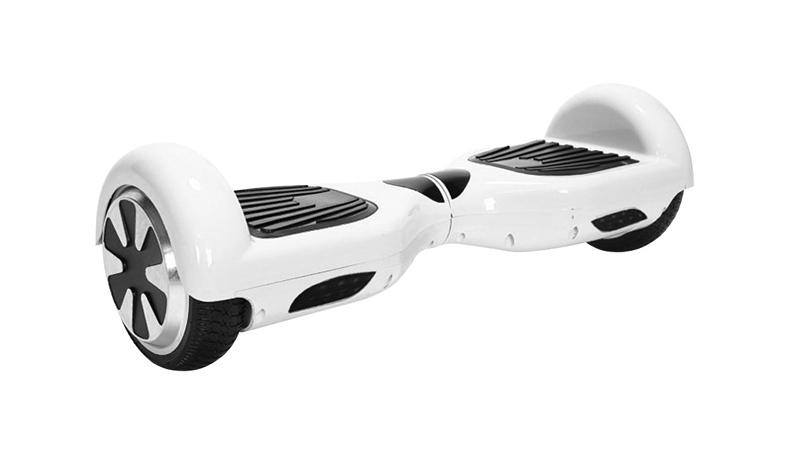
There is another source of confusion: the two-wheeled self-balancing scooters sold as “hoverboards.” These devices became wildly popular in the mid-2010s, especially among celebrities, kids, and anyone who enjoys turning a hallway into a mild emergency. They are compact electric scooters controlled by shifting body weight. They can be fun, but they do not hover. They roll.
The naming problem is not just semantic. It lowered expectations. Instead of demanding a floating board, the market accepted a wheeled gadget with a futuristic nickname. Then safety concerns arrived, especially around low-quality lithium-ion batteries and charging systems. Regulators and safety organizations pushed for stronger standards, including UL 2272 certification for self-balancing scooters. That helped separate better-designed products from risky ones, but it also reminded everyone that even non-hovering hoverboards are complicated machines.
For SEO clarity and reader sanity, it helps to divide hoverboard technology into three categories: wheeled self-balancing scooters, surface-dependent levitation boards, and true flying platforms. The first is common. The second is real but limited. The third is spectacular but not consumer-ready.
What Would Count as “Delivered”?
To say steampunk has “delivered” the hoverboard, we would need more than a clever concept. We would need a working machine that lifts a rider, remains stable, operates repeatedly, and does so with a design language recognizably inspired by steam-age technology. Ideally, it would work without a hidden magnetic track, without specialist refueling, and without needing a flight crew standing nearby with nervous faces.
That is a high bar. By that standard, no: steampunk has not delivered the hoverboard. It has delivered art, concepts, costumes, props, digital models, speculative designs, and maker-community excitement. It has delivered the mood of the hoverboard, not the mass-market machine.
But the word “delivered” can be read more generously. Has steampunk delivered a new way to think about hoverboards? Yes. It challenges the sterile look of modern mobility tech. It asks why future transportation must always resemble a phone accessory. It suggests that personal vehicles can have character, narrative, and visual soul. That matters because successful technology is not only about function; it is also about desire. People do not just want to move. They want to feel like the future has arrived with good lighting.
Could a Steampunk Hoverboard Ever Work?
A practical steampunk hoverboard would probably be steampunk in style, not propulsion. The most realistic version would use modern electric systems, advanced batteries, stabilization software, and perhaps magnetic or fan-based lift, then wrap the experience in a steampunk shell. The brass would be aesthetic. The sensors would be digital. The gauges might look analog while quietly reporting data from modern electronics. In short, the future would wear vintage clothing.
That may sound like cheating, but it is how much of steampunk already works. The genre often uses imagined old machinery to express modern ideas. A laptop inside a wooden typewriter case is still a laptop, but the design changes how it feels. A hoverboard with modern levitation technology and steampunk styling could still be a valid steampunk hoverboard if the user experience captures the fantasy.
The harder question is whether the world actually needs a hoverboard. For everyday mobility, bicycles, scooters, skateboards, e-bikes, and compact electric vehicles are far more practical. They are cheaper, quieter, safer, and compatible with existing roads. The hoverboard’s value is emotional and symbolic. It represents a personal escape from friction, rules, and ordinary pavement. That is why people keep chasing it even when the engineering says, “Please consider wheels.”
Experience Notes: Chasing the Hoverboard Dream in Real Life
The most interesting experience related to the steampunk hoverboard is not riding one, because for most people there is no verified steampunk hoverboard to ride. The experience is the act of encountering the idea and feeling your brain split into two departments. One department says, “That is ridiculous.” The other says, “Yes, but what if it worked?” That second department is where invention begins.
At maker events, design forums, science museums, and technology expos, hoverboard concepts tend to attract a particular kind of crowd. Engineers lean in to inspect the mechanism. Artists study the silhouette. Kids ask the only question that really matters: “Can I ride it?” Parents quietly calculate insurance implications. The best hoverboard concepts create instant conversation because they sit at the intersection of transportation, fantasy, physics, and play.
A steampunk version adds another layer. Ordinary futuristic prototypes often look sealed and mysterious, as if the machine is saying, “Do not ask how I work.” Steampunk design does the opposite. It invites curiosity. Exposed gears, gauges, pipes, and textured materials make people feel that the machine has a story. Even when those details are decorative, they encourage the viewer to imagine cause and effect. A pressure dial suggests rising energy. A lever suggests control. A brass housing suggests craft. The object becomes less like a gadget and more like a character.
That is why a steampunk hoverboard can be compelling even before it works. It turns the engineering problem into a theatrical experience. Instead of a silent slab of carbon fiber, we imagine a board with personality: a little smoke, a little danger, a little Victorian confidence that surely nothing terrible will happen because the inventor has labeled everything in cursive.
There is also a lesson in disappointment. Many people first learned the word hoverboard through fiction, then watched the market fill with wheeled self-balancing scooters. Those devices can be entertaining, but they do not satisfy the original dream. Riding one feels less like levitating and more like negotiating with two motorized dinner plates. Real maglev boards are closer to the fantasy, but they require special surfaces. Jet-powered platforms deliver flight, but they belong to trained experts, not weekend commuters. Every version gives us a piece of the dream while withholding the whole thing.
That gap is why the steampunk hoverboard remains powerful. It does not have to be fully real to be useful. It reminds designers that technology should feel wondrous. It reminds engineers that impossible ideas are sometimes just impractical ideas waiting for better materials. And it reminds the rest of us that wanting a floating skateboard is not childish. It is a perfectly reasonable response to a world with too many potholes.
Conclusion: Steampunk Has Not Delivered the HoverboardYet
So, has steampunk delivered the hoverboard? Not in the practical, proven, consumer-ready sense. There is no widely available brass-and-boiler board floating safely through American neighborhoods. The most credible real hoverboards have come from magnetic levitation, superconductors, ducted fans, and jet-powered platforms, not steam-age mechanics. Even those technologies remain limited by surfaces, cost, noise, complexity, endurance, and safety.
But steampunk has delivered something valuable: a richer vision of what the hoverboard could be. It has taken a familiar sci-fi object and asked us to imagine it with texture, history, and mechanical soul. In a tech culture that often smooths every object into the same glossy rectangle, that is refreshing. The dream hoverboard may eventually arrive through modern physics, but if it shows up wearing brass trim and looking like it escaped from an airship workshop, nobody should complain.
For now, the steampunk hoverboard remains a beautiful maybe: not a finished invention, but a challenge thrown at engineers, designers, and dreamers. Gravity still has the lead. The goggles crowd, however, has not surrendered.