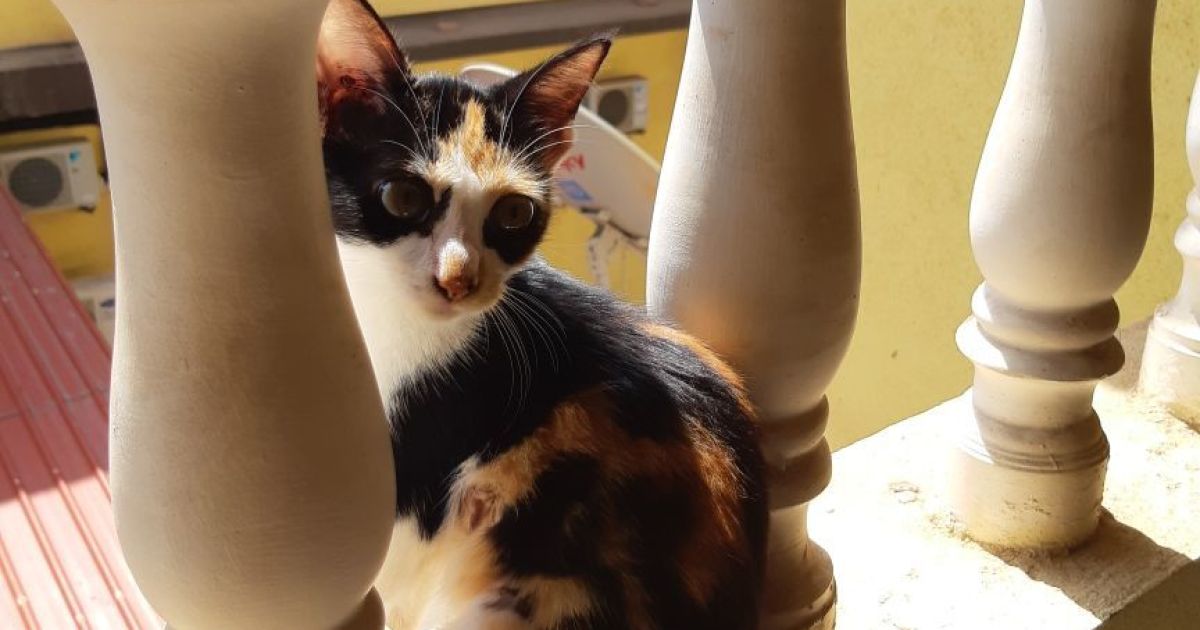
Some heroes arrive wearing capes. Others arrive with muddy paws, a fractured leg, a battle-scarred belly, and the unmistakable confidence of a tiny kitten who has already decided she is not done with life. April, the little rescue cat at the heart of this story, is one of those heroes. She was only about three months old when she was found near a swimming pool in Goa, India, after being attacked by a group of dogs. For many animals, that would have been the end of the road. For April, it was apparently just the opening chapter.
Her story became known online as “The Story Of April – The Warrior Cat,” and the title fits like a perfectly sized kitten collar. April was injured, frightened, and vulnerable, but she also had the kind of stubborn spark that animal rescuers recognize immediately. She needed medical care, patience, safety, and a human family willing to act fast. Luckily, she got all four. What followed was a short but unforgettable rescue journey: emergency vet treatment, weeks of recovery, garden adventures, bedtime cuddles, a few questionable carpet-scratching decisions, and finally a loving forever home.
This is not just a cute cat story, although yes, April is extremely cute and probably knew it. It is also a reminder of how much difference one person can make when they stop, notice, and choose compassion. In a world where stray animals are often ignored, April’s rescue shows that kindness does not need a committee meeting, a logo, or a dramatic soundtrack. Sometimes it starts with a kitten near a pool and a family saying, “We have to help.”
Who Was April, the Warrior Cat?
April was a young kitten found in Goa after a serious dog attack. According to the original account shared by her rescuer, she had a cut on her stomach and a badly fractured paw. She was small, only around three months old, and in urgent need of help. A kitten that young is still developing physically and emotionally. She depends on warmth, food, safe handling, and protection from bigger animals. In April’s case, she also needed veterinary care immediately.
The word “warrior” can sound dramatic, but for April it makes sense. She survived trauma, adapted to human care, learned to trust, and still behaved like a kitten with an agenda. She sunbathed. She played. She slept on the bed. She scratched carpets because, apparently, every warrior needs a hobby. She communicated when she wanted to go outside by scratching at the door, staying near the window, or simply making her intentions very clear in the mysterious language of cats.
What makes April memorable is not only that she survived. It is that her personality came through after the fear. Rescue stories often focus on the injury, but recovery is more than medical healing. A rescued kitten also needs to feel safe enough to behave normally again. When April began playing, lounging, exploring, and demanding attention like a tiny furry landlord, it meant she was returning to herself.
The Rescue Moment: Why Quick Action Matters
After April was found, her rescuer and family took her to a veterinarian. That decision likely changed everything. Injuries caused by dog attacks can be deceptive. A wound may look small on the surface while deeper tissue, bones, or internal structures are damaged underneath. Veterinary sources consistently emphasize that trauma cases need professional evaluation because the most serious problems are not always visible at first glance.
In April’s case, there were obvious red flags: a stomach wound and a badly injured paw. A fractured paw is painful and can affect a kitten’s ability to walk, eat normally, escape danger, or use the litter area. A belly wound is even more concerning because of the risk of infection and deeper damage. This is why “wait and see” is not a good strategy after an animal attack. Cats are also experts at hiding pain. If cats ran customer service departments, every complaint would be filed under “I’m fine, stop looking at me.”
The family’s choice to seek veterinary care right away gave April a real chance. The vet treated her wounds and provided rabies-related injections, according to the original story. In many parts of the world, rabies prevention is taken seriously after animal bites because exposure risk depends on local conditions, vaccination status, and the animals involved. For a rescued stray kitten with unknown history, a veterinarian is the right person to assess what medical steps are needed.
Medical Recovery: More Than Bandages and Brave Faces
April’s recovery lasted more than three weeks with her rescuers. During that time, she was cleaned, cared for, watched, and treated like a princess. That phrase is charming, but it also describes something important: after trauma, an animal needs stability. Food, rest, warmth, limited stress, and gentle human contact all support recovery.
For injured kittens, care may include wound cleaning, medication, monitoring for swelling or discharge, checking appetite, and making sure the kitten can move safely. A fractured paw may require pain control, restricted activity, splinting, or other veterinary treatment depending on the severity. The average pet owner should not attempt to diagnose or fix these injuries at home. A kitten is not a DIY furniture project. You cannot simply apply tape, whisper encouragement, and hope for the best.
Another key part of recovery is observation. Is the kitten eating? Drinking? Using the litter box? Hiding more than usual? Breathing normally? Showing interest in play? Small changes can matter. A kitten that becomes weak, lethargic, cold, or uninterested in food may need urgent veterinary attention. April’s story had a happy outcome partly because her rescuers did not just drop food nearby and walk away. They stayed involved.
April’s Personality: Small Cat, Giant Main Character Energy
One of the sweetest parts of April’s story is how quickly her personality appears in the details. She sunbathed like a retired celebrity on vacation. She played in the garden. She slept on the bed after being cleaned and bathed. She scratched carpets, which is less “princess behavior” and more “tiny interior designer with controversial taste.” She also learned how to express when she wanted to go outside.
These little behaviors matter because they turn April from “an injured kitten” into April: curious, playful, opinionated, affectionate, and resilient. Good animal storytelling depends on specifics. A rescue story becomes powerful when readers can picture the animal living again, not just surviving. April was not simply patched up and passed along. She was loved during the vulnerable in-between stage, the time when an animal is no longer in immediate danger but not yet settled into a permanent home.
That in-between stage is where foster care shines. Foster homes give animals a quieter space than crowded shelters, especially when the animal is young, recovering, shy, or medically fragile. For a kitten like April, a temporary home offered safety and socialization. It helped prepare her for adoption by teaching her that humans could be gentle, routines could be predictable, and soft beds were clearly superior to outdoor survival.
The Forever Home: April’s Second Beginning
After more than three weeks, April moved into her forever home. Her new adopters already had a busy animal family, including many cats and dogs. The original story mentions that April gained new companions, including Sophie, a deaf cat sister, Emily, and even a dog friend. For a kitten who had been hurt by dogs, the idea of living peacefully around a dog is especially meaningful. It suggests careful introductions, patience, and a home environment where animals were understood as individuals.
Introducing cats to dogs should never be rushed. A safe setup usually includes separation at first, scent swapping, controlled visual introductions, escape routes for the cat, and supervision. The goal is not to force friendship. The goal is calm coexistence, with friendship as a bonus. Cats like choices. Remove their choices and you may meet the business end of a paw-powered legal department.
April’s forever home gave her something every rescued animal deserves: continuity. Her first rescuers still kept in touch with the adopters, which adds another layer of warmth to the story. Rescue does not always end at adoption paperwork. Sometimes it becomes a small community of people who all care about the same animal’s future.
Why April’s Story Resonates With Cat Lovers
April’s story has the ingredients people naturally respond to: danger, rescue, healing, personality, and a happy ending. But beneath the emotional arc is a bigger truth. Many stray animals live close to humans but remain unseen until something terrible happens. April was lucky because someone noticed. That single moment of attention changed the rest of her life.
Cat lovers understand that cats are not background decorations for neighborhoods. They are living beings with habits, fears, preferences, and social bonds. A kitten outside may be playful and independent one minute, then completely defenseless the next. Traffic, disease, parasites, dog attacks, weather, and lack of food can turn a normal day into a crisis. April’s story reminds readers that compassion is practical. It looks like transportation to a vet, a clean towel, a safe room, a bowl of food, and the willingness to make a few phone calls.
It also resonates because April did not become a symbol by being perfect. She scratched carpets. She wanted to go outside. She probably made messes, interrupted sleep, and behaved like a normal kitten with a dramatic origin story. That is the charm. Rescue animals are not grateful statues. They are animals. They heal, then they knock things over. That is how you know the system is working.
What April Teaches About Helping Injured Stray Animals
April’s rescue offers a simple but valuable blueprint for helping animals in need. First, assess safety. Do not run into danger if aggressive animals are still nearby. Second, contact a veterinarian, animal rescue group, or local shelter for guidance. Third, transport the animal carefully if it is safe to do so. A box or carrier with ventilation can help prevent further injury. Fourth, avoid giving human medications, which can be dangerous or fatal to cats. Finally, provide warmth, quiet, and gentle handling until professional care is available.
When the animal is a kitten, extra caution is needed. Young kittens can become cold quickly, may need special food, and can decline fast if they are injured or ill. If the kitten is very young and its mother is nearby, rescuers should avoid separating them unless there is immediate danger or medical need. In April’s case, the injuries were serious enough that veterinary care was clearly necessary.
Not everyone can adopt, and that is okay. Helping can mean fostering, donating supplies, sharing adoption posts, funding vet care, volunteering transport, or supporting spay and neuter efforts. The rescuer in April’s story encouraged readers to help other animals in need, and that message is the real heartbeat of the article. You do not need to save every animal to matter. Saving one animal matters completely to that animal.
The Bigger Picture: Rescue, Foster Care, and Adoption
Animal rescue works best as a chain. One person notices the animal. Another provides medical care. A foster home offers recovery space. An adopter provides permanence. A community supports the process with donations, transport, supplies, or awareness. April’s story includes several links in that chain, and every link mattered.
Foster care is especially powerful for cats and kittens. Shelters can be stressful, and very young or recovering animals often do better in homes where they can receive individual attention. Fosters can monitor appetite, weight, litter box habits, social behavior, and response to medication. They also learn the animal’s personality, which helps match the pet with the right adopter. Is the cat shy? Playful? Good with other animals? Secretly planning to become mayor of the laundry basket? These details help.
Adoption is not just about finding any home. It is about finding the right home. April’s adopters had experience with animals, including cats and dogs. That likely made them better prepared to understand her needs and introduce her gradually to a multi-pet household. A good adoption match considers the animal’s history, temperament, medical needs, and the family’s lifestyle.
Why the Name “Warrior Cat” Fits April So Well
Calling April a warrior does not mean she was fearless. Fearless animals usually do not survive long because fear has a useful job. April’s courage was different. She endured fear and pain, then slowly trusted again. That is the kind of bravery people admire because it feels real.
Her warrior spirit showed in small ways: accepting care, exploring the garden, learning routines, playing again, and settling into a new home. For a rescue kitten, these are victories. Every nap in a sunny spot is a quiet announcement: “I made it.” Every playful pounce says, “The bad day did not get the final word.” Every carpet scratch says, “I am alive, and your decor choices are under review.”
April’s story is not famous because it is huge. It is famous because it is intimate. One kitten. One family. One rescue. One adoption. That is enough. In animal welfare, small stories are the big stories. They are how change happens, one living creature at a time.
Experiences and Reflections Inspired by April’s Story
Stories like April’s often bring back memories for anyone who has ever helped a stray animal. There is a particular moment when you first decide to get involved. It may happen beside a road, behind a restaurant, near a school, under a parked car, or in April’s case, near a swimming pool. At first, you tell yourself you are only checking. Then the animal looks at you, and suddenly your schedule has been replaced by a mission. Congratulations, you are now unpaid staff in the emergency department of the universe.
One common experience in rescue is the awkward first hour. The animal may be scared. You may be nervous. Nobody knows the plan. The cat may hide, hiss, tremble, or stare as if you personally invented all suffering. That is normal. Injured animals do not understand that help is coming. They only know that they hurt and that humans are unpredictable. The best thing a rescuer can offer in that moment is calm. Move slowly. Keep noise low. Use a towel or carrier if needed. Avoid dramatic gestures. This is not the time to audition for an action movie.
Another experience many rescuers recognize is the emotional roller coaster of waiting for the vet’s assessment. You want good news, but you also want the truth. Is the wound infected? Is the leg broken? Will the kitten recover? What will treatment cost? These questions can feel heavy. Still, getting professional help provides clarity. Even when treatment is complicated, a plan is better than panic.
Then comes the recovery period, which can be surprisingly funny. A kitten who looked fragile yesterday may decide today that she is ready to climb furniture, steal attention, and test every boundary in the house. This is where patience becomes important. Healing animals often feel better before they are fully healed. They may want to play before the body is ready. A rescuer has to become part nurse, part security guard, and part negotiator. “No, tiny warrior, you may not launch yourself off the sofa today” is a sentence many foster caregivers understand deeply.
There is also the bittersweet side: saying goodbye when the animal is adopted. April’s rescuer missed her, and that feeling is real. Foster care requires love with an open hand. You protect the animal, bond with the animal, and then let the animal move forward. It can hurt, but it is also the goal. A successful goodbye means the rescue worked. April did not just survive; she graduated into a forever home.
The biggest lesson from April’s story is that compassion becomes easier when we stop thinking of rescue as an all-or-nothing act. You do not have to run a shelter to help. You can keep a carrier in your car. You can save the number of a local vet. You can donate towels to a rescue group. You can foster for a weekend, sponsor a vaccination, or share a post about an adoptable cat. Small actions stack up. For April, a few people’s actions stacked up into a whole new life.
And perhaps that is why April remains memorable. She represents every animal who needed someone to notice. She reminds us that behind every “before and after” rescue photo is a messy, tender, sometimes chaotic middle. The middle includes vet visits, medicine, laundry, worry, laughter, scratches on the carpet, and the first time an animal finally sleeps without fear. That middle is where love does its work.
Conclusion: April’s Legacy of Compassion
The story of April, the Warrior Cat, is a small rescue tale with a large emotional footprint. She began as an injured kitten after a frightening attack and became a beloved cat with a safe home, new animal companions, and people who continued to care about her future. Her journey shows why fast veterinary care, foster support, careful adoption, and ordinary human kindness matter so much.
April’s legacy is not only her survival. It is the message her rescuer shared on her behalf: help other animals in need. That message is simple, but it is powerful. Somewhere, another kitten is waiting for someone to notice. Somewhere, another rescuer is wondering whether one small act will matter. April’s story answers that question with a very loud, very feline yes.
So here is to April: sunbather, carpet critic, garden explorer, brave little survivor, and certified warrior cat. She may have started life in danger, but she ended up proving something beautiful. A rescued animal does not just get a second chance. Sometimes, she gives humans one too: a chance to be kinder, quicker, braver, and maybe slightly more forgiving about scratched carpets.