There are moments in dining when creativity walks into the restaurant wearing a chef’s coat, takes one look at a normal plate, and says, “Absolutely not. Bring me a shovel.” That, dear hungry reader, is how we end up with fries in miniature shopping carts, cocktails in lightbulbs, desserts in flowerpots, and burgers balanced on wooden boards like they’re auditioning for a circus.
The title “30 Times People Would’ve Rather Got Plates And Glasses Instead Of These Disasters” speaks to a very real, very saucy corner of modern restaurant culture: food presentation gone rogue. Not elegant plating. Not charming rustic service. We’re talking about the kind of dining experience where the server arrives with your appetizer hanging from a clothesline and everyone at the table silently wonders whether the health inspector has a sense of humor.
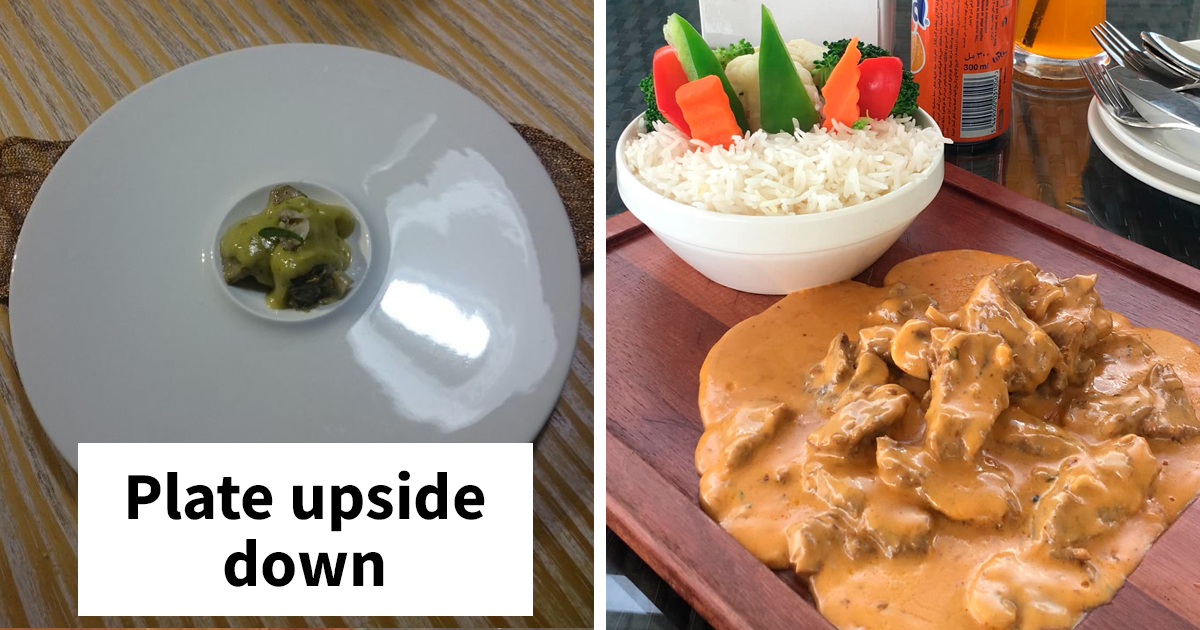
Creative food presentation can be wonderful. A thoughtful ceramic bowl can make ramen feel like a warm hug. A wide white plate can turn a few scallops into edible architecture. A chilled glass can make a cocktail sparkle before the first sip. But when a restaurant forgets that plates and glasses exist for a reason, the result can shift from memorable to messy faster than gravy sliding off a roof tile.
This article explores 30 hilarious, frustrating, and oddly educational examples of restaurant serving disasters, why they annoy diners, what they reveal about food trends, and why sometimes the most revolutionary dining idea is simply this: put the food on a plate and the drink in a glass.
Why Weird Food Presentation Became a Thing
Restaurants compete in a world where everyone has a camera in their pocket. A dish is not just dinner anymore; it is content. It is a post, a reel, a review, a tiny edible billboard. That pressure has encouraged chefs and restaurant owners to think beyond ordinary tableware. Sometimes the results are brilliant. Other times, your tacos arrive clipped to a laundry line like they’re drying after a spin cycle.
The rise of visual dining has made presentation part of the experience. Food that looks striking can increase anticipation, shape how people perceive flavor, and make a meal feel special before anyone picks up a fork. But good presentation should support the food, not wrestle it for attention. The best plating makes the dish easier to enjoy. The worst plating makes diners perform a small engineering project before eating.
That is why “We Want Plates” became more than a complaint. It became a rallying cry for people who like creativity but also enjoy basic stability, hygiene, and not having sauce run into their lap. Plates, bowls, and glasses are not boring. They are centuries of design wisdom quietly doing their job.
30 Food Serving Disasters That Made People Miss Normal Tableware
1. Fries Served in a Tiny Metal Bucket
At first glance, a little bucket seems cute. Then the fries steam themselves into limp sadness at the bottom while the top ones go cold. A plate would let them breathe. A basket would work. A bucket says, “Enjoy your potato sauna.”
2. Soup in a Mason Jar
Mason jars are great for pickles, jam, and pretending you live on a farmhouse even though your apartment overlooks a parking garage. Hot soup in a jar, however, is awkward to pour, hard to spoon, and one slippery grip away from a table disaster.
3. Steak on a Wooden Cutting Board
Wooden boards can look rustic and handsome, but steak juices do not respect boundaries. Without a rim, the sauce often migrates across the table like it has dinner plans elsewhere. A plate with an edge would solve the whole crime scene.
4. Cocktails in Lightbulbs
Yes, it photographs well. No, it does not feel natural to drink a fruity beverage from something associated with electrical repair. Add a tiny straw and suddenly the whole thing feels less like mixology and more like sipping from a science fair project.
5. Burgers on Slate Tiles
Slate looks dramatic, but burgers are not museum artifacts. When the bun slides, the sauce drips, and the fries scatter, the diner becomes a cleanup crew. The plate is not the enemy here. Gravity is.
6. Dessert Served in a Flowerpot
Chocolate “soil” in a flowerpot can be playful once. But when the spoon hits ceramic and the presentation looks too much like gardening day, appetite may need a minute to reboot. Cute concept, questionable comfort.
7. Salad on a Flat Board
Leafy greens are already chaotic. Put them on a rimless board and suddenly the arugula is escaping, the cherry tomatoes are rolling, and the vinaigrette is making a break for the tablecloth. Bowls were invented for exactly this situation.
8. Tacos Hanging From a Rack
Tacos deserve support. They have delicate architecture. Hanging them from hooks or clips may look trendy, but it risks tearing tortillas, dripping salsa, and making dinner feel like a laundry appointment.
9. Ice Cream on a Cold Stone Slab
A chilled surface can help, but not if the dessert spreads out faster than the diner can eat it. A bowl keeps the melting situation contained. A slab turns dessert into a race against dairy physics.
10. Bread Served in a Shoe
Even if the shoe is brand-new, the brain is not interested in hearing that explanation. Food and footwear belong in different departments of human civilization. No amount of artisanal butter can rescue this idea.
11. Pasta in a Frying Pan
A skillet can be charming for sizzling dishes, but pasta in a pan often means awkward angles, hot handles, and sauce hiding in corners. It may look like comfort food, but it eats like a dare.
12. Appetizers on a Shovel
The mini shovel trend is a classic example of “we had an idea and no one stopped us.” It may suit a garden-themed party, but at dinner it mostly reminds people of dirt, construction, and questions about cleaning procedures.
13. Drinks in Plastic Bags
Portable? Maybe. Elegant? Not exactly. A cocktail in a bag can be fun at a festival, but in a sit-down restaurant it can make a diner feel like they ordered lemonade from a suspicious roadside experiment.
14. Nachos in a Dog Bowl
Some jokes should stay in the group chat. Even a clean dog bowl has a visual association that does the food no favors. Nachos need height, crunch, and shareabilitynot the emotional energy of pet store clearance.
15. Sushi on a Rock
Natural stone can look beautiful, especially with minimalist dishes. But if the rock is uneven, too heavy, or hard to clean properly, the drama outweighs the benefit. Sushi already has elegance. It does not need a geology degree.
16. Sauce in an Eyedropper
Precision can be impressive, but diners generally do not want to administer their own sauce like prescription medication. A small ramekin is not boring; it is merciful.
17. Breakfast on a Wooden Paddle
Eggs, beans, tomatoes, toast, and breakfast sauces all need borders. A paddle offers none. One wrong fork movement and the beans begin their journey toward the edge of the world.
18. A Sandwich Wrapped in Newspaper-Style Paper
Food-safe printed paper can be perfectly acceptable, but when it becomes soggy, tears apart, or sticks to melted cheese, the charm disappears. The sandwich should be the thing you eatnot the packaging.
19. Soup Served in a Bread Bowl With No Plate Underneath
Bread bowls can be wonderful. Bread bowls without backup are suspense films. Will the soup leak? Will the base collapse? Will lunch become a table-based flood event? Nobody ordered anxiety bisque.
20. Fries in a Mini Shopping Cart
Adorable? Yes. Practical? Barely. The fries fall through gaps, the cart takes up too much room, and everyone wonders how many tiny wheels must be cleaned after service.
21. A Burger Speared Vertically on a Spike
A small skewer can hold a burger together. A dramatic metal spike can make it look like the burger lost a medieval duel. Diners should not need a safety briefing before removing the top bun.
22. Coffee in a Beaker
Science-themed cafes can make this work, but a hot drink in lab glassware often feels gimmicky. Coffee wants warmth, aroma, and comfort. It does not need to look like it is being tested for acidity in chemistry class.
23. Cheese Served on a Mirror
A mirror may look glamorous for ten seconds. Then fingerprints, crumbs, smears, and reflections enter the chat. Cheese boards should make guests hungry, not force them to confront their own confused faces between bites.
24. Ribs on a Roof Tile
Ribs are juicy, saucy, and gloriously messy. A roof tile is flat, hard, and suspiciously architectural. The combination feels less like barbecue and more like a home renovation with coleslaw.
25. Oysters on a Bed of Pebbles
Oysters on ice make sense. Oysters on decorative stones can look elegant until a pebble gets too close to the food or the shells wobble. Seafood presentation should whisper “fresh,” not “landscaping.”
26. Pancakes Stacked in a Tin Can
Pancakes need syrup coverage and fork access. A can may create height, but it also turns breakfast into an extraction challenge. Plates allow pancakes to relax. Pancakes have earned that.
27. Dumplings on a Skull Prop
There is theatrical, and then there is “why is my appetizer beside a skull?” Unless the restaurant is explicitly horror-themed, this presentation can overpower the food and make dipping sauce feel like part of a ritual.
28. Salad in a Drinking Glass
Layered salad in a glass can look pretty, but eating lettuce vertically is not a natural human activity. The dressing sinks, the fork gets trapped, and the diner starts excavating like an archaeologist with ranch.
29. Breadsticks in a Toolbox
A clean themed container can be safe, but visual associations matter. When breadsticks arrive in something that looks like it belongs next to a wrench, the appetite may file a formal complaint.
30. A Full Meal on a Single Flat Tray With No Compartments
When sauces, sides, mains, and garnishes all share one open surface, flavors can collide in ways nobody requested. Sometimes fusion cuisine is exciting. Sometimes it is mashed potatoes absorbing salad dressing against their will.
What These Serving Disasters Teach Restaurants
The problem is not creativity. Diners love creativity. They love surprise, humor, beauty, and a little drama. The problem begins when presentation ignores the actual act of eating. A dish should be easy to approach, safe to handle, and pleasant from the first photo to the final bite.
Good restaurant presentation follows a few quiet rules. The serving piece should match the food’s temperature, texture, moisture, and portion size. Hot food should not arrive on a surface that burns the guest or cools the meal too quickly. Saucy food needs edges. Shared food needs accessibility. Drinks need vessels that are comfortable to hold and sip from. Anything that touches food should be easy to clean and suitable for food contact.
Plates and glasses became dining standards because they solve problems. Plates give food structure. Bowls contain liquids and loose ingredients. Glasses show color, hold temperature, and guide aroma. Ramekins separate sauces. Saucers catch drips. These items are not dull; they are design tools refined through centuries of people trying not to spill stew on themselves.
The Food Safety Side of the Plate Debate
Beyond comedy, there is a practical food safety conversation here. Food-contact surfaces should be cleanable, durable, and appropriate for repeated service. Nonporous surfaces are generally easier to clean thoroughly than heavily scratched, cracked, or absorbent materials. That does not mean wood, slate, or specialty serving pieces are always unsafe, but it does mean they require careful handling, maintenance, and sanitation.
When restaurants use unusual objects, diners naturally wonder: Was that item designed for food? Can it be washed properly? Does it have cracks or grooves where residue can hide? Is the finish food-safe? Is the surface stable? These are fair questions. Presentation should build trust, not make guests mentally inspect the cleaning schedule.
Even at home, basic food safety guidance emphasizes clean utensils, separate surfaces for raw and ready-to-eat foods, and proper washing of plates, cutting boards, and tools. In restaurants, those expectations are even higher because many people are served each day. A clever presentation is not worth it if it creates doubt about cleanliness.
Why Diners React So Strongly to Bad Presentation
Food is emotional. People do not only eat with their mouths; they eat with memory, expectation, smell, sight, touch, and mood. When a server places a beautiful dish in front of you, your brain starts celebrating early. But when the dish arrives in a shoe, on a shovel, or balanced on a suspiciously narrow plank, the brain pauses and says, “Let’s review the evidence.”
Bad presentation interrupts appetite. It makes the diner think about the container instead of the cuisine. It can also make the meal physically harder to enjoy. If the fork cannot reach the food, the sauce is leaking, or the drink vessel is awkward to hold, the guest experience suffers.
There is also the price factor. When diners pay restaurant prices, especially at trendy or upscale places, they expect thoughtfulness. A weird serving idea can feel insulting if it seems designed only for social media. People may laugh, take a picture, and still leave thinking, “That would have been better on a normal plate.”
When Creative Food Presentation Actually Works
To be fair, not every unusual serving idea is a disaster. A cast-iron skillet can keep fajitas sizzling. A bamboo steamer makes dumplings feel fresh and traditional. A stone bowl can keep bibimbap hot. A wooden board can be excellent for dry breads, cheeses, and charcuterie when properly maintained. A coupe glass can make dessert feel elegant. The difference is function.
Creative presentation works when the serving piece improves the food. It should preserve temperature, support texture, make sharing easier, enhance aroma, or tell a story that fits the dish. It fails when the object exists only to shock people. Nobody needs soup in a sneaker unless the chef is trying to lose a bet.
How Restaurants Can Be Creative Without Annoying Guests
Restaurants do not have to choose between imagination and practicality. The best approach is to design presentation around the diner’s experience. Before approving a quirky serving idea, a restaurant should ask simple questions: Can a guest eat this comfortably? Will it spill? Is it easy to clean? Does it make the food better? Would we still use this if nobody posted it online?
Menus can also help set expectations. If a place is theatrical, themed, or experimental, guests may welcome unusual service. But in a regular dining room, surprising people with a salad in a toolbox may not land the way the kitchen hopes. Novelty should feel like hospitality, not homework.
Experiences Related to Food Serving Disasters
Anyone who eats out often enough eventually collects a story about a dish that arrived in a container with main-character syndrome. Maybe it was fries served in a wire cone that dropped the shortest pieces onto the table. Maybe it was a cocktail in a jar so heavy that lifting it felt like arm day. Maybe it was a burger on a board that looked impressive until the sauce escaped and turned the napkin stack into a rescue mission.
The funniest part is that these meals are not always bad. Sometimes the food is excellent. The steak is cooked beautifully, the fries are crisp, the dessert is rich, and the cocktail is balanced. But the serving choice becomes the headline. Instead of saying, “That was a great meal,” the diner says, “You will not believe what they served it on.” The container steals the spotlight from the chef’s actual work.
One common experience is the shared appetizer that cannot be shared. The server places a dramatic vertical rack in the center of the table, loaded with bites that require careful removal. Everyone becomes polite in the most awkward way. “You go first.” “No, you.” “Does this detach?” “Why is there sauce on the handle?” By the time the group figures it out, the food is cooling and the conversation has become a team-building exercise.
Another familiar disaster is the rimless serving board. It looks gorgeous when it leaves the kitchen. Then reality arrives. A cherry tomato rolls toward freedom. Dressing spreads under the sandwich. Meat juices create a small river. A pickle slides into the fries. The diner tries to cut something and the whole arrangement shifts like a tectonic plate. Suddenly the meal is less about flavor and more about containment strategy.
Drinks can be even more dramatic. A beverage served in a novelty container may photograph well, but if it is hard to hold, difficult to sip, or impossible to set down safely, the charm fades quickly. People want cocktails to feel fun, not fragile. They want iced coffee in something that does not require two hands and a prayer. They want milkshakes that do not arrive with half a bakery attached to the rim unless there is a clear plan for eating it without wearing it.
Home cooks can learn from these restaurant mistakes, too. When hosting friends, the goal is not to create the strangest possible presentation. The goal is to make food inviting and easy to enjoy. A simple white platter, a deep bowl, a clean glass, or a warm ceramic dish can make guests feel cared for. You do not need to serve brownies in a flowerpot to be memorable. In fact, your guests may remember you more fondly if they do not have to ask whether the flowerpot is dishwasher-safe.
The larger lesson is that dining is a balance between surprise and comfort. People enjoy novelty when it adds delight. They resist it when it adds inconvenience. A clever serving piece should make guests smile, not make them search for instructions. The plate may seem ordinary, but ordinary can be beautiful when it lets the food shine.
Conclusion
The world of weird restaurant presentation is funny because it is almost relatable. We understand why restaurants want to stand out. We understand why chefs want dishes to look exciting. We even understand the temptation to make food go viral. But the best dining experiences remember that guests came to eat, not solve a puzzle involving gravy, slate, and a decorative garden tool.
“30 Times People Would’ve Rather Got Plates And Glasses Instead Of These Disasters” is more than a joke about hipster restaurants. It is a reminder that good design should serve the diner first. Creativity belongs in food. Humor belongs in hospitality. Beauty belongs on the table. But when the serving piece makes the meal harder, messier, stranger, or less appetizing, it may be time to return to the classics.
Give us plates. Give us bowls. Give us glasses. Give us tableware that holds the food, respects the sauce, supports the fork, and does not require a waiver. A great meal does not need to arrive on a shovel to be unforgettable. Sometimes, the most impressive thing a restaurant can do is serve delicious food beautifully, simply, and without making the fries feel like they joined a hardware store display.
Note: This article is written as original, publish-ready content based on real dining trends, food presentation practices, consumer reactions to unusual restaurant serving styles, and widely accepted food safety principles.