Celebrity culture loves a mystery, a lyric, and a comment section with too much coffee. That is exactly why Drake’s reference to Millie Bobby Brown on his album For All the Dogs sparked a fresh wave of discussion around a controversy that had been floating around the internet since 2018. The headline sounds dramatic because the internet made it dramatic: Drake, one of the most famous rappers on the planet, finally appeared to address years of criticism about his friendship with the Stranger Things star.
To be clear from the start, the phrase “grooming claims” refers to online criticism and public speculation, not a proven legal finding. Millie Bobby Brown has defended the friendship in the past, and Drake’s lyric seems aimed at people who turned their age-gap friendship into a running accusation. Still, the story remains a case study in fame, boundaries, social media judgment, and how one line in a rap song can reopen an entire cultural debate.
What Did Drake Say About Millie Bobby Brown?
The lyric at the center of the conversation appears in “Another Late Night,” a track featuring Lil Yachty on Drake’s 2023 album For All the Dogs. In the song, Drake refers to “weirdos” in his comments talking about “Millie Bobby,” a line widely interpreted as a response to people who had criticized his past friendship with Brown.
It was not a long speech, a podcast confession, or a carefully polished publicist statement. It was a Drake-style response: brief, defensive, slightly mocking, and wrapped inside a song. That made the line even more combustible. Fans immediately began debating whether he had “cleared the air,” made the situation worse, or simply reminded everyone of a controversy that many casual listeners had half-forgotten.
Where Did The Drake And Millie Bobby Brown Controversy Start?
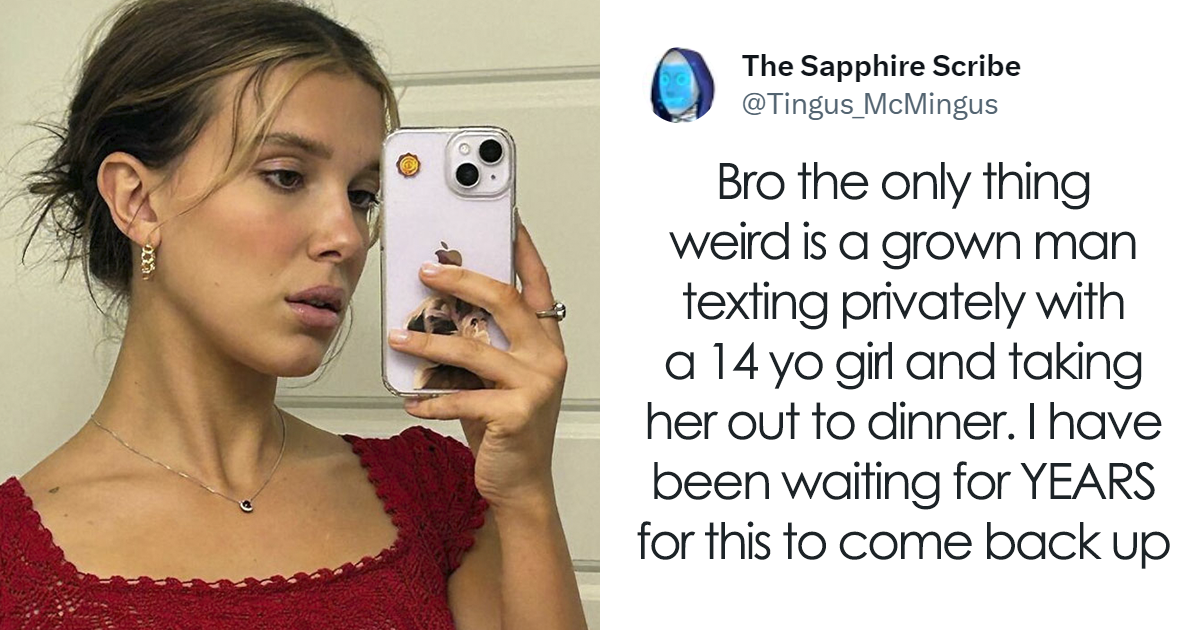
The public conversation began in 2018, when Millie Bobby Brown, then a teenage star known globally for playing Eleven on Stranger Things, spoke warmly about her friendship with Drake during a red carpet interview. She said they texted and that he gave her advice. Because Drake was an adult superstar and Brown was a minor at the time, many people online questioned whether the friendship was appropriate.
Brown later defended the relationship, describing it as supportive and criticizing people for turning what she saw as a positive friendship into something negative. Her response mattered because she was the person at the center of the story. However, the internet rarely closes a file just because one of the people involved says, “Please stop being weird.” If anything, online platforms tend to laminate a controversy and keep it in storage for future arguments.
Why The Word “Grooming” Became Part Of The Conversation
The term “grooming” is serious. It generally refers to manipulative behavior used to build trust with a minor or vulnerable person for exploitative purposes. Because of that, responsible coverage should not toss the word around like confetti at a celebrity roast. In this case, the term became attached to the story through social media criticism, not through a court case or confirmed investigative finding.
That distinction is important. People can reasonably discuss boundaries between adult celebrities and minors, especially when private texting or personal advice is involved. At the same time, there is a difference between saying “this seems inappropriate” and stating as fact that a crime or abusive pattern occurred. The internet often blurs that line, sometimes with the subtlety of a marching band in a library.
Why Drake’s Album Response Got So Much Attention
Drake’s music has always doubled as a personal diary with luxury-brand lighting. He references relationships, rivalries, criticism, gossip, fatherhood, fame, loyalty, betrayal, and whatever else the timeline is arguing about that week. So when he name-checked Millie Bobby Brown, listeners treated the lyric as more than a throwaway bar.
For many fans, the line sounded like Drake finally acknowledging a criticism he had mostly avoided in direct public statements. For critics, it sounded too aggressive or dismissive. For neutral listeners, it was another reminder that Drake’s public image is built on two competing forces: emotional vulnerability and defensive bravado. He wants to tell you he is hurt, but he also wants to tell you he is untouchable. Sometimes he does both before the second chorus.
The Timing: Why “For All The Dogs” Matters
For All the Dogs arrived in 2023 as Drake’s eighth studio album and included a long tracklist filled with features from major artists. The album was already destined for heavy attention because it was a Drake release. Add a lyric referencing a long-running celebrity controversy, and the internet had its headline before the song even finished playing.
The album’s broader tone also matters. Drake spends much of the project moving between flexes, grievances, romantic frustration, and score-settling. “Another Late Night” fits that atmosphere. The Millie Bobby Brown reference does not appear as a careful explanation. It appears as a quick jab at critics, which is why people interpreted it in different ways.
Millie Bobby Brown’s Role In The Public Conversation
One of the most overlooked parts of the debate is that Millie Bobby Brown has not publicly framed herself as a victim in this situation. In 2018, she pushed back against the criticism and described the friendship as something she valued. That does not mean the public is forbidden from discussing celebrity boundaries. It does mean that any responsible article should avoid speaking over her as if her own words do not exist.
Brown’s career has also changed dramatically since the original controversy. She has grown from a child actor into an adult performer, producer, author, beauty entrepreneur, and public figure with her own media identity. Reducing her to a supporting character in a Drake controversy misses the bigger picture. She is not merely “the actress Drake texted.” She is one of the most recognizable stars of her generation.
Why Fans Still Debate Celebrity Age Gaps And Boundaries
The reason this story stuck is not just Drake. It is the larger question behind it: What kind of relationships should adult celebrities have with teenage stars? Hollywood, music, sports, and influencer culture all create strange social circles where age, fame, access, and mentorship can overlap in uncomfortable ways.
Some people argue that mentorship between famous people is normal. A young actor may benefit from advice from someone who survived early fame, public judgment, and industry pressure. Others argue that private communication between a grown adult celebrity and a minor should be handled with extreme caution, especially when the adult is powerful, admired, and socially influential.
Both perspectives can exist without turning every discussion into a shouting contest. The healthiest conversation is not “all celebrity friendships are suspicious” or “famous people should never be questioned.” The healthiest conversation asks practical questions: Are boundaries clear? Are parents or guardians aware? Is the relationship professional, public, and appropriate? Is the younger person protected from pressure? Those questions are more useful than simply throwing labels around for engagement.
How The Kendrick Lamar Feud Reignited The Topic
The Drake and Millie Bobby Brown conversation resurfaced again during Drake’s explosive 2024 feud with Kendrick Lamar. That battle included serious personal accusations, diss tracks, fan investigations, memes, reaction videos, and enough timeline chaos to power a small city. Drake later denied claims about pursuing underage women in his response track “The Heart Part 6,” where he again referenced Millie Bobby Brown while defending himself.
This is why the story has lasted longer than a typical celebrity headline. It is not just about one 2018 interview or one 2023 lyric. It has become part of a broader public debate about Drake’s image, the way rap beefs use personal allegations, and how fans process accusations when they arrive inside entertainment rather than a courtroom.
Did Drake’s Response Help Or Hurt?
That depends on who you ask. Supporters saw the lyric as Drake pushing back against unfair jokes and rumors. They argued that people had been using Brown’s name to attack him for years despite her own defense of their friendship. To them, the line was overdue.
Critics saw it differently. Some felt the lyric was too flippant for a topic involving a former minor. Others thought bringing up Brown again only guaranteed that her name would be dragged back into a conversation she did not ask to restart. In the court of public opinion, even a defensive lyric can act like a leaf blower: it may clear one pile while scattering the mess across the entire yard.
The SEO-Friendly Reality: What People Are Really Searching For
Search interest around this topic usually comes from a few questions: What did Drake say about Millie Bobby Brown? Did Drake respond to grooming claims? What song mentions Millie Bobby Brown? Why were people criticizing Drake? Was anything proven? These questions show that readers are not just chasing gossip; many are trying to understand the timeline.
The short version is this: Brown spoke positively about texting with Drake in 2018, online critics questioned the age gap and boundaries, Brown defended the friendship, and Drake later appeared to address the criticism in “Another Late Night” on For All the Dogs. In 2024, the topic resurfaced during the Kendrick Lamar feud, where Drake again denied allegations involving underage women. That is the factual backbone of the story.
Why This Story Says So Much About Internet Culture
This controversy reveals how celebrity discourse works now. A short interview becomes a viral clip. A viral clip becomes a theory. A theory becomes a meme. A meme becomes a diss-track reference. A diss-track reference becomes a new article. By the time everyone is done reacting, the original context has been squeezed like a lemon in a TikTok comment section.
It also shows how the internet struggles with nuance. People want clear villains and clean endings. But real public controversies often live in gray areas: discomfort without proof, criticism without legal findings, defensive statements without full explanations, and famous people whose words are analyzed harder than a final exam.
Experience Notes: What This Topic Feels Like From A Reader’s Perspective
Reading about the Drake and Millie Bobby Brown controversy can feel like walking into a conversation that started six years ago and somehow everyone is still talking at once. One person is quoting a lyric. Another is referencing a 2018 interview. Someone else is bringing up Kendrick Lamar. A fourth person is yelling “context matters,” and honestly, that person has a point.
The first experience many readers have with this story is confusion. The headline sounds current, but the roots are older. The “new album” most people refer to is For All the Dogs, released in 2023, while the original criticism began years earlier. That timeline matters because without it, the story can seem like Drake suddenly created a controversy out of nowhere. In reality, the lyric landed because the controversy already had history.
The second experience is discomfort. Even readers who do not follow Drake closely may understand why people became uneasy about an adult celebrity texting a young teen star. Modern audiences are more aware of power dynamics than they were in earlier eras of entertainment. People ask harder questions now, and sometimes those questions are necessary. Fame can create unusual relationships, and young stars deserve protection, privacy, and adults who respect boundaries.
The third experience is frustration. Some readers feel that social media turns every uncomfortable situation into the harshest possible accusation. Others feel that celebrity fandoms are too quick to defend their favorite artists no matter what. Both frustrations are real. Online culture often rewards the loudest interpretation, not the most careful one. A thoughtful middle ground rarely trends, mostly because “Let’s examine this responsibly” does not fit neatly on a reaction meme.
The fourth experience is fatigue. Drake has been involved in enough public debates, lyrical feuds, and viral controversies that some readers simply roll their eyes and move on. Yet this topic keeps returning because it touches something bigger than one rapper or one actress. It asks how society should handle concern, rumor, denial, and accountability when the people involved are famous and the evidence available to the public is limited.
For writers, editors, and readers, the best approach is careful language. Say what happened. Say what people claimed. Say what was denied. Say what was never proven. Avoid turning speculation into fact. That may not be as spicy as a gossip headline, but it is more useful, more ethical, and less likely to make your article age like milk left in a tour bus cupholder.
Final Thoughts
Drake’s response to the Millie Bobby Brown grooming claims was not a full public explanation. It was a lyric, and like many Drake lyrics, it worked as both a denial and a provocation. The line in “Another Late Night” gave fans something to dissect and critics something to challenge. It also reminded everyone that celebrity controversies do not disappear; they wait patiently until a song, feud, or viral post gives them a second life.
The most responsible takeaway is simple: Drake addressed the criticism in music, Brown previously defended their friendship, and no public evidence has established the online grooming claims as fact. Still, the controversy remains relevant because it raises serious questions about fame, boundaries, mentorship, and how quickly the internet can turn concern into accusation.
In the end, this story is less about one lyric and more about how modern celebrity culture works. The public wants answers, artists answer in art, fans argue in comments, and the truth usually needs more room than a trending headline allows.