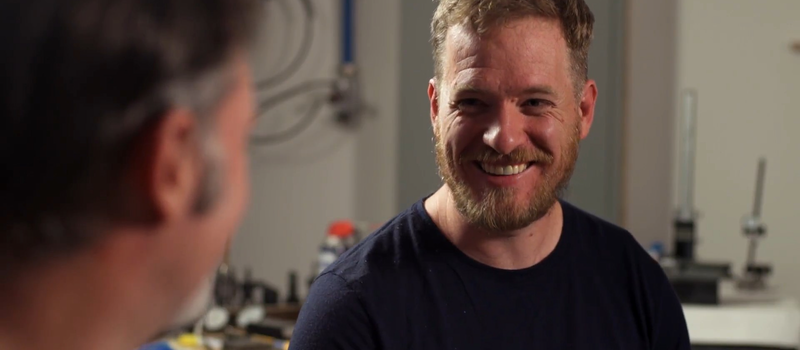
Some people visit Shenzhen and buy a phone case. Scotty Allen visited Shenzhen, wandered into the buzzing electronics markets of Huaqiangbei, and asked a beautifully unreasonable question: could he build a working iPhone from parts? Not repair one. Not customize one with a sticker and call it “limited edition.” Build onepiece by piecefrom the public cell phone repair markets where screens, batteries, logic boards, housings, tiny screws, and stranger things than your junk drawer can dream of are sold like fresh fruit.
The result became one of the most memorable technology stories on the internet: a former Silicon Valley engineer, entrepreneur, hacker, and travel-obsessed maker turning Shenzhen’s hardware ecosystem into a real-world classroom. Through his YouTube channel and project brand, Strange Parts, Scotty Allen did more than assemble an iPhone 6s. He opened a tiny metal door into the global repair economy, the magic of hardware manufacturing, and the humbling truth that modern smartphones are both incredibly sophisticated and surprisingly human-made.
This is the story behind “Scotty Allen visits Strange Parts, builds an iPhone”a project that feels part engineering adventure, part travel show, and part love letter to the people who keep technology alive after it leaves the factory.
Who Is Scotty Allen?
Scotty Allen is best known as the creator of Strange Parts, a technology adventure project focused on the messy, fascinating, often hilarious edges of hardware. Before becoming the guy who could walk through Shenzhen and casually ask for a logic board like ordering a sandwich, Allen worked in software and spent time in Silicon Valley. His background gave him enough technical confidence to be dangerousin the fun maker sensebut not so much hardware experience that the iPhone build became boringly predictable.
That is part of the charm. Allen was not presented as an all-knowing factory wizard descending from the cloud with a soldering iron in one hand and a perfect bill of materials in the other. He was curious. He got confused. He bought wrong parts. He asked vendors for help. He learned by doing, which is the official sport of makers everywhere.
Strange Parts grew from that spirit. It is not only about gadgets. It is about the people, markets, back alleys, repair booths, workshops, tools, and accidental conversations that make technology feel less like a sealed black box and more like a living ecosystem. In that sense, the homemade iPhone was not just a device. It was a passport.
Why Shenzhen Matters to the Story
To understand why Scotty Allen’s iPhone project became so compelling, you have to understand Shenzhen. The city is often described as one of the world’s most important hardware hubs. For decades, it has been connected to electronics manufacturing, prototyping, component sourcing, and global supply chains. If Silicon Valley is where people pitch the next app that promises to revolutionize breakfast, Shenzhen is where someone can probably build the circuit board for it before lunch.
At the heart of this story is Huaqiangbei, Shenzhen’s famous electronics district. It is not a single tidy shop with a “smartphone aisle.” It is a dense network of markets, towers, stalls, repair counters, wholesalers, and tiny businesses. One vendor may specialize in screens. Another may sell batteries. Another may know a person who knows a person who can find the obscure bracket you did not know existed until your phone refused to close properly.
For an outsider, Huaqiangbei can feel overwhelming. For repair professionals, it is infrastructure. Parts move through the district constantly. Used phones are disassembled. Working components are tested, sorted, resold, refurbished, or recombined. That circular life of electronics is exactly what made Allen’s experiment possible.
The Big Question: Can You Build an iPhone From Parts?
The short answer is yes, but the better answer is: yes, if you are patient, curious, and willing to become emotionally attached to tiny screws.
Allen set out to build a working iPhone 6s using parts sourced from the cell phone repair markets. The iPhone 6s was a practical choice because parts were widely available at the time, while newer models were harder to source. The project centered around four major components: the case, the screen, the battery, and the logic board. That sounds simple until you remember that “screen” does not mean one friendly rectangle. A smartphone display involves layers, adhesives, connectors, digitizers, polarizers, backlight parts, and enough fragility to make bubble wrap nervous.
The logic board was especially important. It is the core of the phone, carrying the processor, storage, and other essential components. Allen did not fabricate an iPhone chip from raw silicon in a cave like a superhero with a cleanroom. Instead, he sourced a logic board that had come from an existing Apple-made phone. The software was already present on that board. This distinction matters because the project was not about manufacturing every microscopic component from scratch. It was about using the repair-market ecosystem to assemble a functional phone from available parts.
That nuance did not make the project less impressive. In fact, it made it more interesting. It showed how repair economies work in real life: not as fantasy factories, but as networks of reuse, salvaging, specialized labor, and practical problem-solving.
What Parts Went Into the Homemade iPhone?
The finished phone was a like-new, refurbished-style iPhone 6s with 16GB of storage. The main pieces included the housing, display assembly, battery, logic board, cameras, buttons, brackets, cables, and a Home button that had to be correctly paired for Touch ID to work. That last detail is a perfect example of why modern phone repair is not always as simple as “put the square thing in the square hole.”
Some iPhone components are connected not only mechanically but also electronically and through software relationships. The Home button and logic board pairing was important for fingerprint functionality. If you enjoy puzzles, this is fascinating. If you run a repair shop, it is Tuesday.
Allen also discovered that some tasks were better handled by specialists. Screen assembly, for example, required tools and techniques that were not worth buying for a one-off project. Instead of pretending that every DIY journey must be a lonely march through heroic suffering, he worked with people in the market who already had the equipment and experience. That is one of the strongest lessons from the project: making is often collaborative.
How Much Did Scotty Allen’s iPhone Cost?
The parts that ended up inside the finished iPhone cost roughly a few hundred dollars, but the total project cost was much higher because Allen purchased duplicate parts, wrong parts, tools, and experimental materials along the way. The learning process was not free. It rarely is. Anyone who has started a DIY project with a $12 budget and ended up owning three specialty clamps understands this spiritually.
That cost detail is important for SEO readers searching for “can I build my own iPhone cheaper?” The answer is probably no. Scotty Allen’s build was not a coupon strategy. It was an exploration. Buying a used or refurbished iPhone would usually be easier, faster, and cheaper. The value of the project was not that it beat retail pricing. The value was that it revealed how a phone can be assembled, repaired, sourced, and understood.
Why the Project Went Viral
The Strange Parts iPhone build went viral because it blended several irresistible ingredients. First, it involved Apple, a company whose devices are famously polished, tightly integrated, and mysterious to many users. Second, it took place in Shenzhen, a city many viewers had heard about but never really seen from inside the hardware markets. Third, Allen narrated the process with genuine curiosity instead of fake genius energy. He made mistakes, asked questions, and treated vendors as experts rather than background scenery.
Most technology videos show finished products. This project showed the middle: the negotiation, the guessing, the tiny failures, the “wait, why does this cable not fit?” moments. That middle is where the good stories live.
It also challenged the way people think about smartphones. We often treat phones like sealed magical slabs. When one breaks, many people assume the only options are panic, replacement, or prayer. Allen’s build showed that an iPhone is still a physical object made of parts. Complex parts, yes. Expensive parts, yes. Parts that may require careful repair practices, definitely. But still parts.
Strange Parts as a “Travel Show for Geeks”
The phrase “travel show for geeks” fits Strange Parts beautifully. Instead of visiting a city and reviewing coffee shops, Allen follows technology into the places where it is repaired, modified, manufactured, and reimagined. The iPhone build was never only about making a phone. It was about exploring the culture around hardware.
That is why the project resonated with engineers, repair technicians, makers, Apple fans, and casual viewers alike. It offered the satisfaction of watching a build come together, but it also gave viewers a street-level look at a supply chain most people only discuss in abstract terms. Global manufacturing became personal. The people behind the counters mattered. The repair technicians mattered. The market knowledge mattered.
In a world where technology often arrives in glossy boxes with minimal explanation, Strange Parts made the invisible visible. That is a powerful storytelling moveand a very good reason the project still gets discussed years later.
What the iPhone Build Teaches About Repair Culture
One of the biggest takeaways from Scotty Allen’s iPhone adventure is that repair culture is not a fringe hobby. It is an essential part of the technology lifecycle. Every year, millions of devices are cracked, drowned, dropped, upgraded, traded, stripped, refurbished, and resold. Behind that cycle are people with specialized skills: screen laminators, microsoldering technicians, parts sellers, testers, refurbishers, and shop owners.
Allen’s project highlighted the difference between official repair systems and independent repair ecosystems. Apple now provides self-service repair options for experienced individuals, including access to genuine parts, tools, and manuals for certain products. That official path is useful, but it is only one part of a much larger global conversation about repairability, parts access, sustainability, and consumer choice.
The Shenzhen repair markets showed another model: dense, fast-moving, deeply practical, and full of human expertise. It may look chaotic from the outside, but there is organization underneath the noise. The right person knows which stall has which part. Another knows how to test it. Another knows which version fits which model. The system runs on relationships and pattern recognition as much as inventory.
The Beauty of “Not From Scratch”
Some critics argued that Allen did not truly build an iPhone “from scratch” because he did not manufacture the logic board, fabricate the chips, or create the display layers himself. Technically, that criticism is fair. Spiritually, it misses the entire party.
Almost nothing in modern electronics is built from absolute scratch by one person. Even major manufacturers rely on vast networks of suppliers, machines, standards, tooling, raw materials, logistics, and expertise. Allen’s project worked precisely because it mirrored that reality on a smaller, scrappier scale. He assembled a phone from the available outputs of a huge ecosystem.
That makes the project more honest, not less. It reminds us that every device is collaborative. Your phone is not the product of one genius in a black turtleneck whispering to aluminum. It is the result of designers, engineers, factory workers, suppliers, logistics teams, repairers, recyclers, and many more people whose names never appear in keynote slides.
Why This Story Still Matters Today
The Strange Parts iPhone build remains relevant because the questions behind it have only become more important. Who gets to repair technology? How easy should it be to access parts? What happens to devices after their first owner moves on? Can consumers understand the tools they use every day, or are they expected to remain passive users of sealed objects?
These questions matter for sustainability, affordability, education, and innovation. Repair extends product life. Refurbishing can reduce waste. Understanding hardware can inspire new builders. And seeing someone like Scotty Allen learn in public can make technology feel less intimidating.
The project also matters because it celebrates curiosity without pretending that curiosity is always tidy. Allen’s iPhone build was full of detours, confusion, and help from others. That is realistic. Good learning usually looks less like a straight line and more like a charging cable after three months in a backpack.
Practical Lessons From Scotty Allen’s iPhone Adventure
1. Hardware Is Less Scary When You Break It Into Systems
A smartphone looks impossible until you divide it into systems: power, display, housing, processing, cameras, buttons, antennas, and software. That does not make it easy, but it makes it understandable. Allen’s build showed that even a premium device can be studied one subsystem at a time.
2. Local Expertise Beats Internet Guesswork
Online research helps, but the real breakthroughs often came from talking to people in the market. Vendors and repair technicians understood parts in a hands-on way. They knew compatibility, common failure points, and practical shortcuts. In hardware, lived experience is a search engine with fingerprints.
3. Tools Matter, But Judgment Matters More
A few basic tools can handle simple assembly, but specialized tasks require specialized equipment. The wisdom is knowing when to do it yourself and when to ask someone who does it all day. DIY does not mean rejecting expertise. It means learning enough to respect it.
4. Repair Is a Form of Design Literacy
When you open a device, you begin to understand design decisions. Why is this bracket shaped this way? Why is this cable routed under that shield? Why does one screw differ from another by a nearly invisible amount? Repair reveals the hidden grammar of products.
Additional Experience: What It Feels Like to Follow a Strange Parts-Style Build
Watching or attempting a Strange Parts-style project changes the way you see everyday electronics. Before, a phone might feel like one object: smooth glass, metal edges, camera bump, mysterious intelligence. After learning about Allen’s iPhone build, the same phone starts to feel like a tiny city. There are roads, power stations, communication lines, protective walls, and citizens with very specific jobs. The battery is not just “the battery.” It is the power district. The display is not just a screen. It is a layered theater where light, touch, and color negotiate a daily peace treaty.
The most relatable experience is the emotional roller coaster of parts hunting. At first, everything seems available. You think, “Great, I just need a screen, a case, a board, and a battery.” Five minutes later, you learn there are versions, revisions, compatibility issues, grades of quality, missing brackets, questionable cables, and one screw that appears to have been designed by a committee of ants. This is where patience becomes the most important tool on the desk.
There is also a wonderful shift in respect. The more you learn about phone assembly and repair, the less you take repair technicians for granted. A good technician is not just “opening a phone.” They are managing risk. They are avoiding battery damage, protecting fragile connectors, tracking screw locations, identifying part quality, and solving problems that may not be obvious from the outside. A five-minute repair video can hide years of muscle memory.
Another experience connected to the topic is the thrill of seeing a dead-looking collection of parts become a working device. There is a special kind of joy when a screen lights up after careful assembly. It is not the same as unboxing a new phone. It is better in a nerdy, slightly ridiculous way. You know the device differently. You remember the awkward cable. You remember the part that almost did not fit. You remember the moment you thought, “This will never work,” followed by the moment it absolutely did.
That feeling explains why Scotty Allen’s iPhone build reached people beyond the hardcore electronics community. The project was not only about technical achievement. It was about discovery. It invited viewers to become curious again about objects they use every day. It suggested that technology is not magic locked behind glass; it is human work, layered and organized and sometimes held together by very tiny screws.
For writers, creators, and makers, the biggest lesson is storytelling. Allen did not simply show a finished phone and announce victory. He showed the search, the confusion, the market, the people, and the process. That is why the story stuck. The best technology content does not merely answer “what happened?” It answers “why should we care?” In this case, we care because one man’s homemade iPhone became a doorway into repair culture, global manufacturing, and the joy of learning by doing.
And perhaps the most practical experience of all is this: after seeing the Strange Parts build, you may never look at a cracked phone the same way again. Instead of seeing trash, you see possibility. Maybe it is a repair. Maybe it is a parts donor. Maybe it is a lesson. Maybe it is just a reminder that the world is full of strange parts, and some of them still have plenty of life left.
Conclusion
Scotty Allen’s Strange Parts iPhone build remains one of the internet’s great maker stories because it combines adventure, humility, engineering, travel, and curiosity in one pocket-sized machine. It was not a shortcut to a cheap iPhone, and it was not a claim that one person can recreate Apple’s entire supply chain at a market stall. It was something better: a hands-on exploration of how technology is sourced, repaired, assembled, and understood.
By building an iPhone from parts in Shenzhen, Allen helped viewers see beyond the polished surface of modern devices. He showed the people and systems behind the parts. He made repair culture feel exciting. He made hardware feel approachable. Most importantly, he reminded us that curiosity is still one of the best tools ever madeand thankfully, it does not require a pentalobe screwdriver.