There are bad dates, there are awkward dates, and then there are dates so spectacularly doomed that even the dessert menu starts looking like an emergency exit. The story behind this headline lands squarely in that third category. According to a viral online post, a man took a woman out to dinner, watched her disrespect restaurant staff, listened to her slide from rude to openly racist, paid the bill, and quietly disappeared. Then he asked the internet whether leaving her there made him the villain.
The internet, unsurprisingly, had thoughts. A lot of them. But beneath the juicy “should he have bailed?” drama, this story hits a nerve because it is not really about one dinner gone wrong. It is about what happens when racism shows up in ordinary life, in the middle of small talk, over grilled meat, under warm restaurant lighting, pretending to be “just an opinion.” It is also about modern dating boundaries: what you owe a person after they show you something ugly about their values, and whether politeness still matters when basic respect has already left the building.
That is what makes this story stick. It feels messy, believable, and weirdly educational. It reminds people that chemistry can vanish in a second, and that sometimes the biggest red flag is not a delayed text or a suspiciously curated playlist. Sometimes it is a person telling on themselves before the check arrives.
The Story, Minus the Popcorn Commentary
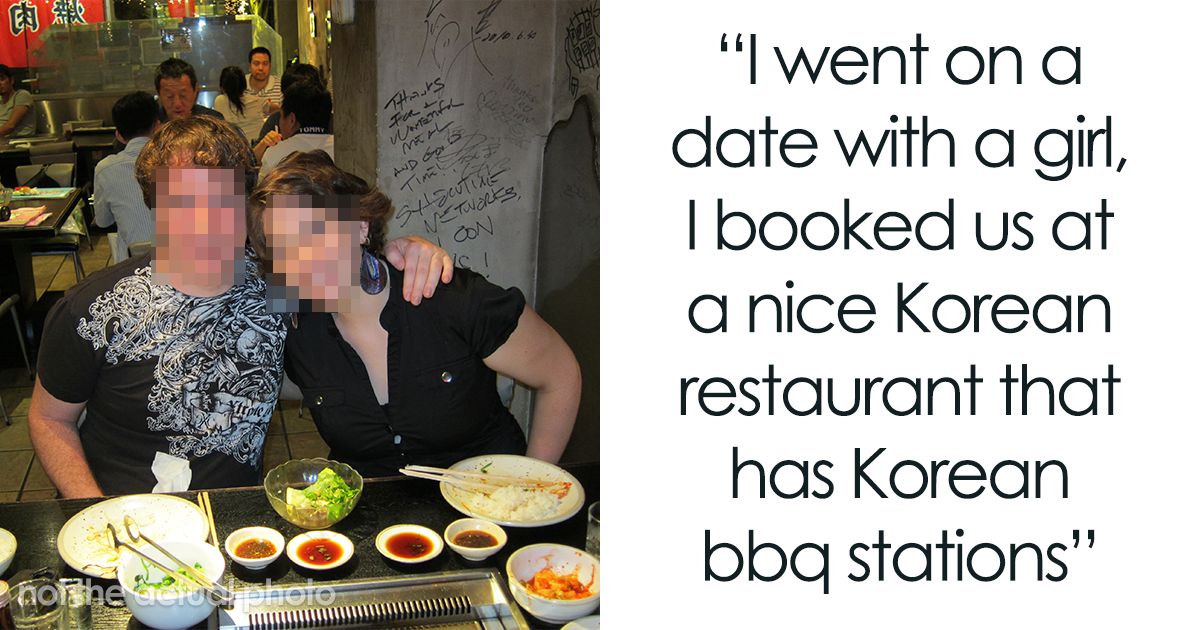
In the version that spread online, the man said he had asked out a woman he knew from the gym and took her to a Korean barbecue restaurant. At first, everything seemed normal enough. Then she reportedly started complaining about the setup, acted entitled toward the staff, and pushed the kind of “why do we have to do anything ourselves?” energy that can make a table go cold even when the grill is hot.
Still, rude behavior alone was not the real breaking point. The night reportedly took a harder turn when she began making openly racist comments about immigrants and the people around her. The man later explained that he was Indian and was especially disturbed by the way she talked about others while assuming she had a safe audience. In other words, she was not just being difficult. She was revealing a worldview.
So he did what many people only fantasize about doing when stuck across from a walking disaster. He paid the bill, left a tip, said he was going to the bathroom, and exited the situation entirely. Then he blocked her number and asked people online if he had handled it badly.
That question is what turned one ugly dinner into a larger conversation about racism, dating, accountability, and whether “I don’t owe you another minute of my time” is rude or simply healthy.
Why This Story Struck Such a Chord
Stories like this go viral because they offer a clean moral puzzle wrapped in messy human behavior. Everyone can imagine themselves at that table. Would you challenge the person on the spot? Finish the meal in icy silence? Call a ride and leave? Stay because you do not want a scene? Laugh nervously and regret it later? Dating is already full of micro-decisions. Add racism to the mix, and the pressure becomes moral as well as emotional.
Part of the public reaction also comes from a broader cultural truth: more Americans say they support interracial relationships and cross-cultural friendships than in past generations, yet bias has hardly vanished. It has just learned better table manners. Sometimes racism arrives loudly, with slurs and rants. Sometimes it sneaks in through stereotypes, “jokes,” selective discomfort, or that smug confidence people have when they think the room secretly agrees with them.
That tension matters. Plenty of people want to believe racism belongs to some cartoonishly obvious villain from another era. But real life is more annoying than that. Often it shows up in someone who is charming, educated, attractive, funny, and then suddenly says something so dehumanizing that the whole personality collapses like a cheap folding chair.
Racism on a Date Is Not “Just a Difference of Opinion”
One reason readers overwhelmingly sided with the man is simple: racism is not a quirky incompatibility. It is not the same as discovering your date hates your favorite movie, puts ketchup on eggs, or thinks all dogs are “just okay.” It reflects how a person sees the worth of other human beings. Once that comes out, the date is no longer about romantic chemistry. It becomes a question of safety, values, and whether staying signals tolerance for behavior that should not be normalized.
Psychologists and public health experts have long noted that racial hostility and even subtler forms of bias can have real emotional and physical consequences for the people targeted by them. Microaggressions, stereotyping, dismissal, and humiliation are not harmless social static. They accumulate. They shape trust. They change how welcome people feel in everyday spaces. And when that behavior happens in intimate settings, it can feel especially revealing, because relationships are supposed to be one place where respect is not up for negotiation.
That is why so many readers saw the man’s exit as less of a dramatic stunt and more of a boundary. He was not leaving because she told a bad joke. He was leaving because she had shown contempt for people based on race and immigration status, while also treating service workers like props in her evening. That combination is not a “misunderstanding.” It is information.
Was He Wrong To Leave Her There?
Here is the honest answer: he was probably not wrong to end the date, but people can still debate the style of exit.
The case for leaving
If someone is being racist, you are not morally required to continue entertaining them. You are not obligated to soothe them, educate them, or preserve the mood of the evening so they can enjoy the cheesecake course in peace. A first date is not a hostage situation. It is a low-stakes social test, and in this case the test results came back screaming in bold red letters.
Leaving also sends a clearer message than half-hearted discomfort. It says: this is unacceptable, and I will not keep participating. For many people, especially those who have personally dealt with prejudice, that kind of decisive boundary can feel healthier than sitting through more venom in the name of politeness.
The case against the stealth exit
The strongest criticism is not that he ended the date. It is that he left without directly saying why. Some people believe the better move would have been to pay, tell her her comments were racist and unacceptable, and leave openly. That approach would have been more direct, and maybe more satisfying in a movie script.
But real life is not obligated to perform like a perfect closing scene. People do not always feel safe, calm, or eloquent when blindsided. They do not always want to risk escalation in a public place. They do not always want to turn dinner into a debate club for terrible opinions. Quietly removing yourself can be the smartest option, especially when the other person has already proven they are comfortable being hostile in public.
So no, he was not wrong for refusing to continue the date. At most, you could argue there were alternate ways to leave. But the core choice to walk away? That looks less like bad manners and more like self-respect.
What This Reveals About Dating in America
Modern dating is often sold as a giant buffet of options. Apps, social media, friend setups, gym crushes, niche communities, endless filters. In theory, people have never had more ways to meet across backgrounds, cultures, and identities. In practice, dating still reflects bigger social realities. Bias comes along for the ride.
Research on interracial relationships and racialized discrimination in dating suggests a messy truth: acceptance has grown, but prejudice has not disappeared. People may publicly endorse diversity while privately clinging to stereotypes. They may say race does not matter, then make snap judgments about who is “appropriate,” who is “safe,” who is “attractive,” or who belongs in certain spaces. Online dating has made some of this more visible, not less. Preferences, exclusions, fetishization, and coded language often show up with startling bluntness.
And even outside apps, there is still social pressure. Interracial couples may face family skepticism, public staring, cultural misunderstandings, or awkward conversations about race that one partner has spent their whole life having and the other has barely considered. That does not mean cross-cultural relationships are doomed. It means they require maturity. A healthy relationship cannot survive on attraction alone if one person treats race as a joke, a stereotype, or a topic to avoid whenever it gets inconvenient.
This restaurant story cuts straight to that reality. The date failed not because the pair were “different.” It failed because one person revealed that her difference came bundled with disrespect and prejudice. Diversity is not the problem. Dehumanization is.
How To Handle It If Something Similar Happens To You
If you ever find yourself on a date that suddenly swerves into racist territory, there is no single perfect script. But there are a few smart principles.
1. Believe what you just heard
People often waste precious emotional energy trying to downgrade an offensive remark into something more manageable. “Maybe they did not mean it like that.” “Maybe it came out wrong.” “Maybe I am overreacting.” Sometimes context matters. But when someone is comfortable stereotyping whole groups, mocking immigrants, or dismissing the humanity of others, the plain meaning is usually the correct one.
2. Do not confuse calm with consent
You are allowed to stay composed while still rejecting what happened. You do not need to perform outrage at maximum volume for your boundary to count. A simple “That comment was racist, and I’m ending this date” is enough. So is quietly paying your share and leaving.
3. Prioritize safety over winning the argument
If direct confrontation feels unsafe, do not force it. Public settings, transportation issues, alcohol, and a stranger’s unpredictable reaction all matter. The smartest response is the one that gets you out cleanly.
4. Notice the pattern, not just the sentence
Often the worst comment is not the first clue. There may have been entitlement, contempt toward staff, weird comments about culture, assumptions about language, or that smug “you know what I mean” tone. Pay attention to the whole chain of behavior. Bigotry rarely appears out of nowhere wearing a name tag.
5. Resist the urge to turn yourself into a rehabilitation center
Some people can learn and change. That is true. It is also true that your first date is not a nonprofit organization devoted to repairing someone else’s moral wiring. You can leave. You can decline the second date. You can refuse the unpaid internship as their personal anti-racism coach.
The Hard Part Nobody Talks About
What often lingers after a moment like this is not just anger. It is disappointment. The person across from you was funny. Or attractive. Or promising. Or maybe you had been excited all week. Then one ugly comment blows a hole through the fantasy. That can feel surprisingly destabilizing, even when you know walking away was the right move.
There is also the weird shame-by-proximity effect. People sometimes wonder, “Did the rest of the room think I agreed?” “Should I have said more?” “Why did I stay through the appetizer?” That internal replay is normal. But the important thing is the choice you made once the truth became clear. Ending the interaction is not failure. It is correction.
And for people who belong to communities regularly targeted by bias, these moments can hit even harder. The issue is not abstract. It is personal. A racist rant does not just reveal ignorance; it can trigger a familiar exhaustion, the kind that comes from realizing yet again that someone felt safe saying something ugly because they assumed the cost would be low.
Experiences People Commonly Share In Similar Situations
One reason this restaurant story resonated so widely is that it mirrors experiences many people say they have had in dating, friendships, and social life. Not always with the exact same dramatic ending, of course. Most stories do not include a Korean barbecue grill and an emergency escape worthy of a sitcom. But the emotional pattern is familiar.
A lot of people describe the “slow reveal” version. The date starts fine. Then a small joke lands weird. Then comes a comment about someone’s accent, hair, food, neighborhood, or immigration status. The person speaking may even smile like they have said something clever. Suddenly the entire interaction changes. The evening is no longer about getting to know each other. It becomes a rapid background check on someone’s character.
Others talk about seeing racism through service interactions before anything else. Maybe a date is warm to the host but rude to the server. Maybe they make assumptions about who “belongs” in a restaurant, who should speak English, or who is “actually from here.” Those moments matter because they reveal how a person behaves when they think the social stakes are low. Plenty of people can behave decently when they are trying to impress someone. Fewer can hide contempt when they are dealing with workers, strangers, or communities they look down on.
Another common experience is the “exception test.” That is when someone says something offensive about a group, then quickly reassures the person in front of them that they are “different,” “one of the good ones,” or somehow exempt. It is supposed to sound flattering. It usually sounds ridiculous. It does not cancel the prejudice. It just proves the speaker thinks bias can be softened with a coupon code.
People in interracial or cross-cultural relationships also frequently describe a different but related challenge: the exhausting labor of deciding when to explain, when to confront, and when to walk away. Some say the hardest part is not even the openly racist person. It is the bystander who shrugs, changes the subject, or acts like calling out racism is somehow more disruptive than saying it in the first place. That is why stories about firm boundaries get so much support online. They offer a form of relief. They show someone refusing to play along.
And then there are the quieter stories, the ones that never become viral posts. The person who ended things after hearing one too many “harmless” jokes. The woman who realized her date liked her culture in the way people like a themed restaurant, not in the way they respect actual people. The man who got tired of being asked where he was “really” from. The couple who learned that family disapproval was not a hurdle but a warning sign. These are not headline-grabbing scandals. They are ordinary reminders that prejudice still leaks into private life in stubborn, unglamorous ways.
That is exactly why the restaurant story feels bigger than one bad evening. It captures a moment many people recognize: the second when attraction loses to ethics, and the person across the table turns from “maybe” to “absolutely not.”
Final Verdict
So, was the guy wrong to ditch the date after finding out she was racist? In any meaningful sense, no. The manner of exit is open for debate, but the decision to end the evening was justified. A date is an invitation, not a contract. Once someone starts demeaning people based on race and immigration status, they are not owed continued company, emotional labor, or a graceful extended farewell.
If anything, the story works as a useful reminder for anyone navigating modern relationships: pay attention to how people talk about those they perceive as different, lower status, or safely ignorable. Attraction can cloud judgment for a while. Values clear it fast. And if dinner reveals that someone’s worldview is rotten, leaving before coffee is not cruel. It is efficient.
Sometimes the best relationship advice is not about sparks, texting rules, or “being vulnerable.” Sometimes it is much simpler: when a person shows you their prejudice, believe them, settle the check, and go.