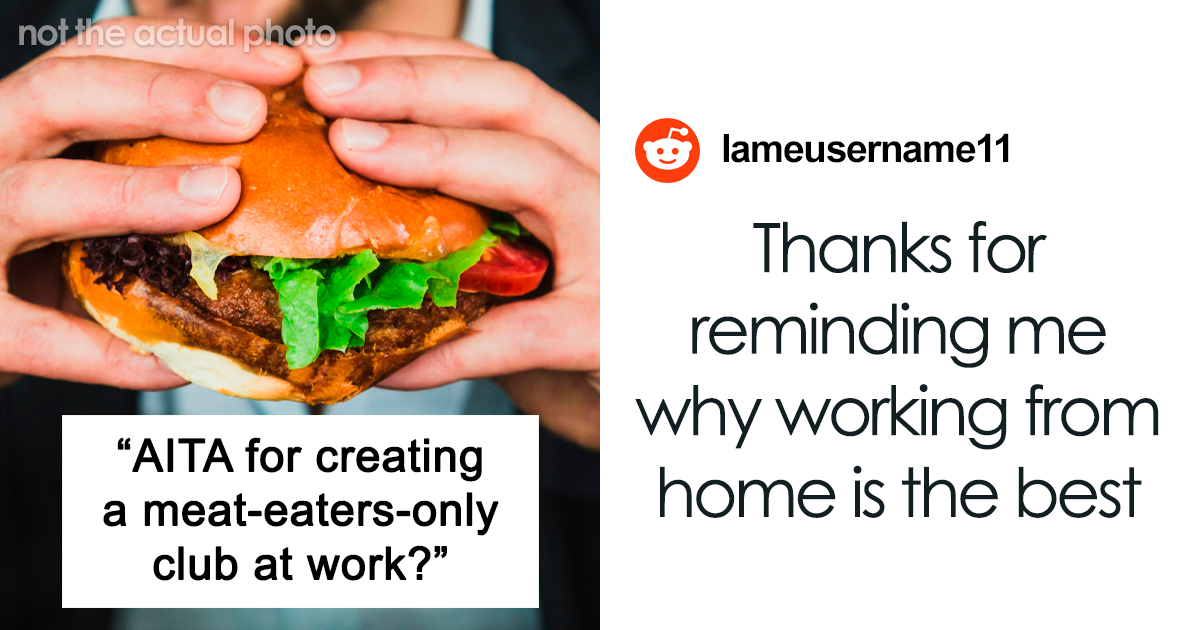
Office drama usually begins with a missing stapler, an aggressively microwaved fish lunch, or someone replying-all with the confidence of a person who has never feared consequences. But every now and then, workplace tension arrives wearing a vegan leather jacket and carrying a brisket sandwich. That is exactly the kind of deliciously awkward situation behind the viral story of an employee who pushed back against a vegan-only workplace club by starting a “Meat Eaters Only” club.
At first glance, it sounds like sitcom material: one group bonds over plant-based meals, another responds with burgers, barbecue, and a name that practically arrives with grill marks. But beneath the comedy is a surprisingly serious workplace question: when does a club meant to create community become a club that makes others feel excluded?
The story works because it is not really about tofu versus steak. It is about belonging, identity, boundaries, and the very human instinct to say, “Fine, if you get a club, I get a club too.” And yes, sometimes that instinct comes with ribs.
The Workplace Food Fight That Became Literal Beef
In the viral workplace scenario, employees formed a vegan-only club where members could socialize, share meals, and celebrate a plant-based lifestyle. The idea itself is not unusual. Many workplaces have clubs based on interests, identities, wellness goals, or shared values. A vegan club can be a positive space for employees who want to discuss recipes, animal welfare, sustainability, or simply how to survive another catered lunch where the only “vegan option” is a sad lettuce leaf staring into the void.
The conflict began when non-vegan employees felt excluded. Instead of asking for a broader food club, requesting occasional open events, or encouraging management to clarify club guidelines, one employee reportedly created a rival group: a “Meat Eaters Only” club. The move was part protest, part parody, and part workplace barbecue smoke signal.
Predictably, people had opinions. Some saw the meat club as a fair response to exclusion. Others viewed it as petty, provocative, or designed mainly to mock vegans. Many landed somewhere in the middle: if the vegan-only club was too restrictive, the meat-only club probably did not solve the problem; it simply added sauce.
Why Food Becomes Personal So Quickly
Food is never just food. It is culture, family, memory, ethics, health, religion, budget, comfort, and identity all stacked on a plate. One person’s harmless office lunch is another person’s deeply held belief. That is why workplace food issues can become emotional faster than a microwave burrito can explode.
For vegans, plant-based eating may be connected to animal welfare, environmental concerns, health goals, or moral philosophy. For meat eaters, food may represent tradition, family recipes, fitness goals, cultural heritage, or simple personal preference. Neither side enjoys being treated like a punchline. The vegan does not want to be mocked as a kale wizard. The meat eater does not want to be treated like a cartoon caveman dragging a steak through accounting.
In American workplaces, dietary diversity is common. Some employees avoid pork for religious reasons. Others eat halal or kosher. Some are gluten-free because of celiac disease. Others are lactose intolerant, diabetic, allergic to nuts, vegetarian, vegan, pescatarian, or simply trying to eat less takeout because their credit card has started wheezing. A smart workplace does not assume one menu or one club can fit everyone.
Was the Vegan-Only Club Wrong?
The answer depends on context. A vegan-only club is not automatically a problem. Employees often form groups around shared interests. A running club does not need to include people who hate running. A chess club does not need to host dodgeball. A vegan club can reasonably exist for people who practice veganism or want to learn more about it.
The trouble begins when exclusivity turns from purpose into gatekeeping. If the club uses company resources, meets during work hours, receives official support, or is promoted as a workplace inclusion effort, then the organization has a responsibility to make sure its clubs are fair, respectful, and aligned with policy. That does not always mean every club must be open to everyone in exactly the same way, but it does mean the rules should be clear and consistent.
Interest-based clubs need clear boundaries
A vegan club could say, “This group is for employees interested in vegan food, plant-based living, and animal-free products. All employees are welcome to attend, but food served will be vegan.” That keeps the mission intact without turning the door into a moral checkpoint.
By contrast, “vegans only, everyone else stay out” creates a different tone. It may make sense for private peer support in some contexts, but in an office environment, it can easily be interpreted as exclusionary. Even employees who have no interest in veganism may wonder why one group gets to draw a hard line while others are expected to be inclusive.
Was the Meat Eaters Only Club Fair Pushback?
It was understandable. It was also messy. That is the beauty and danger of workplace retaliation-by-brisket.
The employee who started the meat-only club may have been making a point: if one diet-based club can exclude people, why not another? In that sense, the group functioned as satire. It exposed a possible double standard and forced everyone to confront the policy question hiding behind the lunch table.
But satire at work is risky. A joke that lands beautifully with one group can feel hostile to another. If the meat club was created mainly to mock vegans, it could deepen resentment rather than solve the original issue. The best workplace pushback does not just prove a point; it improves the situation. A club called “Meat Eaters Only” may win the argument in the group chat, but it may lose the larger goal of creating a respectful workplace culture.
The Bigger Issue: Inclusion Is Not a Zero-Sum Lunch Tray
One of the biggest mistakes workplaces make is treating inclusion as a limited resource. If vegans get accommodation, meat eaters feel ignored. If halal food is provided, someone asks why there is no barbecue. If gluten-free cookies appear, another employee demands the return of the regular brownies, because apparently workplace democracy is measured in frosting.
Good inclusion does not require everyone to eat the same thing. It requires everyone to feel considered. A company lunch can offer vegan, vegetarian, meat-based, gluten-free, and allergen-aware options without turning the buffet into a constitutional crisis. The same principle applies to workplace clubs: groups can have a focus without becoming hostile to outsiders.
Inclusion means access, not sameness
A vegan club does not need to serve steak to be inclusive. A barbecue club does not need to serve tempeh ribs at every meeting. But if either group is officially supported by the employer, both should follow respectful guidelines, avoid shaming others, and provide a clear purpose beyond “we are not them.”
The ideal solution might have been simple: keep the vegan club, allow the meat club if it follows the same rules, and create a broader food appreciation group where employees can share recipes, traditions, and meals without turning lunch into a personality test.
What HR Should Do Before the Grill Catches Fire
Human resources does not need to ban fun. In fact, the best HR teams understand that employee clubs can improve morale, connection, and retention. But clubs need guardrails. Without them, a harmless group can become a source of drama, cliques, or office politics served medium rare.
1. Create one clear club policy
Companies should set rules for all employee clubs, not invent new rules whenever someone gets upset. The policy should explain who can form a club, whether company resources can be used, how membership works, and what conduct is expected. The same standards should apply whether the group is about vegan cooking, grilling, books, gaming, parenting, fitness, or fantasy football.
2. Distinguish between focus and exclusion
A club can have a specific focus without rejecting everyone else. For example, “Plant-Based Lunch Club” sounds educational and welcoming. “Vegans Only” sounds more like a bouncer checking your grocery receipt. Likewise, “BBQ Appreciation Club” feels more inviting than “Meat Eaters Only,” which practically arrives with a tiny office thunderstorm.
3. Keep food events allergy-aware and respectful
Food events should consider allergies, religious restrictions, and dietary preferences. That does not mean every event must satisfy every possible need perfectly, but it does mean organizers should plan thoughtfully. Labeling dishes, avoiding cross-contamination, and asking employees about dietary needs can prevent many problems before they become Slack folklore.
4. Stop moral grandstanding on both sides
Vegan employees should not shame coworkers for eating meat. Meat eaters should not mock vegan meals as “rabbit food.” People are more likely to try new foods when they are invited, not insulted. Nobody has ever said, “You called me a monster over my sandwich, and now I crave lentils.”
Why This Story Went Viral
The “Meat Eaters Only” story went viral because it combines two internet favorites: workplace drama and food identity. It is easy to understand, easy to debate, and easy to turn into jokes. More importantly, it touches a nerve. Many people have felt excluded by a workplace clique. Many have also seen a well-intentioned group get misunderstood or exaggerated.
The story also reflects a broader cultural tension in the United States. Americans are more aware than ever of plant-based eating, climate-conscious food choices, animal welfare, and health-focused diets. At the same time, meat remains central to many families, restaurants, traditions, and regional cuisines. Barbecue, burgers, steak nights, deli sandwiches, Thanksgiving turkey, and game-day wings are not just meals; they are rituals.
That is why the most productive conversation is not “Which side wins?” It is “How do people with different values share a workplace without turning every lunch into a courtroom drama?”
The Better Alternative: Build a Food Culture, Not a Food War
Instead of rival clubs with defensive names, workplaces can encourage food groups that are curious rather than combative. A “Plant-Based Cooking Club” could host vegan taco day and invite anyone interested. A “Grill and Smoke Club” could discuss barbecue techniques while also offering vegetable skewers, smoked mushrooms, or plant-based options for guests. A “Global Lunch Club” could highlight dishes from different cultures and include notes about ingredients and dietary restrictions.
This approach allows employees to celebrate what they love without defining themselves against someone else. The goal is not to erase differences. The goal is to make differences easier to navigate.
Practical example: the open-door model
Consider a workplace where the vegan club hosts a monthly lunch-and-learn. The food is vegan, the topic is plant-based eating, and all employees can attend. No one is pressured to change their diet. No one is mocked for asking whether oat milk behaves in coffee. The club maintains its identity while remaining welcoming.
Now imagine a barbecue club that hosts a grilling skills event. The main topic is smoking meat, but the organizers also include grilled vegetables, corn, and plant-based burgers for anyone who wants them. The club does not pretend to be vegan, but it also does not use meat as a weapon. Everyone leaves with full stomachs and fewer enemies. This is what civilization looks like, plus napkins.
What Employees Can Learn From the Beef
The biggest lesson is that pushback works best when it is constructive. If employees feel excluded by a club, they should ask questions before launching a rival movement with a provocative name. Was the club officially exclusive, or did it simply have a specific theme? Were non-vegans actually banned, or did they assume they were unwelcome? Could the club revise its description? Could HR clarify the rules?
On the other side, employees who start identity- or lifestyle-based clubs should think carefully about language. A name can either invite curiosity or build a wall. The difference between “Vegan Lunch Club” and “Vegans Only” may seem small, but in an office, wording matters. People read tone into everything, including calendar invites.
Experience Section: Real-World Lessons From Office Food Drama
Anyone who has worked in an office long enough has seen food become unexpectedly political. A team lunch is announced, and suddenly the workplace becomes a miniature United Nations, except the delegates are arguing over pizza toppings. Someone wants pepperoni. Someone else wants vegan cheese. One person is gluten-free. Another is allergic to tree nuts. A fifth employee says they are “fine with anything,” which is almost always a lie told by someone preparing to complain later.
In real workplace experience, the most successful food events usually share one feature: nobody is forced to explain themselves. Employees should not have to give a medical history to request a gluten-free meal. Vegans should not have to defend animal ethics just to eat lunch. Meat eaters should not have to apologize for wanting chicken. A good organizer simply asks for dietary needs, labels the food, and avoids turning the buffet into a debate stage.
One useful example is the mixed-menu team lunch. Instead of choosing one restaurant that serves only one type of food, the organizer picks a place with several clear options: meat-based dishes, vegetarian meals, vegan meals, and allergy-friendly choices. The result is not perfect, but it sends a message that everyone was considered. That message matters more than people realize. Employees remember when they were included, and they definitely remember when their lunch was a dry roll and a grape.
Another experience-based lesson is that humor needs a safety check. Calling a club “Meat Eaters Only” may feel hilarious to people who are frustrated, but it can sound aggressive to those on the receiving end. The same is true in reverse. A vegan group that jokes about meat eaters being heartless may think it is being playful, but coworkers may hear judgment. Office humor works best when it punches up at shared absurdities, not sideways at people’s identities, beliefs, or lunchboxes.
Managers also play a major role. When leaders ignore small exclusion issues, employees often solve them creatively, and “creatively” sometimes means “in a way that requires three meetings and an email from HR.” A manager who notices tension early can ask simple questions: What is the purpose of the club? Is it using company resources? Are the rules consistent with other employee groups? Can the language be more welcoming without changing the club’s mission?
The best personal rule for workplace food conflict is simple: be generous before being defensive. If a coworker starts a vegan club, assume they want community, not control. If another coworker starts a grilling club, assume they enjoy barbecue, not domination. Then look at the actual behavior. Are people being excluded? Mocked? Pressured? If not, there may be no problem. If yes, address the behavior directly rather than escalating into a lunch-based arms race.
In the end, the “Meat Eaters Only” controversy is funny because it is so human. People want to belong. People want their choices respected. People also occasionally respond to mild social discomfort by founding a rival club with the energy of a medieval kingdom. The wiser path is less dramatic but far more useful: clear policies, open invitations, respectful language, and enough menu options so nobody has to eat resentment with a plastic fork.
Conclusion: The Real Beef Is About Belonging
The viral “Meat Eaters Only” workplace story may sound like a lunchroom comedy, but it points to a serious truth about modern offices: people want their identities and choices respected, even when those choices involve tofu, brisket, or both. A vegan-only club can create community, but if it feels needlessly exclusive, it may spark resentment. A meat-only club can highlight a double standard, but if it is created mainly to provoke, it can make the workplace more divided.
The better answer is not to ban every food-based club or force everyone into one bland committee called “General Nutritional Togetherness.” The better answer is to build clubs and events around clarity, respect, and access. Let vegan employees celebrate vegan food. Let barbecue fans celebrate barbecue. Let curious coworkers visit without being judged. And please, for the love of office peace, label the dips.
Note: This article is an original, publication-ready synthesis based on real workplace inclusion principles, dietary accommodation practices, employee club norms, and public discussion around the viral “Meat Eaters Only” office conflict.