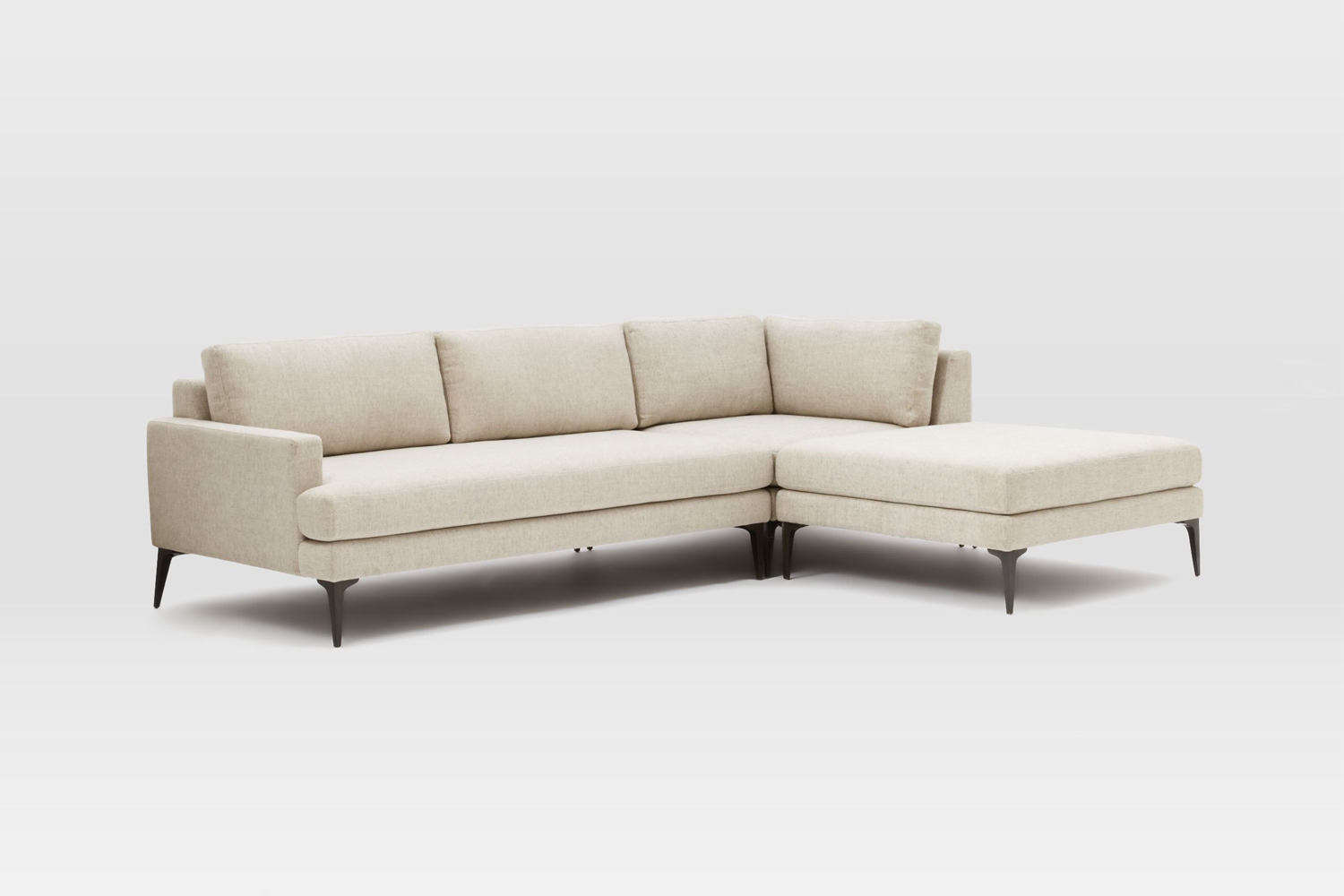
A sectional chaise sofa is basically the furniture equivalent of sweatpants you can host guests in: comfy, flexible,
and somehow always the best seat in the house. It’s the “movie night” zone, the “I’m just resting my eyes” trap,
and the unofficial office for anyone who’s ever answered an email while lying down like a Victorian in a fainting scene.
But buying one isn’t as simple as “pick the biggest one that fits on your screen.” Sectional chaise sofas come in
wildly different depths, cushion fills, fabrics, and configurationsplus the left-facing/right-facing chaos that has
launched a thousand confused customer service chats. This guide breaks down what to look for, what to avoid, and
(because we’re all busy) ten solid “easy pieces” worth knowing about.
What “Sectional Chaise” Really Means (and Why It Matters)
Sectional vs. chaise vs. “why does the picture look different at checkout?”
A sectional is a sofa made from multiple pieces that connectusually forming an L shape (or a U shape
if you’re living your best “I host brunch” life). A chaise is the extended lounge seat where your legs
can stretch out without needing an ottoman. Put them together and you get a sectional chaise sofa:
part hangout hub, part nap station.
Left-facing vs. right-facing: the easiest way to stop guessing
“Facing” is determined as if you’re standing in front of the sofa looking at it. If the chaise is on your left, it’s
left-facing. If it’s on your right, it’s right-facing. (Yes, this is different from
“my left while sitting on it,” which is how perfectly reasonable humans accidentally order the wrong configuration.)
Reversible chaise: the commitment-phobic hero
Some chaise sectionals are reversible, meaning you can switch the chaise from left to right.
This is gold if you move often, rearrange furniture when you’re stressed, or just want the option to change your mind
without paying a return shipping fee that costs the same as a small moon.
How to Choose the Right Sectional Chaise Sofa
1) Measure like you mean it (including the path inside)
Start with your room: wall lengths, window placement, radiator vents, and where people actually walk.
Then measure the delivery pathdoorways, stair turns, hallways, elevator depth. Many retailers provide “diagonal depth”
measuring guidance because rotating a sofa can help it clear tighter doorways. If you can, mock the footprint on the
floor with painter’s tape so you can see the size instead of trusting your imagination (the same imagination
that thinks you’ll “definitely fold laundry right away”).
2) Decide your “chaise job description”
Ask what the chaise is actually for:
- Legs-up lounging: prioritize length and cushion softness.
- Extra seating: look for a wider chaise or “bumper chaise” that’s more like a squared extension.
- Occasional sleeping: medium-firm cushions and a flatter surface feel better overnight.
- Kid/pet command center: choose performance fabric and cushions that bounce back.
3) Pick your seat depth: standard, deep, or “where did my legs go?”
Seat depth changes everything. A medium seat depth tends to suit more body types and feels easier to get in and out of.
Deep seats are amazing for curling up, but shorter folks often need a lumbar pillow so their feet aren’t dangling like
they’re waiting for a theme park ride to start.
4) Understand cushion fill (a.k.a. the fluffing tax)
Cushions generally fall on a spectrum:
foam (supportive, low maintenance), foam + fiber wrap (softer edges),
and down blend (cloud-like, but needs regular fluffing and can “relax” over time). If you love a sink-in
feel, down blend is dreamy. If you want the sofa to look “company ready” without daily karate-chopping, lean supportive.
5) Fabric: choose your battles (spills, claws, sunlight, snacks)
Upholstery is where a smart choice pays off every single day. For busy households, consider performance fabrics
designed for easier cleaning and durability. If you’re comparing fabrics, you may see abrasion ratings like
Wyzenbeek “double rubs”. Higher numbers generally indicate higher abrasion resistancehelpful if your sofa
will live in a high-traffic room.
6) Frame and suspension: the unsexy stuff that matters most
A pretty sectional that sags in year two is just an expensive regret. Look for sturdy frames (often kiln-dried hardwood
is mentioned), and reliable suspension (like sinuous springs or webbing depending on the build). You don’t need to become
a furniture engineerjust don’t ignore the construction notes.
7) Modular vs. fixed: do you want flexibility or simplicity?
Modular sectionals are great for reconfiguring and moving through tricky doorways (since they arrive in
smaller pieces). Fixed two-piece chaise sectionals can feel more seamless and tailored. Choose based on
your space, lifestyle, and whether you enjoy rearranging furniture “for fun” (a real hobby some people have, and we respect it).
10 Easy Pieces: Sectional Chaise Sofas Worth Knowing
These are ten notable options across styles and prioritiessome are classic two-piece chaise sectionals, others are modular
systems that can create a chaise setup. Always confirm current dimensions, upholstery options, and lead times before buying.
1) IKEA KIVIK Sectional with Chaise
A practical favorite with a generous sit and a reversible chaise setup. It’s known for approachable comfort and
household-friendly features like washable covers. If you like a sofa that doesn’t act precious about real life,
this one gets the job done without drama.
2) Crate & Barrel Lounge Deep 2-Piece Sectional with Chaise
If your love language is “extra deep,” this is a strong contender. The Lounge line is often described as cozy and
lounge-forward (shocking, given the name), with a relaxed vibe that’s made for curling up. Great for movie nights,
less great if you prefer perching upright like you’re waiting in a lobby.
3) West Elm Harmony 2-Piece Chaise Sectional
A plush, sink-in style that leans into comfort. Harmony is built for sprawling, with pillow support that makes it feel
inviting right away. If you want your living room to say “come sit down,” Harmony understands the assignment.
4) West Elm Harmony Modular Chaise Sectional
Similar comfort, but with modular flexibility. Modular can be a lifesaver if your entryway is narrow, your building has
tight corners, or you’re the kind of person who changes layouts seasonally (or emotionally).
5) Room & Board Jasper Sectional (Chaise/Sectional Configurations)
Jasper balances a cleaner profile with cozy comfort. It’s a great example of a sectional that tries to please both camps:
those who want supportive seating and those who want softness. It also tends to look lighter visually thanks to slimmer arms
and raised legshelpful in smaller rooms that get overwhelmed by bulky silhouettes.
6) Joybird Eliot Sectional (with Single Arm Chaise)
Mid-century style with the chaise option built in. Eliot brings tailored details and a structured look, while still offering
deep seating and a lounge-ready chaise piece. If you want your sectional chaise sofa to look intentional (not accidental),
this one has that “designed” feel.
7) Interior Define Sloan 2-Seat Reversible Chaise Sectional
A customizable option that’s especially appealing for small spaces where sizing matters. The reversible chaise helps if you’re
unsure which side you’ll prefer long-term, and customization lets you pick fabric and details that fit your lifestyle.
This is the “I know what I want” pickor the “I will learn what I want through fabric swatches” pick.
8) Interior Define Sloan Chaise Sectional (Custom Sizing Options)
If the reversible version is the flexible friend, this is the “dial it in” version: more configuration and sizing choices
so you can match seat depth or chaise length to your room. Ideal if you have specific constraints like a doorway, a wall
you can’t block, or a rug you refuse to replace because it was expensive and you’re still emotionally attached.
9) Lovesac Sactionals (Configured with a Chaise Setup)
Lovesac is the modular system pick: seats and sides that can be rearranged into different layouts as life changes.
Many people love the ability to swap covers and adapt the configurationespecially if you move, redecorate, or live with
pets and kids who treat furniture like a sport.
10) Floyd The Form Sectional (Chaise Configurations)
Floyd’s Form Sectional offers multiple chaise configurations (left/right arm chaise and side chaise options), blending clean lines
with modular flexibility. If you want something modern that can evolve with your room, it’s a strong “buy once, adapt later” option.
Layout and Styling Tips That Make a Chaise Sectional Look Better
Keep the “traffic lane” clear
The chaise is the piece most likely to block flow. Aim to maintain a comfortable walking path around the sectionalespecially
between the sofa and doorways or main routes through the room. If the chaise turns your living room into an obstacle course,
switch to a reversible layout (if you can) or choose a smaller chaise depth.
Rug sizing: anchor the chaos
A sectional chaise sofa can look like it’s floating if the rug is too small. Ideally, the front legs of the sectional (or at least
the main sofa portion) should sit on the rug to visually “lock” the seating area into place. If your rug budget is modest,
go bigger in the front area and let the chaise portion sit partially offstill looks intentional.
Balance the chaise with an opposite “weight”
Because the chaise extends outward, the room can feel lopsided. Balance it with a round coffee table, a side chair on the open side,
or a floor lamp that visually evens out the composition. Translation: don’t let the chaise be the only dramatic personality in the room.
Care and Longevity: Keep It Looking Good Without Turning Into a Full-Time Sofa Butler
- Rotate cushions if possible (especially chaise cushions) to prevent “favorite spot” dents.
- Fluff down blend cushions regularly to keep shape and loft.
- Clean spills quicklyperformance fabrics usually reward speed.
- Protect from direct sun if your room gets strong light; even durable fabrics can fade over time.
- Use a washable throw on the chaise if it’s the daily snack-and-nap zone.
Extra: Real-Life Experiences With Sectional Chaise Sofas (The Things People Only Tell You After You Buy)
The first surprise most people have is how quickly a chaise becomes the household’s unofficial throne. You think it’s for “lounging,”
but it turns into the spot where someone drinks coffee, scrolls their phone, eats dinner, watches TV, and thensomehowfalls asleep
without remembering it happened. If you live with others, expect light competition. If you live alone, congratulations: you’ve purchased
a highly supportive enabler.
The second surprise is that a chaise is a layout decision, not just a comfort feature. In smaller rooms, the chaise can feel
like it steals a corner of the floor plan, especially if it blocks a walkway or a cabinet door. That’s why reversible chaise options
feel like such a relief in real life: you can try the chaise on one side, realize it makes opening the blinds a daily workout, and
swap it without replacing the entire sofa. People who move frequently tend to appreciate modular sectionals for the same reasonpieces
can be reconfigured when your new living room has different traffic patterns.
Another common experience: seat depth becomes personal. Deep seats are dreamy for curling up, but they can feel awkward
if you like sitting upright with your feet on the floor. In shared households, you’ll often see “pillow diplomacy”one person wants deep,
relaxed lounging and another wants back support. The compromise is usually lumbar pillows (and, occasionally, passive-aggressive throw pillow
placement). If you’re buying for a mixed grouptall, short, grandparents, kidsmedium seat depth often keeps more people happy.
If you have pets, the chaise tends to become the main shedding zone. The good news is that people who choose performance fabrics or removable
covers often report a much easier time dealing with fur, muddy paws, and the occasional “mystery spot.” The not-so-fun reality is that texture
matters: tightly woven fabrics typically release hair more easily than loose weaves or certain velvets (though some performance velvets can be
surprisingly resilient). If you don’t want to think about fabric science, a simple habit helps: keep a washable throw blanket on the chaise,
then toss it in the wash when life inevitably happens.
Finally, there’s the “delivery day story.” Sectionals are big, and the chaise piece is often the trickiest angle. People who measure only the
room and not the hallway learn a memorable lessonusually while holding a tape measure in a doorway and whispering, “But the website said…”
Measure the full path, check diagonal depth guidance, and don’t forget tight turns (stairs are the final boss). The best experience tends to happen
when you plan for the route, clear the space, and have a basic layout in mind so the delivery team isn’t waiting while you debate furniture feng shui.
Conclusion
The best sectional chaise sofa is the one that fits your room and your real life: your lounging style, your cleaning tolerance, your
household traffic, and your willingness to fluff cushions. If you prioritize smart measuring, practical fabric choices, and a configuration that
doesn’t block how you move through the space, you’ll end up with the kind of sofa that makes your living room feel instantly more livable.
And yesyour chaise will become the best seat. Accept it now. It’s easier.