Note: HTML body only, in English, ready for web publishing.
Let’s be honest: a lot of “budget organizing” advice sounds suspiciously like “Spend $437 on matching acrylic bins and pretend it’s self-care.” That is not the plan here. If your home feels crowded, chaotic, or just mildly offended by your existence, you do not need a designer label maker and a shopping cart full of baskets to fix it. You need a smart system, a realistic budget, and a willingness to ask one very brave question: Why do I own three gravy boats?
The good news is that organizing your home on a budget is absolutely possible. In fact, it often works better when you keep it simple. A low-cost decluttering plan forces you to focus on the stuff itself before buying more stuff to hold the stuff. That is a surprisingly powerful plot twist.
This guide walks you through how to declutter room by room, how to organize without overspending, what to repurpose before you buy, and how to keep clutter from creeping back in like it pays rent. Whether you live in a tiny apartment, a family home, or a place with one mysterious drawer full of batteries and takeout menus, these strategies can help you create a calmer, more functional space without torching your budget.
Why Decluttering First Saves You the Most Money
The biggest mistake people make is buying storage products before they know what they are keeping. It feels productive. It looks productive. It is often just very organized procrastination.
Decluttering first saves money because it reduces the amount of storage you actually need. Once you remove duplicates, broken items, expired products, old paperwork, clothes you never wear, and that exercise gadget now serving exclusively as a coat rack, your home instantly becomes easier to manage. Often, the solution is not “more storage.” It is simply “less stuff.”
There is another budget win here too: when your home is more organized, you are less likely to buy duplicates. You stop purchasing tape, scissors, canned beans, black T-shirts, and phone chargers you already own but could not find. Organization is not just about aesthetics. It is a practical money-saving habit.
Start with These Three Sorting Categories
Keep your first pass simple. Sort every area into three groups:
- Keep: items you use, need, or genuinely love
- Donate or sell: items in good condition that no longer serve you
- Toss or recycle: broken, expired, stained, or unusable items
Avoid creating a giant “maybe” pile unless you enjoy making future-you miserable. If you are unsure about something, place it in a clearly labeled box with a date on it. If you do not open that box in 30 to 90 days, that is your answer.
Create a Budget-Friendly Decluttering Plan That Actually Works
Decluttering your entire home in one weekend sounds heroic. It also sounds like a great way to end up sitting on the floor surrounded by tangled charging cables, emotionally attached to a bread maker you have not used since 2022.
A better approach is to work in small, manageable chunks. Pick one drawer, one shelf, one cabinet, or one category at a time. Small wins build momentum, and momentum is what keeps a project from dying halfway through the linen closet.
Use the 15-Minute Method
Set a timer for 15 minutes and work on one tiny zone. That could be a junk drawer, a bathroom shelf, a purse, a shoe rack, or the top of your nightstand. Short sessions are easier to repeat, and they reduce the overwhelm that makes people quit before the good part.
If you want extra structure, try a simple challenge:
- Find 12 items to throw away
- Find 12 items to donate
- Return 12 items to their proper homes
It turns decluttering into a game, which is helpful because otherwise it can feel like a confrontation with every shopping decision you have made since college.
Start Where the Stress Is Lowest
If you begin with sentimental keepsakes or family photos, you may stall out immediately. Start with areas that require less emotional energy, such as:
- Bathroom drawers
- Kitchen utensils
- Expired pantry goods
- Cleaning supplies
- Entryway clutter
- Random cords and tech accessories
These spaces usually offer fast results, which gives you the confidence to tackle harder zones later.
How to Organize Your Home Without Spending Much
Once you have decluttered, thenand only thenshould you think about organizing tools. But even here, your first move should not be “go shopping.” Your first move should be “look around your house like a creative raccoon.”
Repurpose What You Already Own
Before buying organizers, check your home for free storage solutions:
- Glass jars for cotton balls, office supplies, screws, or pantry items
- Shoeboxes for drawers, socks, accessories, and chargers
- Delivery boxes for closet shelves or under-bed categories
- Old baskets for towels, toys, or cleaning products
- Mugs or cups for pens, scissors, and makeup brushes
- Trays for corralling clutter on counters and dressers
Repurposing works especially well in bathrooms, pantries, craft rooms, laundry areas, and kids’ spaces. It is not glamorous, but neither is paying $18 for a bamboo box that does the exact same job as the sturdy one your phone arrived in.
Buy Cheap, Useful Basics Only
If you do need supplies, focus on low-cost items that improve function, not just looks. The best budget organizers are usually:
- Clear bins
- Drawer dividers
- Over-the-door organizers
- Shelf risers
- Hooks
- Uniform hangers
- Lazy Susans for hard-to-reach cabinets
- Labels for shared spaces
Dollar stores, discount chains, thrift stores, buy-nothing groups, and secondhand marketplaces can all be gold mines. The key is to buy for a specific purpose. Never shop for “organizing stuff” in the abstract. That is how you end up with a closet full of empty bins and unresolved feelings.
Room-by-Room Budget Decluttering Tips
1. Entryway
Your entryway is the launchpad for daily chaos. Keep only what belongs there: shoes in regular rotation, coats in season, bags you actually use, and a small tray or bowl for keys and mail. Add a few wall hooks and a basket, and suddenly the area looks intentional instead of “family tornado passed through.”
2. Living Room
Living rooms collect everything from remotes to blankets to unopened mail. Use baskets for throws, trays for coffee table clutter, and a small bin for remotes or chargers. If toys or hobby supplies live here, give them a defined container and a hard limit. When the basket is full, that is nature’s way of saying, “No more.”
3. Kitchen
The kitchen is where clutter quietly drains money. Expired food, duplicate utensils, novelty gadgets, and overpacked counters all make cooking harder and shopping less efficient.
Declutter the pantry first. Toss expired items, group similar foods together, and keep frequently used ingredients easy to reach. Decanting everything into matching containers is optional. Knowing where the pasta is? More important.
Also clear the counters. Countertops are workspaces, not long-term housing for random mail, snack wrappers, school papers, and six reusable water bottles with missing lids.
4. Fridge and Freezer
An organized fridge can help you waste less food and shop smarter. Group similar items together, keep leftovers visible, and leave enough room for airflow. Use bins if you have them, but even a simple “dairy here, condiments here, produce here” system makes a big difference.
This is one of the few organizing projects that can literally pay for itself because you stop discovering wilted spinach and mystery containers after they have already entered the afterlife.
5. Bedroom and Closet
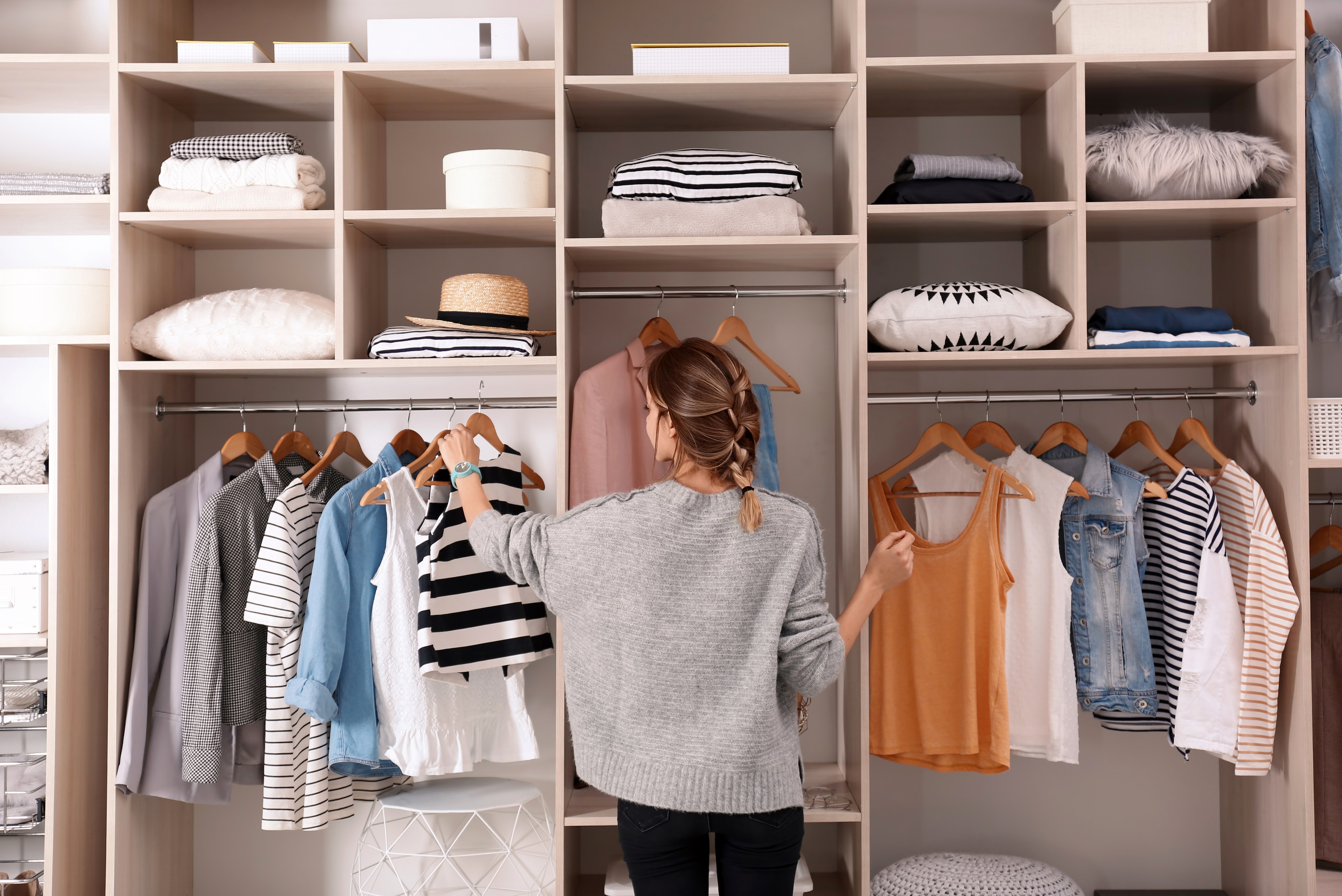
Closets get messy fast because they are easy to shut and ignore. Start by removing anything that does not fit, does not feel good, or has not been worn in a long time. Then sort what remains by category: tops, pants, dresses, outerwear, shoes.
Uniform slim hangers are one of the few budget upgrades worth buying because they save space and instantly make a closet feel less chaotic. Under-bed bins, shelf dividers, and labeled boxes can also help, but do not overcomplicate the system. If it takes a user manual to put away a sweatshirt, the system is too fancy.
6. Bathroom
Bathrooms are usually small, which makes clutter feel bigger. Toss expired makeup, half-used hotel samples, duplicate products, and anything you keep “just in case” but never touch. Use cups, jars, or small bins to sort daily-use items from back stock. One under-sink basket for extras is reasonable. Seven backup body washes is an identity, not a plan.
7. Home Office and Paper Clutter
Paper is sneaky because it looks important even when it is absolutely not. Sort paper into only a few categories: action, file, shred, recycle. Use one inbox tray for papers that need attention, and avoid keeping documents in five different places. A basic folder system beats an elaborate color-coded masterpiece you will abandon by Thursday.
How to Declutter Without Wasting Good Stuff
One reason people avoid decluttering is guilt. They feel bad getting rid of usable items, especially if those items cost money. The answer is not to keep everything forever. The answer is to move it out responsibly.
Sell the Good Items
If something has value and you have the energy, sell it. Furniture, electronics, tools, baby gear, small appliances, and nicer clothes often do well on local marketplaces. Set a time limit so the sales process does not become its own form of clutter. If it does not sell within your deadline, donate it and move on.
Donate Intentionally
Clothes, kitchenware, books, decor, and household goods can often be donated. Keep a donation bag or box in a closet so you can drop items in as you find them. Once it is full, take it out quickly. A donation pile that lives in your hallway for six months is just clutter with better PR.
Use Community Sharing
Buy-nothing groups, neighborhood swaps, and local giveaway platforms are great for passing along items you no longer need. They are especially useful for things that are too good to trash but not worth the effort of listing for sale.
How to Keep Clutter From Coming Back
Decluttering once is great. Decluttering the same pile every three months is a terrible hobby. Maintenance is what turns a one-time cleanout into a lasting system.
Adopt the One-In, One-Out Rule
For every new item that enters your home, remove one similar item. Buy a new sweater? Donate one. Replace a kitchen tool? Get rid of the old one. This rule keeps your storage from quietly expanding into every available inch of your life.
Try a Spending Pause
One of the smartest budget decluttering tricks is not really about organizing at all. It is about slowing down purchases. Try a 30/30 rule for nonessential items: wait before buying, especially when the purchase is driven by boredom, stress, or a social media video that convinced you a rotating canned-goods dispenser would change your life.
Reset High-Clutter Areas Weekly
Pick the spots that collect mess fastestkitchen counters, the entryway, your nightstand, the dining table, the junk drawerand give them a 10-minute reset once a week. Tiny maintenance sessions are much easier than epic all-day rescue missions.
Give Everything a Home
This sounds basic because it is basic. It also works. When items have a specific place, tidying becomes faster, and the household is more likely to maintain the system. A basket for pet supplies, a hook for keys, a drawer for batteries, a bin for wrapping paperthese small decisions eliminate daily friction.
Smart Budget Organizing Mistakes to Avoid
- Buying organizers before decluttering
- Trying to do the entire house in one exhausting day
- Keeping duplicates “just in case”
- Creating overly complicated systems no one will follow
- Ignoring hidden clutter like drawers, cabinets, and paper piles
- Letting donation bags linger in the house
- Using organizing as an excuse to shop
The best organizing systems are not the prettiest ones on the internet. They are the ones that match your real life, your real habits, and your real budget.
Final Thoughts
If your home feels cluttered, start small and stay practical. You do not need perfection. You need progress. One shelf, one drawer, one cabinet, one basket at a time, you can create a home that feels lighter, calmer, and easier to live in.
And the best part? Budget decluttering is not about deprivation. It is about making room for the things you actually use and enjoy, while spending less on duplicates, impulse buys, and unnecessary storage products. In other words, it is not just good for your space. It is good for your wallet too.
Experiences and Real-Life Lessons From Budget Decluttering
One of the most useful lessons people learn when they start decluttering on a budget is that the transformation usually happens before a single organizer is purchased. The moment you remove five trash bags of obvious clutter from a closet, pantry, or spare room, the space already works better. That immediate improvement changes your mindset. Instead of thinking, “I need to buy my way out of this mess,” you start thinking, “Maybe I just needed less chaos in the first place.” That is a powerful shift.
A common experience is discovering how much money gets wasted in disorganized spaces. In kitchens, people often find duplicate spices, canned goods, snack boxes, and tools they forgot they owned. In bathrooms, they uncover unopened shampoo, expired skincare, and enough travel-size lotion to moisturize a small village. In closets, they rediscover clothes with tags still on them. These moments are equal parts helpful and humbling. They also make it easier to stop impulse buying because you have seen the evidence with your own eyes.
Another real-world lesson is that emotional clutter is harder than physical clutter. It is one thing to toss junk mail. It is another thing to sort through gifts, sentimental keepsakes, kids’ artwork, hobby supplies, or clothes tied to an older version of yourself. Many people find that budget decluttering works best when they save those emotional categories for later. Once they have built confidence in easier areas, they can make more thoughtful decisions without feeling overwhelmed.
People also learn that simple systems beat perfect ones. A family may start with Pinterest-level dreams of labeled bins, matching baskets, and color-coded zones, then realize the habit that truly changes everything is just returning items to one designated spot. Shoes in one basket. Mail in one tray. Chargers in one drawer. Snacks on one shelf. The more realistic the system, the more likely it is to survive a busy week, a stressful month, or a Saturday when nobody feels like organizing anything at all.
One especially encouraging experience is realizing that decluttering can create money, not just save it. Selling a few unused electronics, small furniture pieces, tools, or name-brand clothing can bring in enough cash to cover the handful of supplies that actually help, such as drawer dividers, hangers, or storage bins. That creates a satisfying cycle: the clutter funds the fix. Even donating feels better when you know useful items are leaving your home for a reason instead of collecting dust in a hallway corner.
Over time, most people notice the biggest change is not visual. It is mental. They spend less time searching, less time cleaning around piles, less time moving things from one place to another, and less time feeling vaguely annoyed by their own stuff. The home becomes easier to reset, easier to manage, and more comfortable to live in. That is the real reward of organizing and decluttering on a budget. It is not about owning less for the sake of it. It is about making everyday life easier without spending money to create a problem-shaped storage solution.