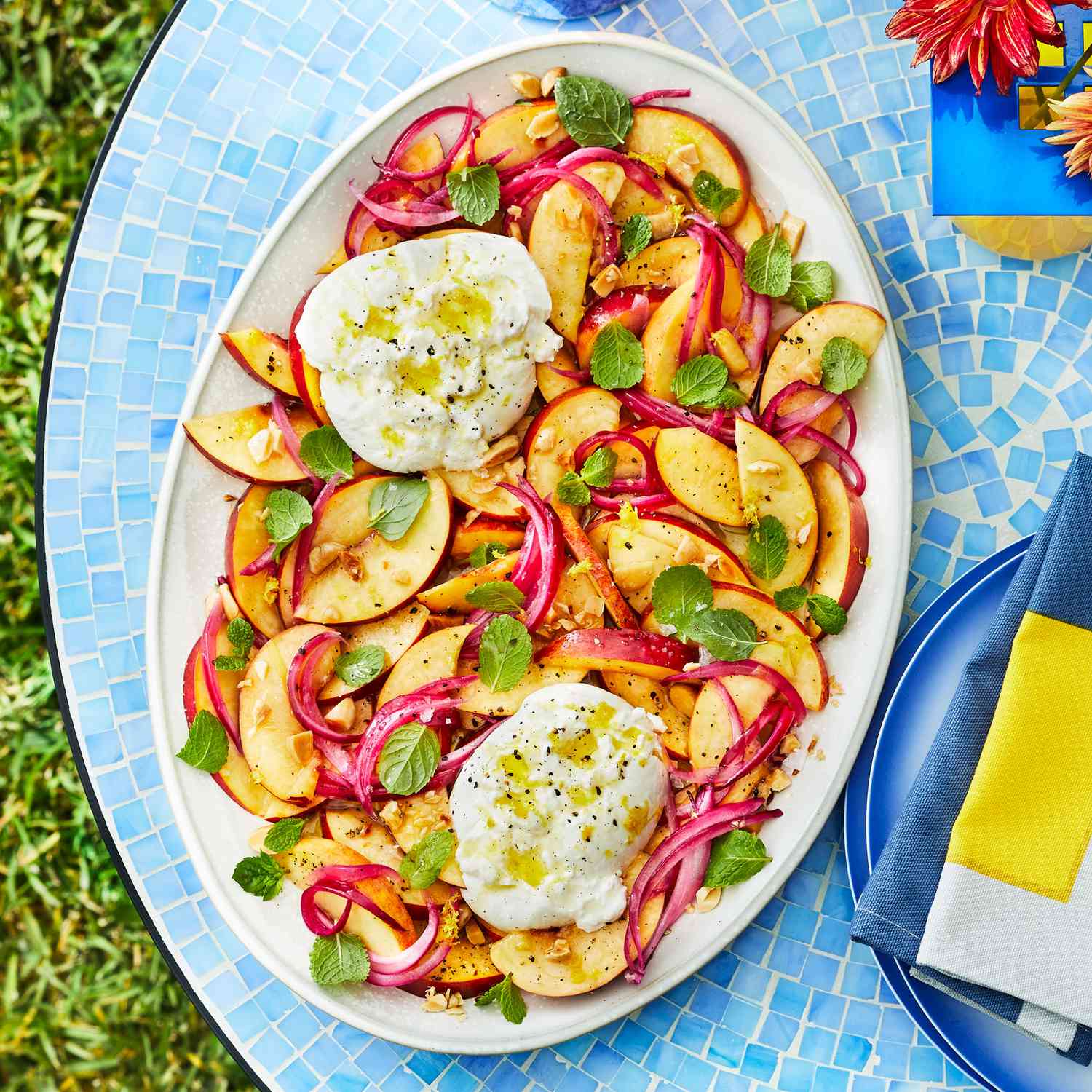
Some salads whisper. This one singspreferably on a patio, with a breeze, a cold drink, and at least one person saying, “Wait… what is burrata again?” (Answer: the cheese equivalent of a tiny luxury hotel with turndown service.)
Nectarine-and-burrata salad is what happens when peak-summer fruit meets peak-summer cheese: juicy, sweet nectarines + impossibly creamy burrata + peppery greens + something tangy (vinaigrette) + something crunchy (nuts) = a dish that looks fancy, tastes expensive, and takes about as much effort as tying your shoesunless you’re wearing sandals, in which case, even easier.
Why This Salad Works (Flavor Math, But Make It Delicious)
Sweet fruit + rich cheese = instant balance
Nectarines bring bright sweetness and floral perfume; burrata brings buttery richness and a cool, milky center. Together, they hit that “dessert-meets-dinner” sweet spot without drifting into fruit-salad territory. The key is contrast: if you add something sharp (acid) and something bitter (greens), the sweetness and creaminess stop being “a lot” and become “just right.”
Texture is the secret weapon
A great salad isn’t just about flavorit’s about mouthfeel. In one bite, you want: juicy (nectarine), creamy (burrata), crisp (greens), crunchy (nuts), and silky (olive oil). That variety keeps every forkful interesting, like a tiny party where everyone actually gets along.
It’s a choose-your-own-adventure recipe
Make it minimalist with five ingredients. Or load it up with herbs, tomatoes, prosciutto, toasted nuts, and a dramatic drizzle of balsamic glaze like you’re auditioning for a cooking show. It’s flexible, forgiving, and extremely photogenicbasically the golden retriever of salads.
Ingredients (The Cast of Characters)
This recipe serves 4 as a starter/side, or 2 as a main (especially if bread is involved).
For the salad
- 3–4 ripe nectarines, sliced into wedges (or halves, then slices)
- 8 oz burrata (two 4-oz balls, or one big one)
- 4–6 cups arugula (or mixed baby greens)
- 1/3 cup toasted pistachios or almonds (pepitas also work)
- 1/4 cup fresh basil and/or mint leaves (torn, not chopped into confetti)
- Flaky sea salt and freshly cracked black pepper
- Optional: prosciutto, heirloom tomatoes, thin-sliced red onion, cucumber ribbons
For the quick vinaigrette
- 3 tbsp extra-virgin olive oil
- 1 tbsp balsamic vinegar (or champagne vinegar / sherry vinegar)
- 1–2 tsp honey (or maple syrup)
- 1 tsp Dijon mustard (optional but helpful for emulsifying)
- 1 small garlic clove, finely grated (optional)
- Pinch of salt and pepper
- Optional: pinch of chili flakes, lemon zest, or a spoonful of hot honey
How to Choose Great Nectarines (Because the Fruit Does the Heavy Lifting)
Look for aroma and a little give
A ripe nectarine should smell sweet and fruityif it has no aroma, it’ll often taste like crunchy water. Gently press near the stem end: you want a slight give, not a rock, and definitely not a squishy stress ball.
Ignore the red blush (it’s a sun-tan, not a ripeness badge)
Red color can be variety- and sun-exposure-related. What matters more is the background color: look for yellow/golden tones (for yellow-fleshed fruit) and minimal green around the stem.
Ripen on the counter, then chill (if you must)
If your nectarines are firm, let them ripen at room temperature. Once ripe, you can refrigerate them briefly to slow things downbut let them come back closer to room temp before serving for best flavor.
How to Handle Burrata Like You Know What You’re Doing
Serve it closer to room temp
Cold burrata is shy: it won’t spread as nicely, and the flavor feels muted. Take it out of the fridge about 30 minutes before serving so the creamy center loosens up.
Keep it wholeor tear it for maximum “ooze”
For a dramatic platter moment, place the burrata whole and slice it open at the table. For more even bites, tear it into large pieces and scatter it around. Either way, that creamy interior should mingle with the dressing and fruit juices like it was born for this job.
Step-by-Step: Nectarine-and-Burrata Salad (No Stress Edition)
1) Toast the nuts (2 minutes that changes everything)
Toast pistachios or almonds in a dry skillet over medium heat until fragrant, 2–4 minutes. Let cool. This step turns “nice salad” into “why is this restaurant-quality?”
2) Make the vinaigrette
In a small bowl (or a jar with a lid), whisk or shake together olive oil, vinegar, honey, Dijon, salt, pepper, and any extras (chili flakes, zest). Taste. Adjust:
- Too sharp? Add a little more oil or honey.
- Too flat? Add a pinch more salt or a squeeze of lemon.
- Too sweet? Add a splash more vinegar.
3) Slice the nectarines
Cut around the pit and slice into wedges. If your nectarines are extremely juicy, slice them over a bowl so you can catch the drips (and maybe whisk a spoonful of that juice into the vinaigrettechef move).
4) Dress the greens lightly
Add arugula to a big bowl. Drizzle with a small amount of vinaigrette and toss gently. You’re aiming for “glossy,” not “swimming.”
5) Assemble (platter style = instant fancy)
Spread the greens on a serving platter. Arrange nectarine slices over the top. Add torn basil/mint. Tear burrata into large pieces and tuck them in.
6) Finish like a pro
Drizzle a little more dressing over the nectarines and burrata. Sprinkle toasted nuts. Add flaky salt and black pepper. If using prosciutto, drape it in loose ribbons like it’s lounging.
Optional Upgrade: Grilled Nectarines (When You Want That Smoky-Sweet Flex)
Grilling nectarines adds caramelization and a subtle smokiness that plays ridiculously well with burrata.
- Heat a grill or grill pan to medium-high.
- Brush nectarine halves or thick wedges with olive oil.
- Grill cut-side down until marked and slightly softened, then flip briefly.
- Cool a minute, slice, and assemble as usual.
Shortcut: If grilling feels like a commitment, sear nectarine wedges in a hot skillet for a minute per side.
Variations (Same Vibe, Different Outfit)
Tomato–Nectarine–Burrata (the summer trifecta)
Add sliced heirloom tomatoes or halved cherry tomatoes. Use balsamic or a lemony vinaigrette. Finish with basil and extra black pepper.
Hot Honey + Chili (sweet heat fans, assemble)
Swap regular honey for hot honey, add chili flakes, and consider toasted pepitas. It’s sweet, spicy, and dangerously snackable.
Stone Fruit Swap
Use peaches, plums, apricots, or a mix. The formula stays the same: sweet fruit + creamy cheese + acid + crunch.
Make it a meal
- Add grilled chicken, shrimp, or salmon.
- Serve with crusty bread or focaccia to catch burrata + dressing (mandatory, in spirit).
- Toss in cooked farro or quinoa for a heartier bowl.
Make-Ahead Tips (So It’s Not a Soggy Situation)
Best practice
- Make vinaigrette up to 3 days ahead; store in the fridge and shake before using.
- Toast nuts ahead and keep airtight at room temp.
- Slice fruit close to serving time for best texture and color.
- Assemble right before serving so greens stay crisp and burrata stays dreamy.
Food safety note
Burrata is a fresh, highly perishable cheese. Keep it chilled until you’re ready to temper it briefly for serving, and don’t leave it out for extended periodsespecially outdoors in hot weather.
Serving Ideas (What to Pair With Nectarine-and-Burrata Salad)
- Wine: crisp Sauvignon Blanc, Pinot Grigio, dry rosé, or a light Pinot Noir.
- Non-alcoholic: sparkling water with lemon, iced tea, or a fruit-forward spritz.
- Menu match: grilled chicken, steaks, roasted corn, pasta with herbs, or pizza night.
Common Mistakes (And How to Avoid Them)
Using under-ripe nectarines
If the fruit isn’t flavorful, the salad won’t be either. Ripen them properly and let aroma guide you.
Serving burrata ice-cold
Cold burrata is like trying to spread butter straight from the fridge. Let it relax a bit.
Overdressing the greens
Start small. You can always add more, but you can’t un-sog a salad without getting into “salad therapy.”
of Real-Life Kitchen Experiences With This Salad
This is the kind of dish that tends to earn a permanent spot in people’s “I need something impressive but I also want to enjoy my own party” playbook. It often starts as an experimentsomeone buys burrata because it looks fancy and they’ve seen it on a menu, then realizes it’s basically a cheat code for making any plate feel special. Add nectarines at their peak and suddenly the kitchen smells like summer vacation.
A common scene: a cutting board, nectarines that are almost too juicy to behave, and a bowl catching runaway drips like a tiny safety net. Someone tastes a slice and decides it needs “just a tiny pinch of salt,” then becomes briefly shocked at how salt makes fruit taste more like itself. The dressing gets whisked, tasted, adjusted, tasted again. There’s always that moment of internal debate: “More vinegar?” followed by the very adult realization that yes, rich cheese and sweet fruit can handle brightness. The dressing turns glossy, and suddenly it’s hard not to dip bread straight into it (no judgment; that’s research).
Then comes the burrata moment. People either treat it delicately, like a rare artifact, or they go full dramatic and slice it open so the creamy center spills out. Either approach works, but the platter-style assembly is where the magic happens: greens spread out like a green runway, nectarines arranged in easy wedges, herbs torn by hand because chopping basil feels like a crime in this context. Nuts rain down for crunch. The whole thing looks like you meant to do itlike you planned it days agoinstead of assembling it in 12 minutes while also trying to locate your good serving spoon.
At the table, this salad tends to be the first thing people talk about. Not because it’s loud, but because it’s unexpected in a fun way. Someone will say, “I didn’t know fruit and cheese could be… like this,” as if they’ve discovered a new continent. Another person will ask how you grilled the nectarines (even if you didn’t) because the flavor combination tastes restaurant-level. This is also the point where the bread becomes essential: burrata + fruit juice + vinaigrette creates a creamy, tangy sauce that pools on the plate, and nobody wants to leave that behind like it’s not the best part.
And here’s the charming thing: it scales to the occasion. On a quiet night, it can be dinner with a piece of grilled chicken and a hunk of bread. On a weekend, it becomes a centerpiece salad that makes everything else feel more celebratory. It even survives the potluck test when you pack components separatelygreens in one container, sliced fruit in another, burrata chilled, dressing in a jarthen assemble on-site for maximum freshness and minimal sog. The final “experience” is usually the same: a clean platter, a few stray pistachios, and someone saying, “Okay, you have to make this again.”
Conclusion
Nectarine-and-burrata salad is a summer classic for a reason: it’s bright, creamy, and wildly satisfying with minimal effort. Focus on ripe, fragrant nectarines, let the burrata warm slightly for its best texture, keep the dressing lively, and finish with crunch and herbs. Whether you serve it as a starter, a side, or a full meal with bread and protein, it’s the kind of dish that makes everyday eating feel like a special occasionwithout requiring you to break a sweat.