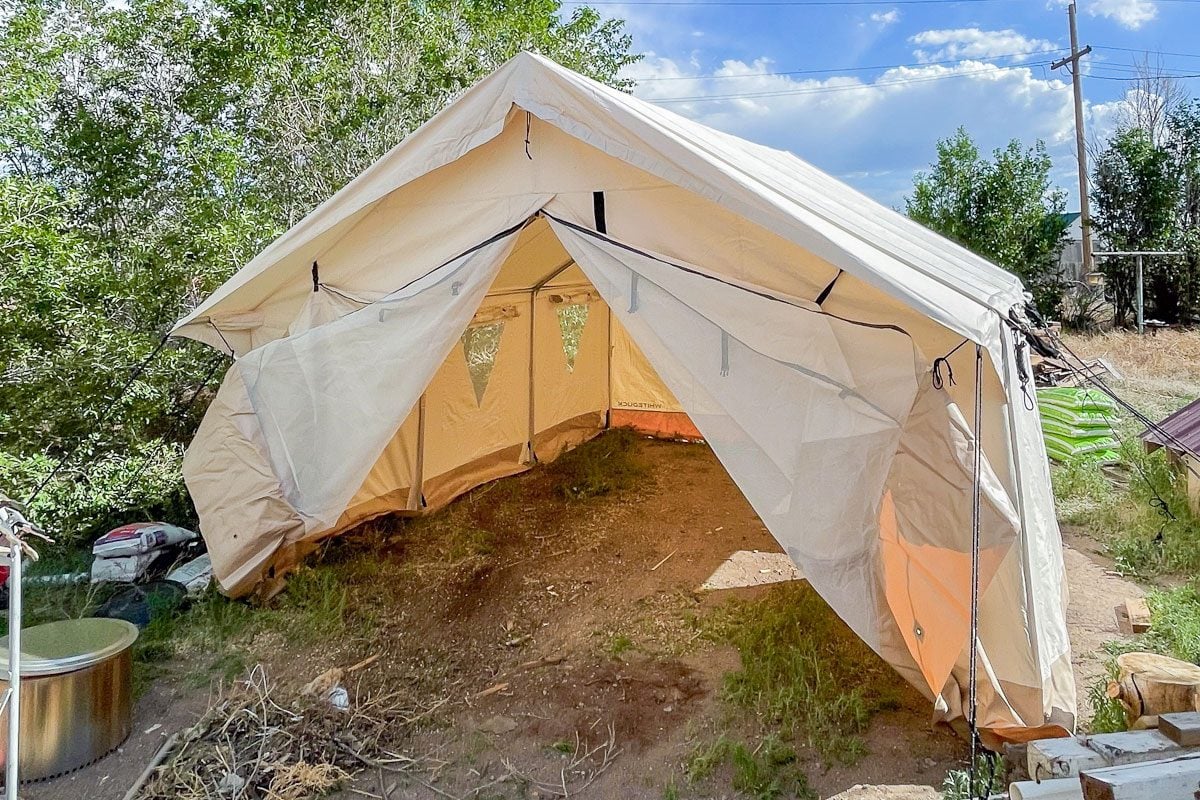
The White Duck Alpha Wall Tent does not arrive looking like an ordinary camping accessory. It arrives in two hefty packages that suggest you may have accidentally ordered a small frontier outpost.
That first impression is accurate. The 10-by-12-foot Alpha is a heavy-duty canvas shelter designed for extended camps, hunting bases, glamping setups and large outdoor gatherings. It can also serve as a seasonal backyard workshop, which is how the original hands-on test evaluated it through rain, wind and summer heat.
After examining the long-term test results, updated specifications and real-world ownership experiences, our conclusion is straightforward: The White Duck canvas tent is exceptionally sturdy, roomy and versatile, but it is not portable in the backpacking sense of the word. It is best for people who want to establish a comfortable base camp and leave it standing for days, weeks or even months.
Editor’s note: This 2025 update revisits documented hands-on testing of the White Duck Alpha Wall Tent and incorporates updated product details, maintenance guidance and additional owner experiences. Prices and available fabric treatments may change.
What Is the White Duck Alpha Wall Tent?
The Alpha is a traditional wall tent upgraded with modern materials and convenience features. Unlike a dome tent, it has nearly vertical side walls, a tall peaked roof and a rectangular floor. The result feels more like a temporary cabin than a nylon sleeping pod.
The 10-by-12-foot model provides approximately 120 square feet of floor space. Its peak reaches about 8 feet 3 inches, while the side walls stand roughly 5 feet high. Most adults can walk through much of the interior without bending into the posture of someone searching for a dropped contact lens.
White Duck builds the tent from 10.10-ounce army duck cotton canvas. The fabric is treated to repel water and resist mold and ultraviolet exposure. Buyers can generally choose between a water-repellent version and a more expensive fire- and water-repellent version.
A free-floating 16-ounce polyvinyl groundsheet is included, along with the frame, stakes, guy ropes, angle fittings, reinforcement wire and rubber mallet. The tent also has four storm windows, bug mesh, a zippered door and a silicone-coated stove jack.
White Duck Alpha Wall Tent Specifications
| Model tested | Alpha Wall Tent, 10 feet by 12 feet |
|---|---|
| Floor area | Approximately 120 square feet |
| Peak height | Approximately 8 feet 3 inches |
| Side-wall height | Approximately 5 feet |
| Canvas | 10.10-ounce army duck cotton canvas |
| Floor | 16-ounce heavy-duty polyvinyl groundsheet |
| Windows | Four triple-layer storm windows with bug mesh |
| Heating compatibility | One preinstalled silicone-coated stove jack |
| Approximate total weight | About 192 pounds for the water-repellent configuration |
| Suggested capacity | Up to eight sleepers, with fewer recommended for comfortable long-term use |
Setting Up the White Duck Canvas Tent
The Alpha is not difficult to understand, but it is too heavy to treat casually. The canvas and groundsheet package weighs close to 90 pounds, while the frame and hardware package weighs more than 100 pounds. Unless your weekend hobbies include competitive stone lifting, bring a helper and use a garden cart or utility wagon.
The original setup took roughly 90 minutes because every component had to be unpacked, identified and arranged for the first time. Once the process was familiar, two people could complete the job in about 45 minutes.
The frame pieces connect with spring-button fittings. After the roof structure is assembled, the canvas is spread over it. The remaining legs are then installed, the walls are lowered and the shelter is anchored with stakes and guylines.
The instructions are logical, but this is not a tent to assemble for the first time after sunset in sideways rain. Practice in the yard before taking it to a remote campsite. Labeling the frame sections can also save time during later setups.
How Much Space Does It Need?
The nominal footprint is 10 by 12 feet, but the tent needs substantially more open ground. Guylines extend several feet beyond the walls, so plan for a relatively level area with enough room to anchor every side properly.
That extra space is not optional decoration. The Alpha is not freestanding. Its stability depends on correct staking, balanced tension and secure guy ropes. A poorly anchored wall tent is less “rustic retreat” and more “enormous beige kite.”
Seasoning the Canvas Before Use
Cotton canvas tents should be seasoned before their first serious exposure to rain. Seasoning sounds like something involving pepper and paprika, but the process only requires water and patience.
Set up the tent, soak the canvas evenly with a hose and allow it to dry completely. Water causes the cotton fibers to swell, helping close tiny needle holes and spaces in the weave. After the canvas dries, it forms a tighter barrier against rain.
Perform this step on a clear day before moving tools, beds or electronics inside. A small amount of moisture during the first soaking can be normal. The goal is to discover and address potential seepage in the backyard instead of during a midnight thunderstorm.
How Did It Perform in Rain and Wind?
Weather protection is where the White Duck Alpha earns its keep. During the documented long-term test, the tent remained outdoors through repeated rain, thunderstorms and windy conditions. One especially useful trial involved approximately two hours of wind gusts near 30 mph and about 1.5 inches of rain.
The interior stayed dry, and the shelter remained stable. That is an impressive result for a temporary structure, particularly one large enough to hold a worktable, power equipment, lumber and a laptop station.
The steep roof helps shed rain, while reinforced seams, heavy canvas, bungee-supported tie-down points and a substantial frame prevent excessive movement. The vinyl mud strip near the bottom also reduces the chance that the canvas will wick moisture from wet ground.
Still, “weather resistant” does not mean “indestructible.” Severe storms, falling branches and heavy snow accumulation can damage any tent. Do not leave the Alpha unattended when extreme weather is expected, and periodically check guyline tension after rain or major temperature changes.
Comfort and Ventilation
Inside, the Alpha feels dramatically more comfortable than a typical family camping tent. The vertical walls allow furniture, cots and storage bins to sit close to the perimeter. There is enough headroom for standing work, changing clothes or walking around without repeatedly greeting the ceiling with your forehead.
Four windows provide cross ventilation. Each window uses layered panels that can be adjusted for airflow, insect protection or storm coverage. The front door also includes mesh, making it possible to ventilate the shelter without issuing an open invitation to every mosquito in the county.
Is a Canvas Tent Cooler in Summer?
Cotton canvas breathes better than many coated synthetic fabrics, but the Alpha can still become hot in direct summer sun. Opening the windows and door helps, as does positioning the tent where it receives afternoon shade.
During hot weather, a fan connected through a safely routed extension cord can improve comfort. White Duck tents are far more pleasant than sealed plastic sheds for sitting and working, but they are not air-conditioned cabins. On a humid 95-degree afternoon, the laws of thermodynamics remain stubbornly employed.
Can You Use a Wood Stove?
The Alpha includes a heat-resistant stove jack that can accommodate a compatible stove pipe. This feature makes the shelter appealing for hunting camps and cold-weather base camps.
However, a fire-resistant treatment does not make canvas fireproof. A properly installed stove, adequate clearances, ventilation and a carbon-monoxide alarm are essential. Open fires, charcoal grills and unattended heaters should never be used inside the tent.
Using the White Duck Tent as a Workshop
The 10-by-12-foot Alpha proved surprisingly practical as a seasonal project shelter. It had enough room for a portable generator, sawhorses, folding work surfaces, lumber, tools and a small desk area.
For assembly, repairs, equipment testing and computer work, the tent offered a useful balance of weather protection and fresh air. It also allowed projects to remain set up instead of being packed away whenever clouds appeared.
There are limits. A canvas tent is not an appropriate paint booth, welding station or enclosed woodworking shop. Fine sawdust can cling to the fabric, while sparks, solvents and chemical vapors create obvious fire and health hazards. Cutting and heavy sanding are better performed outside, with the tent reserved for storage, planning and cleaner assembly work.
What We Liked
Exceptional Durability
The canvas, seams, poles, stakes and tie-down system feel designed for repeated use. This is not a disposable festival tent destined to become a colorful trash bag by Monday morning.
Cabin-Like Interior Space
The tall walls make nearly all of the floor usable. It works well with cots, shelving, folding tables and other rectangular furniture that fits awkwardly in sloped dome tents.
Excellent Weather Protection
Once seasoned and anchored correctly, the Alpha handles sustained rain and ordinary storm winds confidently. The storm windows and heavy floor add another layer of protection.
Versatile Design
The shelter can function as a hunting camp, family tent, glamping room, backyard office, guest room, dining space or temporary workshop. Few portable structures are this adaptable.
Useful Standard Features
The frame, floor, bug mesh, windows, stove jack, stakes and setup tools are included. Similar wall tents sometimes require buyers to purchase several of these components separately.
What We Did Not Like
It Is Extremely Heavy
At around 192 pounds, the tested configuration is designed for vehicle-supported trips and semi-permanent installations. It is not remotely suitable for backpacking, canoe portages or campsites located far from the parking area.
Setup Requires Time and Help
Although the process becomes faster with practice, the Alpha is not a quick overnight shelter. It makes the most sense when it will remain erected long enough to justify the labor.
The Price Is Significant
The 10-by-12-foot model has commonly sold for approximately $1,880, with the fire- and water-repellent version costing more. Accessories such as a porch or fly sheet can push the total well beyond $2,000.
Hot-Weather Comfort Has Limits
Canvas breathability helps, but direct sun can still turn the interior into a warm room. Shade selection and active ventilation matter.
Drying and Storage Take Effort
The tent must be completely dry before long-term storage. If it is packed wet at camp, it may need to be reassembled or spread out at home. With nearly 90 pounds of canvas and flooring involved, that chore is not exactly a delicate little laundry project.
How to Maintain a White Duck Canvas Tent
Canvas longevity depends heavily on care. The most important rule is simple: Never store the tent while it is wet or even slightly damp. Trapped moisture can create mildew, stains, unpleasant odors and permanent fabric damage.
- Shake out dirt and debris before packing.
- Allow the canvas, guylines and floor to dry completely.
- Use fresh water, a soft brush and mild soap for spot cleaning.
- Avoid bleach, harsh household cleaners and machine washing.
- Clean and dry stakes before placing them near the folded canvas.
- Store the tent in a cool, dry, ventilated location.
- Inspect seams, zippers, ropes and stove-jack material before each season.
If the tent must be packed during rain, unpack it as soon as possible at home. Setting up a giant tent twice in one weekend is inconvenient, but replacing mold-damaged canvas is considerably less entertaining.
Who Should Buy the White Duck Alpha Wall Tent?
The Alpha is a strong choice for hunters, outfitters, campground hosts, glamping operators, large families and property owners who need dependable temporary shelter. It is particularly valuable when the tent will remain in one location for an extended period.
It may also be worth considering as a backyard workspace when local rules permit temporary structures. Unlike a small storage shed, it provides windows, headroom, ventilation and a comfortable place to spend time.
Skip it if you move camp daily, travel in a compact vehicle, camp alone without setup assistance or lack a suitable place to dry and store heavy canvas. A lighter cabin tent will be easier to manage for occasional weekend trips.
Extended Experience: What Living With the Alpha Tent Is Really Like
The first day with the Alpha is largely about logistics. The packages are awkward, the frame pieces occupy more ground than expected and the canvas has the gravity of an extremely large weighted blanket. This stage makes the tent feel less like camping equipment and more like a construction project.
Once it is standing, however, the experience changes immediately. The interior does not feel temporary. The walls remain upright, the roof is high and the windows provide actual views instead of narrow mesh strips located six inches above the ground. A folding table and full-size chair fit naturally, and there is room to walk around them.
Using the tent as a workshop reveals one of its biggest advantages: Projects can remain organized. Tools do not need to be rushed indoors whenever the forecast becomes questionable. Lumber, worktables and equipment can stay arranged for the next day, provided everything is kept away from the canvas walls and protected from condensation near the floor.
Rain is when the Alpha feels most worthwhile. Water hitting cotton canvas produces a softer, deeper sound than rain striking thin polyester. Inside, the atmosphere is calm rather than frantic. There is no fly snapping directly above your face, and the structure does not shudder every time a gust passes through.
The windows are especially valuable during long stays. Opening opposing panels creates useful airflow, while the bug mesh keeps the interior functional at dusk. When rain begins, the storm covers can be secured without dismantling the entire ventilation arrangement.
Hot afternoons are less charming. Even breathable canvas absorbs solar heat, and the large interior can become stuffy without shade or a fan. The best setup location is not always the prettiest patch of open grass. A spot with morning sun, afternoon shade and good drainage produces a much more comfortable long-term shelter.
The tent also changes how people use outdoor space. It can become a place for morning coffee, rainy-day games, remote work or quiet reading. Children see a fort. Adults see a guest room. The dog sees 120 square feet that clearly exists for the storage of sticks.
Pack-up day restores some realism. The canvas must be clean and dry, stakes need to be wiped down and the components must be separated so that metal hardware cannot rub against fabric. Folding the cover neatly is much easier with two people. Trying to wrestle it alone can resemble an argument with a beige sail.
Storage also requires planning. The packages are too large for a crowded coat closet, and a damp basement is a poor location for cotton canvas. A dry garage shelf, gear room or protected storage platform is far more suitable.
Over time, the Alpha’s value comes from repeated use. Purchasing it for one weekend would be difficult to justify. Using it every hunting season, throughout a summer of property projects or as part of a small glamping operation makes the cost easier to understand. It is a long-term shelter that happens to be portable, not a portable tent that happens to be large.
Final Verdict: Is the White Duck Canvas Tent Worth It?
Yes, the White Duck Alpha Wall Tent is worth it for buyers who prioritize durability, interior space and extended use. Its heavy canvas, substantial frame, storm-ready details and included floor make it feel far more secure than a typical temporary shelter.
The 10-by-12-foot model performed well as a seasonal workshop and remained dry during sustained rain and strong gusts. It also provided enough room for tools, equipment and a dedicated desk area without feeling cramped.
Its drawbacks are equally clear. The Alpha is expensive, extremely heavy and slower to assemble than an ordinary family tent. It also demands careful drying and significant storage space.
For a quick overnight campground visit, it is excessive. For a hunting base, glamping retreat, long family stay or backyard project shelter, it is a serious and impressively comfortable piece of equipment. Think of it as a cabin that can be packed into two enormous bagsassuming you have a friend willing to help lift them.