Hearing the words “lymphoma in the brain” is enough to make anyone’s internal alarm system start banging pots and pans. Central nervous system lymphoma, usually shortened to CNS lymphoma, is a rare form of non-Hodgkin lymphoma that can involve the brain, spinal cord, cerebrospinal fluid, meninges, or eyes.
Although CNS lymphoma is aggressive, it is also unusually sensitive to certain chemotherapy medicines. Treatment has improved considerably, and some people achieve long-lasting remission. The tricky part is that the central nervous system is protected by the blood-brain barrier, so treatments that work beautifully for lymphoma elsewhere in the body may not reach an effective concentration in the brain.
This guide explains CNS lymphoma symptoms, diagnosis, treatment, survival rates, relapse, and what the treatment experience may look like in everyday life.
What is CNS lymphoma?
CNS lymphoma develops when lymphocytes, immune cells that normally help protect the body from infection, become cancerous in or around the central nervous system. Most primary CNS lymphomas are a type of diffuse large B-cell lymphoma (DLBCL).
Doctors generally divide CNS lymphoma into two categories.
Primary CNS lymphoma
Primary central nervous system lymphoma (PCNSL) begins within the CNS rather than spreading there from another part of the body. It may involve the brain, spinal cord, cerebrospinal fluid, meninges, or vitreoretinal area of the eyes.
Primary CNS lymphoma is rare. U.S. cancer organizations estimate that roughly 1,500 people are diagnosed each year. It occurs most often in older adults, although people of almost any age can develop it.
Secondary CNS lymphoma
Secondary CNS lymphoma occurs when lymphoma begins elsewhere in the body and later involves the brain, spinal cord, cerebrospinal fluid, or related structures. Aggressive lymphomas such as diffuse large B-cell lymphoma and Burkitt lymphoma have a greater tendency to involve the CNS than slower-growing lymphomas.
The distinction matters because secondary CNS lymphoma usually requires treatment for disease both inside and outside the nervous system.
What causes CNS lymphoma?
In most people, doctors cannot identify a single cause. Cancer develops after genetic changes allow lymphocytes to grow and survive when they normally would not.
A weakened immune system is a recognized risk factor. Risk may be higher in people living with advanced HIV infection and in individuals receiving strong immunosuppressive treatment after organ transplantation. Epstein-Barr virus is strongly associated with many immunodeficiency-related cases.
Age is another important factor. Primary CNS lymphoma is diagnosed most often in adults in their 60s and 70s. Still, having a risk factor does not mean someone will develop the disease, and many patients have no obvious risk factor at all.
CNS lymphoma symptoms
CNS lymphoma symptoms depend heavily on where the cancer is located. Unfortunately, the brain does not provide a convenient flashing notification saying, “Lymphoma detected in aisle three.” Symptoms can resemble stroke, infection, dementia, migraine, or other brain tumors.
Changes in thinking and behavior
Some of the most characteristic symptoms involve cognition. A person may become unusually forgetful, confused, slow to respond, distracted, or noticeably different in personality or behavior.
Family members may spot these changes before the patient does. Someone who normally manages bills effortlessly, for example, may suddenly struggle with routine calculations or familiar tasks.
Weakness and neurological problems
CNS lymphoma may affect areas controlling movement and sensation. Possible symptoms include:
- Weakness in an arm or leg
- Numbness or tingling
- Difficulty walking
- Poor coordination or balance
- Trouble speaking
- Paralysis affecting one side of the body
Headaches, nausea, and seizures
A tumor and the swelling surrounding it can increase pressure inside the skull. This may cause persistent or worsening headaches, nausea, vomiting, sleepiness, or confusion.
Some people first learn something is wrong after experiencing a seizure.
Vision symptoms
CNS lymphoma may involve the eyes. Symptoms can include blurred vision, decreased vision, or new floaters. Eye involvement can occasionally resemble inflammatory eye disease, which is one reason diagnosis may take time.
Spinal cord symptoms
Spinal involvement is less common but may cause back or nerve pain, leg weakness, numbness, difficulty walking, or loss of bladder or bowel control.
Unlike many systemic lymphomas, classic “B symptoms” such as drenching night sweats, unexplained fever, and major weight loss are not particularly common in primary CNS lymphoma.
How is CNS lymphoma diagnosed?
Diagnosis usually requires more than one test because CNS lymphoma can imitate several neurological diseases.
MRI scans
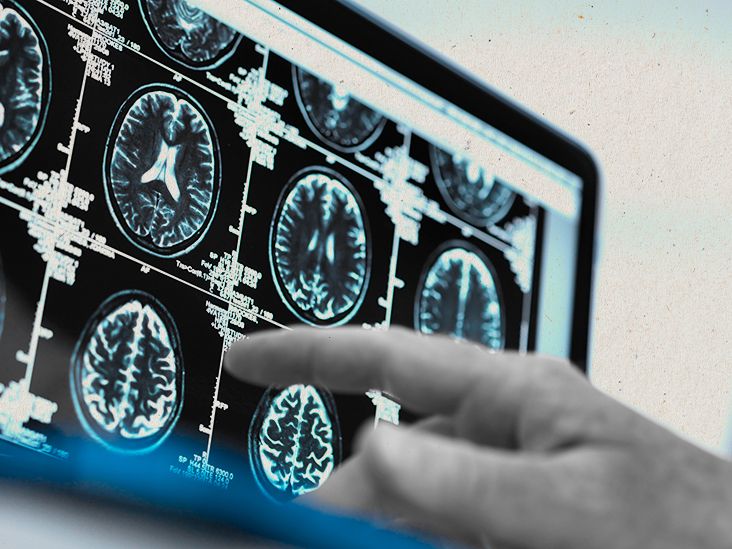
An MRI of the brain with contrast is often the most useful initial imaging test. MRI can identify suspicious lesions and show their location, size, and surrounding swelling. MRI of the spine may be performed when spinal or cerebrospinal fluid involvement is suspected.
Biopsy
A tissue biopsy is commonly required to establish the diagnosis. Unlike many solid brain tumors, extensive surgical removal is usually not the primary treatment for CNS lymphoma. Surgery may mainly be used to obtain enough tissue for pathology because lymphoma often responds to systemic therapy.
Lumbar puncture
A lumbar puncture, commonly called a spinal tap, can allow doctors to analyze cerebrospinal fluid for lymphoma cells and other molecular or biochemical evidence of disease.
Eye examination
Because primary CNS lymphoma can involve the eyes, a detailed ophthalmologic examination may be recommended even when visual symptoms seem mild.
Checking the rest of the body
Doctors may use PET/CT scans, CT scans, blood tests, HIV testing, and other examinations to determine whether lymphoma exists elsewhere. This helps distinguish primary CNS lymphoma from secondary CNS involvement.
How is CNS lymphoma treated?
Treatment is individualized according to age, kidney function, overall health, neurological condition, immune status, disease location, and whether the lymphoma is newly diagnosed or recurrent.
High-dose methotrexate
High-dose methotrexate (HD-MTX) forms the backbone of most modern primary CNS lymphoma treatment. Methotrexate is particularly useful because, at sufficiently high doses, it can penetrate the blood-brain barrier.
It is usually combined with additional medicines rather than used entirely on its own. Regimens vary among cancer centers.
Combination chemotherapy and immunotherapy
Examples of commonly studied approaches include combinations involving high-dose methotrexate with rituximab, cytarabine, procarbazine, vincristine, temozolomide, or thiotepa.
One intensive regimen known as MATRix combines methotrexate, cytarabine, thiotepa, and rituximab. Clinical-trial evidence has shown strong disease control in appropriately selected, generally fit patients, although the regimen can also cause considerable toxicity and is not suitable for everyone.
Another frequently used approach is R-MPV, which includes rituximab, methotrexate, procarbazine, and vincristine.
Consolidation treatment
Once initial chemotherapy produces a response, doctors may recommend additional treatment called consolidation. The idea is to eliminate microscopic lymphoma cells that remain after the visible tumor has shrunk.
For medically fit patients, high-dose chemotherapy followed by an autologous stem cell transplant is an important consolidation option. In this procedure, the patient’s own previously collected blood-forming stem cells are returned after intensive chemotherapy.
Radiation therapy
Whole-brain radiation can kill CNS lymphoma cells effectively, but traditional higher-dose whole-brain radiation has been associated with delayed neurological and cognitive toxicity, particularly in older patients.
For this reason, modern treatment often attempts to reduce or delay radiation exposure when effective chemotherapy and transplant options are available. Lower-dose radiation may still be considered in selected situations, and radiation remains useful for some patients with recurrent or difficult-to-control disease.
What happens if CNS lymphoma comes back?
Relapse is unfortunately common, particularly during the first few years following treatment. However, recurrent disease does not automatically mean treatment has run out of road.
Depending on previous therapy and overall health, options may include another methotrexate-based treatment, rituximab, lenalidomide, ibrutinib and other targeted medicines, temozolomide, radiation, stem cell transplantation, CAR T-cell therapy, or enrollment in a clinical trial.
A significant development occurred in the United States in February 2026 when FDA labeling for the CD19-directed CAR T-cell therapy axicabtagene ciloleucel was updated to remove the previous exclusion affecting primary CNS lymphoma. This has expanded the possibility of CAR T-cell treatment for eligible patients with relapsed or refractory disease.
Because CNS lymphoma is uncommon and its treatment changes rapidly, evaluation at a center experienced in neuro-oncology, lymphoma, and cellular therapy can be especially valuable when the disease relapses.
CNS lymphoma survival rate
The question almost everyone asks is also one of the hardest to answer: “What is the survival rate for CNS lymphoma?”
There is no single number that accurately predicts an individual’s outcome.
Mayo Clinic currently reports the following approximate five-year survival rates for primary CNS lymphoma by age:
- Ages 0 to 14: about 86%
- Ages 15 to 39: about 61%
- Age 40 and older: about 38%
These are population statistics, not personal forecasts. A patient receiving modern intensive therapy at a specialist center may have a very different outlook from someone represented in older cancer-registry data.
For example, long-term follow-up from the MATRix clinical trial reported an overall survival rate of approximately 56% at seven years among patients assigned to the full MATRix induction regimen. Outcomes in clinical trials, however, should not be directly compared with general population statistics because participants are selected according to specific eligibility criteria.
Factors affecting prognosis
Important prognostic factors include:
- Age
- Overall physical and neurological function
- Immune status
- HIV status
- Serum lactate dehydrogenase levels
- Cerebrospinal fluid protein levels
- Location and extent of disease
- Whether the eyes are involved
- How strongly the lymphoma responds to initial treatment
Secondary CNS lymphoma generally carries a different prognosis because lymphoma is also present, or has previously been present, elsewhere in the body. Survival therefore depends heavily on the lymphoma subtype, systemic disease burden, response to therapy, and availability of transplant or cellular therapies.
Can CNS lymphoma be cured?
Yes, long-term remission and cure are possible, particularly in people who respond strongly to first-line therapy and can receive effective consolidation.
That said, clinicians often discuss CNS lymphoma in terms of remission rather than declaring victory after the first clear scan because recurrence can occur years later. Follow-up remains important even after successful treatment.
Repeat MRI scans, neurological examinations, eye examinations when indicated, and additional testing help doctors monitor for recurrence and manage long-term effects of treatment.
What treatment can feel like: patient and caregiver experiences
The medical description of CNS lymphoma can sound remarkably tidy: MRI, biopsy, induction, consolidation, follow-up. Living through it is considerably less tidy. For patients and families, the first difficult experience is often uncertainty.
A person may initially seek medical attention because they are forgetting conversations, walking strangely, struggling to speak, experiencing headaches, or simply “not acting like themselves.” Families sometimes wonder whether the problem is stress, aging, medication, stroke, or something else entirely. Then imaging finds a brain lesion, and the waiting begins.
The diagnosis may actually bring a strange mixture of fear and relief. Nobody wants lymphoma, obviously, but knowing what the lesion is finally gives doctors something specific to attack.
High-dose methotrexate treatment also differs from what many people imagine when they hear the word chemotherapy. Because the dose is high and methotrexate must be cleared safely from the body, treatment frequently involves close monitoring. Hydration, urine alkalinization, blood tests, methotrexate-level measurements, kidney-function monitoring, and leucovorin rescue may all become familiar parts of the routine.
For patients receiving repeated inpatient cycles, hospital life can become oddly repetitive. There may be treatment days followed by waiting for laboratory values to reach the level required for discharge. Entertainment suddenly becomes important. A comfortable pair of headphones, a tablet, familiar television shows, and a long charging cable can acquire the emotional significance normally reserved for family heirlooms.
Cognitive symptoms can be especially difficult for caregivers. Unlike a visible surgical wound, memory problems or personality changes may fluctuate from day to day. Someone may look physically well while struggling to remember why they are in the hospital. Another person may regain strength quickly but need much longer for concentration, language, or executive function to improve.
Recovery also is not always linear. A better MRI does not guarantee that every neurological symptom disappears immediately. Brain tissue needs time to recover from tumor pressure, swelling, seizures, treatment, and prolonged illness. Rehabilitation involving physical therapy, occupational therapy, speech therapy, or neuropsychological support may therefore become part of the cancer journey.
Caregivers face a different workload. They may manage medications, appointments, transportation, insurance questions, home safety, and communication with several specialists while simultaneously trying to understand words such as “leptomeningeal,” “thiotepa,” and “autologous.” That is a heroic amount of vocabulary before breakfast.
Another common psychological hurdle is scan anxiety. Once treatment ends, MRI appointments can become emotionally loaded. A headache that once would have been blamed on poor sleep may suddenly feel suspicious. Patients should report genuinely new neurological symptoms promptly, but learning to live without interpreting every ordinary sensation as relapse can take time.
For some families, recurrence becomes part of the story. Modern relapse treatment offers more options than were available even a few years ago, including targeted medicines, stem cell transplantation for appropriate patients, clinical trials, and increasingly CAR T-cell therapy. This rapidly changing treatment landscape is one reason older internet survival statistics can be frightening without providing the full picture.
The practical lesson from many CNS lymphoma journeys is that specialist care matters. Because the disease sits at the intersection of blood cancer and neurological cancer, treatment may involve hematologic oncologists, neuro-oncologists, radiation oncologists, transplant specialists, ophthalmologists, neurologists, rehabilitation clinicians, and supportive-care teams.
It is a complicated disease, but complicated does not mean hopeless. The most useful approach is to focus on the next measurable step: confirming the diagnosis, choosing appropriate induction therapy, evaluating the response, deciding on consolidation, and maintaining follow-up afterward.
When should someone seek medical attention?
Symptoms such as sudden weakness, a first seizure, rapidly worsening confusion, difficulty speaking, loss of consciousness, or severe neurological changes warrant urgent medical assessment.
Less dramatic but persistent problems worsening headaches, unexplained personality changes, progressive memory problems, new visual abnormalities, balance difficulties, or numbness and weakness should also be evaluated rather than ignored.
Conclusion
CNS lymphoma is rare and aggressive, but it is also treatable. Primary CNS lymphoma usually develops from B lymphocytes within the brain, spinal cord, cerebrospinal fluid, meninges, or eyes, while secondary CNS lymphoma spreads to these areas from lymphoma elsewhere in the body.
Symptoms can range from headaches and seizures to memory problems, personality changes, weakness, walking difficulties, and visual disturbances. Diagnosis often involves MRI imaging, tissue biopsy, cerebrospinal fluid testing, eye evaluation, and studies to determine whether lymphoma is present outside the nervous system.
High-dose methotrexate-based chemotherapy remains the foundation of treatment. Rituximab and other chemotherapy medicines may be added, while consolidation can include autologous stem cell transplantation or carefully selected radiation therapy. For recurrent disease, targeted treatments, additional chemotherapy, clinical trials, and CAR T-cell therapy are expanding the available options.
Survival statistics deserve context rather than panic. Age, general health, disease biology, neurological function, and treatment response can all dramatically alter prognosis, and today’s patients may receive therapies that were unavailable when older survival statistics were collected.
Note: This article is for general educational purposes and is not a substitute for diagnosis or treatment from a hematologist, neuro-oncologist, or other qualified healthcare professional. Treatment choices for CNS lymphoma should be individualized, particularly because high-dose chemotherapy, transplantation, radiation, and cellular therapies have important eligibility requirements and potential side effects.