Salmon is one of those magical dinner ingredients that makes you feel wildly competent right up until the exact moment you stare at the fillet and think, “Is this perfect, or am I about to serve expensive fish confetti?” It cooks fast, it goes from silky to dry in what feels like three dramatic seconds, and it has a sneaky habit of looking almost done before it actually is. The good news: learning how to tell when salmon is cooked is much easier once you know what signs to watch for.
Whether you are roasting, pan-searing, grilling, air-frying, or poaching, the clues stay surprisingly consistent. The fish changes color, texture, and structure as it cooks. It becomes firmer, less translucent, and easier to separate into flakes. A thermometer can give you a clear answer, but even without one, you can still get very close to salmon greatness if you pay attention.
This guide walks through five reliable ways to know salmon is done, plus a few smart tips for avoiding the dreaded dry, chalky, overcooked finish. Because salmon deserves better. And frankly, so do you.
Why Salmon Can Be So Tricky to Cook
Salmon is not difficult in the dramatic, soufflé-collapsing sense of the word. It is difficult because it is fast. A thick center-cut fillet can be glorious and buttery one minute, then turn dry and crumbly if you answer one text message, refill your water, and wander back too late. Unlike tougher proteins that can coast a little, salmon is delicate and doesn’t hide your mistakes.
Another reason it confuses home cooks is that doneness depends on both safety and preference. Some people love salmon just cooked through. Others like it more tender, with a softly pink center. That is why the best approach is to use a combination of cues instead of trusting just one. Think of it as salmon detective work, but with less crime and more dinner.
1. Check the Internal Temperature First
The most reliable answer lives in the thickest part of the fillet
If you want the least guesswork and the most confidence, use an instant-read thermometer. Insert it into the thickest part of the salmon, not the skinny tail end that always cooks first and tries to ruin the experiment.
For food safety, salmon is considered fully cooked at 145°F. That is the benchmark many home cooks use when they want a clear yes-or-no answer. At that point, the flesh is opaque and flakes easily. If you are cooking for people who need a stricter food-safety approach, such as older adults, pregnant people, or anyone more vulnerable to foodborne illness, aiming for that temperature is a smart move.
That said, many cooks pull salmon off the heat a little earlier, often around 135°F to 140°F, because the fish keeps cooking for a short time after it leaves the pan, oven, or grill. This is called carryover cooking, and it matters more than people think. A fillet that reads 137°F when removed from heat may finish beautifully after a brief rest.
Best practice: remove the salmon from heat when it is almost where you want it, then let it rest for a few minutes. Translation: stop trying to win by cooking it into oblivion.
2. Look for the Color Change from Translucent to Opaque
Your eyes are more useful than you think
Raw salmon has a glossy, translucent look. As it cooks, that see-through appearance fades and the flesh turns opaque. This is one of the easiest visual clues to spot, especially on the side of the fillet. If you are pan-searing salmon skin-side down, you will usually see the color change creep upward from the bottom. It is like a little doneness elevator moving floor by floor.
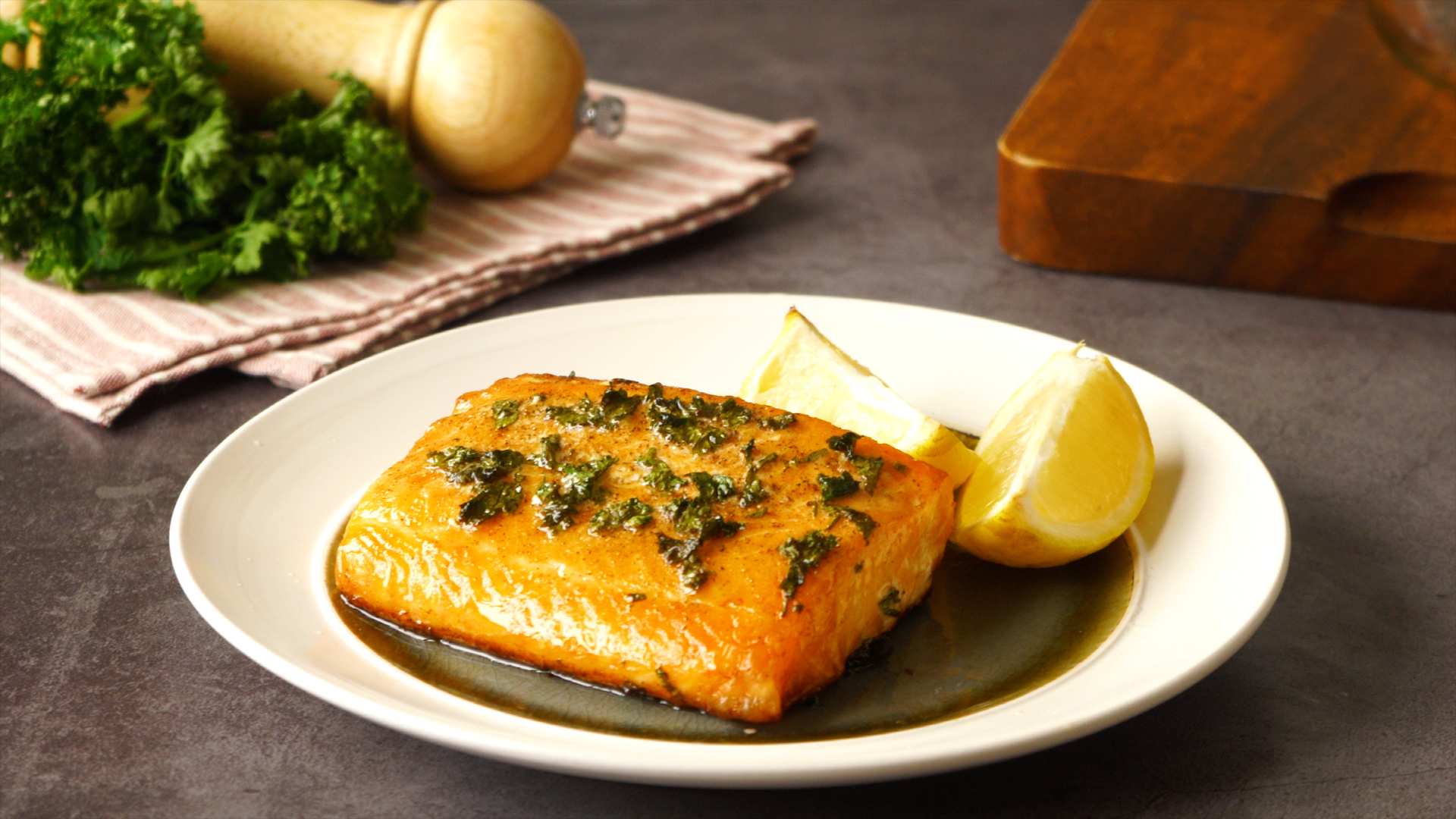
When the salmon is nearly done, the center should no longer look raw or glassy. Instead, it should look moist and just set. Depending on the variety of salmon, the inside may still be pink, but it should not look translucent. Pink is fine. Raw-looking and shiny in the middle is not.
This method is especially helpful when cooking salmon in the oven or on the stovetop, where you can peek at the side profile. A good rule is to start checking early, not late. Fish cooks quickly, and salmon does not send a calendar invite before crossing into overdone territory.
3. Test Whether It Flakes Easily with a Fork
The classic fish test still works
There is a reason this advice shows up everywhere: it works. When salmon is cooked, the muscle layers begin to separate naturally. To test it, insert a fork into the thickest part at a slight angle and gently twist. You are not trying to shred the whole fillet into seafood confetti. You just want to see whether the layers separate easily.
If the salmon resists, looks gummy, or stays in one stubborn piece, it probably needs more time. If it flakes with very little pressure, it is likely ready. If it explodes into dry pink dust, well, dinner may still be edible, but we are now in “please add sauce” territory.
The fork test is best used as a light check, not a repeated attack. Every time you dig into the fish, you let out moisture and disturb the texture. One gentle test is plenty. Think graceful tap, not excavation project.
4. Press the Top and Notice the Feel
Cooked salmon should feel slightly firm, not squishy
Touch is another handy doneness clue once you know what you are looking for. As salmon cooks, it firms up. Raw salmon feels quite soft and loose. Cooked salmon feels slightly firm and springs back a bit when gently pressed. The key word here is slightly. You are not looking for chicken-breast firmness. Salmon should still feel tender.
If you press the top and the fillet feels mushy or visibly sinks in without resistance, it likely needs more time. If it feels stiff, tight, or dry, you may have gone too far. The sweet spot is somewhere in the middle: gently firm, still juicy, still delicate.
Another old-school trick is the knife test. Slide a thin knife or cake tester into the center of the salmon for a few seconds, then touch the metal. If it feels warm or hot, the center is cooked through. This method is especially helpful for poached or baked salmon when you want a quiet little doneness check without tearing up the surface.
5. Watch for White Albumin, but Don’t Treat It Like a Trophy
That weird white stuff is harmless, but it does tell you something
If you have ever cooked salmon and seen white stuff ooze out of the top, congratulations: you have met albumin. It is a protein that turns solid when heated. It is safe to eat, flavorless, and not a sign that the fish has gone bad. It is just not particularly photogenic.
Albumin can show up even on well-cooked salmon, but heavy white streaks or blobs often suggest the fish cooked too hot, too fast, or too long. In other words, it is less of a perfect doneness marker and more of a “hey, maybe ease up next time” clue.
If you notice only a little albumin, don’t panic. Your salmon may still be juicy and delicious. If the fish is covered in white protein and feels dry, it probably overshot the ideal finish. Lower heat, gentler cooking, and removing the salmon slightly before its final target temperature can help prevent that in the future.
Putting the 5 Signs Together
The best cooks rarely rely on just one signal. Instead, they layer them:
- Use a thermometer for precision.
- Check that the center has gone from translucent to opaque.
- Gently test whether the fish flakes.
- Press the top to feel for slight firmness.
- Notice whether albumin is minimal or starting to spill out in a dramatic protest.
When several of those signs agree, you can stop hovering over the pan like a worried stage parent.
Common Mistakes That Make Salmon Harder to Read
1. Waiting too long to check
Salmon cooks quickly. Start checking a few minutes before you think it will be done, especially with thinner fillets.
2. Ignoring thickness
A thick center-cut piece and a thin tail portion do not cook at the same speed. If your fillet is uneven, the narrow end will finish first.
3. Using blazing heat for the whole cook
High heat can create a great sear, but too much of it for too long pushes out albumin and dries out the fish.
4. Cutting into the fillet over and over
Every test leaves a mark. Use a thermometer once, a fork once, and then trust your clues.
5. Forgetting carryover cooking
Salmon does not stop cooking the instant it leaves the heat. Letting it rest for a few minutes can finish the job without drying it out.
Quick Method Guide: What Done Salmon Looks Like by Cooking Style
Pan-seared salmon
Look for the color to rise from the skin side upward. The top should lose its raw shine, and the center should feel just firm. This method is ideal for checking firmness and side color.
Baked salmon
Use a thermometer or fork test near the thickest section. Baked salmon is easy to overdo because it looks calm and innocent right up until it is not.
Grilled salmon
Watch carefully because grill heat can be intense. Grill marks are nice, but they are not proof of doneness. Trust the center.
Poached salmon
Poached salmon often looks softer on the surface, so a fork press or knife test is especially useful. It should flake gently, not collapse.
Air-fried salmon
Air fryers cook quickly and can brown the outside before the middle is ready. A thermometer is your best friend here.
Experience Notes from Real Salmon Dinners
If there is one lesson repeated in home kitchens everywhere, it is this: salmon teaches patience faster than it teaches confidence. The first time many people cook it, they stare at the fillet every 30 seconds like it is about to reveal its secrets through telepathy. It does not. It just keeps cooking. Then comes the classic mistake: waiting for it to look completely firm, completely pale, completely undeniable. By then, dinner is technically cooked but emotionally disappointing.
A much better approach comes from experience with repetition. Once you cook salmon a few times, you begin to notice the sequence. First the surface loses its raw gloss. Then the sides start to turn opaque. Then the center tightens slightly. Then the fork slips in and the layers begin to separate. After that, there is only a short window before the fish starts drying out. That small window is where the magic lives.
One common experience is discovering that thinner salmon fillets are far less forgiving than thick ones. A skinny supermarket fillet can go from underdone to overcooked while you are plating the rice. Thicker center-cut pieces are easier to read and easier to pull at the right moment. Many home cooks learn this the hard way, usually after bravely insisting, “It’ll be fine,” and serving a fillet with the texture of pink chalk.
Another very real salmon moment is the panic over white stuff on top. Many people assume it means they ruined dinner or bought bad fish. In reality, it usually just means the protein tightened up under heat. Once you know that, it stops being scary and starts being useful. A little albumin is no big deal. A lot of it is your fish politely telling you to turn the heat down next time.
There is also the oddly satisfying moment when you finally trust a thermometer. Some cooks resist using one because they think it feels too precise, too technical, too “I am auditioning for a cooking competition.” Then they try it once and realize it removes half the stress. Suddenly salmon night stops feeling like a gamble and starts feeling like a plan.
Perhaps the most valuable experience of all is learning that salmon keeps cooking after it comes off the heat. This single insight rescues more dinners than fancy marinades ever will. Pulling the fish a little early, letting it rest, and resisting the urge to “just give it another minute” can make the difference between juicy, tender salmon and a fillet that begs for a gallon of sauce. Experience teaches what recipes often bury in the fine print: the best salmon is usually not the one cooked the longest, but the one stopped at the right time.
Final Takeaway
If you remember only one thing, let it be this: the best way to tell when salmon is cooked is to use a combination of temperature, appearance, and texture. A thermometer gives you the clearest answer. Opaque flesh, easy flaking, and slight firmness confirm what your thermometer tells you. And if a little white albumin appears, don’t declare culinary defeat. Just treat it as feedback, not failure.
Once you learn these five cues, salmon becomes much less mysterious and a whole lot more enjoyable to cook. Which is great news, because salmon is too delicious to be reduced to dry dinner regret.