NASA is famous for hardware that makes humans say, “That’s impossible,” and then NASA says, “Coolwatch this.” But here’s the plot twist: a lot of NASA’s work today doesn’t require a rocket, a lab coat, or even a telescope. It requires peoplepattern-spotters, careful clickers, phone-camera observers, and creative problem-solvers who can help turn mountains of data into discoveries.
Modern missions generate oceans of images and measurements. Computers do a ton of sorting, but they still get tricked by noise, glare, and “looks-like-a-thing” moments that aren’t actually a thing. Humans are still excellent at catching the weird stuff and validating the important stuff. That’s why NASA’s “help wanted” sign shows up in two big ways: careers (paid roles) and citizen science (volunteer projects where anyone can contribute to research).
Let’s break down both routesand how you can help NASA with nothing more than your curiosity and a device that can open a browser tab.
What “Help Wanted” Means at NASA
Two lanes: employment vs. participation
- NASA jobs and internships: formal roles with official applications and (sometimes) security requirements.
- NASA citizen science, open data challenges, and community programs: contribute time and skills to real research projectsno badge required.
Both are legitimate ways to “work with NASA.” One is your day job. The other is your spare-time superpower.
Track 1: NASA Jobs (Still No Telescope Required)
Where the real postings live
NASA civil service roles are typically listed through official federal hiring channels, with NASA directing applicants to those systems. If a site promises you a “NASA job today!!” for a small fee and a large amount of optimism, that’s not a hiring portalit’s a plot device.
Pathways: the student-to-NASA pipeline
NASA’s Pathways Internship Program is built for students and is designed as a multi-semester experience that can lead toward full-time employment after graduation. Pathways openings are posted through the federal job system used for government hiring, and opportunities vary by NASA center and career field.
Internships beyond Pathways
NASA also runs additional internship programs (often with paid stipends) where interns work with mentors on agency projects. If you want experience, references, and a clearer picture of what NASA work actually looks like, internships are a practical on-ramp.
What NASA hires for (spoiler: it’s not just rockets)
NASA hires across engineering and science, yesbut also across software, cybersecurity, data analysis, project management, procurement, communications, education, and many “keep-the-mission-moving” roles that don’t make movie trailers.
A strong application usually shows:
- Evidence: projects with measurable outcomes (built, shipped, improved, reduced, automated, tested).
- Teamwork: collaboration, documentation, and communicating decisions.
- Relevance: your skills mapped to the role (not a scrapbook of everything you’ve ever done).
Track 2: NASA Citizen Science (Your Laptop Is the Telescope)
NASA’s citizen science projects are volunteer research efforts designed so beginners can learn by doing. Many are open internationally and walk you through what to look for. The vibe is less “prove you’re a genius” and more “help us handle a dataset too big for a small research team.”
Find hidden neighbors in NASA space data
Backyard Worlds: Planet 9 asks volunteers to search infrared images from NASA’s WISE mission to spot moving objects, including brown dwarfsand potentially candidates connected to the hypothesized Planet Nine. It’s classic discovery work: the data already exists, but finding the needle takes a lot of eyes.
Spot planet-forming disks (and sometimes earn paper credit)
Disk Detective has volunteers examine infrared survey data to identify dusty disks around starsclues about planet formation. The project has produced notable findings (including the “Peter Pan” disk phenomenon) and has credited volunteers as coauthors on published research.
Hunt exoplanets by reading light curves
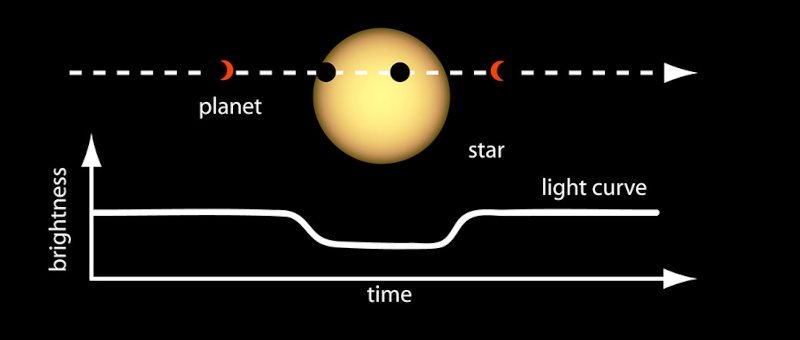
Planet Hunters TESS lets you review light curves from NASA’s TESS mission. A planet transit can look like a small, repeating dip in a star’s brightness. Algorithms flag candidates; humans help validate patterns and catch odd cases that automated filters miss.
Help confirm rare eclipsing binary star systems
Eclipsing Binary Patrol uses TESS data toothis time to identify eclipsing binary stars, where one star periodically blocks the other from our view. In 2025, NASA credited citizen scientists with identifying 10,001 eclipsing binary pairs, including 7,936 previously unknown systemsexactly the kind of scale that’s hard without public participation.
Report auroras to improve space weather understanding
Aurorasaurus turns aurora sightings into data. Volunteers report and help verify auroras, supporting real-time maps that scientists can use to refine models and better understand when and where auroras appear.
Do NASA Earth science with your phone
The GLOBE Observer app invites people to submit structured observationslike clouds, mosquito habitat, land cover, and trees. These “ground truth” observations help researchers compare what satellites see from above with what’s happening at ground level.
Play a game that trains science
NeMO-Net is an iPad game where players classify coral reefs by painting 2D/3D imagery. Those classifications help train algorithms that can map reefs at scalean example of NASA using gamified data labeling for environmental research.
The Telescope-Optional Toolkit: What You’ll Actually Use
- Time in small chunks: 10 minutes a day beats a once-a-year weekend sprint.
- Pattern recognition: humans are great at “that looks off” detection.
- Data honesty: if you’re unsure, mark unsure. Quality matters more than speed.
- Basic data literacy: reading charts (like light curves) gets easier fast with practice.
Humans + machines = better science
Many NASA projects combine machine learning with human validation. Computers help narrow the pile; people help confirm, classify, and correct. That partnership improves results now and trains better algorithms for laterespecially when the real world refuses to behave like a clean training dataset.
Want to Go Further? Hackathons and Open Source
NASA International Space Apps Challenge
Prefer building tools over classifying data? NASA’s International Space Apps Challenge is a two-day global hackathon where teams use NASA’s open data to tackle real-world challenges. Coders, designers, scientists, and storytellers all participate, and many projects become portfolio pieces you can point to long after the event ends.
NASA open source contributions
NASA also publishes open-source software through public repositories. You don’t have to start by rewriting flight code. Beginner-friendly contributions often include documentation improvements, small bug fixes, issue triage, and examples that make tools easier for others to use.
How to Choose Your Best “NASA Help Wanted” Path
- If you want a career: aim for official NASA jobs and internships, and build a targeted skill set with project evidence.
- If you want flexibility: pick one citizen science project and contribute consistently.
- If you want fast portfolio wins: join Space Apps or contribute to NASA open source and document your work clearly.
- If you want discovery thrills: try Backyard Worlds, Planet Hunters TESS, or Eclipsing Binary Patrol.
Start with one lane, one project, one week. Momentum is a better strategy than perfection.
Conclusion
NASA’s biggest missions aren’t powered only by rockets and robots. They’re powered by people who show up, learn, and contributewhether that’s through an official job, a student internship, a citizen science project, an open-source pull request, or a weekend hackathon. If you’ve ever wanted to be part of “space stuff,” this is your reminder that there’s more than one way in.
Telescope optional. Curiosity required.
Bonus: Experiences That Make It Feel Real (Telescope Still Optional)
“Helping NASA” sounds like a Hollywood montage. Real life is quieterand honestly, that’s part of what makes it cool. Most people start small: a sign-up page, a short tutorial, a few practice classifications. The first day is mostly learning what you’re looking at. The second day is noticing you’re already faster. Then, at some point, you catch yourself thinking like a scientist: Is that a real signal, or is it an artifact?
The couch-based space detective. On image-review projects, volunteers often describe a strange shift: you stop seeing “pretty space pictures” and start seeing “evidence.” Smudges become candidates. Repeated patterns become clues. You learn what normal looks likeso that unusual pops out. The wins are tiny but addictive: “I spotted motion,” “I found a clean disk candidate,” “I flagged something that didn’t match.” It’s not instant fame; it’s the satisfaction of careful work done well.
The light-curve reader. If you’ve never looked at a light curve, it can feel like staring at a heartbeat monitor for a star. At first, you’re unsure what counts as a dip. Then you learn: real signals often have shape, timing, and consistency. Volunteers talk about the moment it clicks: the graph stops being random squiggles and becomes a story. Some people do a handful and quit. Others do a handful and realize they’ve found their new “I unwind after work” ritual.
The Earth observer who can’t unsee clouds anymore. With phone-based projects like GLOBE Observer, everyday scenes turn into science opportunities. A cloudy day becomes a chance to practice observation: coverage, type, height cues, and how that compares to the forecast. A walk outside becomes a mini field check. People often say the biggest surprise is how quickly they feel connected to the researchbecause the data point is literally something they saw, measured, and submitted.
The aurora spotter. Aurorasaurus-style participation has a very specific flavor of joy: you get a reason to step outside and look up. Participants often describe a mix of excitement and responsibilityexcitement when the sky cooperates, and responsibility to report carefully (where you are, what you saw, and whether it’s truly an aurora and not a bright cloud pretending to be one). Even when the sky is quiet, you’re learning how solar activity connects to what happens overhead.
The gamer doing stealth science. Games like NeMO-Net feel playful, but the impact is serious: your classifications help create training data that improves large-scale mapping. Players often describe it as a “good kind of productive”the way finishing a puzzle feels satisfying, except the puzzle helps a real research pipeline. The reward isn’t just points; it’s knowing your effort trains smarter tools.
The open-source contributor. Contributing to NASA’s public code can feel intimidating at firstuntil you realize most projects need the basics: clearer instructions, better examples, fixed typos, more readable documentation. People often describe their first contribution as small and oddly empowering. Once you’ve made one helpful change and seen it accepted, “professional collaboration” stops being abstract. It becomes a workflow you can repeat.
The hackathon teammate. Space Apps experiences tend to be social and intense. People show up with different skills and leave with a shared artifact: a prototype, a visualization, a story-driven demo. Participants often remember the moment their team’s idea becomes realwhen a messy dataset turns into a clean map, or a concept turns into a clickable demo. Even if the project never becomes a product, it becomes proof: “I can build useful things from NASA data.”
The confidence effect. Across all these experiences, the most valuable outcome might be internal: people stop thinking of NASA as a distant institution and start thinking of it as a community they can contribute to. Today it’s volunteer validation. Next it’s a portfolio project. Later it might be an internship application. The telescope stays optional, but the trajectory becomes real.