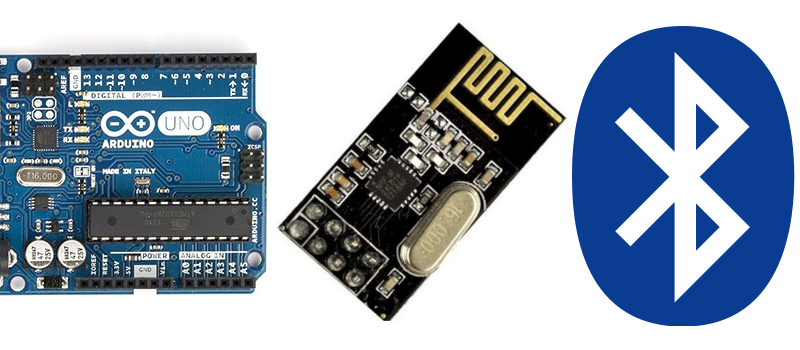
Some hardware projects solve a problem. Others solve a problem while casually bending reality over a workbench. The Hackaday Prize Entry: BLE Beacon Library belongs firmly in the second category. It takes the humble nRF24L01+ wireless module, a radio board that has lived in countless Arduino drawers for years, and persuades it to behave like a Bluetooth Low Energy advertising beacon.
The result is not just another cheap wireless sensor project. It is a clever lesson in protocol engineering, resourcefulness, packet design, low-power IoT development, and the occasional joy of making a tiny radio chip wear a Bluetooth disguise.
What Is the BLE Beacon Library Project?
The BLE Beacon Library project, also known as RF24BLE, was created as a Hackaday Prize entry by Pranav Gulati. Its central idea is simple but wonderfully ambitious: use an nRF24L01+ module and an Arduino-compatible microcontroller to broadcast Bluetooth Low Energy-style advertising packets.
Normally, an nRF24L01+ module is used for low-cost 2.4 GHz wireless communication between hobby electronics projects. It is popular because it is inexpensive, compact, widely available, and supported by mature Arduino libraries. The project asks a more interesting question: what happens when that radio is pushed beyond its usual job description?
Instead of relying on a dedicated BLE chip or a complete Bluetooth stack, the BLE beacon library prepares advertising packets in software, configures the radio carefully, and broadcasts short payloads that nearby smartphones and BLE scanner applications can detect. In other words, it turns a bargain-bin radio module into a tiny digital lighthouse.
That lighthouse is not sending ocean rescue signals, unfortunately. It is more likely broadcasting temperature readings, motion events, sensor identifiers, asset labels, or a brief message that says, “Hello, phone. Please notice this tiny circuit board.”
Why Bluetooth Low Energy Beacons Matter
Bluetooth Low Energy, often shortened to BLE, was designed for devices that need to send small amounts of information without chewing through a battery like a hungry squirrel in a trail-mix factory. BLE is especially useful when a device needs to wake up, broadcast a short message, and then return to sleep.
A BLE beacon typically sends advertising packets that nearby phones, tablets, gateways, or computers can scan. Unlike a traditional Bluetooth connection, the device does not always need to pair with a phone, negotiate a connection, or hold a long conversation. It can simply announce that it exists.
That makes BLE advertising useful for many Internet of Things applications, including indoor location systems, museum guides, smart retail displays, equipment tracking, environmental sensors, attendance systems, proximity alerts, warehouse labels, and home automation triggers.
A beacon can also broadcast changing information. A sensor node might transmit temperature, humidity, battery level, vibration data, or a status code. The payload is small, but that is often the point. Not every device needs to send a novel-length diary entry every 20 seconds.
BLE Advertising Is a Tiny but Powerful Message Board
BLE advertising works by sending compact packets over dedicated advertising channels. Traditional Bluetooth Low Energy advertising commonly uses channels 37, 38, and 39. These channels are arranged to reduce interference with common Wi-Fi activity in the crowded 2.4 GHz spectrum.
The practical challenge is that advertising packets do not offer much room for custom information. A beacon must fit addressing, packet structure, protocol data, checksums, and user payload into a very limited amount of space. This means BLE beacon development often feels like packing for a two-week vacation using only one backpack and a mild sense of denial.
The RF24BLE project embraces that limitation. It is intended for low-payload advertising, where a short sensor value or identifier is more important than sending large files, audio, images, or a complete weather forecast for all 50 states.
How the nRF24L01+ Becomes a BLE Beacon
The nRF24L01+ was not originally designed as a standard Bluetooth Low Energy controller. It is a low-cost 2.4 GHz transceiver commonly used for hobby wireless links. However, parts of its physical radio behavior overlap closely enough with BLE transmission requirements to make experimental BLE advertising possible.
The trick is not magic, although it may look suspiciously magical when a smartphone detects an Arduino project as a Bluetooth advertiser. The library handles the difficult work of formatting packets, applying whitening, calculating the required checksum, selecting suitable radio channels, and transmitting the advertisement in a way that BLE scanners can recognize.
In practical terms, the library acts as an abstraction layer between the Arduino sketch and the radio hardware. Instead of manually building bytes, reversing bit orders, calculating cyclic redundancy checks, and wondering why the phone is ignoring the project, the developer can use higher-level functions to configure a MAC address, set a device name, add payload data, and advertise.
That is the real charm of the BLE Beacon Library. The project does not merely prove that the nRF24L01+ can imitate BLE advertisements. It packages the proof into something other makers can use without spending their weekend reading radio protocol documents with increasingly dramatic facial expressions.
Typical Library Functions
The RF24BLE library includes functions for initializing the radio, configuring a MAC address, assigning a name, setting data, selecting phone behavior, transmitting advertising packets, and receiving certain beacon transmissions. It is built on top of the familiar RF24 library, which makes it more approachable for Arduino users already comfortable with nRF24L01+ projects.
A basic workflow might look like this: initialize the RF24 radio object, create the RF24BLE object, provide a device identity, add a few bytes of sensor data, and call the advertising routine on a schedule. The code may be short, but the radio activity underneath is doing some impressively careful choreography.
The exact configuration will vary depending on the Arduino board, wiring, RF24 setup, and intended payload. Still, the example shows the appeal of the project: the hard protocol work is hidden behind a simple library interface.
What Makes This Hackaday Prize Entry So Clever?
The biggest achievement is not that the project creates a beacon. Plenty of BLE-capable chips can advertise packets. The clever part is that it reuses extremely common hardware that many makers already own.
A dedicated BLE system-on-chip usually includes a Bluetooth radio, a protocol stack, memory, security features, and carefully designed firmware support. The nRF24L01+ is much more modest. It is basically a hardworking little radio that normally expects a different kind of job. The BLE Beacon Library asks it to put on a Bluetooth costume, memorize a few important packet rules, and walk confidently into a room full of smartphones.
That approach lowers the entry barrier for experimentation. A student, hobbyist, or early-stage prototyper can explore BLE advertising without immediately purchasing a specialized development board. It also encourages a valuable engineering mindset: understand the protocol layers, identify the hardware constraints, and see whether an existing component can be used in a new way.
The project also demonstrates why open-source maker communities matter. The library builds on earlier research into bit-banged BLE transmission and expands that work into a reusable Arduino-focused tool. Instead of leaving the idea as a one-off proof of concept, the project creates a pathway for others to test, modify, and extend it.
Real-World Use Cases for a Low-Cost BLE Beacon
Battery-Powered Sensor Nodes
A simple environmental sensor can wake up every few minutes, measure temperature or humidity, broadcast a compact payload, and return to sleep. A nearby phone, Raspberry Pi gateway, or BLE-capable computer can collect the data without requiring a constant connection.
Asset Tags and Object Identification
A workshop could attach beacon nodes to storage boxes, test equipment, tools, or moving projects. A scanner near the door could detect whether a particular tagged object is nearby. This will not stop anyone from losing a screwdriver under a pile of cables, but it may reduce the search radius.
Road, Motion, and Vibration Logging
The project was also connected to a road-quality sensing concept. A moving sensor node could collect motion or vibration measurements and periodically advertise compact readings. That approach could support experiments involving bicycle routes, vehicle vibration, road surfaces, or transport monitoring.
Interactive Installations
Artists and makers can hide beacon nodes around an installation, exhibit, classroom, or escape room. A nearby device can detect the beacon and trigger audio, visual effects, information panels, or location-based interactions.
BLE Learning and Protocol Exploration
Perhaps the strongest use case is educational. The BLE Beacon Library helps developers understand what happens underneath polished mobile apps and commercial beacon hardware. It reveals that Bluetooth advertising is not just a mysterious cloud of wireless convenience; it is a structured packet system with channels, timing, addresses, checksums, payload limits, and trade-offs.
Important Limitations of the BLE Beacon Library
The project is clever, but it is not a replacement for a dedicated modern BLE development platform in every situation. It is best understood as a low-cost BLE advertising experiment and a maker-friendly learning tool.
First, the nRF24L01+ has payload limitations. Its packet size is restricted, and some of that space is consumed by BLE packet overhead. That means the usable custom data area is small. The system works best for short identifiers, sensor values, status flags, and compact telemetry.
Second, advertising is not the same as a full Bluetooth Low Energy connection. A complete BLE peripheral may support pairing, services, characteristics, secure data exchange, firmware updates, and two-way communication using GATT. The BLE Beacon Library is centered on broadcasting, not on becoming a fully featured Bluetooth device.
Third, wireless range and reliability depend heavily on antenna design, supply voltage stability, transmit power, obstructions, nearby Wi-Fi traffic, human bodies, walls, metal surfaces, and the general mood of the 2.4 GHz spectrum. Radio behavior indoors can be wonderfully unpredictable. Move a beacon six inches, and suddenly it either becomes a hero or vanishes into the wireless void.
Finally, a prototype should not automatically become a commercial product. Commercial BLE devices may require careful hardware design, regulatory testing, security planning, compatibility testing, battery analysis, enclosure work, production validation, and support for current mobile operating systems.
How to Test a BLE Beacon Project
Testing is one of the most satisfying parts of a BLE beacon build because the success moment is so immediate. You upload the sketch, power the circuit, open a BLE scanner app, and wait. If the beacon appears in the scan list, the tiny radio has successfully convinced a modern smartphone that it belongs in the Bluetooth neighborhood.
Mobile tools such as nRF Connect for Mobile and LightBlue are useful for inspecting advertising packets, device names, addresses, signal strength, and raw payload data. These apps help confirm whether the project is transmitting regularly and whether the advertised information matches the bytes sent by the Arduino.
Start with a short device name and a tiny payload. Avoid adding too much data before confirming that the basic beacon is working. Once scanning is reliable, experiment with sensor readings, changing values, longer advertising intervals, low-power modes, and multiple beacon nodes.
It is also smart to test with more than one phone. Different phones, operating systems, BLE scanner apps, and Bluetooth chipsets may display beacon information differently. A project that works perfectly on one device may look slightly different on another. Wireless engineering has a way of reminding us that “works on my phone” is not always a complete test plan.
What Modern Makers Can Learn from RF24BLE
The Hackaday Prize BLE Beacon Library remains interesting because it represents a timeless kind of engineering curiosity. It is not about buying the most powerful hardware. It is about understanding what existing hardware can do when someone studies the boundaries carefully enough.
Modern BLE development boards are now inexpensive and much easier to use. ESP32 boards, Nordic Semiconductor chips, Silicon Labs devices, and other BLE-capable platforms provide more reliable support for modern Bluetooth features. They are usually the better choice for production IoT devices, secure products, and advanced mobile applications.
But the RF24BLE project still has value because it teaches a deeper lesson: libraries are not merely collections of convenient functions. A good library captures difficult knowledge and makes it reusable. It transforms packet construction, radio configuration, and protocol quirks into a practical tool that lets someone else build faster.
That is the spirit of a strong Hackaday Prize entry. The project is affordable, educational, shareable, surprising, and just risky enough to make engineers lean closer to the screen.
Experiences and Lessons From Building BLE Beacon Projects
Building a BLE beacon project often begins with unreasonable confidence. The parts are tiny, the wiring is simple, and the sample sketch looks short enough to fit on a coffee receipt. Then the beacon does not appear on the phone, and suddenly the project becomes a dramatic investigation involving jumper wires, SPI pins, power supply noise, library versions, and several suspiciously judgmental LEDs.
One of the first lessons makers encounter is that wireless projects are rarely only software projects. A beacon library may be perfectly written, but the nRF24L01+ module still needs stable power. These radio modules can behave strangely when powered from a weak source, especially when connected directly to a board that is already powering sensors, displays, and enough LEDs to guide aircraft through fog. A small decoupling capacitor near the radio module can make a surprising difference.
The second lesson is patience with scanning. BLE scanner apps do not always refresh instantly, and a device may appear under a different name or address than expected. Sometimes the beacon is transmitting but the scanner is filtering results. Sometimes the payload is valid but the device name is missing. Sometimes the real problem is that the phone’s Bluetooth setting was turned off while the maker was busy blaming the code.
Another memorable experience comes from experimenting with advertising intervals. Broadcasting too frequently can make a beacon easier to detect, but it also increases power consumption. Broadcasting too slowly saves energy, but a scanner may take longer to notice the device. Finding the right interval becomes a balancing act between responsiveness and battery life. It is the electronic equivalent of deciding how often to text someone without looking either too eager or completely absent.
Payload design is also more important than it first appears. When only a few bytes are available, every byte must earn its place. A temperature value might be stored as an integer multiplied by 100 instead of a long text string. A status field may use bits instead of words. Battery voltage could be compressed into a compact number. This encourages disciplined engineering and makes developers think carefully about what information actually matters.
Multi-beacon testing adds another layer of fun. A single beacon is easy to understand. Ten beacons in one room can become a small orchestra of identifiers, signal strengths, intermittent packets, and accidental duplicates. At that point, good naming conventions and unique addresses become essential. Without them, debugging quickly turns into a game of “Which tiny blinking board is yelling at my phone?”
The most valuable experience, however, is realizing that a working prototype does not need to be perfect to be useful. A simple BLE beacon can teach packet structure, radio timing, sensor encoding, mobile scanning, and low-power design in one compact project. Even when it fails, it fails in educational ways. A missing packet becomes a lesson about interference. A weak signal becomes a lesson about antennas. A corrupted payload becomes a lesson about data formatting.
That is why projects like the Hackaday BLE Beacon Library remain memorable. They encourage makers to look at cheap, familiar hardware and ask a better question than “What was this designed for?” The better question is: “What else might it become?”