Note: This article is written as an original, SEO-ready feature inspired by the true photo story of Roxy the fox and grounded in real red fox behavior, ethical wildlife photography practices, and human-wildlife coexistence guidance.
Some wildlife stories begin with a plane ticket, a wilderness guide, and a backpack full of equipment that makes the photographer look like a lost astronaut. This one began at a cottage window, after dusk, with a fox who apparently had better evening plans than most humans. Her name became Roxy, and over eight months, her quiet visits turned into a rare photographic diary: 26 images that did more than show a beautiful red fox. They revealed personality, patience, adaptation, and the strange magic that happens when a wild animal allows a person to observe without being invited to interfere.
The title 26 Photos Of Roxy The Fox, Whose Life I Observed For 8 Months sounds charming at first glance, almost like a children’s book with better lighting. But the story has more depth. Roxy was not a pet, not a performer, and definitely not a fluffy influencer waiting for sponsorship deals in organic vole snacks. She was a wild vixen moving through the edge between forest and village, appearing after dark, circling familiar spaces, testing the environment, hunting, exploring, and surviving on her own terms.
That is what makes the photo series so compelling. It is not just about “cute fox pictures,” although yes, Roxy has the kind of face that could make a tax auditor say “aww.” It is about the discipline of watching, the ethics of distance, and the way a red fox can completely dismantle the old myth that foxes are merely pests. In Roxy’s world, every glance, pawstep, leap, and pause tells a story.
The Story Behind Roxy The Fox
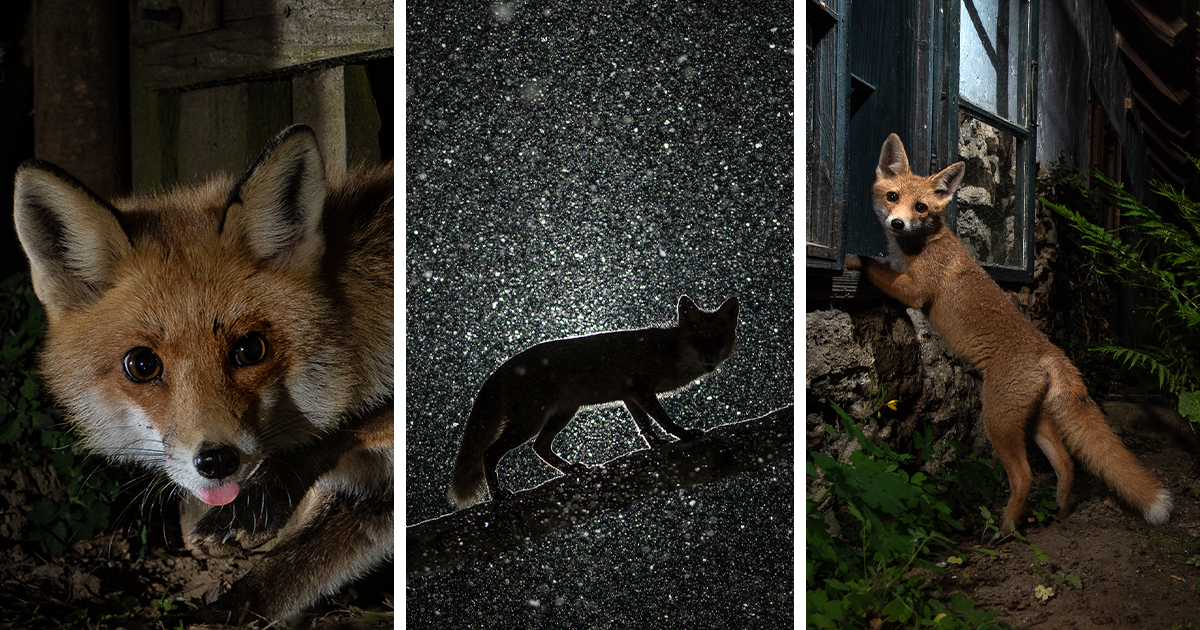
Roxy’s story became widely known through the work of Hungarian photographer Milan Radisics, who spent months observing a young vixen near his cottage. The setting was cinematic by nature: forest, darkness, a quiet yard, and a wild visitor who appeared regularly enough to become familiar, but never tame. The photographer worked from a darkened room and used remote exposure techniques, allowing Roxy to behave naturally rather than turning the scene into a wildlife paparazzi ambush.
That distinction matters. Wildlife photography is most powerful when the animal remains the author of its own behavior. Roxy was not being asked to pose like she had just arrived at fox prom. She was photographed moving through her nightly routine: drinking, hunting, crossing fences, inspecting objects, pausing under carefully arranged light, and occasionally staring toward the camera with the unmistakable expression of an animal who knows more than she is willing to say.
The project lasted eight months, long enough for patterns to appear. Roxy often emerged after dusk, returned repeatedly, and adapted quickly to changes in the environment. Red foxes are known for this flexibility. They thrive in forests, farmland, suburban edges, and even cities because they are opportunistic, alert, and astonishingly good at making a living where other animals struggle. Roxy’s nightly visits were not random decoration; they were survival strategy with a tail.
Why Roxy Captured So Many Hearts
People love foxes because foxes seem to live in several categories at once. They are doglike but not dogs, catlike but not cats, elegant but also capable of looking deeply ridiculous when pouncing. A red fox can appear regal in one photo and like a mischievous sock thief in the next. Roxy’s images work because they show all those layers.
In one moment, she is alert and graceful, her ears tuned to sounds humans would miss completely. In another, she is simply curious, investigating a yard as if inspecting the property value. Her body language changes from cautious to confident, from focused hunter to silent neighbor. The emotional pull comes from recognizing individuality without pretending she is human. Roxy is not a cartoon character wearing a fur coat. She is a wild animal with routines, preferences, instincts, and decisions.
That balance is important for storytelling. The best animal photography lets viewers care without projecting too much. Roxy looks expressive because foxes are expressive: their ears rotate, their tails signal mood and balance, their eyes track movement, and their posture can shift from relaxed to electric in half a second. Observing her for months allowed the photographer to catch moments that a quick visitor would miss.
What Red Fox Behavior Reveals In The Photos
1. Curiosity Is A Survival Tool
Roxy’s curiosity is one of the strongest themes of the series. Red foxes explore carefully because exploration helps them find food, shelter, routes, and risks. A cautious fox is not timid in the weak sense; she is collecting data. Every scent mark, shadow, sound, and object may matter. If humans had Roxy’s level of environmental awareness, we would stop losing our keys in the refrigerator.
Foxes rely heavily on smell and hearing. Their excellent hearing helps them detect small prey, including rodents moving beneath grass, leaves, or snow. When a fox tilts its head, freezes, and then pounces, it may be triangulating tiny sounds that humans cannot perceive. That famous “mousing” leap is not theatrical nonsense. It is precision hunting wrapped in a furry spring-loaded package.
2. Adaptability Is The Fox Superpower
Roxy’s comfort near a human dwelling reflects a broader truth about red foxes: they adapt well to edge habitats. Forest borders, village lanes, gardens, barns, parks, and suburban lots can all become part of a fox’s route. This does not mean foxes are begging to move into the guest room. It means they are skilled at using fragmented landscapes.
Red foxes eat rodents, rabbits, insects, birds, fruit, carrion, and other available foods. In human-shaped environments, they may also scavenge unsecured garbage or pet food. That flexibility is why they are seen in both rural and urban areas. They do not need perfect wilderness; they need opportunity, cover, and enough peace to avoid constant disturbance.
3. Night Is Not Empty
One reason the Roxy photos feel magical is that they remind viewers how alive the night is. When people go indoors and turn on streaming shows, animals begin their second shift. Foxes often move at dusk, dawn, and night, especially where avoiding people is useful. A yard that seems still at 2 p.m. may become a busy crossroads after dark.
Roxy’s appearances after dusk gave the project its atmosphere. Night photography adds mystery, but it also reflects real fox behavior. Darkness offers cover. It softens human activity. It turns ordinary places into corridors for animals who prefer not to file paperwork with the daytime world.
The Photography: Patience, Preparation, And A Very Cooperative Fox Who Never Signed A Contract
The technical side of Roxy’s story is part of the fascination. The photographer prepared scenes in advance, used controlled lighting, and waited for Roxy to enter naturally. That approach is closer to stage design than chasing. The set was ready, but the fox decided whether the photograph would exist.
That is both the joy and the emotional damage of wildlife photography. You can plan the light, charge the batteries, clean the lens, and sit perfectly still for hours, only for the animal to walk behind the camera like a tiny red-furred comedian. Patience is not optional. It is the admission fee.
Remote triggering also matters. By reducing the photographer’s visible presence, the setup allowed Roxy to continue her behavior with less disturbance. Ethical wildlife photography usually favors distance, restraint, and respect. The goal is not to force a dramatic image; it is to create the conditions where natural behavior can be witnessed safely.
Ethical Wildlife Photography: The Quiet Hero Of The Story
Roxy’s photos are beautiful, but the deeper lesson is how humans should behave around wild animals. The rule is simple enough to fit on a bumper sticker: admire, do not interfere. Do not chase wildlife. Do not corner it. Do not feed it for entertainment. Do not turn a fox into a neighborhood mascot with a snack schedule and a fan club.
Feeding wild foxes can cause habituation, meaning they lose healthy caution around people. That can create conflict, especially if a fox begins approaching homes, cars, pets, or poultry. Sadly, when wild animals become “too comfortable,” they often pay the price for human mistakes. The fox gets blamed for behavior people encouraged. Nature, as usual, has terrible customer service policies.
Ethical photography also means protecting locations when necessary, avoiding dens during sensitive periods, and refusing to manipulate animals for a shot. A truly great wildlife image should not come at the animal’s expense. Roxy’s story resonates because it suggests a different relationship: not ownership, not control, but attention.
Why Foxes Are Often Misunderstood
For centuries, foxes have carried a reputation as sneaky villains. Folklore made them tricksters. Farmers worried about poultry. Urban residents sometimes mistake daytime sightings for danger. The truth is more practical and less dramatic. Foxes are predators and scavengers doing what predators and scavengers do: finding food, raising young, avoiding threats, and trying not to get hit by cars or judged by homeowners’ associations.
Most healthy foxes avoid people. Seeing one during the day is not automatically a sign of illness. During breeding season, when adults are feeding kits, or in places where foxes face less pressure, daytime activity can happen. The key is behavior: a fox that keeps distance and moves normally is very different from one that appears disoriented, aggressive, severely sick, or unusually fearless.
Roxy’s images help soften the “pest” label because they show the animal as an individual. Once viewers see her hunting, exploring, and adapting, it becomes harder to reduce her to a nuisance. Photography can do that. It can turn a stereotype back into a living creature.
What The 26 Photos Teach About Coexisting With Foxes
Roxy’s story is not just for photographers. It offers practical lessons for anyone who lives near wildlife. First, secure food sources. Pet food, open trash, compost scraps, and fallen fruit can attract foxes and other animals. Second, protect small pets and backyard poultry with secure enclosures. Foxes are not evil for noticing an unprotected chicken. They are simply reading the menu.
Third, give foxes space. Watching from indoors, from a distance, or through a long lens is far better than approaching. Fourth, avoid turning occasional visits into dependency. A fox passing through your yard is a privilege. A fox waiting at your door for dinner is a problem humans created with leftovers and enthusiasm.
Coexistence works best when people respect boundaries. Foxes can help control rodents, add biodiversity to neighborhoods, and remind us that wildness still threads through human spaces. But they remain wild. The healthiest relationship is neighborly, not domestic.
The Emotional Side Of Watching One Animal For Eight Months
Eight months is long enough for observation to become relationship, even if the relationship is distant. The photographer described a subtle connection with Roxy, which is easy to understand. When you see the same wild animal repeatedly, you begin to notice patterns. You recognize timing, routes, habits, moods, and surprises. The animal becomes familiar without becoming yours.
That can be humbling. Humans like to think we are the main characters, but a fox can quickly correct that assumption by ignoring us with professional excellence. Roxy’s world did not revolve around the camera. The camera was merely lucky to be near her world.
There is also a meditative quality in long-term wildlife observation. You slow down. You wait. You learn that not every night produces a masterpiece. Some nights produce nothing but cold feet and doubts about your hobbies. Then, suddenly, the fox appears, the light catches, and a single frame justifies the entire ridiculous arrangement.
How Roxy Changes The Way We Look At Wild Animals
The greatest achievement of the Roxy series is not simply that the photos are striking. It is that they encourage viewers to look longer. A quick glance says, “Pretty fox.” A longer look says, “This animal has a life I barely understand.” That shift is small but powerful.
Wildlife conservation often begins with attention. People protect what they notice. They notice what they emotionally connect with. A photo essay like Roxy’s can bridge that gap. It does not lecture. It invites. It says: here is a fox at night, here is her patience, here is her hunger, here is her intelligence, here is her place in a world that overlaps ours more than we admit.
And yes, it also says: foxes are ridiculously photogenic. This is not their fault. Some creatures are born with cheekbones and tail drama.
Experiences Inspired By “26 Photos Of Roxy The Fox, Whose Life I Observed For 8 Months”
Spending time with a story like Roxy’s changes how you experience ordinary outdoor spaces. After seeing a fox documented so intimately, a backyard no longer feels like just a backyard. It becomes a possible stage. The fence line becomes a highway. The shadow under the hedge becomes a hiding place. The rustle near the compost bin becomes a mystery with whiskers.
One of the most valuable experiences related to this topic is learning to observe without demanding a result. Many people approach nature with a checklist: see the animal, get the photo, post the photo, collect applause, repeat until the internet gives a tiny dopamine biscuit. Roxy’s story suggests a slower method. Sit still. Watch patterns. Let the animal decide the schedule. Accept that the best encounters may happen when you are quiet enough to become part of the background.
Another experience is discovering how much drama exists in small behavior. A fox crossing a fence can feel like an action scene. A fox listening in the grass can feel like a detective story. A fox drinking from a pool can feel almost mythological, as if the forest sent an ambassador with wet paws. The longer you watch, the more details appear: the angle of the ears, the tension in the shoulders, the way the tail balances a jump, the split-second pause before movement.
For photographers, Roxy’s story is a reminder that equipment is useful, but knowledge is better. A longer lens helps, yes. So do remote triggers, low-light skill, and careful lighting. But the real advantage comes from understanding behavior. When does the animal arrive? What routes does it prefer? What sounds make it cautious? Which parts of the environment does it inspect? Wildlife photography is not just pressing a button. It is research wearing a camera strap.
For homeowners or nature lovers, the experience is more personal. You may begin noticing signs that animals share your space: tracks in mud, scat near a path, disturbed leaves, half-eaten fruit, or nighttime movement caught by a security camera. The goal is not to lure wildlife closer. The goal is to appreciate the hidden lives already happening nearby. There is something comforting about realizing the world is busier, wilder, and more connected than it appears under porch lights.
Roxy also teaches emotional restraint. It is natural to feel affection for an individual animal. It is also necessary to protect that animal from our affection. Love, in this context, means not feeding her chips, not trying to touch her, not naming her so loudly that the whole neighborhood starts treating her like a celebrity guest. The best human role may be witness, not manager.
Finally, the experience of following Roxy’s story leaves a gentle challenge: look again at the animals you think you know. The “pest” may be a parent. The “scavenger” may be an adaptable survivor. The flash of red at the tree line may be living a complex life just beyond your understanding. If Roxy had a message, it would probably not be sentimental. It would be practical, alert, and slightly suspicious. Something like: keep your distance, secure your trash, and admire my tail from a respectful angle.
Conclusion
26 Photos Of Roxy The Fox, Whose Life I Observed For 8 Months is more than a charming wildlife photo story. It is a study in patience, ethical observation, and the beauty of allowing a wild animal to remain wild. Roxy’s nightly movements reveal the intelligence and adaptability of red foxes, while the long-term photography project shows how powerful images can reshape public perception. Instead of seeing foxes as pests or fairy-tale tricksters, we see a living neighbor: cautious, curious, resourceful, and unforgettable.
The best part of Roxy’s story is that it does not ask us to own nature. It asks us to notice it. From behind a window, through a lens, or during a quiet walk at dusk, we can learn to share space with wildlife in ways that are respectful and realistic. Roxy may have been one fox, but her story carries a wider message: the wild is closer than we think, and sometimes it walks through the yard after dark wearing a red coat and an expression that says it has absolutely no time for our nonsense.