Pregnancy has a remarkable way of turning perfectly ordinary relatives into amateur detectives. Suddenly everyone wants to know the due date, the name, the nursery color, whether Mom is craving pickles and, apparently, classified information about the baby’s sex.
For one expectant couple, however, the usual family curiosity reportedly crossed a line. The parents-to-be had decided that they did not want to learn whether they were expecting a boy or a girl before birth. Their decision should have been fairly simple: their baby, their pregnancy, their surprise.
The husband’s parents had different ideas.
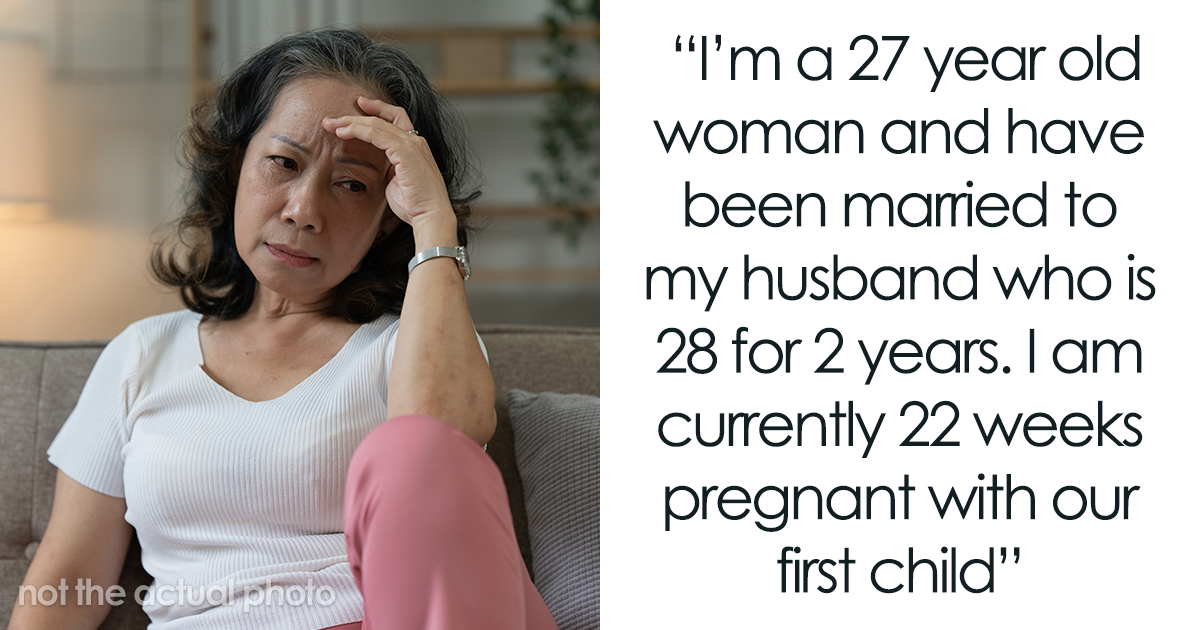
According to the widely shared story, the 27-year-old pregnant woman was 22 weeks along when tension with her in-laws intensified. Her Chinese in-laws repeatedly pressured the couple to reveal the unborn baby’s sex, despite being told that the couple themselves wanted to remain surprised. The situation became particularly uncomfortable because the grandparents had previously made dismissive comments about the woman coming from a family of six daughters.
Eventually, the husband had enough. When his parents once again pushed the issue, he reportedly warned that if their obsession with having a male descendant continued, any future sons could receive his wife’s surname instead. Then came the line destined for family-group-chat immortality: he was prepared to “burn down the family tree.”
Behind the dramatic punchline is a much more serious question about family boundaries, pregnancy privacy and what happens when expectations about boys, girls and family lineage begin overshadowing the actual child.
A Surprise Pregnancy Detail Becomes a Family Power Struggle
The couple’s original position was hardly unusual. Some expectant parents find out fetal sex through prenatal testing or ultrasound. Others prefer to wait until delivery. There is no universal rule saying Grandma must receive a briefing immediately after the anatomy scan.
In this case, the couple reportedly agreed that the baby’s sex simply did not matter enough to them to spoil the surprise. They expected to be delighted either way.
The mother-in-law, however, allegedly continued asking. When she learned that the couple planned to wait until birth, she reportedly became emotional and cried. The repeated pressure made the expectant mother increasingly uncomfortable, particularly because of earlier comments about daughters.
Comments about having “only girls” raised a red flag
The pregnant woman described herself as Caucasian and said she came from a family with six daughters. Her in-laws had allegedly referred to her parents as unlucky for not having a son while boasting about successfully having a boy themselves.
That history changed the meaning of the grandparents’ questions.
“Are you having a boy or girl?” can be innocent curiosity. Asking it over and over after making it obvious that one answer would be more desirable is something else entirely.
The expectant mother reportedly began worrying about how the grandparents might react if the baby turned out to be female. That is an unpleasant thought for any parent. A baby should not have to arrive wondering whether she met the quarterly expectations of the Family Lineage Department.
Why the Husband’s Response Got So Much Attention
The conflict apparently reached its peak when the in-laws arrived without invitation and raised the subject again. This time, the husband stepped in.
He made it clear that information about the unborn baby was not his parents’ business unless he and his wife decided to share it. More importantly, he challenged the idea that preserving a male family line should control their parenting decisions.
His surname threat was especially pointed. If preserving the family name was so important that his parents were willing to disrespect his wife, then future sons could simply carry her name instead.
That is where the “burn down the family tree” remark landed like a verbal meteor.
Was it diplomatic? Not exactly.
Was the message difficult to misunderstand? Absolutely not.
There Is a Difference Between Excitement and Entitlement
Grandparents are understandably excited about a new baby. Many have spent months or years imagining the moment. They may want ultrasound photos, nursery updates, possible names and approximately 700 pictures within the baby’s first 36 hours.
Excitement is normal.
Entitlement begins when relatives believe their excitement gives them decision-making authority.
Parents may decide not to share a baby’s name until birth. They may keep the due date vague. They may decline visitors at the hospital. They may ask relatives not to post ultrasound images online. They may choose not to reveal fetal sex.
Those decisions do not require approval from an extended-family committee.
Family-boundary experts frequently emphasize that healthy boundaries work best when they are clear, specific and consistently enforced. A vague “we’d rather not talk about it” can invite repeat negotiations. A clearer statement“We are not sharing that information, so please stop asking”leaves much less room for creative interpretation.
Boundaries are especially important before the baby arrives
Pregnancy disputes can become previews of future parenting conflicts.
Today the argument may involve learning whether the baby is male or female. Tomorrow it could involve hospital visitors, feeding decisions, sleep routines, religious traditions, photos on social media, discipline, holidays or who gets to hold the newborn during Thanksgiving dinner.
Establishing respectful boundaries before birth can therefore be useful practice. It tells relatives that grandparents are important members of the child’s life, but the parents remain the parents.
Why Son Preference Can Carry So Much Emotional Weight
The cultural element deserves careful treatment. The behavior of one Chinese family should never be presented as representative of every Chinese household. Families are individuals, not walking cultural stereotypes.
At the same time, historians and demographic researchers have documented longstanding son preference within some traditional patrilineal Chinese communities. Historically, sons could be expected to continue the surname and family line, participate in ancestral traditions, inherit family property and provide economic or caregiving support to parents.
Those attitudes have changed substantially across generations, regions and social groups. Education, urbanization and changing economic roles have weakened traditional preferences in many families. Modern Chinese parents cannot reasonably be reduced to a single historical pattern.
Still, the family-tree theme in this particular dispute is meaningful. Research examining patrilineal family structures has found that ideas about surname inheritance and continuation of the family lineage can contribute to preferences for sons.
That makes the husband’s threat to give future boys his wife’s surname more than a joke. It directly challenged the assumption underlying the conflict: that male descendants were necessary to preserve something uniquely valuable.
The Baby’s Sex Is Medical Information Before It Is Party Information
Everyday conversation commonly uses the phrase “baby’s gender,” including the headline of this story. Technically, prenatal testing and ultrasound can provide information about fetal biological sex or sex chromosomes; gender identity is a separate concept that develops over time.
During a standard prenatal ultrasound, clinicians may sometimes be able to identify fetal sex if the fetus is positioned appropriately. Cell-free DNA screening, often called NIPT, can also provide information involving sex chromosomes and can be performed relatively early in pregnancy.
But the existence of technology that can reveal information does not create an obligation to receive it.
Parents may decline to learn fetal sex. They may ask medical staff not to disclose it. And even when they do know, they may keep the information private.
The grandparents do not automatically receive login credentials to the pregnancy dashboard.
Gender-Reveal Culture Has Made the Question Feel More Important Than It Is
Modern pregnancy culture sometimes treats discovering fetal sex like the season finale of a television series. There are cakes, balloons, confetti cannons, elaborate photo shoots and social media countdowns.
Most celebrations are harmless. Some families simply enjoy having an excuse to gather and eat cake, which is an extremely defensible life philosophy.
But the trend can unintentionally make parents feel as though they owe everyone a reveal.
They do not.
There are also practical reasons to keep celebrations modest. The United States has seen several highly publicized accidents involving dangerous pyrotechnic gender-reveal devices. In one notorious California case, a smoke-generating device used during a 2020 gender-reveal photo shoot ignited the El Dorado Fire. The wildfire burned tens of thousands of acres and killed a firefighter.
Compared with that, “we’ll tell you when the baby arrives” is refreshingly low-risk event planning.
The Real Concern Is How a Child Might Be Treated
The strongest reason to challenge obvious son or daughter preference is not to win an argument during pregnancy. It is to protect the child who eventually joins the family.
Imagine that grandparents spend months announcing how desperately they want a boy. Then a girl is born.
Even if they behave politely at the hospital, years of comments can create a family environment in which children notice who receives special attention. Siblings can notice different gifts, different expectations, different praise and different standards.
Children also absorb gender stereotypes surprisingly early. Telling boys they must behave one way and girls another can unnecessarily restrict their interests, personalities and sense of possibility.
A healthier approach is wonderfully uncomplicated: welcome the actual child instead of the imaginary child relatives ordered in advance.
Pregnant Parents Do Not Need Extra Family Stress
Pregnancy already comes with enough uncertainty. Medical appointments, physical changes, sleep disruption, financial preparation and worries about delivery can fill anyone’s mental calendar.
Persistent family conflict adds another layer.
Organizations focused on maternal health note that stress is common during pregnancy and that family or relationship problems can contribute to it. This does not mean one annoying mother-in-law automatically causes pregnancy complications. Human health is far more complicated than that.
It does mean relatives could consider whether their behavior is making an already demanding period easier or harder.
Grandparents who want a strong relationship with the new family generally accomplish more through practical support than interrogation. Bring dinner. Run an errand. Ask what the parents need. Respect their medical and personal privacy.
In other words, fewer investigative hearings and more casseroles.
How Couples Can Handle Relatives Who Keep Pushing
1. Decide together what stays private
Before answering relatives, partners should agree with each other. Decide what information will be shared about fetal sex, names, medical appointments, delivery plans and social media.
2. Let each partner manage their own relatives when possible
When conflict involves one partner’s parents, that partner can often deliver the boundary most effectively. It reduces the possibility of the spouse being framed as the outsider who “changed” their child.
That is one reason the husband’s intervention in this story mattered. He did not leave his pregnant wife alone to fight his family’s expectations.
3. Stop over-explaining
A boundary does not become more valid after a 14-slide PowerPoint presentation.
“We decided not to find out” is enough.
If relatives continue arguing, repeating the same answer is usually more effective than generating increasingly complicated justifications.
4. Add consequences when necessary
If someone repeatedly ignores a boundary, parents can reduce the information shared with that person, end conversations when prohibited topics arise or limit unannounced visits.
The purpose is not revenge. The consequence simply makes the boundary real.
5. Watch how relatives behave after birth
If family members expressed a strong preference for a particular sex, parents should notice whether that preference disappears once the child is born or starts influencing treatment.
Grandparents deserve room to grow, adapt and surprise everyone in a good way. But children also deserve protection from favoritism.
The Husband’s Nuclear Option May Have Prevented a Bigger Explosion
Threatening to “burn down the family tree” probably will not appear in many professional communication manuals.
Still, the underlying principle was sensible: the husband prioritized the family he was building with his wife rather than automatically surrendering to pressure from the family in which he grew up.
Marriage and parenthood often require that shift.
Respecting parents does not require giving them unlimited access to decisions within an adult child’s marriage. Family tradition can be meaningful without becoming compulsory. Culture can be honored without permitting sexism. Grandparents can be valued without receiving veto power.
Most importantly, an unborn child should not arrive carrying the responsibility of preserving an adult’s preferred version of a family tree.
Experiences and Lessons Families Commonly Encounter in Similar Situations
Stories about pregnancy privacy often follow a remarkably similar pattern. The details changebaby sex, name, delivery room, ultrasound picturesbut the central conflict remains the same. Relatives see themselves as part of the pregnancy, while parents see the pregnancy as something they are choosing to share.
One common experience is the escalating question. A grandmother asks about the baby’s sex once and receives a polite answer: “We’re keeping it a surprise.” She asks again a week later. Then Grandpa asks. Then an aunt mentions that Grandma is “really hurt.” Suddenly a private decision has somehow become an international diplomatic incident.
Couples often discover that repeatedly explaining themselves makes the problem worse. Every new explanation supplies another argument for relatives to challenge. When parents eventually replace explanations with a consistent sentence“This is our decision and the subject is closed”the conversation becomes much easier to manage.
Another familiar scenario involves baby names. Couples enthusiastically share a favorite name, expecting relatives to smile. Instead, somebody remembers a terrible coworker with that name, another relative dislikes the spelling and a grandmother begins campaigning for the name of a long-deceased uncle nobody ever met. Many parents consequently learn an important lesson: not every decision improves with crowdsourcing.
Social media creates another version of the same problem. Expectant parents sometimes share ultrasound pictures privately, only to discover that an excited relative posted them publicly before the parents announced the pregnancy themselves. The relative may have meant no harm, but good intentions do not erase the boundary violation. That experience often prompts parents to establish explicit rules about photos before birth.
Gender preference can be more emotionally complicated. Some families constantly predict a granddaughter because the family already has several boys. Others desperately want a grandson to “carry on the name.” Even playful comments can become uncomfortable when repeated for months.
Parents in that position frequently worry less about the prediction itself than about the eventual reaction. They wonder whether relatives will sound disappointed after delivery or whether one child will receive more attention than another.
A useful response is to redirect the conversation away from what adults hope the child will be and toward what the child actually needs: safety, affection, stability and the freedom to develop their own personality.
The best grandparent experiences tend to involve relatives who understand this distinction. They may be curious, excited and occasionally opinionated, but they recognize that supporting new parents does not mean managing them. They ask before visiting. They respect privacy. They accept “no” without turning it into a referendum on family loyalty.
That is the larger lesson behind the viral “family tree” confrontation. A healthy family tree is not preserved merely by passing down a surname. It survives because the people on its branches actually enjoy being around one another.
If maintaining the family name requires guilt trips, disrespecting the pregnant parent or treating daughters as consolation prizes, perhaps the problem is not the surname after all. Perhaps the tree could use a little pruning.
Conclusion
The dispute over this unborn baby was never really about one piece of prenatal information. It became a conflict over who gets to make decisions, how much influence extended family should have and whether traditional expectations about sons should outweigh a couple’s boundaries.
The parents-to-be had chosen something simple: they wanted to meet their baby without knowing the sex beforehand. Repeated family pressure turned that personal choice into a larger confrontation.
The husband’s “burn down the family tree” threat was undeniably dramatic, but it also communicated an important priority. His wife and child were not supporting characters in somebody else’s lineage story.
Grandparents can bring tremendous love, wisdom and support to a child’s life. The strongest grandparent relationships, however, usually begin with respect for the people doing the parenting.
And if the parents say the baby is a surprise, there is always one foolproof method for discovering the answer: wait for the baby.