Every culture has looked at death and asked the same nervous question: “So… who is in charge down there?” The answers are rarely comforting. Across world mythology, the underworld is ruled by kings, queens, judges, gods, corpse-lords, and bureaucrats with better recordkeeping than your local tax office. Some punish the wicked. Some guard the dead. Some decide where souls go next. A few simply sit in the dark, looking skeletal and deeply unbothered by your five-year plan.
This list explores 10 terrifying rulers of the underworld from ancient myths and religious traditions around the world. These figures are not “villains” in the simple movie-monster sense. Many are guardians of balance, judges of morality, or symbols of natural cycles like decay, winter, rebirth, and harvest. Still, let’s be honest: if a deity lives in a realm of corpses, carries a soul-snaring noose, or rules a kingdom called “the World of Darkness,” they have earned a place at the spooky table.
Why Underworld Rulers Are So Fascinating
Underworld rulers appear in myths because human beings need stories to explain the one destination nobody can avoid. These deities transform fear into structure. Instead of death being an empty cliff, mythology turns it into a kingdom with gates, laws, judges, guides, punishments, rewards, and occasionally a terrifying dog with too many heads.
What makes these gods and goddesses memorable is not only their connection to death, but their authority. They do not merely haunt the underworld. They manage it. They decide who enters, who suffers, who rests, who returns, and who becomes a cautionary tale told around fires for the next thousand years.
10 Terrifying Rulers Of The Underworld
1. Hades: The Unseen King of the Greek Underworld
Hades may be the most famous underworld ruler in Western mythology, and his reputation is darker than a basement during a power outage. In ancient Greek religion, Hades was the brother of Zeus and Poseidon. While Zeus ruled the sky and Poseidon ruled the sea, Hades drew the least beach-friendly assignment: the realm of the dead.
Yet Hades was not the Greek equivalent of a cartoon devil. He was stern, remote, wealthy, and impossible to bribe. His name became attached to both the god and the underworld itself. The dead entered his domain, and almost nobody left. His kingdom was guarded by Cerberus, the monstrous hound often described with three heads, making Hades’ front door security significantly more intense than anything at an airport.
What makes Hades terrifying is his calm finality. He does not need to chase mortals. Everyone comes to him eventually. His power is quiet, patient, and absolute. In myth, that is often scarier than rage.
2. Persephone: The Queen Who Belongs to Two Worlds
Persephone is often remembered as the daughter of Demeter, goddess of agriculture, and as the bride of Hades. But reducing her to “the kidnapped spring girl” misses her most haunting role: Queen of the Underworld. In Greek myth, after Persephone ate pomegranate seeds in the underworld, she became bound to return there for part of each year.
Her story explains the changing seasons, but it also makes her one of mythology’s most complex underworld rulers. Persephone stands between bloom and burial, sunlight and shadow, grain fields and ghostly halls. She is terrifying not because she is always cruel, but because she represents transformation. She knows what it means to be taken, changed, and enthroned in a place most beings fear.
As queen, Persephone adds emotional depth to the Greek underworld. Hades is the locked gate. Persephone is the reminder that even beauty, youth, and spring cannot avoid the dark.
3. Osiris: The Mummified Judge of the Egyptian Afterlife
Osiris is one of ancient Egypt’s most important gods, and his underworld authority comes with a dramatic backstory worthy of a prestige television series. According to Egyptian myth, Osiris was murdered by his brother Seth, restored through the devotion and magic of Isis, and became ruler of the afterlife.
In Egyptian belief, Osiris presided over the realm of the dead and was strongly associated with judgment, resurrection, fertility, and renewal. He is often shown wrapped like a mummy, holding the crook and flail of kingship. This visual says everything: Osiris is dead, but he reigns. That is not a contradiction in Egyptian religion; it is the point.
His terrifying power lies in moral judgment. The Egyptian afterlife was not a vague fog. It had standards. The heart of the deceased could be weighed against the feather of truth. Osiris’ court suggested that death was not an escape from ethics. It was the final audit, and nobody wants to fail an audit conducted in the afterlife.
4. Anubis: The Jackal-Headed Lord of Funerary Rites
Before Osiris became the dominant ruler of the Egyptian dead, Anubis held a major role as lord and guardian of the dead. He is one of the most recognizable figures in ancient Egyptian religion: a black jackal or a man with the head of a jackal, elegant and eerie at the same time.
Anubis was associated with embalming, tombs, funerary rituals, and the protection of the deceased. His black coloring symbolized both decay and the fertile soil of the Nile, making him a perfect image of death transforming into renewal. He was also connected to the weighing of the heart, guiding souls through the dangerous process of judgment.
What makes Anubis terrifying is not brutality but precision. He is the divine mortician, the guardian at the threshold, the one who knows whether the body has been properly prepared and whether the soul is ready to proceed. If Hades is the landlord of the dead, Anubis is the inspector with a clipboard and supernatural night vision.
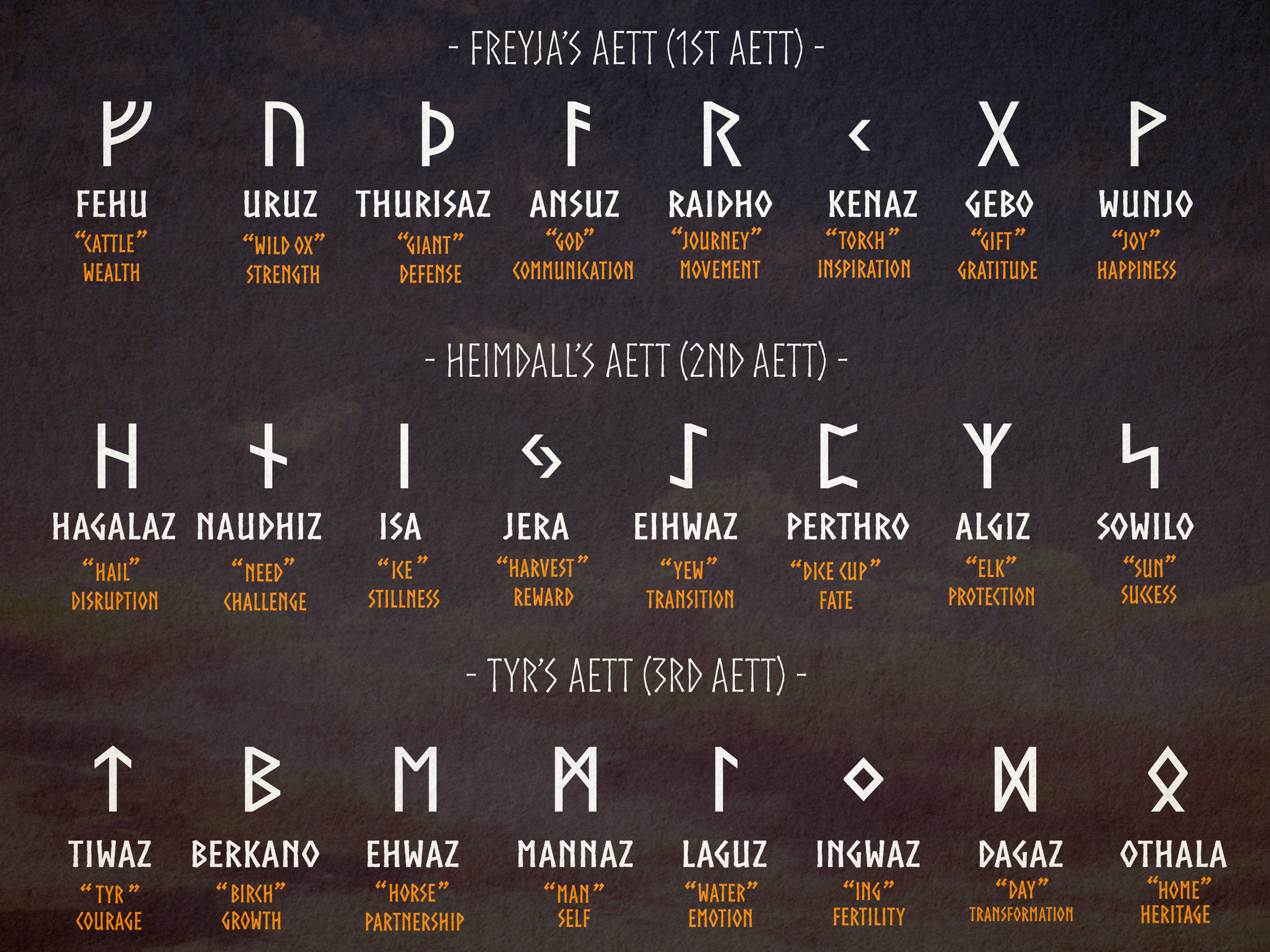
5. Hel: The Cold Queen of Norse Death
In Norse mythology, Hel is both a place and the being who rules it. She is the daughter of Loki and the giantess Angrboda, which already gives her one of the most chaotic family trees in mythology. Her realm lies downward and northward, associated with cold, mist, darkness, and the dead who do not go to more heroic destinations like Valhalla.
Hel is often described as a grim figure, sometimes half-living and half-corpse. Her kingdom, linked with Niflheim, is not a fiery inferno but a freezing world of shadow. That difference matters. Norse terror often comes not from flames but from cold silence, hunger, and the slow disappearance of warmth.
Hel’s horror is atmospheric. She does not need thunderbolts. Her realm itself is punishment enough. She is the ruler of endings that are not glorious, the quiet deaths without songs, the places where battle trophies do not matter.
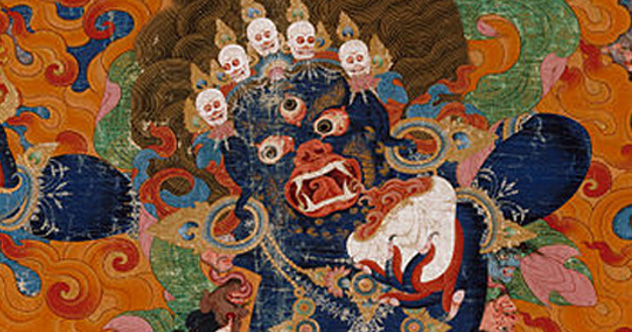
6. Yama: The Judge Who Measures Human Deeds
Yama appears in Hindu tradition as a god of death and a judge of souls. In early Vedic thought, he is described as the first mortal to die, the one who found the path that all humans would eventually follow. Over time, Yama became associated with justice, law, and the destination of the dead.
He is often imagined as a stern judge, sometimes riding a buffalo and carrying a noose or staff. In later traditions, he evaluates human actions and sends souls toward reward, punishment, rebirth, or ancestral realms. That makes him terrifying in a deeply practical way: he is not impressed by excuses.
Yama’s fear factor comes from accountability. He is death with a legal department. The mythic message is clear: actions matter, consequences follow, and the afterlife has receipts.
7. Emma-ō: The Japanese King of Hell
Emma-ō, also known as Enma or Enma Daiō, is the Japanese Buddhist king and judge of hell. He corresponds to Yama, but Japanese tradition gives him a distinctive presence as the fearsome ruler of Jigoku, the hell realm. In popular imagery, he is stern, red-faced, commanding, and very unlikely to accept “I forgot” as a defense.
Emma-ō judges the souls of the dead according to their deeds. Some traditions describe hell as containing hot and cold regions, each suited to specific sins and punishments. The idea is not random cruelty; it is moral consequence dramatized through frightening images.
What makes Emma-ō memorable is his role as supernatural judge. He does not merely punish. He reviews. He checks the register. He listens to testimony. In some folk beliefs, even children were warned not to lie because Emma-ō might pull out a liar’s tongue. Subtle? Absolutely not. Effective? Very likely.
8. Mictlantecuhtli: The Skeletal Lord of Mictlan
In Aztec religion, Mictlantecuhtli ruled Mictlan, the underworld of the dead, alongside his wife Mictecacihuatl. His name is often translated as “Lord of Mictlan” or “Lord of the Land of the Dead.” If underworld rulers had a contest for most metal visual design, Mictlantecuhtli would be a finalist.
He is commonly associated with skulls, bones, owls, spiders, bats, and the direction south. Aztec imagery often presents him as skeletal or corpse-like, a direct confrontation with mortality. Souls who did not die in ways that led to special afterlife destinations were believed to journey through Mictlan, facing dangers and trials before reaching rest.
Mictlantecuhtli is terrifying because he strips away comfort. He is not polished death. He is bone, darkness, hunger, and endurance. His realm is a long road through the reality that bodies break and names fade.
9. Cizin: The Stinking Maya Lord of Death
Cizin, sometimes connected with names such as Ah Puch or Yum Cimil in discussions of Maya death gods, is a Maya underworld figure associated with death, earthquakes, sacrifice, and decay. His name has been translated as “Stinking One,” which is frankly not a nickname anyone wants to earn.
He is often described as a skeletal or corpse-like death god, linked with the subterranean world of the dead. Maya death imagery could be vivid and unsettling, using bones, skulls, darkness, and decomposition to express the terror of the grave. The underworld was not simply “downstairs.” It was a dangerous sacred realm filled with trials, spirits, and powers beyond ordinary human control.
Cizin’s terror is physical. Where some underworld gods represent law or kingship, Cizin represents the smell and substance of mortality. He reminds us that death is not only philosophical. It is bodily, earthy, and impossible to perfume forever.
10. Ereshkigal: The Mesopotamian Queen of the Great Below
Ereshkigal is one of the most formidable underworld rulers in ancient Mesopotamian religion. She is queen of the dead and ruler of the realm often called Irkalla, the “Great Below.” Unlike some gods who share authority or move between realms, Ereshkigal’s power is rooted in the underworld itself.
One of her most famous myths involves the descent of Inanna, the goddess of love and war, into the underworld. Inanna passes through gates, is stripped of her symbols of power, and ultimately stands exposed before Ereshkigal. The story is ancient, strange, and psychologically intense. Even a mighty goddess must surrender status before entering the realm of death.
Ereshkigal is terrifying because she enforces boundaries. In her domain, titles fall away. Jewelry, weapons, beauty, command, pridenone of it survives the gates intact. She rules the place where power is unmade.
11. Mot: The Canaanite Devourer of Life
Mot, the ancient West Semitic god of death, sterility, and the powers opposed to fertility, is one of mythology’s most chilling death figures. In Canaanite myth, he is the great enemy of Baal, the storm and fertility god. Their conflict reflects the seasonal struggle between life-giving rain and deadly drought.
Mot is not always described as a tidy king sitting on a throne. He is more like death as an appetite. He represents barrenness, dryness, famine, and the swallowing power that pulls life into the earth. In myths where Baal is defeated by Mot, the result is not just one god losing a fight. The land itself suffers.
Mot’s terror is ecological. He is what happens when fields fail, rain stops, and survival becomes uncertain. His underworld power is not only about individual death; it is about the terrifying possibility that life itself can be interrupted.
Common Themes Among Underworld Rulers
They Are Not Always Evil
A common mistake is to treat all underworld rulers as demons. Many are frightening because they are powerful, not because they are wicked. Hades maintains order. Osiris judges and renews. Yama and Emma-ō enforce moral consequence. Ereshkigal guards the laws of her realm. These figures are terrifying in the way a courtroom, a hospital, or a graveyard can be terrifying: they force honesty.
They Turn Death Into a System
These myths give death rules. There are gates, guides, trials, ledgers, judges, rivers, dogs, masks, and rituals. That structure may sound frightening, but it also makes the unknown slightly more understandable. A chaotic void becomes a map. A map with monsters, yes, but still a map.
They Reflect What Each Culture Feared Most
Greek myth feared separation and finality. Egyptian religion emphasized preparation, preservation, and judgment. Norse myth imagined a cold shadow-realm. Mesoamerican traditions focused on endurance, sacrifice, bones, and the journey through darkness. Canaanite myth tied death to drought and famine. Underworld rulers are cultural mirrors, and sometimes mirrors are rude enough to show everything.
Experience Notes: What These Underworld Myths Teach Modern Readers
Reading about the 10 terrifying rulers of the underworld can feel like wandering through a global haunted house, but the experience is richer than simple fear. These myths are powerful because they turn death into a story humans can approach, examine, and even argue with. Modern readers may not share the exact beliefs of ancient Greeks, Egyptians, Norse poets, Maya scribes, or Mesopotamian worshippers, but the emotional questions remain familiar. What happens when life ends? Do our choices matter? Can love cross the boundary of death? Is there justice beyond the limits of human courts?
One of the most striking experiences when studying underworld rulers is noticing how practical these myths are. They are not just spooky decorations for ancient religion. They helped people grieve, bury their dead, explain seasons, warn against wrongdoing, and give meaning to disasters like drought, famine, and disease. Osiris made death part of a cycle of renewal. Persephone gave winter a face and a story. Yama and Emma-ō suggested that moral behavior follows the soul beyond the body. Mictlantecuhtli and Cizin reminded people that death is physical and unavoidable, while Ereshkigal showed that no power survives unchanged in the Great Below.
These figures also create unforgettable images. A jackal-headed guardian beside a tomb. A queen behind seven gates. A skeletal lord surrounded by owls and bats. A cold goddess ruling the misty dead. Such images stay in the mind because they combine fear with order. They are scary, but they are not random. Each symbol has a job. Bones point to mortality. Pomegranates point to binding choices. Scales point to justice. Dogs guard boundaries. Gates mark transformation. Mythology knows how to use props better than most horror movies.
For writers, artists, gamers, filmmakers, and curious readers, underworld rulers are a gold mine of storytelling. They offer atmosphere, conflict, symbolism, and moral tension. A good underworld scene is never only about monsters. It is about what a character must leave behind, what truth must be faced, and whether return is possible. That is why these rulers still appear in novels, comics, role-playing games, museum exhibitions, fantasy films, and dark academic rabbit holes visited at 2:00 a.m. by people who were “just going to read one article.”
The biggest lesson may be that fear and meaning often travel together. Underworld rulers are terrifying because they stand at the edge of human knowledge. But they are also strangely comforting because they prove that people have always tried to give shape to the dark. The underworld may be cold, silent, fiery, skeletal, bureaucratic, or full of gates, but in myth, it is never meaningless. Someone is there. Someone keeps the keys. Someone remembers the rules.
Conclusion: Death Has Many Thrones
The world’s most terrifying underworld rulers show how creative, serious, and occasionally bone-rattling human imagination can be. From Hades’ locked kingdom to Hel’s frozen realm, from Osiris’ court of judgment to Mictlantecuhtli’s skeletal dominion, these figures reveal that death has never been just an ending in mythology. It is a place, a process, a test, a transformation, and sometimes a royal court with very strict entry requirements.
What makes these rulers unforgettable is their variety. Some are judges. Some are guardians. Some are monarchs. Some are embodiments of decay, famine, or darkness. Together, they remind us that the underworld is not one universal idea. It is a thousand human fears shaped into stories. And while nobody is eager to meet these rulers in person, learning about them is a thrilling way to understand how civilizations faced the mystery waiting at the end of every road.
Note: This article is written for educational and cultural interest. It synthesizes well-established mythology, museum, encyclopedia, and historical reference material while respecting that some figures remain important within living religious and cultural traditions.