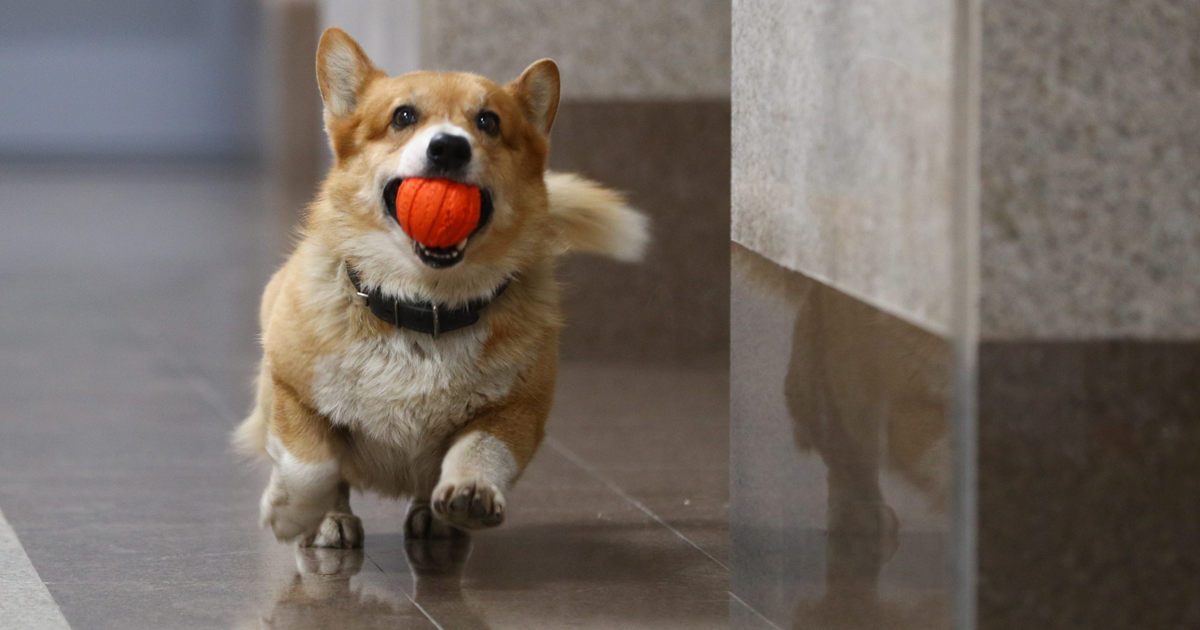
Police dogs are usually imagined as tall, muscular German Shepherds or Belgian Malinois capable of clearing a fence before the average human has finished saying, “Wait, is that gate locked?” Redhead did not fit that picture. He was a Pembroke Welsh Corgi with upright ears, a determined expression, and legs that appeared to have been ordered from the compact section of the catalog.
Yet Redhead, also known by the Russian name Ryzhiy, became an accomplished police detection dog in Nizhny Novgorod, Russia. His powerful nose, enthusiasm for training, and ability to work in tight spaces helped him build a law-enforcement career lasting approximately seven and a half years. He became a local celebrity, but behind the adorable photographs was a genuine working dog with discipline, specialized training, and an impressive record.
Who Was Redhead the Police Corgi?
Redhead was a Pembroke Welsh Corgi who served with the transport police in Nizhny Novgorod. His Russian nickname, Ryzhiy, is commonly translated as “Ginger” or “Redhead,” an appropriate name for a dog with a warm reddish coat and enough personality to fill an entire railway station.
He entered police service after completing his examinations in 2013. By the time he retired in 2020 at nine years old, he had spent roughly seven and a half years assisting officers with searches. Contemporary reports described him as Russia’s firstand, during his career, onlypolice detection dog of the Welsh Corgi breed.
That distinction made Redhead unusual, but it was not a novelty appointment. He had to learn commands, maintain focus in noisy public places, identify target odors, communicate discoveries to his handler, and ignore the constant temptation presented by friendly passengers. For a sociable corgi, ignoring a crowd of potential admirers may have been the hardest assignment of all.
From Family Pet to Police Recruit
Redhead was not originally selected from a large police breeding program. His handler and owner, Olga Chumarova, initially brought him home as a companion for her young daughter. Chumarova was already an experienced canine professional who had worked with larger breeds, including shepherds and Rottweilers.
Because corgis are active, intelligent herding dogs rather than decorative couch cushions with ears, she began teaching Redhead practical commands. His responsiveness and enthusiasm quickly became obvious. When a supervisor suggested training a dog to locate narcotics, Chumarova decided to work with the talented little dog she already had.
The idea reportedly earned a few laughs at first. A corgi standing beside a traditional police shepherd can look less like a fellow officer and more like the shepherd’s highly confident assistant manager. Redhead soon ended the jokes by passing the required tests and proving that his nose worked perfectly well without long legs attached to it.
This path reflects an important truth about working dogs: breed matters, but individual ability, motivation, health, temperament, and handler compatibility matter too. Pembroke Welsh Corgis were developed to herd livestock. They are alert, energetic, trainable, and surprisingly powerful for their size. Redhead simply redirected those working instincts toward a different kind of search.
What Did Redhead Do for the Police?
Searching Transportation Areas
Redhead worked primarily with transport police, which meant operating around railway stations, waiting rooms, storage lockers, baggage, and vehicles. These environments can be crowded, distracting, and full of competing smells. Food, cleaning products, luggage, fuel, clothing, people, and outdoor air all create an odor puzzle that a detection dog must solve without losing focus.
Detailed local reporting emphasized Redhead’s narcotics-detection work, particularly his talent for inspecting luggage and transportation. Broader international coverage also associated his career with searches for weapons, explosives, and illegal contraband. Whatever the specific assignment, his central job was detection rather than chasing suspects through alleyways.
A Memorable Search Inside a Car
One of Redhead’s early assignments demonstrated exactly why his small body could be useful. A man brought officers an expensive car that he believed had previously been used to transport drugs. Redhead searched the vehicle, entered the trunk, and alerted near a particular area.
An experienced shepherd was brought in to confirm the indication and responded to the same location. Officers dismantled part of the trunk and discovered a hidden compartment containing traces of a suspicious substance. According to Chumarova, Redhead indicated the precise area especially well because he could physically fit into the trunk and investigate the confined space.
In other words, his short legs were not a defect in the system. They were part of the equipment.
How Redhead Communicated a Discovery
Detection dogs are trained to give a clear alert when they locate a target odor. Depending on the program, a dog may sit, lie down, stare at the source, point with its nose, bark, or perform another trained behavior.
Redhead generally lay down when he identified the scent he had been trained to find. When an odor source was positioned higher, he could rise onto his back legs to indicate it. This behavior gave his handler information without requiring him to scratch, bite, or disturb the searched object.
His preferred paycheck was reportedly boiled liver. It was not a traditional government salary package, but Redhead appears to have considered it highly competitive.
Why Redhead’s Short Legs Could Be an Advantage
Redhead’s appearance attracted attention because police dogs are commonly associated with larger breeds. Size is useful for patrol, apprehension, and protection work, but detection is a different specialty. A dog searching for odor does not necessarily need to tackle a fleeing suspect. It needs a strong desire to search, reliable obedience, physical stamina, confidence, and an effective partnership with its handler.
A compact dog may maneuver easily inside cars, baggage areas, narrow corridors, and other confined locations. Redhead’s body allowed him to get close to low surfaces and fit into spaces that were less convenient for a large shepherd. His low profile also made him approachable in public, although his popularity could create distractions when passengers tried to call or pet him.
His success should not be reduced to anatomy, however. Short legs did not train themselves. Redhead performed well because Chumarova developed his natural ability through repeated practice, rewards, obedience work, environmental exposure, and careful handling.
The Science Behind a Detection Dog’s Nose
Dogs experience their surroundings through smell in ways humans can barely imagine. Research has shown that canine olfactory pathways connect with brain regions involved in orientation, memory, emotion, and even visual processing. A dog is not merely noticing a pleasant or unpleasant smell. It is gathering detailed information about where an odor came from, how it moved, and what may have left it behind.
Detection training turns this ability into a repeatable task. The dog learns that finding a particular odor leads to a valuable reward, such as food, praise, or a favorite toy. Over time, the search itself becomes exciting. The hidden scent means a game is underway, and a successful alert means the reward is coming.
Professional programs also depend on much more than a sensitive nose. Standards address dog selection, handler education, health, recordkeeping, testing, operational procedures, and continuing training. A brilliant dog with an unreadable handler can miss important information, while a skilled team learns to notice subtle changes in breathing, posture, direction, and search intensity.
Redhead’s career therefore represented a partnership. His nose located odor; Chumarova interpreted his behavior, controlled the search, protected him from distractions, and communicated with other officers. Police K-9 work may have four paws at ground level, but it is always a team sport.
A Serious Officer Who Became a Social-Media Star
Redhead’s unusual appearance made him extremely popular. Photographs showed him patrolling beside a much larger Belgian Shepherd, walking through railway facilities, training with Chumarova, and wearing police equipment. His social-media following grew into the thousands, and television crews reportedly visited to feature him.
The public saw a lovable corgi in uniform. His handler saw a service dog who happened to be at work.
Chumarova reminded people that working dogs should not automatically be touched, called, or distracted. Redhead was friendly, but he needed to concentrate. She sometimes allowed polite visitors and children to pet him, yet the decision belonged to the handler.
That lesson applies to police dogs, service dogs, search-and-rescue dogs, and other working animals. Admire the ears. Appreciate the tiny boots. Take a photograph when permitted. But do not interrupt an employee simply because the employee is fluffy.
Redhead’s Retirement and Final Chapter
Redhead retired in June 2020 at nine years old. Railway duty, regular training, and summer heat had become more demanding with age. His retirement plans reportedly included continued exercise, dog sports, time with Chumarova’s family, and even dancing activities. After years of inspecting baggage, a schedule involving naps and hobbies was well deserved.
He had also distinguished himself beyond police detection. Chumarova later remembered him as the only corgi to win a Russian national championship in a general dog-training discipline, further evidence that his success was based on broad obedience and working ability rather than one lucky talent.
Redhead died in Nizhny Novgorod in December 2023 at nearly 13 years old. Chumarova’s farewell described him as exceptionally loyal, courageous, and talented. Although his story has a sad ending, he enjoyed years of retirement with the person who had trained, handled, and loved him throughout his remarkable career.
Why Redhead’s Story Still Matters
Redhead became famous because he looked different, but his deeper legacy comes from what he accomplished. He challenged the assumption that a police dog must have a particular silhouette. A strong working team is built around the requirements of the task, not around what audiences expect a hero to look like.
His career also illustrates why responsible training matters. Corgis may be clever, but intelligence without guidance can produce a dog that reorganizes the household according to its own policies. Redhead became dependable because natural ability was paired with structure, repetition, socialization, exercise, and a handler who understood him.
Most importantly, Redhead’s story celebrates useful differences. His compact frame helped him inspect confined areas. His approachable appearance created positive public interest. His intelligence supported advanced training. Characteristics that made him unconventional also helped make him valuable.
Experiences and Practical Lessons Inspired by Redhead
Experience 1: The Small Dog Everyone Underestimates
Many owners of small working breeds have experienced the same reaction Redhead initially received: people assume the dog is cute but not capable. Then the dog learns a complicated routine, completes an agility course, finds a hidden object, or solves a food puzzle faster than expected. The useful lesson is to evaluate behavior before judging appearance. A compact body does not indicate a compact brain.
Owners can explore this ability safely through obedience classes, supervised scent games, herding activities, tracking, or canine sports. The goal is not to turn every corgi into a police officer. That would create an alarming number of household investigations into missing sandwiches. The goal is to give intelligent dogs appropriate work.
Experience 2: Discovering How Much Mental Exercise Matters
A common pet-owner experience is assuming that a long walk will completely tire an energetic dog. The dog returns home, drinks water, rests for four minutes, and begins looking for a new management position. Mental challenges often provide the missing piece.
Simple scent games can be highly engaging. An owner can hide a favorite toy or treat in an easy location, encourage the dog to search, and reward success. Difficulty should increase gradually, and the materials used must be safe. These activities draw on natural sniffing behavior while strengthening communication between dog and owner.
Redhead’s work was professional and should not be imitated with illegal substances, weapons, or unknown chemicals. Home scent games should remain harmless, controlled, and fun.
Experience 3: Learning Not to Distract a Working Dog
Seeing an appealing dog in a vest creates an understandable urge to say hello. People often describe feeling rejected when the dog does not respond. In reality, ignoring strangers may be evidence of excellent training.
The respectful experience is simple: pause, observe, and ask the handler before interacting. Never call the dog, whistle, offer food, or reach toward it without permission. The dog may be searching, supporting a person with a disability, or responding to a developing situation that is not obvious to bystanders.
Experience 4: Helping a Working Dog Adjust to Retirement
Retirement can be a major transition for a dog accustomed to predictable duties and regular stimulation. Owners of retired working dogs often maintain routines while reducing physical intensity. Veterinary guidance, appropriate exercise, scent puzzles, gentle training sessions, and quiet social time can help preserve quality of life.
Age should shape the activity. A senior dog may still love having a job, but that job can become finding treats around a room instead of searching a railway station. The uniform comes off; the nose remains enthusiastically employed.
Experience 5: Redefining What Strength Looks Like
Redhead’s career offers a broader human lesson. People frequently confuse strength with size, volume, or intimidating appearance. His success came from reliability, courage, concentration, and cooperation. Those qualities are less dramatic than a powerful physique, but they are often more useful.
The next time an individual, animal, or idea seems too unconventional for a role, Redhead provides a reason to look again. Sometimes the candidate with the shortest legs is also the one who can reach the evidence everyone else missed.
Conclusion
Redhead was more than an adorable corgi wearing police equipment. He was a trained detection dog who worked with the Nizhny Novgorod transport police for approximately seven and a half years. He searched vehicles, baggage, storage areas, and public facilities while building an unusually strong bond with his handler.
His short legs attracted headlines, but his intelligence, discipline, courage, and nose earned his career. Redhead showed that effective working dogs do not all need to look alike. Some stand tall and imposing. Others arrive close to the ground, accept payment in boiled liver, and quietly prove everyone wrong.
Note: This article was independently rewritten and fact-checked using reporting from TASS, The Moscow Times, AIF Nizhny Novgorod, Bored Panda, and CGTN, together with working-dog information from the American Kennel Club, Cornell University, Penn Vet Working Dog Center, the National Institute of Justice, the FBI, the United States Police Canine Association, the ASPCA, and National Geographic.